Episode Transcript
[00:00:00] Speaker A: What if the reason you're still exhausted, still in pain, still searching for answers isn't because there's something wrong with you, but because you've only been healing one dimension of yourself?
What happens when emotional trauma gets stored in your physical body? And could the missing piece in your healing journey be something your doctor never learned to measure?
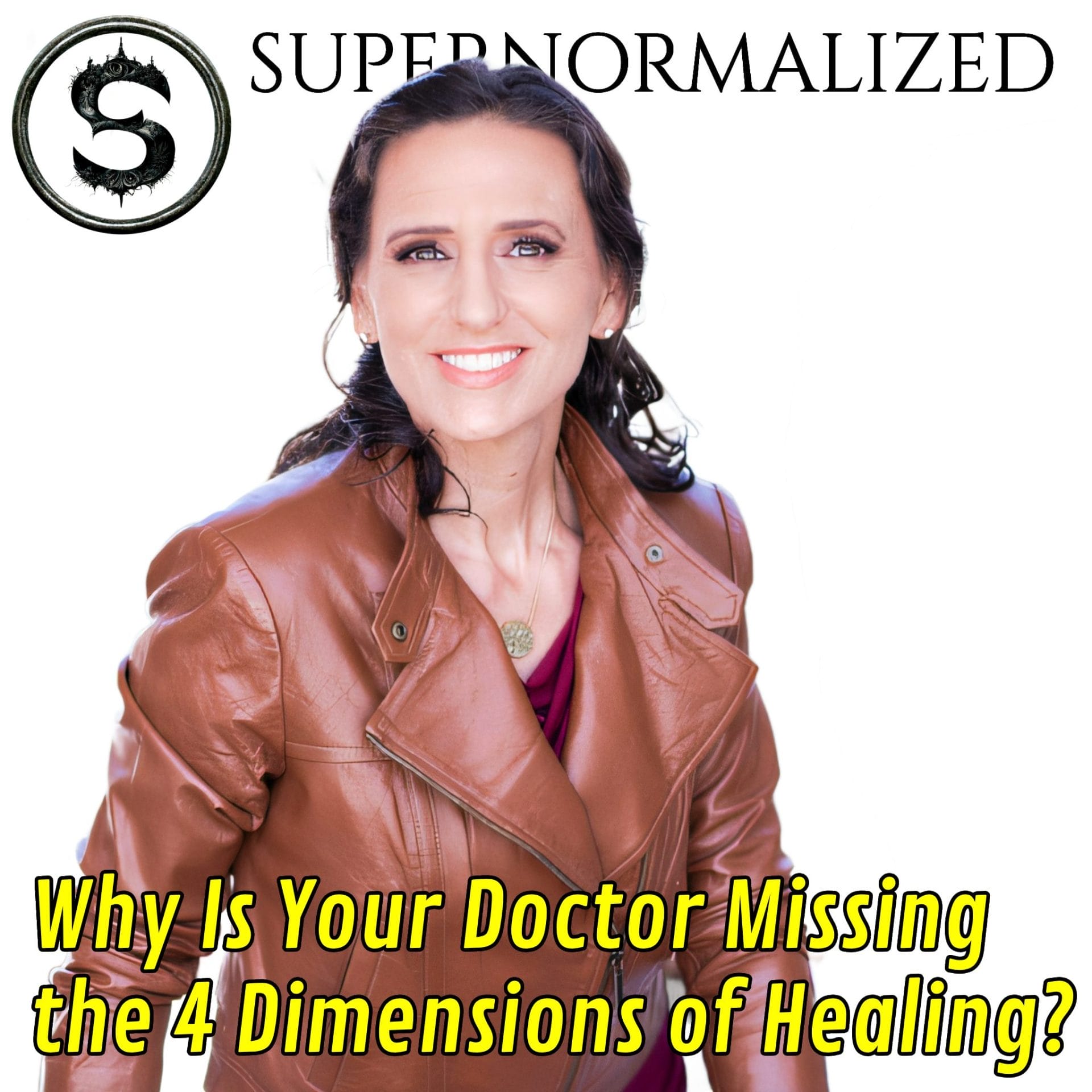
Welcome to Supernormalize, where we decode the extraordinary within the ordinary. I'm your host, CJ Barnaby, and today we're sitting down with Keller Calkins, a board certified holistic nutritionist, an integrative healing practitioner who's bridging ancient wisdom with modern science to help people reclaim their vitality. Kelly's own health crisis became her greatest teacher, leading her to discover why Western medicine alone isn't enough. And what happens when you start treating all four dimensions of yourself instead of just chasing symptoms? Whether you're into your own healing journey or just starting to question, why don't you feel like yourself anymore? This conversation offers fresh perspective and tangible hope. Listen all the way to the end. For all the pro tips from Kelly and a greater understanding of yourself, I'm with the show.
[00:01:12] Speaker A: Welcome to Super Normalized Kelly Calkins. Kelly, you've had quite a journey yourself, and that's inspired you to go deep into wellness and make great changes in your life. I'm looking forward to hearing that story. Welcome to the show.
[00:01:28] Speaker B: Thank you so much for having me. I'm happy to be here and to pour into your audience.
[00:01:32] Speaker A: Excellent. So take us back to that moment when you realized conventional medicine wasn't giving you the full picture. What was happening in your life and your health.
[00:01:40] Speaker B: Yeah. Well, looking back, I see there were a lot of things that I was navigating growing up that weren't normal, but I didn't know any different.
By the time I was in my early 20s, I knew something was off in my body. Things didn't feel right anymore. And I kept going to the doctor and I was told I was anxious or I was depressed. And they kept pushing medication at me. And one time I broke down and I accepted the prescription, had a horrific reaction to the anxiety meds, ended up in urgent care.
[00:02:13] Speaker B: And just couldn't find answers. By the time I had my two kids, I was entering my 30s.
My body was really, really unwinding and breaking down.
And the solution was an emergency hysterectomy at 29. And, yeah, and then I didn't heal right. So they did a second surgery. I ended up bleeding internally for eight weeks, ended up with an abscess. They scheduled a third surgery. And truly we had my. My life group lay hands on me to pray because I didn't know what else to do. I made videos for my kids.
[00:02:51] Speaker B: Ended up going in for the pre op. The abscess was gone. And within three months of that, I was diagnosed with six autoimmune diseases.
And that's when I was in my endocrinologist appointment. And I said, you're telling me my labs are fine, but I still don't feel fine and I'm on, like, 10 different medications.
And he looked at me and said, well, this is the hand you've been dealt. You just have to learn to deal with it.
And something in me just pushed back. And I. Before I could even, like, censor myself, I said, you would never say that to somebody you actually cared about. And I fired him. And I came home and because I was an IT engineer before, I just started pouring through medical journals because I was like, I'll find it my freaking self.
And I know not everybody can understand medical journals, but my brain works that way.
And I started making a connection to inflammation and what was going on, because at that time, I looked like I had a stroke. The whole right side of my face drooped and was numb, and I couldn't see out of my right eye anymore. So I was looking up, you know, what can make the vision go out of your eye? And they kept saying, stress and lack of sleep. And I was like, oh, my gosh, this is so much more than that. And one thread I found talked about inflammation. And that's when I realized Western medicine is looking at my body like it's pieces, and it's not pieces, it's a whole. And something is wrong. And I have to look at my body as a whole and support it as a whole if I have any shot at walking this back, which I ended up being able to do.
[00:04:27] Speaker A: So you discovered the inflammation was causing all of the issues.
What was your next step in that? I mean, did you discover that you needed to change your nutrition or.
Yeah. A lot of your products in your house or anything like that?
[00:04:41] Speaker B: Yep. Great question. Yeah. So inflammation is a slippery slope because it's just as much about what you eat as it is what you put on your body. As it is what you think, what you say, what you feel. All of these things are inflammatory to the nervous system.
So I began turning away from Western and turning towards Eastern and really understanding, oh, it actually matters. Not just what I put into my mouth, but the quality of what I put into my Mouth. Like, I used to think organic was a racket and marketing. And as I was walking back my six autoimmune diseases, I got to a point where I kind of stalled out. And I was like, I guess I'll just try organic and see. And sure enough, it continued to lower my toxic load and my lingering symptoms began resolving. Because toxic load in your body equals inflammation. And one of the things I learned is that non organic food typically has 12 or more pesticide residues, and organic food typically has three or fewer. So it's not that organic food is pesticide free, but it is a significant difference in toxic load. And when you've got disease and dysfunction and chronic symptoms, every bit of ground that you can regain from toxic load and lowering it matters. So I changed my food. I got rid of plastic in my house. I switched out to glass. It took time because when you have an established household, it takes time to bring in the new. So I.
First thing I changed was food. Then I worked on the plastics, then I changed out my cookware, then I changed out my personal hygiene, my body care. And I was probably two years into it, and I'm watching my kids now start to have health issues. And I thought, well, they came from my body.
They probably have a lot of the same genetic predisposition that I had. So when one was in second grade and one was in third grade, I began making shifts in them, and things that I thought were just normal for them also went away.
[00:06:46] Speaker A: That's great. Yeah, yeah. A lot of people don't realize that there's so much toxic elements in our environment, our natural human environment, that just are totally unnatural and sort of like even accepted by mainstream. I mean, look at how many people, like you were saying, you know, your cookware as well, people think nonstick's great because it's non stick. I mean, seriously, it's garbage. It's such garbage.
[00:07:11] Speaker B: You know, stainless steel, cast iron, the oldies are the goodies for a reason.
[00:07:17] Speaker A: Yeah, that's right. And not only do they last, they don't poison you as you're using them.
[00:07:22] Speaker B: So.
Yeah. And cast iron, when you. You cook with cast iron, even one to two times a week, there's iron transfer that happens into your food and then it keeps your iron levels up. And a lot of women, especially in midlife, have low iron. So something as simple as cooking on cast iron a couple of times a week is going to help you not have fatigue, not have, like, muscle and joint aches, because iron will stay high.
[00:07:47] Speaker A: Yeah, that's right. And when you're using iron, too. I mean, the other thing that has to be considered is when you're using it, you've got. Got to think about your. Your heat transfer because it actually works better. And a lot of people, when they start using, oh, this is frustrating because everything sticks. Just use it on lower heat.
[00:08:03] Speaker B: You just have to. You have to get it really hot before you even put the oil in.
[00:08:08] Speaker A: Yeah, right.
[00:08:08] Speaker B: Nothing sticks.
[00:08:09] Speaker A: Yeah, yeah, yeah.
So how did you know when to stop looking for the next fix and start questioning the entire framework?
[00:08:18] Speaker B: Well, I knew something was off. I'm really, really in tune with my body, and I think a lot of women are really in tune with their body. And in my country, Western medicine does a great job of gaslighting women.
So I've always been the person who doesn't like the bully.
So I knew I was being gaslit, and I had little kids, and I didn't want to leave them without a mom because I really was fighting for my life at one point in my journey.
And just because you haven't found your answers doesn't mean your answers aren't there. It means they're not the right person to help you find them.
So I knew there had to be a reason.
I am a believer in a benevolent creator that has made us all intelligently designed. And I believe that for every single thing that we navigate, the answer is there. You just have to find it. And in the United States, Western medicine is a bit of a machine. So when it comes to actually stepping back into health, instead of making managing disease, there's not a lot of answers because there's a lot of money in managing disease.
So I really needed to go kind of back to old medicine, Eastern medicine, Chinese medicine, and every shift I made, I felt my body responding. And then as the body responds, now you're thinking more clearly, you're sleeping a little bit better, you're digesting a little bit better, you're absorbing a little bit better.
So now you've got, like, more gas in the tank to keep going, keep looking more.
So when I got to the point where I was probably 95% symptom free, I thought, okay, I feel like my body is stable.
And that's when my focus kind of shifted towards the stress and the emotional self, because everything up until that point was my gut was trashed, my immune system was destroyed, my nervous system was fried. So it was all the physical healing.
And one thing that I learned in my journey is that you are as much physical as you are mental, emotional, and Spiritual so you can start with the physical healing so that you can get stable. But if you don't pay attention to your stress load, your mental load, all of those pieces, there will always be lingering results.
So for example, I used to journal every morning about what the last 24 hours were. And in the beginning my journaling went what did I eat that made me feel this way? And then I would notice, oh, my 12 year old daughter was just awful to me and she like verbal vomited all over me. And then I was really tired. So I started seeing this connection between stress and what used to be symptoms caused by food.
But once you start healing, that's not what's causing it anymore. So you have to be open to look at what else is not being supported in my life that is contributing to this. So once I really address the stress part, the emotion part, got margin back in my life because most people don't have nearly enough margin in their life. Stillness is not a luxury, it's a requirement, especially for your nervous system.
Then I felt like so not only do I feel healthy, but I feel like I have peace and I have feel balanced again.
And that's when I was like, okay, my body I know will continue to heal, it will continue to rebalance. Cuz I don't believe that health is a destination. I believe it's a journey and that as we continue to heal it becomes compounding.
But I don't feel like there's anything left to find or to fix.
Once you kind of get your peace back and your balance back, your body innately knows what to do. You just have to learn to listen to it and give it the things it's actually asking for.
[00:12:04] Speaker A: You mentioned that you stepped into Chinese medicine. Is that the only Eastern practice that attracted you? And why the Eastern practices, did they actually give you a more holistic view?
[00:12:16] Speaker B: Yeah, absolutely. So when I went back to school to get my board certification, the school I chose taught holistic nutrition through the lens of Chinese medicine. But I've also taken courses on Ayurvedic medicine.
I am a practitioner certified in neuro linguistic programming.
I've done integrative, nutritional, oncology, nutrition courses.
So it really is the science piece of genetic expression. And what gets turned on can get turned off, but you have to know what nutrients can turn something on and off.
And western.
The pieces I got from Western in my education still have merit and value because you have to understand the physiology of the body and the mechanics of how things work together.
But for understanding a disease process and symptom presentation that it's really a warning sign, your body trying to communicate to you.
Eastern absolutely was the way to understand that information and start decoding it for myself and for my clients.
[00:13:21] Speaker A: When did the connection between all four dimensions first click for you?
[00:13:26] Speaker B: That's a loaded question.
This last year has been a bit of an awakening for me.
I have always been a very analytical person and within the last year I've always loved God, loved Jesus, but it became spiritual more than religious if that makes sense.
And in my prayer time one day it came through this visualization of the expanded four dimensional self because I'm working with women who have been gaslit and not well for minimum 10 years, typically up to 20 years.
And it expanded out all the components of the physical self, the mental self, the emotional self and the spiritual self. And I, I don't know how to explain it other than I visually saw it expand.
And then there was this, I don't love the word download but there was this understanding of how they all integrate into one and that it's like a table with four legs.
If one of the table legs is unstable, the whole table can no longer function as designed. And each of those four table legs is one of those four pillars of the four dimensional self.
So this last year I've been really doing a lot of teaching and a lot of speaking into the four dimensional self. And once you support all four pillars and one is usually more weak than the others, they're not all weak to the same degree, but once you're getting all four pillars of support that they ask for.
Man, the body bounces back so fast it has sped up my clients outcomes of the dimensions.
[00:15:05] Speaker A: Which one is the one that most people neglect without realizing it?
[00:15:11] Speaker B: All of them.
[00:15:14] Speaker B: Physical for sure. Because I talk to a lot of people who are like, oh, I've been eating this my whole life. And they don't realize that the way food is made now and the way our soil is now, you could buy the very same thing that you ate growing up and it's not going to digest the same, it's not going to absorb the same and it has probably 20 more ingredients in it, most of which are chemicals. So the physical self gets neglected. Plus at least in the United States, people wear it as a badge of honor to just push through and like not take vacation or not take a sick day. And I'm not so sick, I have to stay home. And we're just wearing down our physical self, not getting enough sleep. You're supposed to get at least Seven to eight hours of uninterrupted sleep a night. Most adults average between five and six. In my country, the emotional piece, I have not met one person who has ever taught how to process an emotion through so it doesn't get stuck. Stuck. We're taught, get over it. What's wrong with you? Stuff it down. Right. Are you still sad?
So that's that piece and then the mental piece.
There's just this stigma that if we vocalize for ourselves and establish a boundary of what we need, then we're weak or fragile and we can't handle it. And we're really just being healthy, so we really neglect that. Plus, in the United States, I'm not sure about your country, but there's a terrible stigma on mental health.
And I will tell you firsthand, every mental health case that I have worked with, there has been a gut imbalance that has disrupted the gut, brain connection and dialogue. And you fix the gut, you support the brain, all of those symptoms come back into balance, but we kind of shroud it with shame. So people hide it, they don't like to talk about it, they keep it secret and they suffer. And then the spiritual piece, I know meditation has been huge for me. I've worked with a lot of clients that maybe initially they think meditation is. Is woo or out there or will pull them out of their faith. And all meditation is, is sitting in stillness, focusing on what you feel and are aware of in the present moment, which is phenomenal for the nervous system.
So I think we really distort what it means to hear the signs that we need balance in those dimensions. And then there's a bit of shame. Like, why can't you just push through it? You shouldn't have to. And I always tell my clients, don't should all over yourself. Like, if you need support, give yourself support, because you're going to break if you don't.
[00:17:44] Speaker A: Yeah, sensible.
How do you actually measure or assess the emotional and spiritual dimensions when they feel so intangible for people?
[00:17:53] Speaker B: Great question. So. So I have been trained in modalities like emotion code, body code, belief code, and through my prayer life, as interesting as it sounds, it's morphed into a different modality that combines like, gene keys, human design, body code, belief code, emotion code, and I use muscle kinesthetic testing to see what. What's surfacing for somebody. And I'm a bit of a medical intuitive, so sometimes I actually hear what's coming up for somebody.
[00:18:27] Speaker A: Yeah.
[00:18:28] Speaker B: And then through muscle testing and actually through prayer, I've incorporated prayer. Not religious prayer, but a prayer of asking Creator to take what has surfaced and make it accepted again. And I kid you not, people will have immediate physical relief from pain. It's just gone. So it's faster than any other modality I had ever been trained in.
So when it comes to someone's emotional needs, sometimes I hear it, sometimes I can feel it. Sometimes we're just doing muscle testing to see what's ready to come up. Because in Chinese medicine, the root of all dysfunction is love, pain, or emotion, and emotion is energy.
So energy, when it gets stuck in the body, creates disturbances in the way our glands and our organs and our meridians and everything communicates.
So if you've got dysfunction, you've got likely got stuck energy in your body. Like, I had a client two weeks ago that we were meeting for something else, and then I heard that they needed this modality, so I asked if they would be open to it. They said yes. It took about 15 minutes to go through. I asked.
I just used the word creator now, but it's for me, it's God, it's Abba, but I use creator just because it's neutral.
I asked if everything that had been identified had been made accepted, and I heard a yes. And they wrote me after two weeks. So just a couple days ago, they wrote me saying that they had been in intense pain for years and it was still gone just from that 15 minutes.
[00:19:55] Speaker A: Yeah, yeah. The power of prayer and intention is very strong if you just allow yourself to open to it. I know for myself that when I find that I'm getting that really weird tiredness that's just out of sorts or anything, I actually do some muscle testing. And sometimes it can even be, you know, a spirit that's just attached itself to me at that moment. And through prayer, you can just push it off. And when you push it off, it's like, well, I don't even feel that anymore. That's good.
[00:20:23] Speaker B: Just make sure you look for the hook, because if something attached to you, there's a hook, and you can actually pray and ask for that hook to be brought back into acceptance so the hook goes away and it can't reattach to you again.
[00:20:35] Speaker A: Yeah, nice. Okay. I didn't realize that.
Can you heal one dimension without addressing the others? I mean, it sounds like you have to sort of work all of them together. And do you do that in any sequence?
[00:20:48] Speaker B: You can absolutely start with one dimension.
And funny enough, what happens with some of my clients that aren't open to the Other pieces, as we're working on the physical pieces, as I'm coaching with them, as I'm muscle testing with them, I feel creator energy coming through.
[00:21:06] Speaker B: Because God will always just give what's highest and best.
And we're one with God.
So it's not like I'm doing anything. It just comes through and does it.
I think a lot of people end up starting with the physical because that's what we see, that's what's tangible. And really quickly as we start working with the physical, as a physical heals, it starts releasing the emotional, because that's how it can heal.
So even if someone shows up for just the physical really quickly, I will often hear, I had no idea how much this was emotional.
[00:21:44] Speaker A: Yeah, right.
[00:21:44] Speaker B: And it's because it's all one. It's not really separate, it's four dimensions, but it's fused and overlapping into one.
[00:21:52] Speaker A: So you've trained in both functional medicine and energy healing. How do you decide which part of the toolkit to pull from?
[00:22:01] Speaker B: With a new client, that is where the gift of being medically intuitive really comes in handy.
Yeah. I usually will start a client with some comprehensive testing so that I can see their baseline. I map out the terrain of their gut. I map out the function of their digestive system.
I have them do a Chinese medicine assessment so I can see all the pillars of their organs and glands and how it's affecting their life.
And then I do a really deep dive with them to understand their challenges, what symptoms they feel they're navigating, how they feel it's impacting their life. And then I have them set goals. Like in our time together, if you had these three to five things, you would feel our time was a success. And then based on the outcomes that they're looking for and looking at all their data, I can hone in pretty quickly on where to start with them so they can get the most relief quickly, so that they can function well enough to want to keep healing.
[00:23:01] Speaker A: Have you encountered any skepticism from scientific community or people that are very science based about your integrative approach? And how did you respond to that?
[00:23:11] Speaker B: Yeah, so one of my good friends is a PA and she was unsure, so I gave her a pro bono session and she still works with me to this day.
[00:23:25] Speaker A: So her eyes were opened.
[00:23:27] Speaker B: Yeah. Yeah. I mean, I think regardless of what wheelhouse you're in, if you think you've already uncovered all the answers, you're doing yourself and your clients a disservice.
[00:23:39] Speaker A: Yeah.
[00:23:39] Speaker B: Because there's always more there's always so much that we're continuing to learn and understand.
So I think the biggest disservice we can ever do, especially if we're in wellness and health and healing, is to think that this is it. There's nothing more. I think there's always something more.
[00:23:59] Speaker A: Where's your line between what's evidence based and what requires the leap of faith?
[00:24:03] Speaker B: I always start with data because I want to see physically what's happening in the body. And I love operating off of data.
[00:24:12] Speaker B: The faith thing for me has really changed just because Creator has shown up so much in my life and speaks through me, and I see miracles daily.
I don't know that I feel like it requires faith anymore because it's just a knowing. Like, I don't have to believe because I know.
Does that make sense?
[00:24:33] Speaker A: Yeah, absolutely. Yeah. Yeah.
And so when you actually do a session with somebody, what does that look like? And can you walk us through what people would expect?
[00:24:43] Speaker B: Are you talking about like a coaching session or the emotional piece?
[00:24:48] Speaker A: Well, if somebody came to you today and made contact with you, where would you start?
[00:24:55] Speaker B: Well, say it's you, cj. I would say.
[00:24:59] Speaker B: Is there any area of your health or wellness that you wish looked or felt different?
[00:25:05] Speaker A: Think about that.
[00:25:08] Speaker A: I'm pretty healthy most of the time, so that's good.
[00:25:10] Speaker B: That's good. And for, like, the people who don't feel well, my. My next question typically is, when was the last time you can remember feeling? Because we're wired with the survival paradox, right?
So as we decline, the body just wants to keep surviving. And most people don't actually stop and think about when is the last time that I really felt really great.
And most of my people that are coming to me, they really can't remember or it's been like 20 plus years.
[00:25:43] Speaker A: Yeah. Yeah.
Wow. Okay.
So how long does it usually take before clients start feeling different when you're working in all four dimensions?
[00:25:52] Speaker B: Well, like that. That one gal from one appointment, she felt a huge shift.
When we're talking about healing the gut, fixing sleep, fixing digestion, usually they feel progress with every session. They start noticing shifts within two weeks. They're noticing bigger shifts within a month. And a cell cycle in the body is 28 days. Okay. So depending on the degree of healing needed, it typically takes three to six cell cycles for healing to happen.
The first part is getting the body nutrient dense again. Because usually by the people at the time people come to me, their gut is a mess, their digestion is a mess. So they're not really absorbing the things they're eating anymore.
So if the body is deficient, it can't heal. So the first part of our work is always restoring nutrient density to the body and then it's about giving the body things the amount of cell cycles it needs to complete healing.
[00:26:55] Speaker A: Okay, what are common patterns or blockages that you see coming up across different.
[00:27:00] Speaker B: Clients on the emotional scope?
[00:27:03] Speaker A: Well, overall, I mean, you've probably seen a lot of people by now, but I like, I find when you see a lot of people then if in say a culture like say the usa, there's things that are severely common. So overall, what's, what's the most common stuff that you're actually seeing when it comes to brain fog? Fatigue.
[00:27:22] Speaker B: Fatigue, poor sleep, constipation.
Yeah.
Weight gain, feeling inflamed, bloated.
[00:27:33] Speaker B: A lot of cognitive decline. People come to me thinking that they've got a brain disease and it's neuroinflammation because the gut brain connection is so compromised.
[00:27:43] Speaker B: I had someone come to me for neuropathy and they thought it was because they were heading towards diabetes and it was, it was actually gut dysbiosis and it was inflammation.
[00:27:57] Speaker A: Yeah, right. Yeah, yeah.
[00:27:59] Speaker B: A lot of brain fung though, a lot of hair falling out. A lot of women are told what they're experiencing is menopause and it's normal or it's just aging or genetics or just the way your body is. And it's all dysfunction. Yeah, it's all dysfunction. The last statistic I saw was that 14 out of the 15 global leading causes of death are chronic low grade inflammation.
So we're taught to ignore chronic inflammation, but it's what turns on the switches for all the disease and dysfunction. So much so that 14 out of the 15 causes of death globally are directly correlated to chronic low grade inflammation. So it's a really big deal.
[00:28:39] Speaker A: Yeah, yeah. I mean, I know for myself this example of gray hair is actually to do with inflammation in the hair follicles which really can be cured by advanced ketosis practices.
[00:28:50] Speaker B: So yeah, this, this right here. I was my mom's caregiver for two years as she fought pancreatic cancer. So even though I was taking care of myself, it was such an acute prolonged stress supplements just can't keep up. But this is my reminder that season, which I have no regrets for, but if I hadn't been taking care of myself, I am positive I would have unwound and fallen apart and my family would have lost my mom and then lost the version of me that they came to know.
[00:29:22] Speaker A: Yeah. Right, right.
Wow. Okay, so how does traditional Chinese medicine inform the way you approach something like chronic fatigue or autoimmune diseases?
[00:29:33] Speaker B: Oh, great question. I love Chinese medicine. So Chinese medicine has something called the five element perspective chart, which is basically the elements, right? Yeah. So depending on, like, fatigue is going to be either small intestine or large intestine. So once I narrow that down, I know if I'm looking at the gold element or the fire element, and that depending on what element it is, there are certain nutrients that will bring that back into balance.
And also, typically when there's fatigue, that tells me that the mitochondria aren't functioning very well. They're typically low in population, and they're not making ATP or energy or enough of it. So then supporting mitochondrial function always comes in with fatigue. But what most people don't realize is that fatigue is also a direct byproduct of an IgG food allergy, which is a delayed food response that happens when you eat eat a food and it becomes active in your digestive tract. It will launch an IgG immune response. And the half life of that response is 28 days.
[00:30:38] Speaker A: Oh, wow.
[00:30:39] Speaker B: So that means 28 days later, that inflammation that went sky high is only, like, half gone.
So the IGG food testing I do, it eliminates fatigue pretty quickly in a lot of people because they don't even realize they're eating healthy food, but their gut can't tolerate it. In my own healing journey, this was very much the case. My first test, I had over four dozen food sensitivities to things like kale, blueberries, spinach, onions, garlic, celery. I'm like, celery is like 99% water only. I could, like, be intolerant to celery, but I'm eating all these things that I thought were healthy, but they weren't healthy for me until I healed my gut.
So sometimes we can be doing all the right things, but it still can be received as destructive by the body because we're navigating.
[00:31:28] Speaker A: Yeah. What's a common way to actually start healing your gut then, in that case?
[00:31:33] Speaker B: So IGG testing is a wonderful first step because an elimination diet has a lot of points of failure because that igg response lasts 28 days.
So if you're eating something every day that you're reacting to, that's always going to stay high. So. So you'll never be able to clearly identify all of the culprits. So once you identify them, you remove the big offenders.
And then you. I map out the gut terrain. So I can see because there is igg immune responses, what has shifted in the microbial community. I look for yeast, mold, fungus, good bacteria, bad bacteria. I typically will put somebody on a really good spore based probiotic so they can start building back the good guys. Because usually the bad guys have overrun the neighborhood of the gut. So it's about restoring balance.
If there are certain imbalances through goals, we can remediate that and bring balance back to the body.
But I kind of use the word or mind picture of when you do the proper testing and you identify your igg delayed food sensitivities and you look at what's happening in your gut. It's like if there was a forest, you've stopped throwing matches on it. Right. So we've removed the food from the diet, but that part of the forest is still burned.
So now we have to actually go in and build that part back. Because removing the food isn't actually enough. Your gut isn't going to heal just by removing the foods. It will calm down, but that part of the forest is still burned. Does that make sense?
[00:33:11] Speaker A: Yeah, it does.
[00:33:11] Speaker B: So it's kind of a two part process. You have to identify the culprits, remove them, and then give the gut the pieces it needs to be whole again.
[00:33:22] Speaker A: What's one concept from eastern medicine that you wish western doctors understood better?
[00:33:28] Speaker B: Everything is connected.
[00:33:31] Speaker B: Everything is connected and nothing is wasted. Meaning everything is on purpose and for a purpose.
[00:33:38] Speaker A: How do you translate meridian work and energy flow to clients who've only known pharmaceutical interventions?
[00:33:45] Speaker B: Well, the cool thing is they are now coming forward saying that when they look at cadavers, you can physically see the meridians in the body. It's a thick myelin sheath in the body. So we've physically have meridians in the body. So science is finally catching up.
But depending on where they are in their openness, I'll often describe a meridian as a communication system between glands and organs that works between all the different nerve plexuses in your body and junctions in your body.
[00:34:21] Speaker A: Okay.
[00:34:21] Speaker B: It's all about having the vocabulary that can bridge the two worlds together. Because a lot of times they say the same things or similar things just in a different vocabulary. The Western just doesn't connect it all together.
[00:34:37] Speaker A: Yeah, right, right.
And some of those blockages could even be emotional trauma, and that's unprocessed. So then how would you help somebody access those emotional blockages that they might not even.
[00:34:49] Speaker B: Yeah. So the beautiful thing about the Modality that I'd been gifted with is you don't actually have to know what it is or that it's there. When the body is ready, it will come up. And I'm able to muscle test to see if it's current, if it's inherited, if it's preconception, or what age it happened within about a year. And often as I narrow it down, if someone wants me to narrow it down, because you don't even have to narrow it down after it's released. One, they feel it release and then they're like, I know exactly what that was. And I'm like, that's okay. We don't need. Because you don't have to re. Traumatize yourself. Do you know what I mean?
[00:35:26] Speaker A: Yeah.
[00:35:27] Speaker B: You don't have to relive it. You don't have to bring it back up. You can just acknowledge that it's gone. So, like grief, for example, grief sits in the lungs. So I've got a client that I'm working with. They've had a horrific year of loss and trauma in their family, and they got to the point where they felt like there was an elephant on their chest and they couldn't see, speak, or take a deep breath in. And after every session, they could just breathe a little bit deeper, sometimes a lot deeper. But then it would come back. And it's because more layers are coming to the surface. Right. Because every time you have felt an emotion, it creates an instance of it in your body. So it's never just one and done. We're like an onion. It's beautiful, intelligent onion. So as the body's ready, these layers come up.
So through muscle testing, I go through and I test what organ system is named, what gland is it in, and then I'm able to narrow down what emotions are coming up. Yes. And then it releases. We take a deep, cleansing breath, and I have them move around a little bit in their seat. And there's physically more space in their body, so they don't even have to know. And a lot of times, as we're coaching and they're talking to me about. Because I start with what's going well, what's not going well, and I start hearing. So I start charting all the different things that I'm hearing. And then we circle around because of what they're feeling, I. In Chinese medicine, I know what meridians to start in. And then it just comes up and it's always.
[00:37:01] Speaker B: More beneficial than they could have expected.
[00:37:04] Speaker A: Yeah. Because they have more of a view that's holistic, so. Yeah, yeah, yeah. It actually, it adds weight to all the understanding. So that's, that's a good thing.
[00:37:14] Speaker B: Yeah. And it becomes, it becomes tangible. Right. Because now they're, they're feeling it. A lot of times when we're talking about energy, sometimes it just feels really abstract. But when you're actually feeling weight lift from your pain go away, then it's like, oh, that just happened. Which is just, it's cool. It's a confirmation of what is real, but unseen.
[00:37:37] Speaker A: When you talk about divine healing energy, what does that mean for somebody who's not religious or spiritually inclined?
[00:37:44] Speaker B: Yeah. So.
[00:37:47] Speaker B: My explanation of that would be that we all come from source energy, that the universe came forward from something. Right. We can't be created from nothing. And that something is Source or creator or God.
And that energy that created all matter, that all matter comes from, that gives our body the automation of a beating heart and breathing lungs without us having to think about it. All of that is divine energy. Divine energy flows through every single thing, Every person, every animal, flora, fauna, all of it.
All of it is divine energy. It's what sustains life. It's life force energy.
[00:38:26] Speaker A: Yeah, yeah, yeah. And then anything that's out of alignment with pure source is, you know, probably interpreted as in inflammation or attachments or.
[00:38:36] Speaker B: Exactly. Yeah, exactly. Because it pulls us out of alignment that we are created to be in.
[00:38:43] Speaker A: Yeah, yeah. And even our own words can do.
[00:38:45] Speaker B: That a hundred percent. Our words, our thoughts, the things we don't say.
[00:38:53] Speaker A: The media, we consume the media.
[00:38:55] Speaker B: A hundred percent. I actually years ago told my husband, I said, you know, there's a reason that the Bible tells us to guard our eyes, our ears and our heart. And it's not that you have to believe in the Bible or do or don't. It's the fact that whatever you consume becomes a part of you.
[00:39:14] Speaker A: Yes.
[00:39:15] Speaker B: Whatever you consume, company from people.
You consume their energy.
[00:39:19] Speaker A: Yeah.
[00:39:20] Speaker B: Things you read, things you listen to, things you watch, things you drink, things you eat. All of it.
[00:39:26] Speaker A: Yeah. What you gotta ask yourself, what do you really want to resonate with, you know, and you know, if you turn on, turn on a major stream platform and there's people being, having all nasty things happen to them, do you really want to watch that? It's not good for you.
[00:39:38] Speaker B: Well, it lowers your vibration. And the thing is, as you lower your frequency or your vibration, you become susceptible to other things that are low vibration.
[00:39:49] Speaker A: Exactly.
[00:39:49] Speaker B: It suppresses your body's ability to function the way it's supposed to function. Even immune system will drop when you have a low vibration.
[00:39:56] Speaker A: That's it. That's it.
How do you help clients reconnect with their life purpose when they can barely get through a day?
[00:40:04] Speaker B: It just happens because they get out of their own way. It's like you clear out enough garbage, and you can finally see the house again.
[00:40:13] Speaker A: Do you have any stories about a client who went through a major transformation really quickly and what shifted for them?
[00:40:19] Speaker B: Yeah, they. I have a client who works with entrepreneurs, women entrepreneurs specifically, and she helps them find, like, the gaps in their business, where money's hiding in their business, where the breaks are, where the weak points in their team are.
And she came to me for chronic pain, and she wasn't functioning well. She felt like she had overwhelm and burnout. So what she had was mold and realized she had molds. Wow. Mediated mold from her body, which is actually really, really common.
And we did the emotional piece, the energetic piece, and by the end of our time together, she had this realization that.
[00:41:03] Speaker B: She was off from her purpose. It wasn't that her work was wrong. It's that she was approaching it wrong. That she's actually a divine compass and that she's trained in human design, but she didn't use it in her business scope.
But now she really, really brings in that everything is connected. And if she hears something or gets intuition, she honors it and she speaks it because she's allowing herself to be a defined compass and be an instrument of source to help people get their clarity and come closer into their purpose.
So now not only is she doing all the physical business things, but she's working with the entrepreneur to make sure they're aligned with their soul's purpose, which is like the ripples, Right. I get to see what I do, but then the ripples of it, I'm just like. It almost makes me want to cry because it's so much bigger than me.
It's not really me doing anything. I just said yes. Do you know what I mean?
[00:42:05] Speaker A: Yeah, I know exactly what you mean. When I was working with an aspect of source a long while back, I really wanted everyone to be raised up into the source energy.
And the spirit that I was working with said to me, you don't have to do anything. You just embody it yourself. And what happens is that resonates.
Yeah, it resonates out to the people around you. You'll watch them change. They will just change.
[00:42:30] Speaker B: And I think it's a trap to get stuck in the doing.
[00:42:33] Speaker A: Yes. You know, I Think so, yeah. Yeah, yeah.
[00:42:34] Speaker B: We think we have to do. And it's so dang simple. We just have to be.
[00:42:39] Speaker A: Exactly. Yeah, yeah.
Have you seen any cases where someone's spiritual connection actually accelerated their physical healing?
[00:42:47] Speaker B: Yes, I see it all the time.
I see it all the time. And my husband is actually a walking testimony to that.
So as I was having this awakening and deepening, I do a lot of work in my sleep.
[00:43:06] Speaker B: The soul doesn't have to stay in the body, right. Because the soul doesn't actually require sleep, just the body does.
So I astral travel, and sometimes I remember and sometimes I don't. But what my husband started noticing is the room would get really, really hot. And we sleep with our room really cold. So he'd wake up because he's hot, and he'd see me in my sleep moving my hands, doing things, and heat would be coming out of me like a. Like a heat lamp. And he'd be dripping sweat. And then the work would finish. I would stop and reset and rest my hands, and then the room would drop back down to 68 degrees Fahrenheit, which is pretty cool to sleep in. And this just kept happening for months and months and months.
And he went from thinking, ah, I love her, but I think she's kind of gone left field. Admit life to something is happening. And then he was using the restroom one day, and he almost got knocked off the toilet because God came through so loud and said, you need to say this to her. And he was like, he came out and he looked white, and he goes, this is going to sound crazy, but it came through so strong, it almost knocked me off the toilet. You're. You have to be careful in this class you're going to take, because someone is not going to represent the truth. And I was, like, so happy. I was like, I got that message a week ago. But I'm so glad that you said yes to God, because the part that most people stumble on is it makes you feel crazy and you don't actually want to say yes. So then you don't step into that surrender, which is so beautiful, and the obedience, which is so beautiful.
And he was someone who was raised Mormon, so very, very different than any of this, and came out, and I just confessed that he almost got knocked off the toilet because he heard this booming voice come through so loud saying that you need to give her this message now.
And he chose to say yes, and without all the stuff he saw me doing in my sleep and the energy that emanates out of Us. So he's like marinating in his energy all night. He doesn't really have a chance. Right. I mean, it's going his. The soul will always say yes.
[00:45:21] Speaker A: Yeah, for sure.
[00:45:22] Speaker B: So it took like six months. And he is somebody that had been married before. It was a terrible divorce. His parents divorced and it was a very, very messy divorce. He had lots of broken pieces, played everything so close to the vest. Very secretive.
Loved to control because control meant safe. And creator cracked him wide open. And this beautiful soul came to the foreground.
And I get to be married to the best version of my husband. Now.
[00:45:55] Speaker A: That'S a perfect story. I love it.
[00:45:57] Speaker B: Yeah, yeah. And it's not effort. Right. I mean, and he had tried to do all the things cj, like, read so many books, go to therapy, do emdr, do this, do that, at the doing.
[00:46:08] Speaker A: Yeah, yeah. Sometimes we get caught up in the doing is work. Yeah, yeah.
[00:46:13] Speaker B: And it was about being in the frequency of that divine healing energy.
Let Creator do the work. You just say yes.
[00:46:22] Speaker A: Well, that's, that's the golden key, really, is just accepting resonance with source.
[00:46:26] Speaker B: Exactly. Yeah.
[00:46:29] Speaker A: What do you notice about clients who experience the deepest transformations versus those who plateau?
[00:46:35] Speaker B: I haven't had anybody plateau.
[00:46:36] Speaker A: Oh, that's good news then.
[00:46:39] Speaker B: So I'll get back to you if I find that.
[00:46:42] Speaker A: Okay.
[00:46:42] Speaker B: But I typically, I just keep hearing. I never even knew it was possible to feel this way. I didn't know my body could do this. I didn't know life could look like this.
I mean, it just keeps unfolding. And the funny thing is, most of my clients, once they find me, they just kind of stay with me to some degree. Like whether it's working with me regularly or doing monthly check ins or quarterly check ins, they just stay around and they use the sessions kind of like tune ups or like refinements just to get recalibrated again.
[00:47:21] Speaker A: Nice.
[00:47:23] Speaker B: So it's wonderful.
[00:47:24] Speaker A: Yeah, it would be. It'd be like a family, really.
[00:47:27] Speaker B: It is. It feels like a family. I feel very blessed that I get to do the work that I get to do.
[00:47:32] Speaker A: Yeah. That's cool. Now you call this approach the missing link. Why do you think integrative healing isn't mainstream as yet? And it is becoming more mainstream.
[00:47:42] Speaker B: It's becoming more mainstream because people are getting fed up. But there's a lot of money in.
[00:47:46] Speaker A: Disease management and symptom control.
[00:47:50] Speaker B: And symptom control. That's disease management. Yep. We're going to keep you comfortable. As we know, the disease and dysfunction march forward to the point where you need treatment.
[00:48:01] Speaker B: There'S a lot of money.
[00:48:02] Speaker A: What do you think modern healthcare would look like if this four dimensional model became standard practice?
[00:48:08] Speaker B: I don't think it would be.
[00:48:12] Speaker B: I think there would still always be triage because there's always a need for triage.
[00:48:16] Speaker A: Yeah, for sure.
[00:48:16] Speaker B: But I think, I think doctors would be healthier, I think nurses would be healthier, I think clinic staff would be healthier, I think families would be healthier.
I think our culture would be more positive, more balanced, more grounded, more considerate, because we would be whole people instead of medicated people.
[00:48:39] Speaker A: Yeah, yeah. What advice would you have for somebody whose doctor would normally dismiss interest in integrative approaches?
[00:48:47] Speaker B: Remember, it's called practicing medicine for a reason and you are the one in control. It is your job to advocate for your own health. So if somebody's not a match for you, there are so many fish in the sea. Find the right fish for you.
Yeah, I fired probably five endocrinologists in my health journey.
[00:49:06] Speaker A: Yeah, I fired five my oncologist.
[00:49:08] Speaker B: You can't do that. I just did.
[00:49:12] Speaker B: I'm not going to stay with a practitioner that's leading me down a road I don't want to go down and making me feel worse.
[00:49:17] Speaker A: Yeah, that's exactly what I did too.
[00:49:19] Speaker B: I have the joke. Like, what do you call doctors that get C's Doctor.
[00:49:27] Speaker B: It's true though, right? Like, not everybody keeps up at the front of their field. I mean, there's a lot of people that fall into complacency. And it's not just a western thing. It can be in any job.
So you deserve to find the person who cares about your health like it was their own health.
[00:49:45] Speaker A: Yeah, there's different levels to every profession. If someone listening feels stuck right now, what's one thing they can do today to start addressing a dimension that they've been ignoring?
[00:49:56] Speaker B: I would say learn to listen to when your body is feeling stressed. Shoulders tight, up, shallow breathing and do box breath, breathing in the nose.
Hold for.
What is it? Inhale for three seconds, hold for three seconds, exhale for five to six seconds, hold for three seconds and repeat three to five times.
And then pay attention to how you feel your body relax because that is coming back from fight flight to parasympathetic. And if you've been feeling off, you're likely stuck in fight flight, which is sympathetic mode. And vox breathing is the quickest way to start shifting your body back into parasympathetic.
And get used to stillness because your nervous system requires stillness.
[00:50:44] Speaker B: And if your brain bounces around like a monkey brain, it's fine. Acknowledge it's a monkey brain, but then just pay attention to your breath. So you can train the monkey to be quiet. Yeah, it makes a huge difference. Just something as simple as deep breathing and stillness makes a huge difference.
[00:51:00] Speaker A: Yeah. And ignore the self, inner critic that says, oh, you're thinking again. Just, just treat it like a cloud.
[00:51:06] Speaker B: Just acknowledge it and say, yeah, I'm thinking again. And here I am with my breath. I'm inhaling, I'm holding, I'm exhaling.
[00:51:12] Speaker A: That's it, that's it, that's it. It's so simple.
[00:51:14] Speaker B: It's a practice. It is so simple.
[00:51:16] Speaker A: Yeah.
[00:51:17] Speaker B: And yes, breathing can actually make that big of a difference. It can stop a panic attack. It can start stabilizing your blood sugar. It can stop a.
[00:51:28] Speaker B: Cortisol spike. It can do wonderful things for the body.
[00:51:32] Speaker A: Are there any warning signs that someone needs to expand beyond conventional treatment that.
[00:51:37] Speaker B: They should listen to if they know something is wrong and it's not being improved and you don't actually just want to be banished into disease?
If you know something feels off and you keep being told your labs are normal, you probably are not with the right practitioner. If you have labs that are truly functional and optimal, not just normal. Because all normal means is everyone in that zip code that was tested, it's the highest and the lowest, that becomes the lab rage. It's the bookends of disease.
So all normal means is you haven't stepped into disease yet.
So if you don't feel the way you want to feel and you're told your results are normal, you need a different practitioner.
That is the warning sign. You know your body and if something's off, it's because something is off.
[00:52:25] Speaker A: Yeah. From speaking to a lot of people, I noticed that when people get to this level that you're at now, they have their own personal practice that they do every day.
What does your morning routine look like? And are there any dimensions that get the most attention?
[00:52:41] Speaker B: I do an hour and a half creator prayer every morning and every.
I do about three hours of prayer. So every dimension is fully assembled into creator. It takes about 45 to 60 minutes to fully assemble it so everything is fully touched every morning so I can show up as my best version of me. And at the end of the day, I do an hour and a half again so that anything that pulled me out during the day is rectified and made accepted by creator again as I fall asleep. And then I'm praying with my clients all day. So I will tell you, if I don't start my day with stillness in that hour and a half, I.
I don't show up the way I want to show up. I don't have the same bandwidth. I don't have the same patience. I don't hear as well.
So it makes a big difference. It calibrates. I feel like my. My body's an instrument, and as the owner or the leaseholder of this instrument, I should be a good steward and I should keep my instrument tuned. So that's what I do every morning and every day.
[00:53:49] Speaker A: Do you have any specific prayers that you use, or is this a prayer set that you've developed yourself?
[00:53:55] Speaker B: I just ask Creator to pull me directly into the depths of Creator's heart and presence and divine energy.
And then I ask for Creator's will to unfold within sight of me. And then I focus on my breath and I literally watch the divine colors.
I listen to messages that come through, and I see it. There's a. There's a door in your heart chakra. That's actually where your soul connects up to the divine. It's the. What the Bible calls the I am within the great I am. So I just go into that heart space and I rest there, and I just focus on the divine energy coming through for an hour and a half.
[00:54:36] Speaker A: Have your own healing practices evolved since you started working with clients this way?
[00:54:41] Speaker B: Yeah, absolutely everything.
[00:54:46] Speaker B: It keeps coming through more strong and more refined and more direct.
So much so that I.
I started a online monthly energy healing, which is me actually leading a creator prayer, so we. Everybody can jump in and actually sit in that energy as it comes through and it flows through the whole.
So my healing modalities keep evolving because as an instrument, I keep evolving.
[00:55:14] Speaker A: That's beautiful. So, Kelly, we've come towards the end of the podcast. I'm going to ask you, how can people find you and learn more about your work and contact you?
[00:55:25] Speaker B: Yeah, my website is Wellness Warriors Care, so I'm not a dot com. I wanted it to have heart, so it's dot care, because I care.
And all my contact information is there. I've intentionally kept my practice small and just me running it. So if you contact me, expect direct communication with me because I.
I feel like it is such a privilege and an honor when somebody trusts me. I handle all of that myself.
[00:55:59] Speaker A: Well, thank you, Kelly, for sharing all that you've shared here today and your great understanding of holistic health and wealth and basically body management and spiritual management that actually will assist a lot of people.
[00:56:14] Speaker B: Lovely conversation.
[00:56:15] Speaker A: It has. It has.
[00:56:19] Speaker A: What a lovely discussion with Kelly just now. I've really appreciated her sharing of her understanding of holistic health and how it touches onto all aspects of our life. And it was good to hear her story and how she basically evolved into a greater understanding of that and the importance of that for herself through her own health issues. If you've enjoyed today's, today's episode, please reach out to Kelly. The details for her website is in the show notes on YouTube and also on supernormalize.com and if you're on YouTube, I'd appreciate it if you liked and subscribe.
[00:56:56] Speaker A: And if you're on a podcast app, give us a good rating. That'd be really nice. Now, if you want to hear more about holistic medicine, you might enjoy this playlist here.
[00:57:20] Speaker A: Sam.