Episode Transcript
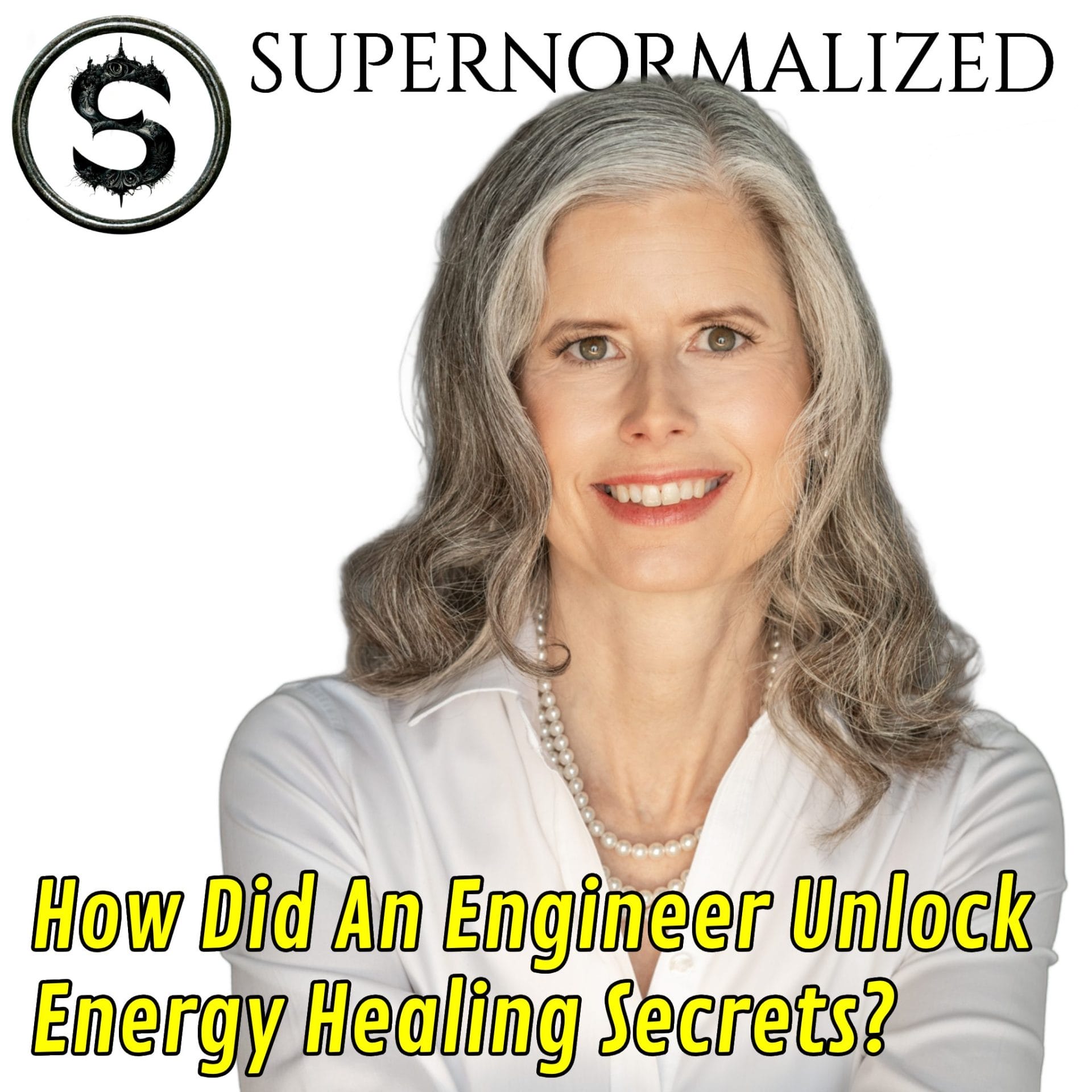
[00:00:02] Speaker A: On this episode of Super Normalized, I welcome to the show Beth Milbrecht. Beth is a energy healer that actually has a way of working with people that she gleaned from her engineering background, which is, I would say, an unusual place to come from. But when you listen to this story, you hear how that informed her and allowed her to dive deep on healing in different sorts of ways. And her work led her to bioenergetics, which she says is the last key in the puzzle for her understanding.
But she also has a greater understanding that she brings to the show of how healing can work from an energetic perspective in relation to sleep stress and. And emotional discontent and how that manifests. You'll hear all that in the show and more, so enjoy.
Welcome to Super Normalized. Beth Muehlbrecht. Beth, you're a bioenergetic practitioner, and you've gone into this path to help people to find their way to healing when the medical system fails them. It seems from what I've seen of your work, it's like when. When people can't find their way, they come to you. Is that right?
[00:01:24] Speaker B: That is right. One of my clients called me a health detective, and I love that because I keep figuring out. And you started with a bio of saying in my profile, a bioenergetic testing practitioner. And that's the last tool that I put together to make it work. It's not the first one, but. But it's the last one. And to me, that was the secret sauce that brought everything I know together and make it easier to help figure out some of these health mysteries that people struggle with.
[00:01:59] Speaker A: I've got to ask the question, though. I find that a lot of people are drawn to a path because they've been through something themselves. And in going through that process themselves, they then discover all these modalities and methods and ways to heal themselves. And then, of course, they want to gift that to the world. What's your story?
[00:02:19] Speaker B: My story is not about me. It really started with my son when he was an infant.
So I'm a mechanical Engineer for over 35 years.
I'm as grounded and as practical as I come.
I've already been to university. I've already been practicing as an engineer.
And when our son was born, as he was an infant and I'm a new mother, he had just fallen asleep. So imagine a baby a few weeks old. He's in my hands, and I have him in my hands. I got it. I did it. He's asleep. I can put him down. Finally, I put him down. In his crib, and he's still sleeping. I'm so excited. And I walk away down the hallway and I had my hands up like he's sleeping.
And I began to feel steel cables between my palms and his little body. What is going on? I have never felt anything like this before. It's like we were connected. And as the world works, as the universe works, when there's something to be learned, it comes. And the little studio down the street that gave massages had a sign up the next week, sang Reiki offered here. And my husband was watching a television program that said all about energy, healing, and Reiki. And he said, I don't know what this is crazy stuff. And wouldn't you know it, children come here to teach us. And my son was saying, hey, mom, level up, because I need you to be more in tune with this.
So I went through, I took the classes, I became a Reiki master teacher.
My intention was really just to take care of my small family. That's it. And so energy work was the way I took care of my family.
And then as my son grew and children get xanthems, which are expressions of growth, like as they're growing their cellular debris, it kind of, you know, there's. There's ear infections, there's aches and pains. And I sought out a homeopath for support. And I was fascinated with homeopathy. And before you know it, I had my own copy of the Materia Medica, and I was studying it, and I had the practitioner kit, and I began to study and become a homeopath. So combined with two forms of energy medicine, hands on healing and homeopathy, that's what I used. And that was really opening my eyes to that there is more to this world than what we can touch and see and that we're all connected. And then when I found bioenergetic testing, which is not a phrase I made up, it's not something I invented, it's been actually around for over 100 years.
Then a couple years ago when I found that that was the missing piece, I thought, okay, with this little piece of technology that. That can supercharge what I know and allow me to do things much quicker, faster and more accurately.
[00:05:25] Speaker A: Well, it sounds like it's, you know, that for a technical person like yourself, then a tool is something you really need. And that universe is like, well, we're going to put that in your hand and then you can start using.
[00:05:36] Speaker A: Really.
[00:05:37] Speaker B: Is the exact right tool. For me, it's, it has. There's Lab grade equipment plus software, and there's a lot of data, and I love data, I love research, and my brain works that really well.
The equipment I use, it's the most highly customizable, so I can customize it in all kinds of ways. And so that works really well for me.
There's so many different ways to go about healing and even doing the type of work, like just basic applied kinesiology, you don't need to use this. It just happens to fit well with my personality and my skill set.
[00:06:16] Speaker A: Yeah, yeah. I'm curious. So you did courses in Reiki and energy healing and went all the way through these other paths as well. Do you actually employ those as a part of your work as well, or is it mainly with this device?
[00:06:28] Speaker B: I do.
[00:06:29] Speaker A: You do. Okay, great.
[00:06:29] Speaker B: Yeah, I do.
[00:06:30] Speaker A: How do they integrate all together?
[00:06:32] Speaker B: Because once you know something and somebody comes to you, don't you want to give them everything you've got? And so the program that I put together uses everything I know. So besides the hands on healing and the homeopathy, I've been a student of health my whole life. I didn't realize this, but I'm really aware of my body and very sensitive.
So I have decades of healing wisdom. Anytime something didn't feel right, I would figure it out, you know? Oh, what? Why does my throat feel this way? Oh, well, there are lymph nodes here. Oh, well, I could. I could help massage my lymph nodes. Oh, I could. What is happening? What could. What is. This whole lymph system.
I just studied and studied.
It's midlife. My hormones are changing. Well, shouldn't I know everything there is to know about hormones? Let me just study with the masters. Because it's my body. I'm not going to outsource this to anyone else. So just decades and decades of doing that, studying with naturopaths, studying with people who know more than I do. And I put that all together.
And so the way I combine it is bioenergetic testing with health coaching.
I also.
My sweet spot is working with people who know that there is an emotional reason connected to their physical symptoms. Because homeopathy is so beautiful with emotions, of course, it treats physical issues wonderfully well, but it also looks at the underlying emotional terrain that is contributing to it.
So I'll use. I call it switching into Reiki mode when I'm identifying and removing trapped emotions. And I'll do that as part of the whole program. And usually I work with clients for about six months and we do testing and then multiple times combined with coaching calls, because there's always real life that has to go along with some energetic work and the bioenergetic testing. The result of that. And here's where the homeopathy comes in. The result of that is a custom homeopathic. So I imprint a custom homeopathic for my clients that has typically over 100 different signatures. And I put them in a bottle of drops and some patches. And so that is custom energetic signatures. Sometimes there's some supplement recommendations if they're really deficient. I don't. I don't sell supplements. I'm not in the business of pushing supplements. I prefer food.
And yeah, that's a little bit of all the pieces. So I do try and put it all together because they all have their place.
[00:09:21] Speaker A: How would a listener, for example, look at themselves and say, well, maybe this issue is an emotional issue. And how would they look at it to be able to say, move forward?
[00:09:31] Speaker B: Well, surprise. Almost everything has an emotional component to it.
[00:09:38] Speaker B: But if you get a kink in your neck and it gets tight, what were you thinking about right before that happened?
The email in front of you, the phone call that you're about to make, Then you know you've got a physical muscle tension problem, and your thoughts are also contributing to it.
So thinking about.
[00:10:03] Speaker B: How your stress is.
[00:10:07] Speaker B: What you're thinking about right before or during when something happens. It's like when someone has a back pain and they say, I was really just bending over to pick up a piece of paper. It wasn't even anything heavy, but they have some muscle weakness. So there definitely is a physical problem.
But then there's some emotional stress, and that tends. We all have an area of weakness, and then it'll tend to settle in that area. And when we get stressed and we can't process everything, it combines. So then we have both together.
[00:10:43] Speaker A: Yeah. And then that plays out as pain and symptoms. And then if they go down to the Western medical path, then they get treated and cut up and all sorts of weird stuff happens.
[00:10:54] Speaker B: Well, if you just submit pain, so. But if you just.
[00:10:57] Speaker A: Yeah, that's right. It's symptom masking. That's. That's the whole. I think the whole Western medical model, it's like, let's just mask it and forget about it.
But that doesn't work in the end. We all know that.
[00:11:08] Speaker B: No, no, it doesn't. And I'm not a therapist, and I don't go into any of these sessions looking to uncover and help people through deep trauma. But however, it is possible to identify and remove unhelpful, trapped emotions without reliving the story. Some people need to relive the story. Some people need talk therapy, some people need more to go with it. They've been through important fundamental things that need support.
And in that case, I refer to a mental health professional.
[00:11:45] Speaker A: Yeah.
So people often then would suppress themselves with medications and supplements, but also do that completely unconsciously. What message would you have for them about getting a greater understanding of why that's all happening?
[00:12:00] Speaker B: So when you have something that's not right in your body, can. We're all connected.
So if you have a pain in your shoulder, it's not just in your shoulder. Unless you had an injury and you smashed your shoulder.
[00:12:15] Speaker A: Physical injury.
[00:12:16] Speaker B: Yeah, if you physically. But if there's something there, you know, that could be related to, to hormones, that could be related to stress, that could be related to.
[00:12:26] Speaker B: A nutrient deficiency. It could be related to some environmental toxins. Like, our body will store things in fat. It'll store things and it'll get packed away in cartilage. So knees and hips and shoulders will bear the burden of that because our body's trying to keep. Keep it safe from us.
So just physical therapy might work for a little while, but we need to figure out if there's something else in your body wants to get rid of it. That's why those old school methodologies of a castor oil pack work so well. You know, anything that's going to get the waste out and bring the fresh blood in is so helpful. And I think things like that might seem time consuming nowadays. It might seem like messy. Like what you want me to put oil on and maybe even mix it with red pepper. Gosh, that'll even get the blood flow going. And then put a cloth on it and go to sleep like that and do it again for a month. Are you serious? No wonder, no wonder. It's so much easier to just go and get cortisone shot or some kind of steroid.
[00:13:40] Speaker A: That's right. Yeah. The quick fix is easier for a lot of people because people are so busy, they think that, okay, well, I'd rather just do the simple thing rather than do the actual work, you know, and the actual work solves it pretty much forever. So what are you up for? You want to hear have a good life, or do you want to have a life where you're just masking things all the time?
So you've actually done a lot of work with a lot of people. Do you have any case Studies or stories that you'd like to share about how your approach made a significant difference in someone's life?
[00:14:07] Speaker B: Sure.
So one of my clients, she works outdoors, she's actually a cattle rancher. She has a very physically demanding job and she is outside on her horse taking care of the steer and moving them around. And you'd think she'd be the picture of health. And instead she told me after we had started working together, her adult children were so worried about her, they were going to have an intervention. They thought something was terribly, terribly wrong.
And after near the end of our six months working together, she got together with one of her best friends. And her best friend said, wow, you look amazing now, six months ago, you look like the walking dead.
And now isn't that something that only a friend could say? She said, we were all so concerned with you and here's what was going on. She was in a toxic relationship, had no boundaries, was being put down every day.
So even though she was eating well and she had tons of physical activity, her relationship, her long term relationship was causing her so much distress. Her cortisol was so elevated, she had gained 20 pounds in the past year before we started working together. Because when your cortisol is high, your blood sugar does not balance.
So she had all kinds of aches in her hips and her knees, which were uncharacteristic for someone who is as fit and as active as she was. And when we started working together, it was support, was getting some boundaries in place.
It was the homeopathy that was all found using the bioenergetic testing that really worked and moved the needle. She found her voice and she decided with our coaching calls that she would just stand in alignment of the truth of who she knew she was. And when that happened, uncomfortable, long term relationship fell away so simply, so easily. It was just not a match for her anymore. She was strong, she remembered who she was. She balancing drops that she was taking helped guidance from me with, to stay true to herself, to remember to eat well and what she should be eating. And she just really turned it around so that when she saw her friend, her friend said, you look amazing. You've got the spark back in your eyes. Her children said, thank goodness we have our mother back.
And that's. She didn't. The weight fell off without even doing anything. You know, there was no dieting needed.
So I would say that that was pretty amazing. And she ended up changing her whole life just by becoming back in alignment with who she was. So it fixed both physical things, the Weight the joint pain as well as the emotional stuff. But if she had been working with a therapist, she had gone to the chiropractor. So she was attempting to do it. It was just different avenues. Nobody was looking at her all together holistically.
[00:17:24] Speaker A: Yeah. Yeah, totally. That's a great story. I often think that we're like a frequency ourselves. And then when we get away from our frequency of what we normally are, all this stuff happens. And it's only natural that it happens, because then you attract other frequencies that match that level that you're at. And then when you do become more in alignment, like you said, the toxic frequencies just fall away. And all the manifestations of those frequencies that are physical, mental, spiritual, they all go to.
So that's great. Okay, so what tools or resources do you offer for those seeking to optimize their physical and energetic wellness? And how can they work with you to achieve their goals?
[00:18:07] Speaker B: So the tools I offer.
Well, the free things that I have. I have a newsletter I just finished writing, one that'll come out at some point in the near future about eye health. I'm in front of the computer all the time, and I know I've improved my eye health with using the Bates method and different methods of palming and swinging and sunning. So I'm always dropping bits of wisdom about things that I've learned in my weekly newsletter.
[00:18:36] Speaker A: I'm gonna subscribe.
[00:18:40] Speaker A: And I need to know eye health as well.
[00:18:42] Speaker B: Eye health. Well, and here's. Here's something that most people don't know. Your eyes are a window into your liver. Your eyes and your liver are connected in traditional Chinese medicine. So if you're facing eye floaters or cataracts, it's time to look at liver stagnation and cleansing the liver. So the liver is super important. It filters everything.
And if the liver isn't happy, then the eyes start deteriorating. But we put so much stress on them with these lights and the computer screens. It's important to also do physical practices of the palming with your hands over your eyes, swinging, which is just moving the body back and forth, and sunning. You know, just go outside morning, noon, and night, close your eyes and gaze up at the sun with your eyes closed. It's so healing.
And then the other way.
[00:19:33] Speaker A: I do a bit of that.
[00:19:34] Speaker B: I have a free quiz that will give you the area that I think you should work on. So it's 10 questions, and with 10 questions, you'll get my insight on an area that should be important to focus on. And you'll get some emails and also access to a private podcast where I talk more in depth.
And if so, those are all areas that might be useful to you and your listeners about learning more about me and my style and getting to know me.
[00:20:10] Speaker A: Yeah, right. Cool. How could an individual create a personalized healing plan based on their body's specific needs, preferences, and resources?
[00:20:20] Speaker B: So if you wanted to do that by yourself, first, take my quiz. It'll give you the system or organ that really needs support. Now, that'll give you one insight. The next thing is to start paying attention. You have to become your own health detective. Start listening to your own body.
So if you eat something and you don't feel well, don't dismiss it. Think about it. Well, what did I just eat? Was it how I ate? Did I eat too fast? Was I gulping my food? Was I eating with someone who's a fast eater? And so I ate fast, too? Was the television or was that on? Or was I scrolling on my phone? And that's why I don't feel good. You have to decipher that.
And then maybe it is a food. So maybe think, well, what was in that meal that I just ate? Should I pay attention to those ingredients?
Another thing is how is your elimination?
Are you eliminating every day? Nobody wants to talk about poop, but it's really important.
It's just as important what you put in your mouth as what comes out of your body that makes it all whole.
So look at that and look about at how is your mental state?
Do you find things to be grateful every minute, every day?
Or is gratitude one of those difficult things that you think you should do because it's supposed to be good for you? If at the end of the night you think of three happy things and those three happy things are hard to do, if that's the case, maybe you're leaning more to the complaining side and it'll be better for you to find things to be happy about. As you explore this with yourself, write it down, and then you can find what areas you should focus on for yourself physically and then emotionally. Those, those are. That's how you would do it on your own, is start looking there and.
[00:22:15] Speaker A: If they get stuck, they come and see you.
[00:22:16] Speaker B: I love working with people. It's, it's, you know, I like to say it took many, many years, even decades to get to where you are now. So I really work with people for six months, and it's sometimes even longer. And it's an ongoing process. I had one client say, when am I ever gonna be in balance?
Like, oh, there is no such thing. We live in a crazy world. There's always things that are being thrown at us to pull us out of balance.
Different things in the environment, things that we see, things that we're listening to, reading family.
It's an ongoing practice. I consider health to be my own personal responsibility. And my encouragement is for you and every one of your listeners to take health as also your responsibility.
Your body knows the most.
So whether I help you to listen to your body and I use my tools to help figure it out, or you do that on your own, it's important to know that your body's always trying to heal and it's your responsibility. It might not be your fault these things might have happened to you, but it's your responsibility to keep moving forward and asking questions and listening and taking action.
[00:23:37] Speaker A: How important is sleep quality when it comes to managing stress effectively in today's fast paced world? And can you share some great tips that people should probably consider considering that.
[00:23:53] Speaker B: Well, sleep hygiene is now a phrase. Who had ever heard of sleep hygiene before?
You know, sleep hygiene is the two hours before bedtime.
So first of all, the best sleep will get you the best health. That's when everything gets repaired. It's when your brain washes itself and prunes and does all the good things with learning, synthesizing, getting that in there. And it's when your body heals.
You're not making muscle during the workout, you're making it during sleep.
So sleep starts. Well, I said two hours before, but no, it starts when you wake up. So you wake up, go outside and see some light. You have to reset your circadian rhythm. So as soon as you wake up in the morning, go get that sunshine in your eyes. It lets you know a new day has begun. We've got that morning sun. If you live in the north and it's dark, or you live in the south and you're at a time of year where it's dark, get one of those lights that you can use that have the right wavelengths to get that bright light in your eyes for a few minutes. Put it in the bathroom while you're brushing your teeth. You don't need a lot of it, just a little bit.
Then midday. Get a little bit of midday light. Next, make sure dinner is done at least three hours before you go to bed. Early. Dinner is super healthy. If you eat late, which I know there are parts of the world where late eating is the cultural norm.
It's just not great for sleep so eat and give yourself at least three hours after you're done eating before you go to sleep. Then as you get in that countdown window, around two hours before bedtime, you want to make sure that your lights are dimmed. If you can have incandescent light bulbs, use those. Otherwise, turn off your LEDs. If you're on a screen, use a flux or some kind of screen dimming program that, that will shift it into red. Or I've got red glasses. I've got some glasses that take out all the blue light so they just look like red glasses. But you can buy any of those things or use usually like night shift mode. Usually that's not enough. It usually is. That's usually still too bright anyway. Once you do that, your screens will look terrible, which is great, get off the screens terrible.
[00:26:26] Speaker A: But you know, you can get actual ones that are color balanced so you don't actually have to lose of the countless.
[00:26:32] Speaker B: So you could do that or you could just do that. And you know what, if you're gonna stay on the screens, read something.
Skip the scary movies. You wanna decompress. You wanna really set the emotional downshift into getting ready. You could do some stretching. You could put your legs up the wall.
You should be.
[00:26:56] Speaker B: If you use any magnesium topical magnesium is super helpful. So you could have an Epsom salt bath or put some magnesium spray or lotion.
Make sure your bedroom is dark and it's cool.
And use an eye mask or earplugs. But set it up to be for sleep. And when it's time for bed, you should be falling in.
The best way to make sure you're ready to fall asleep. Everybody has a different. Whether you're a night owl or an early waker, there's a time when you are ready to fall asleep. If you, you know that if you blow past that and stay up, you'll. Your adrenaline and cortisol will start going again. You'll get that second wind.
That's bad news.
Take that first tiredness and sleep then. And the best thing you can do is make sure that you wake up, wake up at the same time every day within 45 minutes. Keep that cycle the same. Even on the weekends, if you sleep in and say, oh, it's Saturday or Sunday, I'm going to sleep in and get an extra two hours sleep. It's as if you traveled and you changed time zones so you've changed your circadian rhythm. And then it just becomes more difficult to get back into sync for the other days of the week.
Also for that evening meal. It's very popular to have a glass of wine.
Some physiologies can have wine.
My husband can have a cup of coffee right before bed. He has no problem. I know for women the effects of wine on sleep are easily trackable. You can easily feel them.
So if you're going to make that choice, know that it's for a special occasion, know it's for a special reason, but don't do it every night because you're going to see the effects in your sleep. If you, if you. I don't use any of those wearables but if you do use a watch or a ring or anything like that, it'll show. Do you have any good sleep tips from you?
[00:29:05] Speaker A: Yeah, well, I agree with all those. Exactly. And I, I personally use blue light blockers and I do the eat early thing. I mean we usually have dinner at about 4:30 in the afternoon. We find that's perfect. We often go to sleep with the sun. So once the sun goes down we start to feel really exhausted and tired by about 8, 8:30 and we're gone. I mean we can't keep it together. So we just go to bed and just go to sleep instantly. And I have a gratitude practice that I do every night when I'm in bed about all of my life and I can usually tell how tired I was by how far I get through it. And then when I, if I wake up for, you know, for a night wee, then I'll finish my practice then, you know, and then get back to sleep again. And yeah, it's great when you actually fall in line with circadian rhythms. I find too that if you go out late, which you wouldn't normally do, it's the same as if you've been drinking and I don't drink and the next day you feel hungover just from being up so late. And like you said, it's throwing yourself into a different time zone and that doesn't help at all. So we often won't go to events because we couldn't be bothered staying up that late.
[00:30:09] Speaker B: Right, right.
[00:30:12] Speaker A: I understand that the dark room is. Yeah, the dark room is perfectly effective as well. And we used to close our windows just to stop any sound from the street. But where we've gotten used to any cars going past now. So.
[00:30:25] Speaker B: Yeah, that's beautiful.
[00:30:27] Speaker A: It helps so much to have a controlled environment I think for sure. And you know, like you said too, keeping away from frequencies that don't really help you. So don't watch anything that's Going to wind you up before bed because that doesn't help.
And in all, a greater understanding of those things. Why would you want to put those sort of frequencies into your life in the first place? So it's up to you if you want to enjoy those things, but try not to do it before bed.
[00:30:52] Speaker B: That's right. Yeah. Sleep is super important. And it's something that I really protect every year I go away with my college girlfriends and we've known each other for such a long time, 35 years now, and.
[00:31:10] Speaker B: I am the only one that will forego the wine or whatever in the evening. And it's more important to me to have a good night's sleep, especially since I'm traveling and I'm not even at home. So there's already those variables than it is to be in a social situation and just be drinking water, sparkling water. It's super important.
And of course I've known these ladies for such a long time that they know what to expect from me. But it can be feel awkward at times and as you're getting used to it. But it's something that you want to. If health is important, you let in by saying, what role does sleep play? Sleep is very important.
Sleep and digestion are the two most important things.
So getting a handle on sleep means that you're making a commitment to yourself.
[00:32:02] Speaker A: How do you work with clients that you find maybe resistance to energy medicine or have skepticism around holistic practices? I mean, you probably get quite a few of those because they might get sent to you by somebody who's experienced how good your work is. So what happens when you find that you meet with those people? How do you actually deal with that?
[00:32:20] Speaker B: Well, I don't try to convince anyone. And actually on my booking call form, I ask, have you experienced any form of energy medicine? And there's a checkbox. Have you experienced acupuncture, which is a form of energy medicine, or hands on healing or, or muscle testing or homeopathy? And then I also ask them, are you okay with remote energy work? Which my work is remote. I don't need to see clients. And that gives them a sense right away, well, this is the direction we're going. But I'm not in the business of convincing people. If someone is interested, it's usually because they're tired of the trial and error. They've already tried the traditional route, they've tried a few alternative practitioners, and it's not working. And they know that they're meant to feel better. They know that there's a connection between things. And usually at that point, there's no convincing needed. They're saying, if you can help me and you've helped these other people, I'm okay with it. But no convincing. There's so many different ways to heal. There's so many different pathways.
Nobody has to pick my way.
[00:33:31] Speaker A: Yeah, I watched a lot of your shorts and pretty much all of them. You say, if this isn't for you, then cheer no out.
[00:33:38] Speaker B: It's true.
[00:33:39] Speaker A: Which is fair enough. I mean, you don't want to waste people's time, but you also want to help the people that are actually ready to be helped. What advice would you give for the people who are seeking to integrate energy healing into their existing medical treatment plans?
[00:33:53] Speaker B: So energy work.
[00:33:56] Speaker B: Goes along well with any traditional approach.
So acupuncture goes along with any traditional approach. Hands on healing goes along well. Homeopathy also goes along well.
So bioenergetic testing is a way of.
It's a form of digital muscle testing. It's a way of asking questions, getting answers. And then I use that to create custom homeopathics. All of these can be layered together. And to be frank, people do continue traditional methods along with working with me. People still go get their annual physicals and get their regular blood work and go see whoever they want to see because they feel secure in that. And one of my best friends is a medical doctor. There is so much respect I have, and yet there's a lot that she hasn't learned. She wasn't trained in that.
She's a great surgeon, but she's not. She doesn't know the things I've learned because her training was in a different area. So, gosh, I definitely want her on my team should I need her service. But there's definitely many alternative therapies that go along very nicely. One of my clients is a medical doctor.
She's an obstetrician and gynecologist. So she delivers babies and she helps women with their reproductive health during the pregnancy phase. And yet she herself struggles with endocrine and hormonal imbalances and muscle fatigue and aches and pains. And we were talking, I said, maybe you know this.
And she said, put her hand up and said, no, just assume that I don't. She knows what she's been trained in and she knows what she's missing.
So even she was willing to work with me because she hasn't gotten relief from the standard practices she's been through.
So energy medicine, bioenergetic testing, all of the things I Mentioned go work really well, and you don't have to choose between them.
The one thing you do have to choose between is whether you will suppress symptoms or you will figure out what they mean and allow them to come up to be healed.
And that's an important distinction. So if you are going to take certain things that will make the pain go away, suppress the inflammation, which is a healing response, then know that your body is going to have to work harder and energy medicine will still support you, but you are suppressing the healing mechanism of your body. At the same time, other practices, like what I'm doing, is trying to help and bring them to the surface and out.
[00:36:52] Speaker A: Okay, so I just wanted to. I was thinking about this before, but I didn't get to it. But considering your understanding from engineering and all of the work that you've done, are you formulating any of your own sort of theories around how all this works?
[00:37:08] Speaker B: My understanding of energy is unique in that as an engineer, I understand electricity.
[00:37:17] Speaker B: That we know and see that is wired into our homes and buildings, that is generated from a turbine at a power plant.
And I also, for a long time, I've really understood the energy that is in the ether all around us, that is surrounding our bodies, that is powering our bodies, that even if we just take our hands and put them together and bounce them back and forth, you can feel that squishy marshmallow in between your palms, and that we are connected through that electricity, just like standard medical testing can measure the electrical frequencies of the heart of the brain, everything else is built into our biofield.
So I formulate that it's all the same energy, different forms of it.
We're all connected in that way. And I don't pretend to know how all of this works. Even the technology that I use, I don't 100% know how it works, but I do know that our bodies are designed for healing.
And every symptom that comes up is a message saying, help here, look here. It's a sign. And if we pay attention, it's inside of us. And I'm just a translator. I'm just trying to ask the questions. But eventually we could all do this ourselves. There's just so much noise that our senses are dulled. Paying attention to the world we live in.
[00:38:56] Speaker A: Yeah, I think our natural state is a lot more expanded and a lot more aware and a lot more intuitive.
And that's sort of shut down in our modern society because of the busyness that we all live in and go through.
So finally, what's your vision for the future of health and wellness and how can we all come collectively create a more holistic approach to medicine and self care.
[00:39:18] Speaker B: I think the future, it is my hope that everyone finds that healing is your birthright, that healing is inside of you and starts to ask questions and finds out that if you get a cut on your hand, you don't have to do anything, you don't have to think about any healing. Your body just goes to work. And it's like that for everything. And my vision is that there is a paradigm of trusting our bodies, asking questions, and knowing that we can look to balance ourselves, that the teacher is inside of us, that there are experts who know many things, but they are only guides. And we ourselves are the ones who can discern what's out of balance and what we need to be into balance. And that includes emotional, mental and physical. We really can't separate them all.
So when those are all together, there's just a glow because you feel your body feels great, but you're thinking clearly. And there's this internal satisfaction, internal joy that is not rushing, not seeking. It's just content with who you are. And you go about knowing, hey, this is how I'm going to live my day. And at the end of the night, just like when you do your gratitude practice, you're grateful, like, wow, my body really supported me today. And each day becomes very purposeful in that way.
So by inquiring and looking within, I think we'll make different decisions. We don't need to throw everything out, but we need to look elsewhere, including inside.
[00:41:16] Speaker A: That's a perfect message to end on. Thank you so much, Beth. That was a really good interview. I really appreciate all you're sharing around your understanding and your experience of the world from a health perspective.
It's really good that you're doing this sort of work and I'm sure that a lot of people out there would love to reach out to you. So how can they find you?
[00:41:35] Speaker B: The best way to reach out to me is go to my website.
It's yourhealthwithbeth.com and that's where you can take the free quiz that I mentioned before. And that's the best place to get in contact with me.
[00:41:49] Speaker A: Excellent. All right, we'll end the show there. Thank you very much for your time, Beth. And yeah, I'll put that link down in the show notes. And yeah, thank you so much.
[00:41:58] Speaker B: Thank you, C.J.
[00:42:02] Speaker A: It was lovely how Beth framed her understanding at the end there of the future of energy medicine and how that's all going to work. And I've enjoyed talking with Beth because it's also helping me frame a greater understanding of this thing that seems to be evolving in my own head about my own head. What's this head thing? My own experience of the world and frequencies and how being in alignment with the pure frequency of ourselves makes that also flow into the alignment of our whole lives.
And yeah, if you've enjoyed today's show, remember to like and subscribe. And if you're on a podcast app, please give me five stars. And I hope you've enjoyed. If you enjoy this one, you'll enjoy these ones, too. If you're on YouTube, and if you're on a podcast app, have a search around. I've got so many really good episodes on energetic healing and how that can work for you. All right, bye for now.
[00:43:23] Speaker B: Sa.