Episode Transcript
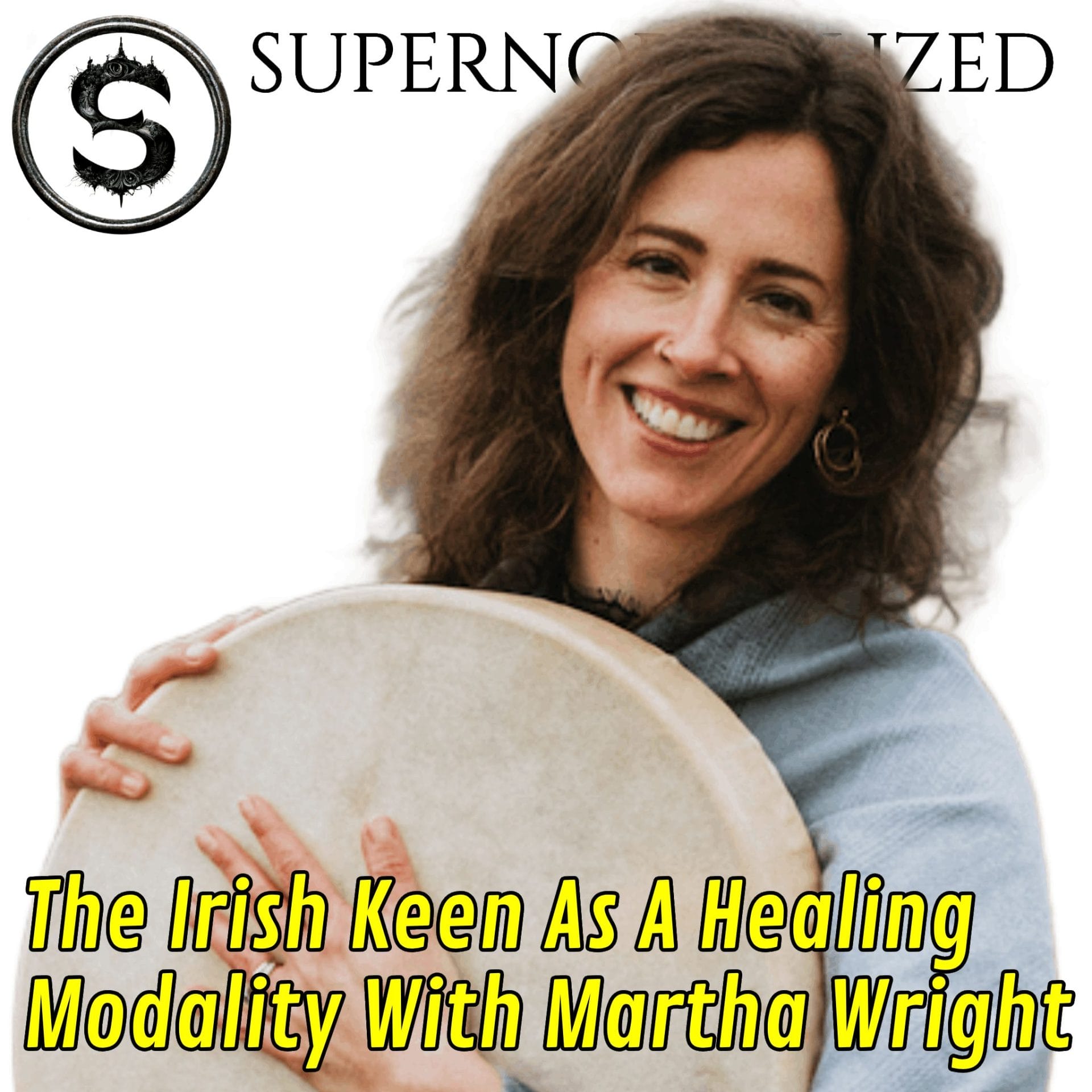
[00:00:00] Speaker A: On this episode of Supernormalized, we meet Martha, a shamanic medicine woman, healer, teacher, keeper of the Irish king. Martha brings a rich blend of breath work, reiki, cacao, akashic, records, Celtic practice and ancestral healing into a deeply grounded conversation about grief, rage, embodiment and reclaiming personal agency. At the heart of this chat is the Irish Cane, an ancient sacred practice that uses breath, sound and movement to help the body release what has been held for too long. Martha speaks about it as a powerful medicine for our times, one that can help people remember their inner child, inner wild self, and reconnect to divinity from within. She also shares how work supports healing that is personal, practical, and rooted in self trust rather than dependence.
Stay with us as we talk about what keening really is.
Stay with us as we talk about what keening really is, how it meets the body where words cannot and why returning to our own voice can be a radical act of healing. If you've ever felt the weight of unspoken grief, wondered what embodied spiritual work can look like, or felt the need to reclaim your own power, this conversation is for you. Keep listening for Martha's perspective on sacred grief, ancestral patterns, and the beauty of remembering who you are beneath it all. Welcome to super Normalized Martha Wright. Martha, you use the Irish Keen as a part of your practice to help people to heal. I'm eager to hear how that works and what that means for you and how you came to this method to help people.
[00:01:42] Speaker B: Well, thank you so much for having me, first of all and for inviting me with that question because of course, as a true Leo, I love talking about myself. So.
Perfect.
[00:01:53] Speaker A: Nice.
[00:01:55] Speaker B: So the Irish Keen is.
Well, maybe I should introduce myself a bit more first. I know you've, you've done that, but.
So I am a shamanic medicine woman. And what that means is I have a life, soul calling to be of service to the community. And what I mean of service is means to be as shaman is to be the bridge between this reality and non ordinary realities or the unseen worlds, and to traverse to journey and into those non ordinary realities to find information, to retrieve soul pieces, to help healing, to figure out what does, what do the spirits of the land need to be happy so that the rain will come and the harvest will be good, historically speaking.
And so, you know, without going into much of a history lesson, a shaman, a modern shaman, still very much does those things, but it tends to be a lot of the work gets outsourced to like lawyers and priests and therapists and counselors. Right.
I'm a Healer in that way, but also a seer and a conduit for the divine to work through me to connect with the individual, my client or whoever I'm working with to help them feel that divine connection in themselves.
So I am not above or better than anybody. I just have a different access point that through me becomes their individual access point as well.
Unique to them. Different. Right. But. But I am a conduit for helping that to become activated.
As a medicine woman, I.
So I learned core shamanism. I learned shamanism through Egyptian mystery schools, but core shamanism predominantly, and then as a medicine woman really came out of me when I started studying through my ancestral lineage with Scottish and Irish Celtic heritage. And. And a medicine woman is going to be someone who is less structured, more in tune with the allies of plants, of the elements, of the seasons, of animal messengers and animal medicine as well, and really letting spirit work through. And so if you think of shamanism as kind of this like core practice, very.
Not hierarchical, but absolutely passed down, you know, from elder to novice and trained throughout a lifetime, you know, the medicine woman is. It's in the soul, it's in the body, and it just comes up and out. And so the. It's a very feminine energy to the structural masculine. So the two balance me out.
But the medicine woman work, like I said, came about when I started studying the Celtic spirituality and Celtic practice as a part of mine.
And it was in there that I had this soul awakening. It was one part really important to connect with my ancestors, but another part of me has this innate connection to death, the death process, to helping people when they feel like nothing can help them. Where they've tried doctors, therapists, friends, counselors, priests, and they just are feeling like something's missing. And they're like, you're kind of my last hope, which, you know, I don't take offense to at all. I think that's lovely. Thank you for thinking of me, and I'm honored. But.
But they show up to me because they don't know what else to do.
And when I say that not everyone is at that point, but.
But there's this point in the death process where we realize nothing is going to be the way it was.
Everything is changing.
What do I do about that? Who does that make me? What does that mean about my life?
And how do I navigate this? And in a hyper modern world where we are so, quote, connected but we're really vastly alone, how do we navigate this wild unknown without the elders of the community training and teaching us, without this Myths and the stories, teaching us and holding us without connection to the seasons and the land, to our ancestors. How do we do that?
And it's terrifying, but that's really in a neat calling for me is to say, I am here and I will stand alongside of you and I will, to the best of my ability, guide you through this dark unknown to find the answers you're seeking, to help adjust to the change that is happening.
And the Irish Keen, and I'll talk a bit about it specifically in a second, but the way that comes through me is it is about helping people navigate the deaf process, to grieve that which never happened, or to grieve that which did happen, but is no longer continuing to release frustration about the dreams that were so desperately wanted but were not meant to be.
And so the keen is this ancient Irish tradition, or it's also Scottish, to be quite fair, but it's this ancient practice of grief tending, where historically, if someone died in the community, you would have a woman, typically three women, but they'd be known as the mana kinsha or the women keeners. The Mana Kinsha, the keening women, would come to the wake, the three day wake, and they would wear all black, have black veils, and they would start to sing and they would cry and they would sing these laments, these songs, and they would evoke the grief from the community, whether through the song or through a kind of a performative action of like, you know, really getting into it, pulling their hair. Oh, John o', Malley, why did you have to go? You know, again, my accent's awful and I'm sorry, but, you know, they just would really throw themselves into it because they were feeling the. The energy of spirit, that is the undertaker, if you will, the aspect of spirit that is saying, I'm here to collect the soul and bring them to the other side.
They were working in tandem with this to say this, this person is ready.
And in order for this person to truly go, we as a community have to let them go.
So let me call up that mourning, that sadness, that anger and frustration, resentment, whatever, let me call that up out of the body through my song, through my motions and words, to cleanse you, for lack of a better word, but to help you liberate your body from those heavy emotions. So that way when the wake is done, we all can move on and life can continue as it needs to do.
And so Keening is honoring the death process. And the way I practice it is quite shamanic in that it's not formal singing that I would perform at a funeral.
I don't think anyone would wish that on anybody, to be honest. My singing voice isn't that great, but it is much more shamanic in that I let the aspect of the Merigan, the goddess of death. Her name is five. She is associated with the banshee or the banshee, and she's associated with grief, and she's associated with keening. And she. She moves through me and guides me and sings through me so that my client, whether it's in person or virtual, whether they're on the table or we're in a group circle, no matter the situation, she. She guides me with the sound, and then that sound works with the individuals as they need, because it's not for me to tell them, oh, you've got this, and you need to do this. That's not right. As a healer, as a shamanic medicine woman, I am a conduit for spirit, and I hold space for people so that they can connect with spirit, and. And then they get what they need at that time in their life.
[00:09:41] Speaker A: That is a huge and comprehensive summary with so many threads in it that we'll now dive into.
What drew you to all of this in the first place? I mean, did anything happen in your life? Would you have, like, a normal life? Because a lot of people I speak to say, well, I was going along. Everything was normal. I was a normal person. And then, boom, you know, spirit turned up and changed everything.
[00:10:05] Speaker B: Well, I thought I was a normal person. We'll just say that I think we're all a little abnormal.
Yeah, I. So my favorite story to share was that when I was about 7 years old, my dad worked for the US State Department. So we moved a lot growing up, and we didn't move until I was just about seven. And when I was seven, we went to visit Kathmandu. We live in Southeast Asia. We went to Kathmandu in Nepal. And we walked into this Buddhist temple. And, you know, it's 1992, I think, 91. And, you know, it's just filled with tourists and loud, loud, loud and clicking of the cameras back in the day. And I, like, blinked, and it was so slow. And I opened my eyes, and everyone was gone. And it was me and, like, 50 to 70 monks sitting in rows, chanting, and, you know, in front of this giant gilded statue of the Buddha and candles. And I said, oh, I'm home.
Like, I felt like, oh, thank God I made it back. Whew. You know, that's how I felt. And then I blinked again, and all of a Sudden, the tourists were back and my mom was there, and she said, what did you say? And I said, I'm.
I'm home. She goes, come on, we gotta go find your father. And off we went. And I just thought nothing of it because I was seven, you know, what do we do with that information?
And then, you know, more travels and kind of various energetic experiences without really knowing what they were. And around 15, I've had enough of these energetic experiences where things just felt weird or things that weren't there were there, and I didn't know how to explain it. And I come from a long line of seers and healers. So my mom, line nurse, hairdresser, which I don't care what anyone says. Those people are absolute healers in their own way. People who hold space, right?
And then my father's line comes from a long line of seers and pastors and priests.
And so it's in the blood whether or not anyone wanted to acknowledge it in my ancestry. So at 15ish, I Google or. Sorry, Google wasn't around yet. It was ask Jeeves if you remember that. And I said, and you had to do, like, the word plus word, but keep it concise. So I said, earth plus spirituality, question mark. And they're like, hey, you're a witch. Congratulations.
Here's some books. Enjoy. And so I remember I got the books from the library, and I was like, this just doesn't feel right. Like, it just.
It wasn't right for me. It's not saying it wasn't right, but it's not right for me.
So I got kind of freaked out by that. And then I prayed to Jesus, and I was like, all right, look, it's been a while since I've been to church. Really sorry, but could you, like, help me out?
And. And he. He introduced me to a woman who then later in my quarter, life crisis, her mother. I was super depressed. I didn't know what I was doing with my life. You know, classic 20, you know, mental crisis, emotional crisis. Her mom did Reiki on me. And it was in that. In that session that this inner wild woman came bursting out of my solar plexus. Like, she looked like an angry cave woman.
And my friend's mom said, I saw a lion jump out of your stomach. And I said, well, I saw this murderous cave woman come out, and we need to call the cops. What is happening? You know? And she was like, I think that's important for you. And I was like, okay. And so I sat with that, and I tried diving into some new Ageisms to understand all the energy work. I became a Reiki master myself.
The new ageisms didn't fit either.
But to answer your question, I had a very average life. You know, I. I had a happy, loving family, but we had our troubles and we had our complications that caused, you know, some semblances of. Of teenage trauma angst. Right.
We had an abnormal life where we moved all over the world, and that had its beauty and its. And its challenges.
I also, as a young woman, experienced surviving sexual trauma.
And unfortunately, that is far more common than it absolutely should be.
So it's like, yeah, I had a totally average life, but not at all. And throughout is dotted these experiences that were so not, quote, normal.
But I didn't know. I didn't know it wasn't normal to think that I should do anything with it.
And then now I realize those were the moments that spirit was trying to call me to work, to say, hey, remember, because we got. You got things to do. And I just didn't get the. I didn't answer the phone quick enough, you know, and then it took me getting chronically sick in my early 30s, and it was all around my throat chakra, which is honesty and truth. Right? And. And the doctors were talking surgery, and. And no more antibiotics because you're incoming resistant. And.
And I just. I panicked. And I again sat at my desk and I just prayed, and I was like, what. What is it? What am I missing? And I heard my. What I thought was my coworker say, you need to become a shaman. And I turned around at the office, and there was no one in the office. And I was like, oh, my gosh. Like, I literally just heard someone talk in my ear. And that's when I was like, oh, no, that's not.
That's not normal. Okay.
So then I. Google was around, and I said, hey, Google, what's a shaman? And sh. And Google was like, oh, Queen, it's this. And I was like.
And all of those moments made sense, and I didn't look back.
[00:15:45] Speaker A: Wow.
So you had a spirit come to you to wake you up?
[00:15:51] Speaker B: Yeah. Yeah. I mean, they really were knocking on the door many times, and I was just, like, eating my snacks. Like, I just.
I don't really know what you want. Bye.
I was a bit of a. Bit of a dull, dull sounding board, but now I hear them loud and clear.
[00:16:10] Speaker A: Yeah, I think that that happens for a lot of people where you just don't want to actually, like you said, pick up the phone because you don't know what's going to be on the other end.
[00:16:18] Speaker B: Right.
[00:16:18] Speaker A: You know what I mean? It's. Yeah, yeah. It can change absolutely everything.
Sorry, go ahead.
[00:16:27] Speaker B: No, I was gonna say, and to your point, like when it, when it does start to change, what else does it change? You know, I think that's one of the biggest fears around people opening up to the concept of shamanism as something not bad or something acceptable as actually the most ancient way of understanding God or spirituality.
Because if we start to move out of the structural disciplines in place in our modern world, that tells us how you access spirit, how you experience the earth, how the earth can experience you. You know, when we start to break out of those systems that are in place, it makes us say, oh shit, if I had misgivings or misinformation or misguidance around this one thing, what else, what else is going to break open for me? And I think that's, that's something that keeps a lot of people from truly receiving and answering the call.
[00:17:26] Speaker A: Would you say then that this calling that happened to you, that you use keening with others is a path to right relation with the self and your own life?
[00:17:39] Speaker B: Absolutely. The cane is one of the most amazing medicines because it's, it is breath, it is movement and a little bit of sound. It is a guided journey into the body. So it is completely present in the body through breath and movement and sound and permission.
Because we believe we need to get permission from the outside in order to be our authentic selves.
Permission granted. Because in truth, when we breathe and we go in the body and the goddess, that energy of the king, that frequency is in the room with us, holding us.
It is like a psychedelic experience without taking any plant medicine.
So it can be incredibly intense. Because what we're doing is we are finding our inner wildness underneath all the layers of conditioning and fear or doubt or any whatever it is, we're finding that inner wild self and saying, I see you and I can't unsee you and I, you're going to come home with me now.
And what needs to get released from the body in order to do that? And it is so not a mental experience. It is incredibly somatic and embodied. And so to release all of that and to make space for the wildness to be remembered in the body, it is incredibly empowering and wild. And not to use wild too many times is incredibly empowering and kind of ground shaking.
And it's life affirming because it's allowing that wild self to come back online just A little bit every time or a big step in one time.
And what I mean by wildness is it's not about like, you know, middle finger to the man and like, burn a grocery store. Like, that's not. That's just reckless.
Wildness is recognizing the ways in which our authentic self wants to be expressed.
Wildness can also be taking a weekend at home, turning off your phone and reading by the fire.
Wildness is honoring the self as the self needs without letting expectations of the world and of others stop us from honoring the truth within ourselves.
[00:20:06] Speaker A: Yeah. Made me think. There we were talking about all of that wildness, that parts of ourselves that get shuffled off into the bag of shadows that we all hold from social conditioning and from traumatic events.
That wildness is a way of actually accessing those and saying, look, it's okay that, that. That was actually a part of your experience, but it's okay to be you and who you are.
[00:20:34] Speaker B: It is. And in that shadow, that shadow realm within ourselves is just. It's where so much woundedness is held. And I think we tend to associate it as bad because no one wants to feel sadness, no one wants to feel rage, no one wants to feel regret unless they're using it to get themselves something and manipulating a situation. Well, I'm going to use this rage to tell people what I feel, and they're going to do what I want. Right.
Like, that's. No, but so rarely are we like, yeah, I want to wake up pissed off today and spend the whole day really rageful. Like, no one does that. So we shove it in our little bag of shadows, like you said, and we avoid it.
But what else is in there are all those little beautiful pieces of our younger selves that are stuck in there with that rage or that sadness or that resentment or shame or repressed joy and pleasure, Those little bits and pieces of ourselves that from those original wounding moments are stuck in there too.
So it's worth opening the bag, it's worth keening, it's worth exploring and somatically releasing and healing energetically through the shadow to get those pieces of ourselves that need to come home so we can be more embodied in our wholeness.
[00:21:49] Speaker A: Yeah. This is the path to the pure, authentic self and self expression.
[00:21:54] Speaker B: Yeah. Exactly.
[00:21:56] Speaker A: How do your many trainings and traditions come together in your.
[00:22:00] Speaker B: I'm kind of. I'm kind of a hodgepodge. I'm like. I'm like the hamburger that had the ketchup and the mustard and the pickled sauce just shoved together.
It's Just like there's really, you know, so anyway, that was a weird metaphor, but tasty. Um, but so I think the Egyptian mysteries I, I think was a way in which I rediscovered journeying and rediscovered the other realms and my spirit guides.
But I really don't do too much with Egyptian mysteries anymore. Core shamanism is what took that which was remembered from past lives and in my, in my body, in my soul, and gave it foundation and gave it roots into the, with the earth, into earth practice and earth presence.
And then from there the Celtic stuff kind of brought all that was rooted in with the earth and brought it into a flower.
So it was like the Egyptian mystery showed me, hey, here is land.
Core shamanism gave me seeds to put in and start to grow. And the Celtic work kind of gives it bright light.
And how that physically looks is like in a session.
It starts very classically like a Reiki session. You're on a table or you're in your own space. And I begin by channeling this energy and I channel energy through me and into your body.
And then it becomes a little bit more shamanic. Spirit starts talking, my spirit guides. And then oftentimes, in case anyone's curious, curious Kuan Yin, who is the source of Reiki as I teach it, who's the Bodhisattva of compassion in the Buddhist lineage, she comes through Christ consciousness and Archangel Metatron are awesome. They come through. Sometimes the Merigan, who is my Celtic, the goddess ally, and sometimes Bridget, who also works with me with breathwork, as I'm a breathwork teacher as well. And so these in. And sometimes other deities will come in or animals and plants, right? Elemental allies like water and fire. So these different expressions of God and spirit come through. And that's really shamanic, right? And I'm journeying into the body and getting little pieces, moving things, etc. And then the medicine woman work with the Celtic stuff kind of manifests like moving body parts. Now, whether, if it's in person, it's always, always consented, always consented upon and constantly asked for consent. And it's always gentle touch, but it's very gentle touches, like maybe moving an ankle or maybe bringing the wrist to the side. And just. It's always very subtle kind of myofascially movements.
And that is all, that is all the goddess, because she is saying, hey, the body is holding this here and we need to move it. And when I'm doing that virtually, I will feel myself manipulating the body. And I'll also say, like, hey, I'm moving your shoulder. If you could please just reach forward. Or if you could bring your arms back. And I will tell them, okay, now breathe through the chest. And so they're doing it themselves. And then they're like, whoa, what is that? And I'm like, okay, well, this is what's happening. But it is fascinating. So I think all these tools in my toolbox just kind of wove together into just practice. And some modalities will come in for some people and activations will come in for others. It's just based on what the person needs.
[00:25:31] Speaker A: I've seen you describe that some of your sessions can be a little psychedelic inexperience for people. Is that because of the deep breath work that you put into it?
[00:25:41] Speaker B: Well, so the breath work is not constant throughout. No, the psychedelic nature of it is, yes, the breath work kind of weaves in and out as is needed. But the psychedelic aspect of it tends to be when there is a significant soul retrieval, because when we have. So for those who may not be familiar in. In modern psychology, you can kind of associate soul retrieval with disassociation.
When we experience trauma and we disassociate from our body and act as like a third person viewer of our own situation as a way to survive the trauma, physically survive it.
And so, shamanically speaking, that aspect of disassociated self becomes a soul piece that is then lost. It's been torn away from the fabric that is your whole soul, and it is stuck in that memory.
So as I've already kind of explained, we move through whatever blocks are coming up. We work through gaining trust, and we. We listen to the body and spirit guides. And, you know, a lot of times people's power animals will show up, and we go back to the memory and we witness it. Now, whether or not the client needs to know I'm witnessing, I always ask. And sometimes I'm like, okay, this is what I'm seeing. But there are some people, and not often, but there are some who I. They. Spirit's like, you can't tell. You cannot tell them that you've seen this, because it will break them. Because they are so convinced, for whatever reason, that they're past either is completely blacked out or that their secret is so safe with them that they don't ever want anyone to know. Fine. It's not about me, right? My sessions aren't about me. It's about the individual.
So I listen to spirit. But we go back and we witness the story and we acknowledge and we help to ask that Soul piece. What do you need to break free?
What do you need to come back home to the present here and now?
And so we work with that soul piece and energetically untangle it and. And neutralize through alchemy, the memory and let that go and bring the soul piece back to the modern time, back to here and now in the session. And then we say, okay, like, you know, what do you need to trust this now version to come home? And we address that. We. We make it happen. Sometimes it's ice cream, you know, and just like a little sit and rest on by a poolside. I know it sounds silly, but after holding some pretty heavy stuff for decades, it's kind of nice to sit by the pool with an ice cream, you know, just have no worries.
So, you know, energetically speaking, we help them receive that till they feel like I'm ready and then they have a new job. What's your new job? Well, I was carrying fear. Now I want to carry curiosity. I want to be curious. Or I held abuse and the fear of abuse for so long. I just want to enjoy play.
Or maybe I'm just so tired, I don't want a job. I just want to sleep. Okay, you got it. And then we bring them back in the heart. We reweave them back into the soul. And when that happens, for someone to have lived years, decades, with a part of their. The light of their eyes is their soul, right?
A piece of that light has been. Has been missing for a long time and all of a sudden comes back. But we are more in our body.
And so colors are brighter, tastes are stronger, sounds are louder, and it's exciting and also a little overwhelming. And so when I say things can be psychedelic, that's really what I mean is it's like it changes us. It completely changes us, but for the absolute better.
Because we're able to be more embodied, be more present, hear our soul's truth more. When we have to ask ourselves, what do I want? What do I need? How should I respond to this? We are more genuinely connected to do that in, within, in a way, with agency.
So it changes us for that forever, but it changes us for the best.
[00:29:39] Speaker A: What changes do people often notice after working?
[00:29:43] Speaker B: Some people are just like, I just don't feel bothered by the same things anymore because they've released that attachment to whatever that wounding was or that frustration that's gone.
Other people I hear a lot of, I just feel calmer. Or I want to go. I need to go explore. I want to do these things because that wildness within them, that that self is more present. They're like, let's go live, let's go be in a new fun way that, that activates and excites us and helps us grow.
Other people, the keen actually kicks off a complete overhaul, meaning a complete death process.
Marriages crumble and jobs are left and a whole new life becomes possible because they realize, subconsciously or otherwise, that what they were doing was patching together something that was ready to break.
And once they keen and they let that, that wild self come back in here, they finally have the courage to put down the plaster and say, I can't keep this together. I can't do this all by myself.
Now, some marriages recover, right, because it's about equity and building that equality and sharing. But others, yeah, there's. Others don't. And I'm not saying all marriages do. Like, I have a perfectly intact marriage. But, but these are just examples. I mean, it just depends on how have you been living your life? What have you been engaging? What have you been avoiding?
What needs to be witnessed, what needs to be embodied?
And more often than not, more often than not, what people report is a sense of clarity that they don't feel burdened by the emotions that they had been feeling and holding. They don't have the attachment to other people's acceptance or validation. And so they just feel clear and calm and they're like, oh, it's like a good thunderstorm. It just feels clear and calm after.
[00:31:54] Speaker A: How's the keen different from talk based healing processes?
[00:31:59] Speaker B: Well, first of all, there's no talking in the keen.
So that's already a big difference.
There is absolutely no talking. We get out of our mind and we get into the body.
And so it is different because, well, one, there's no talking, but two, it's about feeling, not thinking. It's about expressing and not, and not conceptualizing or trying to understand what we're, what we are feeling. It's just feeling it, to let it out.
And so it is somatic, it is physical.
You know, some people will be completely still wrapped in a blanket. Other people will be thrashing on the floor. Some people will be doing cat, cow, kind of yoga moves. Whereas other people will be up. You know, not everyone stands. And when they do, I tend to hold, help hold space so that they don't fall, but they'll be up jumping and expressing themselves. Some people may cry, some people may sing, some people may chant or speak, whereas others are completely silent. It is absolutely 100% different for each individual and it is always a little bit different between different keens. No two keens are the same.
And so it. It's.
It's what is good about it. Obviously, it's good. But what's different, especially from talk therapy, is that because it is entirely from the body and it is entirely from the soul's energy in the body.
It has nothing to do with story. It has nothing to do with identity or labels and everything to do with just being.
And so it frees us up to eventually understand some sort of narrative that we can put around it for our brain to make sense of what happened.
But a lot of the times, the experience itself isn't something that we can totally make sense about.
[00:34:00] Speaker A: In your experience, why do you think so many people struggle to access their own feelings safely?
[00:34:08] Speaker B: There's quite a few reasons. Right. So if we break it down to ancestral and familial conditioning, how were your parents around emotions?
How were your caretakers? If you didn't have direct parents or grandparents or teachers, were you allowed to have feelings?
Were those feelings given names and attention to understand them, why they came up or where they come from? And if you don't know why or where was it okay, and then. So you think about that already.
Layer one, layer two.
What is your. What is your community? What is your society, your culture saying about emotions?
Are you allowed to have them? Are you allowed to feel them? And if you are allowed, which ones are allowed to be felt and which ones are not?
You know, in our modern American culture, rage is like the new currency.
The angrier you are, the more important your voice.
No, that's not true. But that seems to be where we've come to culturally, with social media and trolling and canceling and yelling and just.
It's absurd, because rage and anger is just the surface.
If we don't ask, where is this coming from? We never get to the real thing. We just stay angry.
So culturally, what are you allowed to feel?
When are you allowed to feel it? How are you allowed to feel it? These are all very important questions. And are going to be different based on one's upbringing and where they're from?
And then is there a religious aspect is too? Are you a religious person? Did you grow up with a dogma or an institutionalized practice that has its own code of conduct for emotion or expectation of what a man or a woman or a queer person is or isn't allowed to be or do?
And so when we think about all of these layers of expectation and of conditioning, or rather teaching on how we're supposed to feel in our own body.
It's no wonder then when we do have a feeling that, that we respond to it with judgment, with shame, with embarrassment, with avoid aversion or avoidance, that we say, oh, if I'm not going to cry, I was in a car accident, I'm fine, I'm fine, it's fine. I don't, I'm not going to let anyone see me cry. Your body experienced a trauma. You can cry or you can shake out, right? But we tend to absorb and then bury. And so when you ask the question really well, because you asked to safely express these emotions, we can all tap in and say, I can label this emotion with my mind, I can label this, I can make sense of it. Of course, this was it and this is what it is and da ba ba.
But to safely feel those emotions and let it out means we have to feel safe in our body. And so many of us, because we packed so much crap in there, we, we don't feel safe in our bodies. So we externalize a lot of our comfort, we externalize a lot of our validation, a lot of our praise or et cetera. How can I create comforts out here so I feel safe in my body, quote, quote, when really I don't feel safe in my body? And a lot of the times that comes down to like, you know, ways in which we can.
It was, you know, retail therapy, right, or medication or whatever. And I'm not judging these things, but they are band aids. They aren't addressing the core problem.
So to feel safely feel in the body, we have to start with acknowledging that we don't.
And then we have to sit there and say, what do you need to feel safe?
Because I can hold space for someone non judgmentally open and radical acceptance with complete compassion and the wisdom to say, I don't have your answers, but I'll sit here and with you, help you find them within yourselves.
That's a part of that permission to take agency back in oneself from externalizing and saying, okay, I must. If I have the answers in here, then I get to be an active participant in my own journey rather than a recipient of what my journey's supposed to be, as I'm told it is, right? We get to be an active protagonist in our own story and that gaining that agency back is incredibly crucial because that's the beginning of being able to say, what do I need to feel safe in here? What do I need to trust myself to let these things go and not just to know What I need, but to do it and to give it to myself.
[00:38:45] Speaker A: Yeah. Really wise shaman, which. That I know of, brings that all back to a greater understanding of what is mine to do.
[00:38:57] Speaker B: Exactly. Because we are all connected. And the more we do the work in ourselves, the more we make space for other people to do the work in themselves.
[00:39:07] Speaker A: Yeah. What changes when someone stops looking outside themselves for healing?
[00:39:12] Speaker B: Oh, everything.
We begin to remember that we are an embodiment of the divine. Not because that makes us a goddess in a body. Look at me like, I'm going to lay on the rocks like. Like, you know, Venus or Aphrodite on the half shell, naked. Like. No, that's not. No, just. I mean, do whatever you want, but, like, also now. And so. But we begin to remember that we are a part of the divine.
And if we are a part of this divine thing that is in all life, the trees are divine, the rocks, the water, the animals, the plants. This is all life. Life does not exist without some sense of animation. That animation is spirit. We are all little droplets, little threads of a giant woven fabric. That is spirit, that is energy.
And the divine, if it is in us, then we are born worthy. We're not born sinners. We're not born needing to prove ourselves. We're not born trying to achieve and earn and out outgrow this or that to say, I'd made it. We already are enough. We already are worthy of laughter, of play, of pleasure, of.
Of life.
And part of that is feeling sadness and grief, but that's also part of being alive. And so if we start being alive and we start realizing that we are worthy of love and acceptance and compassion, we stop looking to unhealthy relationships for approval or connection.
We stop consuming, like, ravenously. And we start remembering that we can be connected to the seasons, to the elements and to nature, and that there is an aspect of reciprocity in life and being alive that we have been disconnected from.
When we stop looking outside and we start doing the work in here, we open up space for the God, for the divine, for Spirit, for the universe, whatever. Your faith is to take space in our heart so we are not alone. And we do hear spirit. We do hear the messages that help us navigate through our intuition, that which is in our highest and best moving forward.
And sometimes our highest and best is going through a shit cloud of chaos, but something needed to be cleaned up and dealt with. Right? Like, sometimes it is.
Yeah, but it's going to be worth it. And there's a reason I just Feel like there's a sense of liberation. So when people do the work in themselves and they reconnect the spirit and they reconnect with the earth and natural life and, and find that inner, wise and wild self, they. For this is going to make people realize, I'm from the early thousands. And it unplugs us from the Matrix.
We no longer become cogs in a wheel that operates around us, that we feed, and we start to feed ourselves and we start to feed the land that we live on, and we become free.
That's what happens.
[00:42:16] Speaker A: How do you help people? Trust their own inner wisdom within that.
[00:42:20] Speaker B: So helping people find trust in their intuition and in their connection to the divine has a lot to do with healing, right? Healing the beliefs, healing the blocks, healing the fear, but also helping them to remember that which is already in them.
And so, so I realize that sounds very, like, kind of poetic, but it's, it's helping them realize what is something that brings them joy, what is their purpose? What is their presence? Because we all have a purpose. It's not as glitzy, glammy as Hollywood makes us sound, like we're not, you know, meant to be superheroes, but we are meant to bring joy in this life or we may maybe are meant to bring questions, you know, so what is something that really animates this individual in this life that can feel like an anchor point within themselves as like, oh, yeah, that's my point. Zero. That's where I start from.
And then as we kind of work through those layers and build that within themselves, then we can also build that intuitive knowing. So oftentimes throughout sessions, I'll say, you know, okay, this is coming up. They're like, I remember that. Okay, did you hear this voice? Or do you remember having something here? And they're like, oh, my gosh. Or that sounds like I'm feeding people info. That's not normally how it comes out. They usually say, like, I didn't, I didn't know what to do with that information. I had this information come up. Okay, well, let's, let's talk about that. What did it feel like in the body? What did it sound like? What did it look like? What did it taste like, smell like, you know, And I helped them to hone their psychic gifts, whatever melee of styles, because they're not siloed off. They are very much interwoven, as most things are. But I kind of help them play with and think about and reflect on how their intuition connect, connects with them.
And then after sessions in between sessions, I will give them the homework of, when you feel that voice, write it down, Send me a text. What did it look like, feel like, et cetera? Then did you listen to it and what happened? How did it feel in your body to respond? And then if it wasn't so important or it didn't feel like it was really necessary, and you could play with it and say, I'm not going to listen and see what happens. Let me know what happens. And so we begin to kind of build it that way.
[00:44:50] Speaker A: What does it mean to you to be a mirror rather than the fixer?
[00:44:55] Speaker B: So I used to be a wounded healer, because I didn't know I was a healer, which meant that I attracted people who didn't want to do their work. And I would hold space for them. I would hold their shit for them, and I would help them through their things. And they would say, oh, my God, Martha, what would I do without you? I love you so much. You're so great. And I'd be like, I feel like shit. But you tell me I'm amazing, so that must mean I'm good. Okay, great. Cause I didn't believe in myself. And so it was this awful, codependent loop.
When I broke out of that and began doing the work through my apprenticeships and doing the work within myself, I started to understand that no one can ever really fix anyone else.
All we can do is our work in ourselves. And when we hold, when we do the work in ourselves, then we have the capacity to hold space for someone, no matter what their thing is. And say, I see you, I love you, because you're worthy of love. I believe in you, and I know you can get through this. Now when it's a healing session, I also have spirit being like, okay, offer this as an idea. Move this energy here. Cool. Because I'm working as an agent of spirit, right? So I'm working in co creative flow with spirit, and I'm helping them. And this is the situation. But when it comes to normal life, just having that capacity to say, I see you, I hear you, thank you for sharing with me. I'm not going to respond because you probably don't need more to hold yourself. You just needed someone to witness you.
And in. In Hinduism and in Buddhism, you know, they speak about compassion as doing just that. Witnessing someone else, not fixing, just witnessing. And that in itself is love in action.
And then having the wisdom that understanding everything is connected and to not take things personally, but to be responsible with one's. With one's Responses and actions to be wise in one's beingness, in. In how we're showing up.
So for me, being a mirror is an elevation of where I was in that wounded place into a place of wisdom and wellness, where I say, I hear you, I see you. This is what I'm hearing from you. That must have been hard, scary, beautiful, awful, whatever the right words are, and then saying, you know, if it's a session, here are the options that I'm hearing. What do you want to do? Or if it's not a session and I'm just talking with someone and they just need to be witness, then I say, I hear you. I see you.
That must have been awful, and I'm so sorry that happened. I love you.
What do you need right now?
And just allowing them to say, like, I just needed someone to listen, or I need such and such. Okay, cool.
How can I help you with that? Because. And then I can say, okay, well, I can't. I don't have the capacity to do this. Or I can, and I'm willing to consent to being in this open exchange because there has to be.
We have to express our expectations of ourselves and each other, otherwise we're going to set ourselves up for more failure and disappointment.
So it's just about letting the person know. I see them reflecting back what I hear, and then in the best of my capacity at that time or ability at that time, being of service, you know, as is appropriate.
[00:48:18] Speaker A: Terrence McKenna used to say that from all of his understanding of working with shamans and shamanic practices, that one of the tricks that he learned about being a great shaman is that the great shamans know how to pick great patience and.
Do you refuse anyone?
[00:48:38] Speaker B: Sorry, I'm laughing about a specific situation that I'm remembering.
I used to not.
And then I found myself receiving sessions with people who didn't really want to change, but really loved the look and the sound of having a. So, you know, I went to a healing session and. Or like, everything was fine. Everything was great. And then all of a sudden happened again. We. It must not have worked.
And I finally was just. I used to think it was me. And then I sat back and I was like, wait a second.
I did everything right. They're like, no, you did everything right. I'm like, okay, so what? And they're like, do they really want to change?
And I found myself flooding my calendar with. With more often than not, these situations. And I said, you know what?
I don't need to waste my time. I don't need to waste their time. I don't need to waste yalls time, even though time doesn't exist for them. I said, let's not do this. Let's not make this about me making money off of someone who's willing to throw it away, but not really ready to do the work. Bring me people who are ready to do the work. I will do the work with them. And I think that's what really. And I think when that happened, when I was genuine in that spirit, was like, okay, we're going to up level, so you need to do some more deep work in yourself. And so I have gotten so deep within myself, I don't. I. I'm sure there's something because we always have something, but I don't know what else is left in there for me to deal with. And. And I say that because it allows me to say, then bring me those people. No matter their situation, if they're ready, I will be here and I won't back down. Because I trust you, spirit. I trust you.
And I have been given some pretty intense clients, but they have also been the most rewarding because to see them in some. In specific, I'm thinking of a few who look at me and say, if this doesn't work, I'm not going to stay on earth. I can't do this anymore.
That's a lot of, I normally say, pressure because it's just them being honest about where they were.
But to sit there and take a breath and say, all right, Spirit, tell me what to do. And they say, get them on the table. Let's start working.
Okay? And then I tell them, I can't make any promises as a human to human. I can't promise anything, but I can tell you I will do everything in my ability to do exactly what is able to work through me to be the best I can be for you, for whatever that means for you. And I'm not here to tell you how to receive this or what to do with this when it happens.
I respect that you have sovereign choice in your own life.
And I know that's not a very popular thing to say to someone, but it is what I feel and believe. And so, yeah, I have, in a sense, I've put up some blocks to only have serious people and we go deep. And it's. It's intense and it's beautiful and it's rewarding.
And then every so often, I get tested with a client here and there who are like, I just want you to read my Akashic Records and how do I make more money and tell me when am I going to meet so and so. And I'm like, I mean these are all important questions. I'm not downplaying it, but it's like every so often I get one of these sessions. I'm like, oh yeah, that's right. I used to be here all the time.
And every so often it's nice, it's nice to have a break. But yeah, yeah, yeah.
[00:52:01] Speaker A: What might someone notice in their daily life after doing this kind of work?
[00:52:07] Speaker B: Well, I know I said clarity and ease before and that's absolutely true. Clarity, ease.
Something I hear a lot is that people feel calmer when they're confronted with a situation that used to make them fold or fawn or acquiesce.
They find themselves much calmer and non reactive. They're like, oh no, this isn't what I want. And let me advocate for myself now.
So there's, yeah, it's, it's strengthening in themselves for sure.
[00:52:44] Speaker A: How can a person begin to listen more closely to their body at home?
[00:52:48] Speaker B: Oh well, okay, so let's say, let's say all of this sounds grand, but it's absolutely impossible for whatever the situation or circumstances are. How do we begin? Right. I'm huge, huge advocate of the breath of breathwork. We all breathe. It is free to breathe. It is not illegal to breathe. So no matter who you are, where you are, you can breathe.
Take five seconds to breathe in. Calm, slow, steady and as full as you can go. Not forcing it, but just as full as you go. Within five seconds, calm and then immediately exhale. Same rhythm and speed. Exhale.
Five seconds out. Five seconds in. Five seconds out. No pause, no breaks. Calm and steady in, calm and steady out. And this is called coherence breath. It is one of the, it's a connected breath. So it has the ability to really decompress and regulate our nervous system. It has the ability to slowly and gently open up stress and bring it up out through the body, which manifests as like yawning and stretching and you know, moving or moaning or whatever. But it's not activating as some other kind of cyclical activating, connected breaths can be. So you don't have to worry about it if you do have any sort of medical or mental or physical conditions that would preclude you doing an activating breath work. So coherence breath, five seconds in, five seconds out is a great way to come back into the heart, come back into the body and get re centered and calm and at that point after say three to five minutes of just that breath which flies by, believe it or not, you can sit there and say, where am I feeling tense still?
Where am I feeling angst? Where am I feeling relaxation? And we just begin to feel the body. What am I feeling in my hands and my arms and my back and my belly, et cetera. And as we start to feel and name those things, we can start to recognize patterns over time. We can start to ask the self, when is this worse?
When do I need to come back to this breath? If you could do it three times a day, you'd be marveled at the mass reduction of stress and the mass reduction of cortisol because of that. And then the more presence you have in your body and you'll start to pick up when certain people, situations to times of day, foods, et cetera, activate stress or reactions in the body.
So that's, that's where anyone can begin. Start with the breath and start to feel and listen within.
[00:55:27] Speaker A: Would you say to someone who's ready to meet their own grief with compassion?
[00:55:31] Speaker B: I would say thank you.
Thank you for showing up for yourself. Thank you for listening to your bodies being ready to release. Thank you for loving yourself enough to do this work because it matters. It matters to you, it matters to your soul and it matters to everyone in your life you engage with. Because loving yourself like this can only lead to more love.
[00:55:57] Speaker A: Martha, we've come towards the end of the podcast. How can people find you and tackle their grief in a compassionate way?
[00:56:07] Speaker B: Yeah, well, sure. So my website is marthamw.com so Martha M A R T H A M as in Martha. Right, sorry, W as in right or Medicine Woman because my initials are the same as Medicine Woman.
Also, I realize I flipped my fingers. Sorry about that, was not meant to be offensive.
MarthaMW.com and my Instagram is at Martha Medicine Woman's spelled out and just if you feel any sort of resonance or curiosity or ping or whatever, just reach out to me. I am. Just because I'm on here doesn't make me stand off. I am so real and I'm so genuine and if I'm not your person, I have a great collection of, of friends who I highly recommend for different things. So if I'm not your person, I can help you at least Lily pad in a direction that is right for you.
And it's always an honor to be of service for anybody. So yeah, please reach out.
[00:57:08] Speaker A: Excellent. Thank you for your sharing and understanding of the keen and dealing with grief in conscious ways.
[00:57:16] Speaker B: Thank you, cj. Thanks for having me.
[00:57:20] Speaker A: What a great talk with Martha. She's truly a gem with her understanding and her wisdom and the way she shares it.
Thank you so much, Martha, for coming on the show. I really appreciate all that you shared there. And if you've enjoyed today's show, reach out to Martha and say thank you. That'd be really nice. And if you're on YouTube, remember to like and subscribe. And if you're on a podcast app, five stars, please. And say something nice. And if you're on YouTube, say something nice, too. That'd be really nice, too.
[00:57:48] Speaker B: All right.
[00:57:49] Speaker A: Thank you so much for listening. Until next episode.
We'll see you then. And if you like this one, you'd like these ones, too. If you're on YouTube.