Episode Transcript
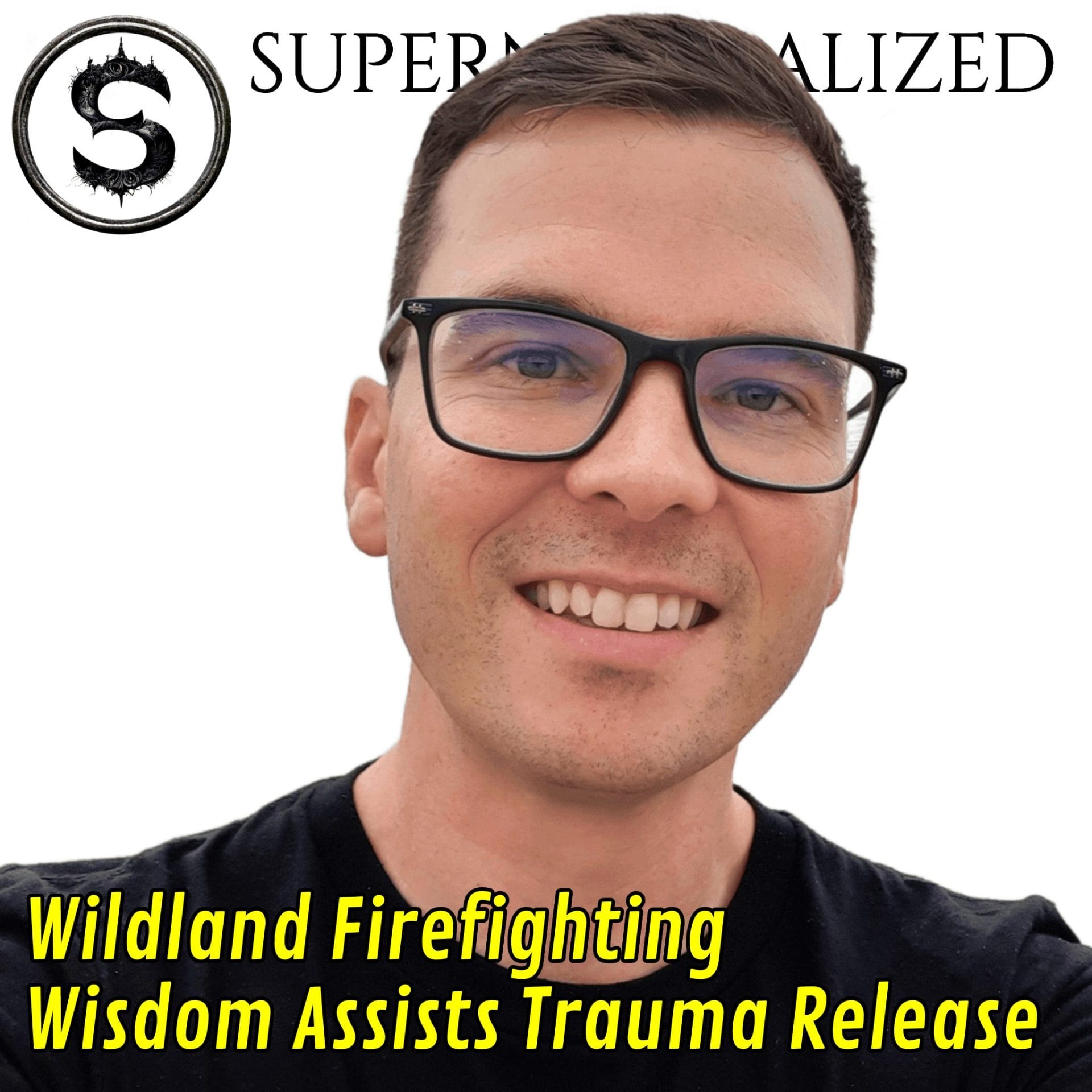
[00:00:00] Speaker A: Today on Super Normalized, I'm talking with Thomas Worm. He brings a story that moves from the fire line to the front lines of healing. After 14 years as a wildland firefighter, a devastating personal loss shattered everything he thought was strength. And what followed was a full body, mind, and spiritual crisis that pushed him to the edge of life itself. From that breaking point, Thomas found a path through acupuncture, nlp, mental and emotional release, Hoonah, qigong, and deep inner work that helped him recover what talk therapy alone could not reach. This conversation goes into what happens when pain lives deeper than words and why root cause of healing matters, and how patterns like shame, burnout, and feeling unlovable can ruin and run a whole system until they are cleared. Stay tuned to be able to hear the moment everything cracked open for Thomas and how he uses those tools and that greater understanding to help others now find their way through trauma and have their own healing process.
Enjoy.
Welcome to Super Normalized. Thomas Worm. Thomas, you've had some rather intense life challenges that pretty much broke open a new path for you, and we're here to talk about that today and then how you work with people. Welcome to the show.
[00:01:23] Speaker B: Thank you so much for having me. I'm excited to be here with you all and just to share my story and just to share, I guess, the inspiration, how much my life has changed throughout the year. So, yeah, I'm excited to be here. Thank you.
[00:01:35] Speaker A: Okay. All right. So what was like for you as a wildland firefighter? I mean, that's a pretty intense sort of job. It's like you're on the edge of danger almost continuously just to do your work. And what does that environment teach you about strength?
[00:01:51] Speaker B: Yeah, it's such a powerful environment, and I don't think people realize that. It's. It's like riding a Tour de France every single day for 14 days straight with lack of sleep, with poor food, plus a whole bunch of stress and a lot of heat. Usually. Usually, yeah. It might be 105 degrees Fahrenheit outside, but also you're right next to the line, so you could be working like 130 degrees. Right.
There's just so much stress on top of stress from a physical, mental. There'd be times on the line where, like, I'm breaking down that I just can't go any farther. Like, I think I'm like, I've hit this wall, and that's like 10am Right? You know what I mean? So I never thought I could push this hard or go this far in My life. And so it just blew my mind on how strong and powerful one the mind is, but also the body.
[00:02:42] Speaker A: Looking back, what did you miss at the time that told you, you told you your system was already under too much strain.
[00:02:48] Speaker B: There was no time to stop for me, I guess there's again so much stress from the job. But also when you start doing two weeks upon two weeks upon two weeks out there on the line, you have two days off and you're out in the wilderness, like you don't see your family, you don't have the phone calls, you, you, you are getting really lonely from a family perspective where the camaraderie comes in, really saves you. But I think that lack of emotional connection in with my family like that was, I think how strained my personal relationships were getting just from work, just from being gone. You know, I missed every of my best friends weddings. You know, I missed so much things because I was out there fighting fire. So I think how much I felt like I missed out in some ways. Although we were doing awesome stuff. Right. So it just, it's just very different lifestyle. Right. And I think the non stop going, going, it just added up. It took me 10 years to realize, like wait a minute, I think I need to slow down here.
[00:03:48] Speaker A: Can you take us into your spontaneous out of body experience that you had and what that moment felt like for you from the inside?
[00:03:58] Speaker B: Oh yeah, yeah. So. So I'm going to give a little bit of context before I jump right into that, you know, right where I was at that time in my life. I had lost somebody really close to me in fire.
And so about six months later I really found myself in this, remember that I'm in the firefighter, like alpha male, like really, I didn't even know what was happening to me really, but I was in this deep, deep grief stage. And so I would say there was a lot more stress, like lack of sleep, really high anxiety at this time. And on top of all like childhood trauma, but also fire trauma. So there's just so many things stacking up and I was really having trouble sleeping. I was having really hard time at work at this point. And so I didn't really know what to do. So I started meditating. And I started, I would say meditating maybe an hour a day, but then I really just was having the worst time sleeping. So I started meditating three, four hours a day. Like if I couldn't sleep, I would just meditate at night. And I found some of these qigong meditations, like microcosmic orbit and things that open up these channels that I really didn't know what I was doing. That's just because I was really just starting out with this stuff. And, yeah, I was just in a deep meditation and I just asked out loud, like, God, can you open my third eye? Right? And from that point, it really felt like what I call like a wind tunnel. Like, it just felt like there was so much air blasting me out of my body. It was super uncomfortable. It was honestly really terrifying. I. Because I really thought I was dying for sure. Like, it really felt like I was. That was the end. And then I found myself above the Earth. All of the molecules in my body were coming apart. It's the best way I can describe it. And I've never, like, smoked dmt, but I think it's that same, like, wind tunnel or bufo, that same thing that really launches you like a rocket ship out of your body. That was the experience I had. Yeah.
[00:05:51] Speaker A: If you could describe yourself as Velcro. Two pieces being pulled apart. It sort of feels like that everything. Yeah, everything becomes so open that there is nothing that's closed.
[00:06:02] Speaker B: At that point it was like, this is nice. I'm at peace. This is like every. All of the terrifying and fear was gone at that point, which was amazing. And for me, I found myself really drawn towards the sun, almost like a moth. And so I just floated into the sun, right into the center of it. And it really opened up to these.
It was like a light trail to the next sun, into the next solar system. I just kept following these trails from this sun to the next star to the next star. And eventually I just came to, like, our black hole in the Milky Way. And so I just went to the center of that and there is another light trail that opened up to, like, the next black hole and the next. And so really, at the end of the day, it was like I was just zooming out and just zooming out and zooming out until I could see, like, the whole universe. And it. To me, it looked like I could see these sparks flying between these galaxies. And it just looked like neurology. I could just. The full panoramic view of neurology. And for me, it was like this voice came over and just said to me, like, this is. This is the universe, it's pure consciousness. And at that point just was slammed back down my body. And it was really shocking. And all those things I was going through at that time in my life, the stress, the sleep, and all of those physical things I was going through as well, everything got a hundred times worse for me at that point. Cause I really feel like my body got electrocuted. That's really what it felt like.
[00:07:25] Speaker A: Yeah.
[00:07:26] Speaker B: Yeah.
[00:07:27] Speaker A: That's wild.
So when you're going through that experience and you're so open and then being pushed back into your body and realizing that the whole universe is conscious, how did that affect your understanding of who you are and your place in the cosmos? Did you actually have any faith or any religious or spiritual experience prior to that?
[00:07:46] Speaker B: Back when I was a teenager, I actually had a near death experience.
And it wasn't kind of this grand type thing, was just kind of the nothingness, this void. When I was reading like Raymond Moody's work and I was like, oh my God, I'm the. I'm the one that went into the void. Like the nothingness. It was so peaceful. But the thing is that my life changed so drastically at that time. When I was a teenager, I really did go into reading Buddhism, Taoism, a lot of the Eastern philosophy. So that was more of my take on things. And it was something that really helped me as a teenager. You know, I did a lot of Tai chi and Kung fu and all of those things. And so I would say, really come from like a Buddhist, Taoist kind of philosophy at that time. Yeah. I think I started having experiences in the field on fires that were, I would say, connected to that out of body experience, but I was really experiencing it in real time. And that's when my gifts started happening. I would say, just happened. What's happening to me right now? You know what I mean?
[00:08:40] Speaker A: What do you mean by gifts?
[00:08:41] Speaker B: There is times where we couldn't really see the fire necessarily. Like we're hiking into it and I find myself found myself like spontaneously kind of tapping into the ground into like the mycelium and speaking to trees and ask them trees to like, go, can you talk to the tree that's up on the hill and tell me what the fire is doing? You know, and then I would get a message and like, not that I was making tactical decisions on that, but I was getting intel from nature a very different way than I had ever experienced. And at first I was like, I think I'm a crazy person. Right? I think anybody that has gifts is going to go through that process. Right? Like, I think I'm a crazy. And. And I would just say it really just started with hearing the natural world, but also just seeing different. Seeing beyond the veil, really. You know, I would say one of my big gifts is seeing energy, especially Now. So it really was.
It's so interesting because I do see and I also hear messages sometimes, but I also feel so I kind of got all of them, you know, I got, I think I opened up so wide in the out of body experience, like kind of got all the clairvoyance, if you will.
[00:09:43] Speaker A: Did the intuition based guidance from the trees stack up against what actually happened later on? Did you see things and go, I'll listen to that, but I won't obviously fully listen to it. And then things played out and you're like, oh my God, that was right?
[00:09:58] Speaker B: Yeah. I would say within after the first season that stuff started happening. That next season I actually was using it tactful like, but I was using that intuition. And you'll hear a lot of guys out in the field fight fire with your gut, right? 100%. 100%. So I think there was a training that was happening for me. There was an initiation. There was a training of like field testing. And I would say there was multiple times where it's like, okay, our orders were to go down this road and up this canyon to start fighting fire. And I'd be like, no way. The fire is telling me don't. And that whole canopy gone by like 2pm and that started happening a lot. The intuition was really spot on out in the field. I'm not a crazy person. Something is happening here.
[00:10:39] Speaker A: What made you realize that this was not just grief that was happening for you at the time, but something much deeper breaking open.
[00:10:47] Speaker B: After my out of body experience, I was really a mess. I really, I had such weird symptoms. I knew I couldn't go to like a doctor, a medical doctor or a psychiatrist because I felt like they're just not going to understand what's happening to me. And so I found an acupuncturist. I found somebody that had some shamanic training and could really work with the energy system in my body because I think that was a big part of it, of course, all the trauma from fire, all those things. But it was like the acupuncture and the shamanic work that I did with that practitioner. We worked together for about a year, pretty consistently, once or twice a week. And that's when all my symptoms started going down. And that's when I would say he really opened me up to the first time we did something like hypnosis. Like it was just a guided meditation.
And I found myself in these totally different realms. And like, and when I woke up from the, from the meditation, I was like, what did you do? To me, I.
What happened. Because, remember, I'm this firefighter guy. Like, I don't. I don't know anything about this stuff.
[00:11:45] Speaker A: Different world.
[00:11:46] Speaker B: So it's. It was all new. It was all new. And so that really broke me open to, like, there's something beyond the physical. Absolutely. I think I knew that at a deep level, but it was like really being shown. And that's. I think it's when I started really getting shown that as a part of
[00:12:02] Speaker A: your experience, you had a bit of mania and anxiety that hit so hard that you thought you might die.
Now, what was happening to your mind and body at that time?
[00:12:11] Speaker B: I would say my crux.
For any climbers out there, I think the crux was really like, mine was health anxiety because the person I. I lost in fire had a massive heart attack at age 40. So there's this just massive health anxiety for me. And so it really was like a. A twinge in the foot. You know, we all get those feelings in our body, right? It was like a twinge in the foot would just completely spin me out. I would just have a. Not necessarily a panic attack, but I would just have, well, I think I'm dying. Oh, that's it. Like, I have cancer. All of those stories in my mind where it was. It was debilitating almost. I mean, I could work and those kinds of things, but it would keep me up at night.
And so the health anxiety really was the hardest thing for me. On top of, you know, my body just got electrocuted from this, like, Kundalini experience. So my eyes were dilated for, like, three months. Like, I probably got a brain. I probably had some sort of brain issue going on from so much electricity. Electricity, yeah. So there is just so many weird things in my body happening at this time that the acupuncture helped immediately. But the thing is that it was just all these weird feelings and part of having so much physical trauma, right? Because being in fire, you're just. Man, you just. You have close calls all the time, right? Trees, car accidents, all the things. So. So the. The sensations in the body became very scary when in reality, what those were were emotions that were being, like, stuck. Emotions that were. I wasn't dealing with, but they were going into the physical body. And that's where I think the mind and body really start. Especially from a trauma perspective, the mind and body really start getting dysregulated because we're not feeling our emotions because they're too scary. So then we put them in the body and it starts Creating problems.
[00:13:59] Speaker A: When you had that first acupuncture experience, how do you know that something real
[00:14:03] Speaker B: had shifted and my body just started shaking my body uncontrollably. Not like a seizure or anything like that, but it was like my body was shaking. And from this health anxiety perspective, it would have been like the end of the world to be like, oh, you have this thing. But when he came back in and saw like I was shaking, he's like, oh, that's just wind leaving your body. So we've taken all the medical stuff out of it and we're like, oh, this is like from a Chinese medicine perspective that's you're releasing trauma, right? So I could feel there was a physiological shift in that first acupuncture experience for me.
And I think that was, that was, that was like a big like I have some hope right now kind of feeling, right? That's like I think something's gonna change now. And I would say it looked kind of fast forwarding a little bit to like mental emotional release technique and some of the hypnosis stuff that I do now. The first time I released fear, I really did have such a physiological change on my breathing. It felt like I could breathe for the first time in a long time. And why I say that is because in fire you really learn how to hold your breath because you have to dodge the smoke. And it's like you really learn how to manage your breath. Probably not the best way. And so a lot of us would get stuck holding our breath. Not like people get stressed out and they hold their breath naturally. This is probably a little bit more extreme. So I could really feel a shift in my chest, even in my breath just from releasing something in the mind.
[00:15:28] Speaker A: So how then did you first come across nlp?
Mental and emotional release?
Hoonah and Qigong?
[00:15:36] Speaker B: Yeah, the, the NLP again, the acupuncturist was like, you're doing really good in acupuncture, but there's this thing called nlp. I think you should go check it out. You know, go to their, one of their. Go, go to one of their seminars. And so I did, I, I did. And, and I would say it was. So the four day training was so life changing. I immediately went to the two signed up for the two week kind of full. It's a very intensive. It's like 12 hour days for two weeks on just you're practicing three or four hours, five hours on each other all day long. So the NLP really was life changing for me. And then when I Started practicing with people when I started because a lot of firefighters started coming to me. Like I have this thing that like you talked about, like, do you want to. I, I want to try it. I want to work with you. Okay. So I started doing a lot of work with firefighters and about 10 clients in.
There was so many things happening energetically that I just like somebody's past life thing would come up or some sort of ancestor would come in or it. There's just so much energy happening that wasn't quite understanding. And that's when one of my teachers was like, you need to go to huna. You need to go to huna to like understand the deeper energy that's happening and really connect with the elements. And that's where I would say a lot of the gifts and energy work really came in. And it's so funny because huna is, that's kind of like means secret. Their real name is like ho mana, which is to make energy. But it's also like qigong is, is, is like energy work. Right. So it's, they're so similar. So the qigong is such a beautiful Chinese medicine perspective where the huna is more of this Hawaiian energy aspect that I use in my practice. Yeah.
[00:17:16] Speaker A: So what changed for you when those tools that you learned were used together in specific sequences?
[00:17:23] Speaker B: Yeah, the, the huna. I think the most beautiful thing is, is the lineage where it comes from. You could be a kahuna of canoe building or agriculture or specific herbal remedies or massage, these kinds of things. This lineage comes from kahunas of like psychology and faith healing. And so we have a technique specifically called higher self therapy or hook.
So that process along with the NLP is such a game changer for releasing emotions at an energetic level. So I think that's the big difference. NLP is going to be more of a mental perspective and huna is going to be more at the spiritual aspect or energetic bodies. We're releasing things with energy, but it's kind of cascading down to the mental, emotional, physical where the NLP is. NLP is fantastic for things like stuck pictures for.
I think that's like stuck pictures and movies and the way you're running patterns, habits that you have those kinds of things where the hoonah is really going to help you release things that are ancestral or past life or during birth or curses or entities. I mean it gets weird. It's. It's Harry Potter some level.
So, so, and, and so that really helped me one open up my gifts, but also really See people and see the root cause. I think that's a huge gift that I have is, is being able to see their energy and see like, well, there's this thing in your body or your mind, but it's actually deeper. It's probably something that's ancestral, generational, or there's this past life thing. And the qigong is so beautiful where it really is just from a Chinese medicine perspective, there's meridians in the body. They're kind of like chakras, but then there's like these rivers of energy that are coming from each organ, basically. So really the idea of qigong is that we're, we want to widen those meridians so your body literally at a physical level can hold more energy. So that's where it's just building the physiology to hold more energy from a practitioner perspective. But also as I teach classes, it's, it's so beautiful for mindfulness, for clearing emotions out of the body. It's, it's that I think all the other tools I use are beautiful for spiritual, mental, emotional. And the qigong really hits that physical, somatic piece.
[00:19:41] Speaker A: What was it about your first breakthrough session that opened your heart in a way nothing else had?
[00:19:49] Speaker B: I look back at when I released anger for the first time, it was actually in the womb. I was, I could feel my mother so angry with my father for smoking around her when she was pregnant. And I imprinted that anger as being in the womb. So that would be an example of like a really deep level root cause of anger. When I release those things, it just, it opened and let go. But also I got to bring in things into wholeness in my heart. Yeah. Really beautiful.
[00:20:17] Speaker A: Nice.
How would you describe the difference between surviving your life and actually being able to breathe again?
[00:20:25] Speaker B: Wow, I love that question. I think surviving, yeah. To me, it's like surviving versus thriving. Right. And I think there's oftentimes we get confused on what that is and are you burning out or are you shining your light? That. That's the best way I can describe it.
If we're surviving, there's no time for you. There's no time to stop and rest and listen to your higher purpose in life. Listen to your, in your dreams, your intuitions, listen to your emotions, listen to what your physical body needs. Like there's not enough time for that because you're so focused on surviving. Where I think thriving, we completely flip everything backwards. And even from a Western perspective, we gotta have the house and the partner and all these things to be happy. We need to Flip that upside down and become and be first to do the things we love, to gain or have the things that we want. I think flipping that perspective and allowing you to thrive and from a place of being instead of a place of doing is like the best way I can answer your questions. I think it really comes down to who do you want to be and who are you being? And if there's a gap in that, then let's work on the being aspect before you start doing too much in the wrong direction.
[00:21:39] Speaker A: Yeah. Like stepping away from conditioned responses to actually authentic being and living.
[00:21:45] Speaker B: Yeah.
[00:21:46] Speaker A: Why do you think talk therapy can build insight but sometimes still miss the root cause?
[00:21:52] Speaker B: I think talk therapy is fantastic at identifying a lot of issues and bringing things to the surface, which is so beautiful. Like, okay, now you have awareness of the pattern.
So there is possible, it's possible to make some change there.
But I think at a certain level, what I hear from a lot of people and a lot of clients I've had is that they walk out of those sessions feeling worse because. Because, yeah, all of your baggage just got dug up, which is great, but there's nothing to release it. And I think that's the thing missing. I think if talk therapy, you talked for 45 minutes and then you did like a 20 minute release of something at the unconscious level, it'd be a totally different. It'd be a game changer. And that's a lot of what my colleagues do. They're psychiatrists or therapists or medical doctors that are doing that model where. So the, the traditional therapy route, I think is very, very useful for the conscious mind. And actually, I think sometimes there's a conscious mind issue. In other words, it's more of an ego or like, I think I'm right or I have to believe it this way, where the work that I do is really more for the unconscious mind. And so it really is about letting the conscious or our ego or who we think we are get out of the way so we can undo or unprogram some of the deeper things that were imprinted with us as children. Ancestral epigenetic level. And so I do think there's some people that just need to go to therapy because that's, it's a conscious mind issue versus an unconscious mind. And plant medicines can be a very powerful way, especially like traumatic brain injuries. And you'll, you'll see the veterans are talking about that so much now. So traumatic brain injuries where maybe they can't even connect their conscious and unconscious minds, that. That's the first issue. So sometimes it's like, yeah, talk therapy and psychedelics, those can go together really well sometimes.
[00:23:44] Speaker A: What do people often keep working on for years that is actually just a
[00:23:48] Speaker B: symptom, you know, okay, you've got everything scanned. There's nothing wrong with you, right? There's no, like, physical damage that you can see from the scans. Like, then that tells me, like, 99.9% chance it's in your mind that it's psychosomatic. Not in a bad way. We all have that. It's just, it's coming from the mind or trapped emotions. And so I see a lot of people kind of chasing the Western perspective of like, I'm going to try this drug, I'm going to try this thing or try that thing. And it's really just treating symptoms and they're just creating more symptoms from the Western perspective. Right. And so I think too, addictions, people. People want to treat the addiction, but there's actually a much deeper level. You'll hear the Western perspective talk about, like, we don't really know why, say, five people can be in an accident, but one will develop PTSD at a certain level. There's something that was triggered in that event that actually ties back to something way deeper in the childhood. And so there's like childhood trauma that got triggered on top of this new trauma. And it's just really connected now. It's just a bigger gestalt of trauma. I think that is actually the biggest game changer that I've seen for people is really getting to that childhood imprint thing. That's the actual problem.
[00:24:59] Speaker A: Are you listening for beneath the obvious presenting story?
[00:25:04] Speaker B: I'm going to hold space for that. But as a practitioner, really what I'm looking for is I'm looking for the context, structure, and process of the problem. And what I mean by that is that I want to understand steps like, okay, my anxiety starts with this step one. Maybe it's like they get true, they see something and they get triggered. Right? And then that feeling, they're like not an emotion, but a feeling in their body, creates a thinking. And then that thinking creates this emotion and it starts to kind of maybe spin on itself. So now it's creating more sensations in the body. Right. So that's just a general example. But what I'm really looking for is step one, step two, step three, step four to your process of the problem. And why that is is because once we get the strategy of how you. How you do your problem, just like brushing your teeth or putting on your Pants, like there's a certain way you do it. Let's get the strategy to how you do anxiety.
Because now from an NLP perspective, I can take those steps and scramble them so you can't even do it. And that is where I see people really have big changes is when we actually undo the strategy so they don't even, they can't even remember how to do it and help switch pictures in their mind, which is really, really, I think if you've ever seen a horror movie or like had pictures stuck in your head, people with trauma know exactly what I'm talking about. But we can actually take those pictures and swish them. And so when you think of that person or event, you have a positive picture instead of a negative one. Pictures are so much bigger than we realize. Our brain is taking that picture in our mind and decoding it into biochemistry and all of our chem biology markers and all those things. So it's, it's. It. That picture is worth a million biomarkers is what I see. And so when we switch those pictures, we have a huge change in the mind and body as a part of that pattern interrupt.
[00:26:51] Speaker A: It causes the, the system to have an opportunity to look at it from a different way.
[00:26:57] Speaker B: Yeah. Yeah. And I think from a higher level there's this idea of doesn't help I get this word right. But it's really like we, we want to put things in a box and think about things in a box. But the NLP perspective, it's like let's, let's actually just remove the box and think outside the box and push the boundaries.
[00:27:13] Speaker A: Yeah.
[00:27:13] Speaker B: Out.
I did take some neuroscience classes in recently. And really understanding how much NLP from a neurological level is actually breaking down these neurological pathways is so interesting too. This is a documentary called Mind Hackers. So if anybody wants to watch that is mind blowing. But what they show you is how anchors actually do create these. Like, we learn that in nlp. Like anchors are so important. It's a huge part of nlp. But to watch the brain scans and the neurological connections disconnect and connect in new ways. That's what we're doing. We're, we are changing neurology at a very deep level. And it's all about learning. It's all about learning a new way of being, a new way of doing, a new way of having your life. People do a breakthrough session, like you're in this just like a psychedelic perspective. You have about 21 days of like your, your, your brain is recalibrating and Pruning neurons. So you want to load it up, you want to be reading, you want to listen to podcasts, you want to do everything you can to create new neural pathways.
[00:28:13] Speaker A: What would you say to someone that's skeptic? Because they've tried therapy, EMDR and other approaches and they still feel stuck.
[00:28:20] Speaker B: Some people have this thing called a secondary gain. And, and I think it's. Yeah, right. So there's this. The problem's actually giving you something and you agree, giving you this. And it's not a bad thing. It's. It's that that problem was created for a reason to usually for protection or safety at a very young age. A lot of times this is actually a conscious mind issue because the person doesn't want to believe a different way. They don't actually don't want to change. And so as a practitioner, we, we can't help you if you don't want to change. Sometimes those people need a lot of help with reframing. And talk therapy is a fantastic. For those kind of people that like have a really hardcore resistance.
And I think for the skeptics, I would say look at Michael Jordan. Michael Jordan's on the best Basketball players of all time. And his secret was NLP and hypnosis. You look at somebody like, not to get political at all, but like Barack Obama, like, he was an amazing speaker. I mean he would just. I don't care who you are, you just listen to him. Like, wow, oh my God. Like I'm just glued to the tv. It was all nlp, right? So there's these people, like, you'll see NLP in so many different ways. Like Tony Robbins, my teacher's dad taught Tony Robbins. Like, that's all Tony's doing is nlp. So I think the next one that I'll say is, is actually, I know the US Military used NLP for training snipers. And so they took kind of the sniper school and they ran it through some NLP processes and like, okay, let's try to do it. Instead of like three to six months, let's do six weeks. And so what they did, they gave the guys strategies of how to shoot, when to do it, how to breathe, a perfect strategy of how to be a sniper. And they, they did, they actually took the six month training down to six weeks and they were shooting better.
Right. And so that is, I think that's Project Jedi if you want to look that up for folks. So it's just a very different way of thinking about how the mind works.
[00:30:19] Speaker A: The listeners can you outline your eight hour breakthrough session? What actually happens during one of those?
[00:30:24] Speaker B: So the first three to four hours, two to four hours is really called a detailed personal history. So at that time it really, it could feel like talk therapy in a way. But we're not doing that. What we're doing is we're really looking again for that context, structure, process of their problem. And I want to zoom out a little bit. It's not just like one problem. It's all the problems in their area of life. Let's say they work in relationships. We're going to talk about every single problem that's going on in the relationship. And what I'm doing is I'm looking for patterns. I want to see where, where does this belief show up like and why and who and with this person and kind of looking at all of these other patterns until we come to this single belief that connects to everything and what I would call as the greater problem, which is like the root cause. So we spend two to four hours just talking, just getting to that. Like, like. And I, I think it's, it's the harder part because it's digging up baggage. It is intentionally getting you to connect all of the neurology to all of your problem. And so it kind of. People get uncomfortable like their body, everything is just getting tighter. And it's like we're connecting all of that. So the next stage is really doing a lot of release work. We're going to use mental emotion, release and hypnosis aspects. We're going to do huna. So we're going to release anger, sadness, fear, hurt, guilt, any negative, any other negative emotions you have. Anxiety, limiting beliefs. I may go through 10 to 15 limiting beliefs we're going to go through. I always bring people through like a forgiveness process. Hooponopono from a huna perspective. So we spend the next two to three hours just in trance really and doing deep, deep transformational work. And then the last hour we kind of talk about what's next on homework. And with these generally we do a lot of future pacing and install kind of what they want to do, what's coming up next. And then I always recommend people do some integration work with me because he's, I would say, equivalent to like plant medicine. Right. You're going to have such a big change that you need help integrating. And what I like to say is you're going to take abstractions into action.
So we're taking a lot of these things that are mental and emotional and we need to apply it to your physical life as soon as possible to install it even deeper. So that's what I would say. Integration is the boundaries, the values. How are you gonna. What's your strategy for the doubters? All those things. So that's more the integration work that I do with people afterwards. I remember this one firefighter, she came to me, she was so depressed. She quit her job, she quit firefighting. She was really, really down, like really at the end of her rope. And we did a breakthrough session and she started feeling so much better that she. She's like my dream, my dream job was to actually repel out of helicopters, which is like going. Lowering down on the ropes. And she did, she applied and she got it. And she's been repelling for about six years now. Maybe four years. Four to six years now. I can't remember the exact year now, but so she went from, I can't even do this job, I'm so depressed, to now I'm actually at this super elite level. And rappelling out of helicopters, which was my dream. Like, that was a huge thing. I. I was just like, wow, this is amazing. I'm so happy for you. I had another. Another firefighter that she again, really came to me for really deep depression after her father passed away. But it had been like 15, 20 years and she had been on like her goal was to really just not be depressed anymore. I was like, well, I don't treat depression. That's not what I do at all. We can work at the root cause level.
Let's see how it goes. And she turned around so much. And I think one of the biggest things out of her story that amazed me. She. She lived in Colorado and really her next step in life was like, I have this great job. I'm feeling better mentally, emotionally, but I really, I need housing so bad. I really need a house. Because house like a ski town Colorado is just impossible with the firefighter, firefighter salary. So we did a prayer process and she actually applied like she's next couple days. She's like, oh my God. There's this thing, there's like this lottery for this housing.
So we did another prayer process. She entered the lottery and she actually got her dream house, like on a lottery, like half of the price that you normally would. So she got her dream house. It was so wild. So there's. I think the biggest thing is that people step into what they want in life. You know, they. They let go of those voices that like, you're not a good enough. You're not worthy and they step into voices or pictures in their mind. That's like, you're loved, you're safe, everything's going to be okay. And that's when they start having these. Finding their dream house, finding their dream partner, finding these things that are so beautiful in their life.
[00:35:15] Speaker A: Talking about the hidden pain that high stress jobs have upon people, what do you think the culture of silence costs people in those positions?
[00:35:23] Speaker B: You know, I think it's getting better out there, but I know the fire community is.
I don't know if people really realize that the wildland fire community specifically has the second highest suicide rate. So I've definitely lost people in fire to suicide. It's not quite the military, but it's not that far off either. So suicide is a huge issue, huge issue in the fire service and across the board, first responders and military. But I think that's the hidden cost of the silence and not reaching out. And I see it so often, especially with firefighters. People come to me because I work with whoever wants to show up. I'm going to work with you. But when the fire folks show up, they're usually at the end of their rope. Like, I mean, like, they're like, they're done with life or they're in a really dark, dark, dark spot. It's like, why did you wait this long? Why did you. I did the same thing. I did the same thing.
So not to blame anybody. It's just like, why are we doing that as a culture? Why are we doing that? And I think that's shifting, but that's the hidden cost, is that people really are just, just so at the end of their rope.
[00:36:26] Speaker A: Are there any signs that tell you someone in that world is carrying way too much for too long, it's going
[00:36:32] Speaker B: to show up in their body somehow, their posture, or even like, physical health stuff? I think at a certain level, the silence, like I said in the beginning, like, we're going to take all of this stress, we're going to put it into the body, and we're not going to deal with that at a spiritual, mental, emotional level. The body's going to have to deal with it. So I think that's, that's, that's another hidden cost of the stress that we're not letting go by talking about it or opening up or having community or therapies. Whatever we need is. It really does take that physical toll on people.
[00:37:02] Speaker A: What would we just say to the person's actually been the strong one but doesn't know how to ask for help?
[00:37:08] Speaker B: Yeah, I Think that's a huge one. For people that are leaders, they're always on point, they're always leading and, and for them to actually stop and say, one, I need help, or two, to even be in a place to receive help, I think that's a big one, is giving help. For a lot of people like this that are leaders, that have a lot of people under them, giving is easy, but it's actually stopping to receive is really hard for these, for those types of folks. And I think once they open up to receiving, there's, it's just so unbalanced. There's a cyclone rhythm that's so out of balance that, that really wreaks a lot of havoc on people. When you don't allow yourself to receive
[00:37:46] Speaker A: what you need, what role does meditation play in your daily life rituals and also in your healing process?
[00:37:54] Speaker B: Yeah, for me, qigong is absolutely a major part of my life. Every morning I'm doing qigong, right. And so that's, I may practice. Some days it's like 15 minutes. Most days it's an hour. And so that's a moving meditation. But part of that is like a 15 minute, I'm gonna sit down for 15 minutes in Silen silence or do some sort of qigong process. So to me, I think there's so much value in meditation because we're, we're always so on the external. And I, to me, I love to start my day just going inside. And I do think there's a modality called mindfulness based stress reduction. So it's more of a clinical perspective on Buddhist psychology. But the MBSR is what you'll hear it called that this specifically helps so much with people. Chronic pain, really, depression, anxiety, these kinds of things, because it teaches you how to pay attention to the sensations in your body.
And so it's not fixing anything, it's not talking, it's not releasing. It's just simply sitting with the sensations in your body without the stories. Because I would say this is a huge thing. I, I've gone through my own journey with chronic pain just from all the trauma I've been through my life. And so, so that chronic pain, a lot of times if we just sit with the sensation and not tell the story and maybe even talk to the pain or just sit with it and observe it, it's actually going to dissolve itself or it's going to tell you something, a message that you need to hear. And so that mindfulness based stress reduction, that style of meditation is super therapeutic. And I do, I've Taken some classes to be able to teach some of that stuff. So I do bring some of that MBSR into the Qigong perspective. And so, yeah, I think meditations are very, very important. And there's so many different kinds. I mean, there's like active, there's passive, there's the mindfulness stuff. So it just depends on where people are at and what they're working on. But I feel like meditation might be one of the cornerstones. I would say deep breathing and meditation, those two things are probably number one.
[00:40:00] Speaker A: What is one thing someone can do today if they feel stuck or in shame or living in emotional heaviness?
[00:40:09] Speaker B: Yeah, I would say the biggest thing we can even do it together now is, is something called hawk allow from a huna perspective. And so this is so simple. All you have to do is just look straight ahead, like find a point and just focus on that, like laser point on one point. And then also allow your peripheral vision to kind of expand. So you want to look at one point but also the peripheral vision and looking at both. So you're staring at one point but also looking at the size peripheral. And we're just going to take four big deep breaths, breathing in and then out the mouth. Like a big ha sound. Okay, Big breath in and out. Okay, Big breath in and out the mouth one more time. Okay. So number one, the, the, the breathing, the ha breathing. Super good to just let go of emotions. This would be from a Chinese medicine perspective, also a huna perspective. You're clearing the heart space, the emotion. And then also this, this hakalau, this laser point focus, but also peripheral urine.
[00:41:07] Speaker A: You're.
[00:41:07] Speaker B: You're kind of opening the brain up into this flow state, but you're kind of going into this more.
You're kind of going this natural trance where you're allowing things to just let go. This is a super simple.
[00:41:19] Speaker A: Love it.
[00:41:19] Speaker B: There's also.
Yeah, yeah. I would also soak for people like psych K position. I think it's psych K, like psychology, but it's psych K position. If you Google that, you can like cross your arms and cross your legs and do some deep breathing and it really resets your whole brain system. It's fantastic. So nice.
[00:41:38] Speaker A: I'll look that up. Sure.
[00:41:39] Speaker B: Yeah, yeah.
[00:41:41] Speaker A: How can someone begin to feel safer in their own body without waiting for that perfect moment?
[00:41:48] Speaker B: I think to me, I always come back to nature and grounding. Like if I can get my feet on grass, if I'm feeling a little out of balance, if I can just ground and Breathe.
I'm going to come back to my center. And from a qigong perspective, if we can. Can really bring our mind, which our mind leads our energy. Right. So if we can lead our mind down into the center of our body, like just below our belly button, at the very center of gravity, if we can hold our energy there in our. In our lower Dantian or Nao, this is where we're going to stay safe. We're going to feel safe. We're going to be grounded. We're going to be in our bodies. So that's. That's a huge thing is most people have too much energy in their head, maybe too much energy in the heart. We need to come back down to the center of the body to be balanced months.
Nice.
[00:42:37] Speaker A: What does peace mean to you now compared to with who you were on the fire line in the past?
[00:42:45] Speaker B: Yeah, I think it's so interesting because when I left fire, it was really hard to. I think the integration part was that there is no more chaos. There was no more storm. There was no, like, fire. There was nothing to put out. So the actual stillness was scarier than the fire.
That took a while. That took a long time for me to kind of break through.
And so I think for me, I. I have found that the stillness is so peaceful now for me. And that's really coming back to that. Just coming back to my center and breathing. Like, it's. It's. I feel like I find. Be able to find that peace every day now. It may not be all day. I'm. I'm human, of course, but I can come back to that peace every day in some sort of practice. And that's. That's really what fuels my peace now.
[00:43:32] Speaker A: How has helping others change the meaning of your own suffering?
[00:43:36] Speaker B: Wow.
I think when my friend passed away, it took a lot of years and a lot of helping other people to realize that, to find that gratitude for his passing. Because now I understand, to me, I think it was a sole agreement to wake me up and also to open my gifts. Yeah, there's a lot of gratitude now. There's a lot of gratitude for that whole situation, my whole journey.
I don't think I could help people the level I do without going through all the things I've gone through. Like, I mean, sometimes people hear my story, like, oh, my God, Thomas, how did you survive all of that? Like, I don't know. God, I think.
[00:44:12] Speaker A: Yeah.
[00:44:13] Speaker B: Yeah.
[00:44:14] Speaker A: What do you hope people feel after hearing your story today?
[00:44:19] Speaker B: I want them to feel hope, because I can tell you, if If I made it, you can too. I'm telling you, I was. I was really in a dark place for a lot of years. And so. So if I can make it, then you can too. And I just want them to have hope. Even if they don't reach out to me or anything, Just know that there's the right practitioner, there's the right modality, there's the right thing that's gonna help you. It's out there. You just gotta look for it.
[00:44:44] Speaker A: Perfect. Thank you so much for coming onto the show today, Thomas. I appreciate your sharing and your understanding and your wisdom that you've gained over all these years and all power to you with helping so many people with the work that you do.
[00:44:58] Speaker B: Oh, thank you so much. I appreciate it. It's been. It's been a pleasure just to talk with you and thank you.
[00:45:05] Speaker A: It was a great talk with Thomas just now, and because of my training in nlp, it was good to hear the processes that he's using and to understand that he has a really great structure around it all and how he works with people. And I really appreciated the way that he shared that and his understanding from his own experiences. If you've enjoyed today's episode, like, and subscribe.
And if you're on a podcast app, give me five stars and say something really nice. And if you're on YouTube, say something nice. Really down below, that'd be really cool. Or be nasty. That's up to you.
Or if you're on the podcast, thank you so much for listening. And if you're on YouTube, you'll like these episodes too.