Episode Transcript
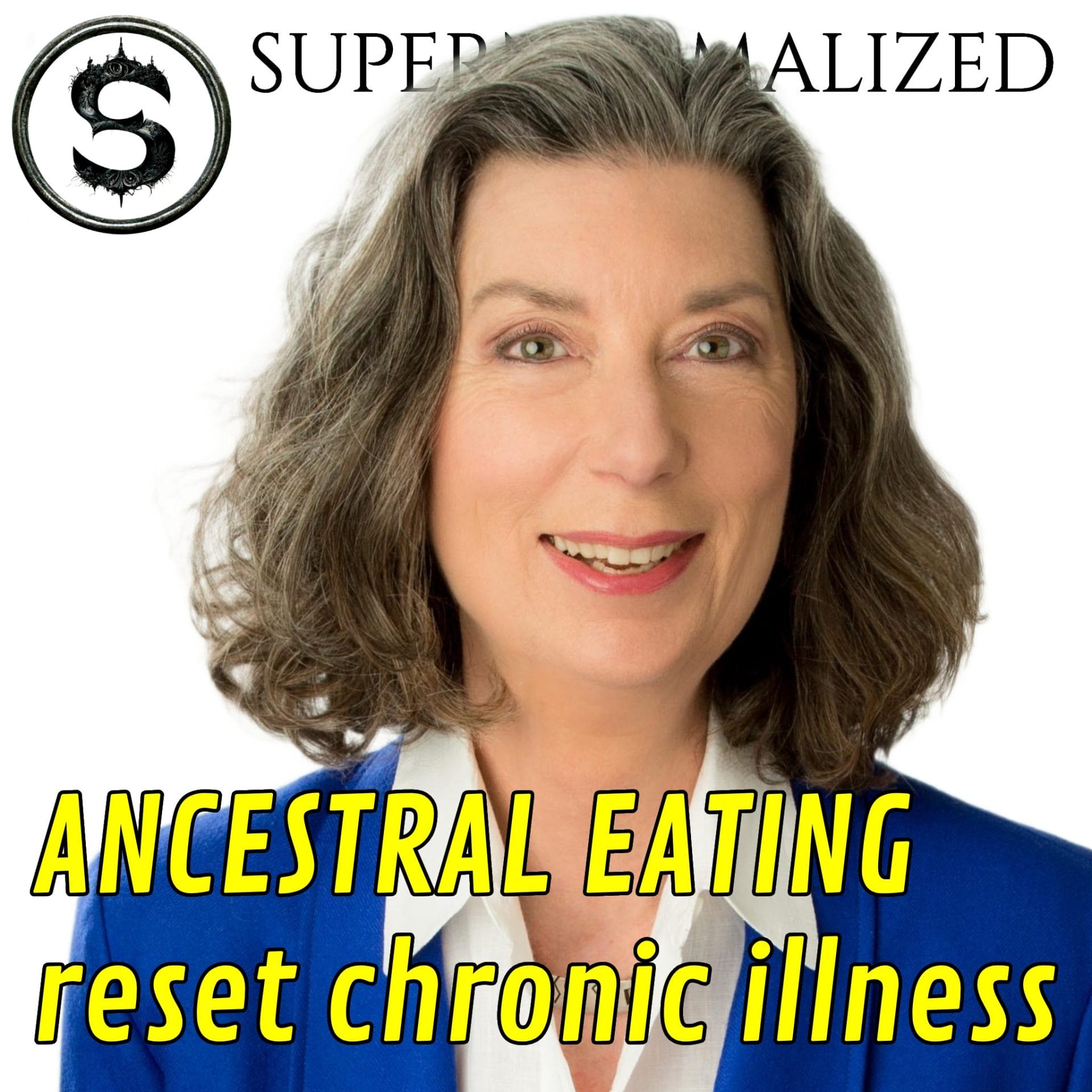
[00:00:00] Speaker A: Today's conversation on supernormalize features Beverly Meyer, a clinician, researcher and longtime patient whose health journey began decades before functional nutrition even had a name.
Hospitalized twice with Epstein Barr, living in chronic anxiety, pain, hormone imbalance, and severe sleep disruption, Beverly learned that feeling unwell was not normal. And even when medicine had no answers.
Certified as a clinical nutritionist in 1989, she taught ancestral eating principles long before popular trends caught on, while quietly building deep expertise around sleep, anxiety, adrenal health and hormone testing. A life threatening mystery illness later forced her to question everything again, leading her to uncover rare genetic immune disorder on her own and reclaim her future. This episode invites listeners to rethink symptoms they may have accepted for years, question mainstream assumptions around chronic illness, and hear what what changes when a patient refuses to stop asking better questions? Stay with us for grounded insights, candid stories, and practical ways to care for a body that has been asking for attention all along. You'll enjoy this episode. Welcome to Super Normalized. Beverly Meyer. Beverly, you had some health challenges, then found a new way in life with your understanding of.
What would you call it? I mean, give me a description of that. And welcome to the show.
[00:01:29] Speaker B: Thanks for having me on.
Well, I have been in practice in natural health, complementary health for 36 years, but my own health journey started in the 70s when I was in college at Duke University here in North Carolina and had some medical issues, a virus that was becoming really chronic and the doctors weren't helping me, nobody was helping me.
And I, a friend of mine said, you know, why don't you go see this guy, he's kind of different, but he's pretty smart and maybe he can help you. And I went out to see this person, a young man, and we did. The first time I had ever been exposed to muscle response testing or what we also call autonomic reflex testing, but muscle testing for short. And this was back in the 70s, so the early days, and was able to quickly hone in on some things that were helpful to me. And when I left his place, I thought, wow, there's a whole other world of information out here that is not just a straight medical system.
And I want to know more. So I was hooked on the alternative pathways at an early, at an early age.
[00:02:58] Speaker A: So that led you to creating your own practice. How can people find you? What's your website and details?
[00:03:04] Speaker B: I have a excellent website. It's a big website. There's hundreds of articles on there about health. It's called On Diet andhealth on dietandhealth.com and I've been podcasting for 14 years and that is Primal Diet Modern health.
And the concept being that if we speak about it today, but I'm a big proponent, actually one of the co founders of what we call the Paleo diet or ancestral biological eating. And so the concept of Primal Diet modern health is, yes, let's follow the biology and eat like our bodies and our systems have always eaten.
And what's the best in modern healthcare that we can find to help us? Whatever that is, what's the best that we can find to help us?
[00:04:00] Speaker A: Yeah, that makes a lot of sense to me. I try and follow the Primal Diet myself.
What first convinced you that feeling unwell all the time was not something you had to accept?
[00:04:11] Speaker B: Well, again, I think early on finding someone that assisted me, we didn't completely fix the problems, but it that, you know, yes, you.
I became excited and very clear that research and talking and asking and questioning and trying. And so I've been a very passionate researcher and trier my whole life. And that's how I ended up in practice as a clinical nutritionist. We're kind of an elite field working with the chemistry of the body and labs and the nutrients and hormones and signaling in the body because I had so much knowledge and I'm seeing practitioners that I know more than they do. And I said, okay, at this point I'm going to sell my company and companies and focus on continuing to learn from myself and passing that on to help other people. So that, that's pretty much been my life other than several years in big business.
[00:05:22] Speaker A: What did your body teach you before your mind caught up?
[00:05:27] Speaker B: Well, I am an overwork kind of person and because I do get passionate, excited about things and I want to know more and do more and help more.
And yeah, the body definitely went downhill a couple of times and I had to realize that, okay, you're asking too much of your body. You need to stop, figure out what's going on, get help, do what's needed. And at one point I spent almost a year away from my practice and looking for answers. I knew they were going to come. I just didn't know where, when, how or who.
And eventually I figured out, ah, this neurologist I've heard about in New York and Florida, this guy seems to be somebody that can help me. He's not in practice now, but he definitely was thinking outside the box. And that's where I first learned about the neurotransmitter gaba. And so I'm very big on speaking and writing about the neurotransmitter gaba, because people don't know about it. And it's essential to our ability to sleep, be calm, reduce anxiety, to regulate all of our body systems. It's a huge neurotransmitter, and nobody really hears much about that.
[00:06:54] Speaker A: Yeah, I'm curious about that. Do you think that supplementation of GABA shuts down the body's own natural processes of creating gaba, or do you encourage, through primal health, ways to generate your own gaba?
[00:07:09] Speaker B: Well, good question. The way that this neurologist write and speaks about himself, and he said that a lot of this is how you're born. You know, blue eyes, five foot two, whatever it is, that you're in part of your genetic encoding that this brain is not balanced. It has more dopamine than it has acetylcholine or it has more serotonin than it has gaba.
So that there's that genetic element. And then, of course, nature and nurture that our lives are big players in our health now, and every minute of our lives depending on how we were fed and our trauma and accidents and birth defects and genes and all of that.
So the goal for me is to learn how to. How to best support that neurotransmitter with either prescription or with herbs and things, and learn how to manage my own time and energy a lot better so that I don't. I don't wear myself, wear myself out.
[00:08:22] Speaker A: What shifted once you became board certified and finally connected the dots in your own symptoms?
[00:08:29] Speaker B: Well, a couple of things.
That experience of going through a period of profound anxiety and inability to function that led me to the neurologist and GABA support.
But I also had a very, very severe time with Epstein Barr virus. I was hospitalized twice for that, and it pretty much just destroyed my adrenals. And I was told I'd be on steroids the rest of my life to survive, and I've never took them. And I. So of course, I dove into that of how to get rid of this virus and how to rebuild my adrenals. So those also are a big part of how I practice, but also the learning curve for myself about, oh, this. This company, they make herbs and stuff that support Epstein Barr and the herpes virus and mononucleosis. They're all members of the herpes family.
And learning different companies and different approaches and the way that food impacts the herpes family of viruses, and that is massive and huge. And that's what led me to create basically a skeleton framework for what came to be known by others as the Paleo diet was eliminating grains.
Grains are the seeds of grass. They're grass seed wheat, rice, corn, oats, barley, rye. They're in the family of cereal grasses.
And their seeds are what we eat as grains and turned to bread or chips or flour or whatever.
But humans never, we never were hunters and gatherers. We never evolved to bend over and graze on grass seed.
So that was a profound realization when that.
One of my many mottos is follow the biology.
And you know, whether you're working with an animal or a sick child or an athlete or whatever it is, but other than the animal, we're all, we're humans, we are the same species.
And, and a cat or a dog, whatever, they're going to have their own particular biology that demands what they need to, to be as optimal as they can be.
And so I followed that path now for decades of, well, what would a human eat and what would a human not eat?
And that's how I teach my clients. And I say, look, you're gonna have to work to get your health back.
It is not about selling people handfuls of supplements. By definition, a supplement is a supplement. It's not the core piece.
Your lifestyle, your food, how you care for yourself, how you think.
These strongly affect our chemistry. And supplements, yes, they have their place. But the groundwork of the big chemistry, what I call the big chemistry, has to come first. Supplements can't overcome an Epstein Barr virus or an immune deficiency or this or that, that you, you have to, you have to find out more what's going on in the chemistry of the body.
[00:12:09] Speaker A: Yeah, getting to the root cause.
[00:12:11] Speaker B: Yeah, that's what we call it now, isn't it? The root cause and functional medicine and the root cause. But those of us in that have been practicing natural health have been functioning that way forever without a phrase. The root cause. But yes, indeed.
Find the causal issues and address them as fast and as well as you can.
And surprise, see what clears up. Because the body knows what's wrong.
It wants to fix things.
Our job is to get out of the way and let it, let it reformulate hormones and redo our chemistry.
And the things that, stress and anxiety and drinking and processed foods, all these things block the body's ability to do what it wants.
I like to say that the body has an infinite to do list and it shuffles those priorities based on what's going on with you. I mean, okay, yes, you break an arm that quickly moves to the top of the priority list, but otherwise a Client may come with 10, 15 different issues, you know, migraines, insomnia, hot sweats, muscle cramps, whatever. And so I can't address those one by one, especially not by supplements, because that's just not enough.
Let's start with the diet and sleep upgrade. So I'm really adamant about sleep support as much as I am about food.
[00:14:01] Speaker A: How did studying nutrition through the lens of lived experience shape your clinical research?
[00:14:06] Speaker B: Well, again, when something's up for me, I want to research it and find out what's happening. And sometimes I get a client with a condition that I don't know, I'm not trained in, and I have to research that. But one of the biggest things for that was that I've struggled my whole life with immune problems, basically with viruses. A lot of people have chronic bacterial infections like recurrent sinus infections and bronchitis and UTIs. But for me, it wasn't bacteria, it was the viral world.
And which. Where we started this very podcast talking about viruses. And it was been very frustrating for decades not being able to understand what is going on with me.
And then I went into a very serious crisis point in my health that couldn't work at all. Couldn't drive and I could sit on the home computer and research.
And what I discovered was that I have a genetic immune flaw.
And so I ran my labs and did the research and this went on for months till I was really sure what was going on and the best medicines and format and dosing and all that that my body would need. Then I went to the immunologist to say, here's what I have, here's what I need. Hello, how are you? Let's get to work.
And of course they ran all the same tests. And that's, that's fine. It's, you know, I knew exactly what I had.
So that was a huge change that I, you know, I strongly encourage people to take control of their lives.
And we, you know, the Cinderella complex just does not work in the modern world. Nobody is riding in to save you.
You know, it's more the Joan of Heart complex or something that we have to be brave, be bold, get on there and start researching on legitimate and valid types of websites.
Stay away from the miracle cures and the biohacks and all these things. It's like, just do this one thing. No, no, you're already way off base.
And so, yes, that governs. Everything I do is I want to help people. Here's how you run your own labs through LifeExtension.com for example, and here's how you can get a sense of where your lab number should be on that range.
Shoot for the middle of the lab range. If the range is 20 to 100, you don't want to be at 26.
You want to be at the average of that 60.
So I try to encourage clients to be conscious about taking charge of how you think, how you eat, how to speak to physicians so that you can get what you need from them. No one trains us how to do that, but I actually help train my clients. All right, here's a thyroid test I want you to run. It's a little expensive, so let's get your doctor insurance to do it.
So let's do a little practicing here on the phone. What to ask for and how to present that request to your physician to get what you need.
[00:17:45] Speaker A: What, in your experience do most clients often say they assumed was just part of life?
[00:17:51] Speaker B: Oh, I think by the time they have contacted me and I've replied and we're starting to get set up to talk and think and work, they've left that pack behind that, oh, it's just going to be this way.
So by the time they get to me and have sent me a contact, hey, I found these articles on your website. These really resonate. I'm ready to get some help here. And you sound like you know what you're talking about. I'm like, okay, good. This person has, has stepped to the front of the line and declared themselves, you know, okay, let's talk. So we all have some, I hesitate to say victim mentality, but we all have some level of hopelessness or fear. It's just fear. It's a fear based thing that this condition will always be here. This condition will get worse. This condition is not bearable.
And I learned so much from studying and listening to many audiobooks of Eckhart Tolle.
Eckhart Tolle is just so incredible. The books don't work. You just turn the pages and move on. But when you listen to him on audio, which I do in the car, he had a profound influence on me. The Power of Now, for example, one of his famous books, so that the ability to hear what your mind is saying, this is a talent that we are not being taught.
And we need to learn how to listen to the self talk. Oh, this will never work. This is terrible.
This is bad. And wait, stop. I heard myself say that.
Let's back this up.
[00:19:53] Speaker A: Why do sleep and anxiety tend to show up together so often?
[00:19:57] Speaker B: Well, you're into the sympathetic versus the parasympathetic. Nervous system. So we have two nervous systems. Just like a deer or a cat, whatever. We have two nervous systems.
One for the.
Everything's okay, I'm doing my work. Yeah, this is kind of hard. Boy, I've got to do this. It's kind of difficult, but let's keep going. And you know, life is what it is. And then the sympathetic nervous system is, oh dear, something is trying to kill me.
That's the best way I can summarize it. One is living with all of its ups and downs. And one is, oh dear, something is trying to kill me.
A tiger, people with guns or spears.
That's when the sympathetic nervous system kicks in and it takes over everything immediately.
When that happens, our body primes itself for fight or flight or fright.
Fight, flight and frightening.
Our blood begins to clot because it expects we're going to bleed.
Our pupils dilate blood pressure, glucose, cholesterol, all these things jump up to provide the tools that we're going to need to run like heck and climb a 40 foot pine tree.
So that's the sympathetic nervous system. And when we don't handle our life stressors and our mind's conversation, we tend to get stuck in oh dear, oh dear, oh dear, oh dear. That danger, danger. And the immune system's doing its job.
When we think, oh, oh, this is really bad, this is really bad, the immune system kicks into gear and starts pumping the hormones and the things that it does, the adrenaline and so on for the sympathetic nervous system. So we wire ourselves for fight, flight or fright by being in position of over strong stress and speaking it too strongly. So the solution to that is to being more realistic.
Here's a really stupid example, but exactly what I'm trying to say. You're out for a walk and your friend with you suddenly jumps up in the air and screams and says, snake, snake.
And you look and you say, no, it's a stick. It's a stick.
So their immune system is on full tilt. Fight or flight.
And you're able to use your realistic mind to say no, actually it's a, it's a stick.
So when we're in those lines of thinking and feeling, our pulses elevated, you know, we're on, on.
And yes, it's very hard to sleep when your body is on, on. And this of course, is exactly where that GABA neurotransmitter comes into play.
This is its job.
It's the great equalizer of our electrical signals in the brain.
And if you think of a metronome On a piano, you know, tick, tock, tick, tock, tick, tock. That's what our GABA wants our brain to be like. It's monitoring your heart rate, your bowels, your emotions, your pupils dilating, a hundred different things.
And when these begin to start swinging, GABA is starting to be called forth to stabilize, stabilize.
But in our modern life, life is so on the scary side.
You know, there's a lot of danger and concern about bills and people and traffic and money and everything.
We are in the edge of that fight or flight all the time.
And it wears down our adrenals, and it wears down our GABA resources, and they're not hard to supplement. We can supplement gaba.
[00:24:46] Speaker A: What small changes tend to create the biggest relief for anxious, exhausted people.
[00:24:51] Speaker B: Well, again, the first thing is being able to hear what you are saying in your mind.
If you take the word catastrophe and make it into a verb or an adverb. Catastrophizing.
And I've met many people in my life, and I've been that way myself, too. Of course, that something is happening, and we catastrophize it. We go immediately to the end game of, oh, boy, now I'm going to be homeless and out of a job, and my husband will leave me and he'll take my kids away. And it's like, whoa, whoa, whoa, wait, wait. You are catastrophizing.
Bring it back.
What happened is you had a phone call and your boss's tone of voice was a little unusual. Now, let's not. Let's not take that all the way to. My children are being taken away.
So there's kind of a silly, but not silly example of how it's our job to hear what we think and speak.
And it's very clear when you start thinking about it, which hopefully people listening to this, they're going to start hearing themselves say things like that to themselves or to someone else and then hopefully go, oh, wait, wait a second. I have a flat tire.
It's not the end of the world here. I may miss my appointment or my friend will be late at the movies, whatever, but it's a flat tire. Let's get this handled.
[00:26:33] Speaker A: Exactly. Yeah. I think the catastrophic mind comes from our primal ways when we used to be, you know, walking around hunting and everything. We've got to watch out for that tiger that's hiding in the bushes.
And it's a traumatic sort of trigger towards things that cause us to take things to the nth degree just for safety reasons when it's really not Anything to do with current reality and to become more conscious of that is important. To be able to step past that and become more balanced.
And now, what do most people misunderstand about sleep apnea, for example, and nervous system stress?
[00:27:12] Speaker B: Oh, boy. Sleep apnea is my new passion.
I was diagnosed with sleep apnea just six months ago, five months ago. Very recently, I told my physician, can I please order an at home sleep test? I have these chronic headaches at night. For 10 years, I've been seeing doctors and practitioners in multiple states. And, you know, I mean, I've worked really hard on these nighttime headaches for 10 years.
I said, asked my doctor, I said, can we run an at home sleep test? I want to check my blood pressure at night and see if my blood pressure is crashing.
Because of my former history with adrenal failure.
People use the term adrenal failure. I'm the only person I've ever met that actually had adrenal failure, not just adrenal fatigue. But anyway, I said, I know I don't have sleep apnea, but I'd like to check my, my blood pressure.
And I am a big fan of taping the mouth at night.
So I tape my mouth at night. 15 years I've been doing that. I have three articles and podcasts on how important it is that, that this is for breathing and this is for eating. We're not supposed to breathe through our mouth. We're supposed to breathe through our nose. And there's a lot of chemistry involved in airflow and filtration and warming and where the air hits what spot on the back of the throat, and there's some very chemical, hard chemistry about this. But when we close our mouth at night, it, it stops us from snoring. It keeps our breathing humidified and more stable.
But we may still have sleep apnea, where when you sleep and you're generally on your back or side, and especially when we hit REM sleep, the deep sleep, you know, our bodies become paralyzed is too strong a word. But we're, we all know that, that when we hit rem, you're not moving, nothing's moving when you hit rem, and the base of the tongue can slide back and shut off our airway. And it's a very common thing. It can happen with children, men, women, children of all ages and weights and everything.
And what happens then is we stop breathing for five seconds, that's not so bad. 20 seconds, that's not so great.
30 seconds, a minute, two minutes that we are not breathing.
So our blood oxygen Level is plummeting.
And to get us out of that, the brain and the rest of the body say, hey, wake up. You need to breathe.
And this is why if you've ever slept with somebody with undiagnosed sleep apnea, they will cough in their sleep or suddenly start breathing. And, you know, it's often the spouses that say, honey, I thought you were dead last night. You were not breathing.
And then you.
But for most of us, sleep apnea is a silent disorder. We do not know that we have sleep apnea. And in my case, I was mild sleep apnea.
And my home test showed that I was stopping breathing dozens and dozens and dozens and dozens of times every night.
So these hormones of adrenaline and dopamine and other things that the body starts squirting at us to get us to pull that tongue up and start to breathe, we don't know about it. It's a very silent disorder. So I'm very passionate about telling people you may have sleep apnea and you should get a home test and then learn how to use a CPAP or sleep on your side or the other options.
And what's really cool is that. And of course, I've thrown myself into sleep apnea like I do.
The new types of sleep apnea masks are. They're little tiny things that fit on the end of your nose.
I mean, they do make the full masks and many people prefer them. But it's not the big scary thing that people may have in their mind. They may be much, much, really just nasal. Nasal, what they call pillows.
So I urge everybody to have an at home sleep test and to get that prescription for one.
You want to tell your doctor I'm really, really tired in the daytime. I think I snore. I think I'm waking up coughing or not breathing. I have headaches during the night.
My memory is declining.
I'm having cramps up in the upper part of my traps and my neck. That's your body trying to open your airway.
And if your doctor hears that, they'll be able to prescribe a sleep test for you.
[00:32:44] Speaker A: Yeah, I did my own sleep test a little while back because I kept on getting the morning headaches. I was like, what's going on here? My wife was adamant that I snored a lot, even though I didn't hear a much myself.
But I listened to her and read a book on it called Breathe. And one of the things that they suggested in there was mouth taping. And as soon as I learned more about that, I started mouth taping myself and found that it stopped everything for me. And it was great just the way it worked. It took a little while to get the mouth taping right, but once I got it right, I've had amazing sleep since. Not to mention also the fact that, you know, the room should be cool, the room should be dark, no electronics in the room, no exposure to blue light after, you know, the sun goes down. All those things help as well. And I made another little podcast about that just here. And yeah, I've got to say, it changed my life. Mouth taping.
[00:33:38] Speaker B: But C.J.
and that's. Yay you. That is exactly right.
But mouth taping alone and stopping the snoring. And even if your headaches went away, you still want to go on and test because there are.
There's other things happening in here that aren't good. And, you know, if your airway is being partially or completely blocked for periods during the night, you want to know about it.
[00:34:10] Speaker A: Okay, yeah, I'll check that out. Thank you.
What drew you towards salivary. Salivary hormone testing when it was still controversial?
[00:34:20] Speaker B: Well, I've been doing salivary hormone testing for 15, 20 years in my practice.
I don't remember how I first learned about it. Some functional medicine doctor here in Texas, most likely.
And blood tests for hormones are different than the saliva and how it tests and records which hormones. So they're actually different tests. And the.
It can get complicated. But basically, saliva tests, in the opinion of many of us in biological or ancestral or functional health, the saliva test is a much more accurate reading of the available hormones in your body.
Blood tests, total hormone in the blood, that minute.
Now, if you're a woman with infertility or PMS or some hormonal thing, these are very connected to your cycle.
So right off the bat, if you take a random blood test on a random day, not only is it not necessarily accurate information, it's also possibly with the chance of 1 in 29 or 30 or 31, it's on the wrong day to see what you want to see, which is what is my progesterone at its peak?
And how is it relating to estrogen and testosterone and DHEA and adrenal cortisol? And so what we're looking for is free hormones.
What blood tests is total hormones. And they're very different. A hormone, a group of hormones may already be used.
They may be bound up with an amino acid or a toxin like mercury.
So there may be plenty of them floating around in there. But if they're not available, I'M not interested in them.
They don't help me regulate my testosterone or my menstrual cycles. So we do free testing, which you can do with testosterone in.
You can test testosterone by blood, but the other hormones, if you order it correctly, if your physician orders free testosterone, but that. So that's the key. What's available and what's just floating around in there and not really available to be used.
[00:37:02] Speaker A: What were you teaching about food log before it became popular?
[00:37:05] Speaker B: Say it again.
[00:37:07] Speaker A: What were you teaching about food long before it became popular?
[00:37:12] Speaker B: Well, I've always been a very slight person, a very underweight person.
I grew up eating large, big, healthy meals without a lot of carbs.
And I'm naturally grown to meats and proteins and vegetables and fats anyway, so I've always kind of eaten that way and really never was much of a bread or pasta or tortilla or dessert kind of person. Although, yeah, you put a chocolate souffle in front of me, that looks pretty good. But I wouldn't eat it now, but I have in the past.
So I've always kind of eaten close to what we now know as the type of foods we ate in the Paleolithic period, before we started keeping animals or having to grow grasses to feed the animals. And that's how we got started eating the grass seed.
So I've always been drawn to proteins, fats, vegetables, some tubers, good high quality salt, things of that nature. So.
And what. What really set it in a different path was a client that came to me who was very underweight.
We suspected that she had very bad, very badly advanced ovarian or uterine cancer. But her own religion said, I won't test it, I won't treat it.
So that was off the table. I said, all right, let's see what I can do to help you be comfortable and satiated and have some nourishing food. So I.
I like to do things myself before I recommend them to other people.
So the salivary testing or gluten expanded gluten testing or a change in diet or castor oil packs, whatever it may be, I want to know how those things work in my body.
So I developed a specific diet for her, and she just thrived.
You know, she just totally thrived. She was dying and thriving.
It was a very sad and peculiar thing. And before she passed away, she said, I want you to know I have felt better in the last year of my life than I have maybe my whole life. Wow.
So, you know, that was a pretty strong mandate, that high quality Satiating. Digestible food is what we want. It's what we've always wanted. And starchy carbs are just. They're not on the menu. They're not our food. My horse, my pony and my horse, they like starchy carbs. Hey, you know, that's really a yummy alfalfa. Yay. Alfalfa grass. Yay. Get out and graze on the lawn. You bet.
But they're not eating. They're not trying to steal my hamburger.
You know, they might sniff at the french fries and check them out, but they know what they can eat. It's humans that just stuff anything down our mouths that we can.
[00:40:38] Speaker A: Yeah, I think we've been distracted by big, big agriculture and things like that. Yeah. Yeah. I mean, for me, it's steak tonight.
Now, why do dietary labels often distract people from what their bodies actually need?
[00:40:56] Speaker B: Well, distraction is the art of all magicians. You know, that's how you do the.
The walnut under the cup, you know, the three cups, you know which one has the walnut. And, you know, distraction is the art of deception, and that's how it is.
Here's a classic example for you. That oils like olive oil and avocado oil, they can contain up to who knows how much amount of canola oil and not have to list it on the label.
It's just the opposite of what you're saying. It's the ingredients that are in there that are not listed on the label. And I have a whole podcast and blog posts on this. I really encourage people to come over on diet and health and look for it.
I think it's titled are your olive and avocado oils pure and how to tell the difference and how to get correct versions of olive and avocado oils. I personally find chosen foods. Avocado oil seems to be okay, but a lot of them, even the labels don't say anything about canola, but they're cut.
[00:42:18] Speaker A: Yeah, no. I've seen a recent YouTube video on Olive oils in Australia and their purity, and it was amazing. I was like, oh, my God. I've used all these brands thinking they were good, and they were just awful.
They did make some good recommendations, so we're going to look into that.
What mistake?
[00:42:35] Speaker B: Sorry, I was just going to add. Thank you. That a bottle that's dark brown or dark green in color is first off. That's the first thing. The olive oil has to be in a glass, dark glass bottle, number one. Number two, it's preferably from Europe or some other country that. Where they. They're really into their olives. You know, France and Spain and Argentina and, and Italy and so on there. I don't know why I said Argentina. I'm not sure about them. But where, where they grow their olives and they're serious about their olive oil. They would never cut it with canola oil. And they don't have big giant fields of canola rapeseed growing anyway.
So that's number two is glass bottles foreign, possibly in nature. But if they are from your own country, you want olive oil that comes from a private grove, an individual grower who's growing their own olives and selling and processing them rather than having a giant tanker come and take their product away to be mixed in with something else.
[00:43:49] Speaker A: Yeah, yeah, that's the best way.
What mistakes do you often see when people adopt ancestral eating without understanding their own physiology?
[00:43:58] Speaker B: You know, I often see that people are suspicious of the amounts and types of fat that I recommend. And I often have to go over and cover this fat business many, many times.
But and also people, we're all reluctant to buy and clean and cook the amount of vegetable matter that we need.
And so I have an ebook on this exact topic if people want it. But it's at the bottom of every blog post on my website. You can get an ebook on cooking without recipes. And it's fast food that you've got raw food now you've got not raw food, no recipes, no seasoning. It's just not raw food anymore. But, but the fats are really important to us and what we think we understand from looking at the diets of people living all over the world that are not living in towns or cities and have grocery stores that, that, that fats may be up to 40% of our diet.
And of course we're also terrified to eat fat. And with 40, 50 years of misinformation on that topic. So that's part of my mandate is helping educate people that the right kind of fats are absolutely essential and our cells need fat.
The membrane around our cells is made of fat. For right off the bat, our cells protect themselves against intruders or things that can come into the cell by having a fat membrane. That's just one tiny example.
So yeah, getting people to eat enough the fats from healthy pastured animals, those fats are good as gold. If you can find and locate and buy and have fully pastured meats, you want to save the fat that comes from those when you cook them and then use that later on in the week to saute your greens. Or whatever.
Coconut oil is a really good fat. It's easy to digest. It's got some saturated and some non saturated fats and butter and ghee.
That's the only dairy that I pretty much ask clients to touch is butter and ghee. The fat from dairy, not the protein.
And then try to avoid any of the canola, cottonseed, corn oil, sunflower, safflower, soybean oil, the three Cs and the three Ss.
[00:46:48] Speaker A: Yeah.
[00:46:49] Speaker B: And then the canola, excuse me, the avocado and olive. Yeah.
To try to get the highest quality, one little trick. Olive oil. When you get it in a restaurant or something and you ask for olive oil or you have your own bottle at home, you can pour it in a white bowl and look at it and see what color it is. Olive oil is green and pure, heavily virgin, real stuff. This can be pretty dark green, depending on the species of olive.
And it has a bitterness to it, a spiciness that.
That's why Americans for sure cut it with canola oil. It's cheaper that way also, but it makes everything nice and bland for the bland American taste profile.
[00:47:43] Speaker A: So what would you keep and what would you discard from today's paleo narrative?
[00:47:47] Speaker B: Well, when I go to speak about the paleo diet, I like to add a phrase, true and correct paleo to it, because, you know, there's 50 books you can buy right at this very moment of paleo for life, and half of the book is paleo treats.
Well, wait a minute, already we're having a problem.
So the concept of paleo treats is wrong. I mean, personally, I find a good ribeye a paleo tree, but that may not be your definition of a paleo tree, but coconut oil and nuts and seeds or something. Okay, those are all quite tasty.
So that's part of it is true and correct paleo. And here's a simple question, which is, if you're considering a food, ask yourself this. Could I have eaten this food in this form at this quantity in this season 100,000 years ago?
So like a glass of orange juice? No, no, no, no and no.
Now, if you were in the right longitude, latitude, season and the right day or week, you might find some ripe oranges that the birds and ants and monkeys and squirrels and foxes and bears or whatever, haven't gotten to that apple or that fruit yet. But as I like to joke, not. But you know, people that like to hike and, you know, oh, and you go out pretty deep in the woods and fields. Yeah. And it's like, great. How much fruit do you find out there?
None. I think I saw a raspberry once. I'm like, well, see, this is what I'm saying. Humans really did not eat a lot of fruit.
The birds, the ants, the beasts have usually beaten us to it. And what they have left behind has bird poop on it anyway. So, you know, fruit in the wild is not a full thing. Then when Mark Sisson S I s s o n when he wrote his excellent book the primal diet, some 12 years ago, first edition, and he had a food pyramid for the paleo diet, and he had fruits and vegetables at the base of the food pyramid. And very quickly he pulled that book and published a second edition which put animals, fish, seafoods and animals as the base of the Paleo diet and, and left vegetables down there. But, but move the fruits farther up. So he, he, I just always thought that was wonderful that he, he realized, wait a minute, what was I thinking? This is not true. We're hunters and gatherers. We're. We're not produce collectors.
[00:50:55] Speaker A: Yeah, yeah, yeah.
What does real self care look like beyond supplements and routines?
[00:51:02] Speaker B: Oh, real self care. I think we' awareness of what's going on in my body, my sleep, my mind, perspiration, body odors, muscle cramps, whatever it is, being aware of what's happening. And most of us try to do things, you know, drugs and alcohol or CBD or whatever. Often these things take us out of ourselves and our ability to do a self inventory. So I'm big on self inventory. Like, that's interesting.
I had a muscle cramp last night. I haven't had a leg cramp in a year. Let me think about that.
What have I done differently yesterday or this week that might have brought that on? So self inquiry is an essential, in fact, the essential component of self help. Otherwise we wait until we're in an ambulance and somebody else tells us why we fell down.
So we need to be in charge as much as possible.
Here's another example for you. I had a client, wow, this was maybe 30 years ago, and I'm doing my muscle testing. I have an extremely sophisticated setup for that. Very. I don't know anybody else in the country that does what I do, but I have thousands of test files. Anyway, I'm going through box after box after box after box after box with this client. I'd seen her once before, had a general idea of her story, but I couldn't find that priority piece, the entry point, as I call it, the entry point for where her Body wanted attention.
This is what a really good muscle tester can do.
And finally I went to what I call the face box, which has eyes, nose, and teeth in it.
And we were all over that box and went through everything in there, 75 vials, and went to the retina, the retina in the eye.
And wow. I checked it like five times. I said, are you having any episodes of flashing light in one of your eyes? Are you having some light flashing in your eye? And I'll never forget this. She cocked her head like, why?
And I said, are you having flashing in one of your eyes? She said, yes.
I said, all right, pick up your purse, get your belongings. You need to get to an ophthalmologist immediately. I said, your retina is detaching. And it was. And she did. And it worked out. But so, you know, there you go. Somebody's having flashing in the eyes and hasn't had the time or the foresight or whatever to follow up. And of course, that was in the days where we had an Internet even. But to say, what does flashing in one eye mean?
But anyway, so there is a perfect example of, you know, she knew she was having it and felt guilty about it, but needed to take action immediately.
[00:54:27] Speaker A: Wow, that sounds like a lucky situation. So where do people unintentionally sabotage their own healing?
[00:54:34] Speaker B: Everything we've talked about, they surrender to bad food.
They don't pay attention to what they're feeling and what they're thinking.
We let our mouths run away with us. We let our mind run away with us.
And we.
We do things like guilty, go skydiving when we really didn't want to.
But it was, you know, your friends say, oh, come on, don't be a wimp. Let's go skydiving.
This was a very long time ago. I'm like, no. If I'd had a. An ounce of self respect, I'd have said, absolutely not. I am not jumping out of an airplane. And this was back in the old days. You didn't have the little rectangular type of parasailing that you have now. This was the big parachutes. And, you know, anyway, it's ignoring our condition, mentally and physically, or feeling that we are unable to take some level of control. And I disagree with that. I think with awareness can come a willingness to now engage with whatever it is that you're feeling. I have people that come to me that have had shingles for six months and haven't seen a doctor yet. I'm like, what is going on with you? Why did you be at the doctor within two days.
So I think we get busy, we get defensive, we're broke, we're this, we're that. But, you know, we have to put ourselves as a priority.
Children come first. But, you know, we're right there behind.
Like they say on an airplane, put the mask over your own nose and mouth before assisting those in the seat next to you.
[00:56:30] Speaker A: What question would you should someone ask themselves if they feel off but functional? If they feel what off but functional?
[00:56:39] Speaker B: They're off functioning. That they're not functioning. Right.
[00:56:41] Speaker A: Well, I know. I'll rephrase it. So if somebody feels off but they're functional, what questions should they ask themselves?
[00:56:50] Speaker B: To try to identify as much as you can what is going on and what am I doing that might have brought this on or is making it worse?
And how and who do I reach out for Support and help me get this back on track.
[00:57:06] Speaker A: Yeah, yeah, yeah. And what has your body taught you about patience and persistence?
[00:57:14] Speaker B: Well, in my case, persistence and patience are opposites, you know, because I'm a passionate, persistent person. And that pretty much means patience is left behind sometimes. But given my.
As we've all had some really bad periods in my health, I am a much more patient person now with my own body. And I also try to make a habit out of communicating something of gratitude to my body.
Like, wow, knees.
That was a great job. I can't believe you stood up like that. Good job, niece. So, you know, we're always just beating ourselves up for something.
And, you know, I try to turn that around and thank parts of me. Wow, that was smart. You remembered that. Good job or whatever it is. I don't know. I think that we need that and we deserve it. And if nobody else is going to say it, we need to say it.
[00:58:22] Speaker A: Well, Beverly, look, I've got to say that we've come towards the end of the podcast because we're.
All of the questions I had. You've blown through most of them really quickly because you have such great explanations.
Now, how can people find you again in your work?
[00:58:36] Speaker B: Oh, please come and visit my website. It's a big, beautiful website on diet andhealth on dietandhealth.com and there's just hundreds of pages there.
You can go anywhere.
And the podcast, Primal Diet, Modern Health, or just use my name, Beverly Meyer. I'm well known enough that even Google can direct you towards me, although there is apparently a piano player somewhere with my name.
But other than that, if you remember Beverly Meyer, you'll find me and can dig into the free resources there and then contact me if you want a consult.
[00:59:21] Speaker A: Okay then. Thank you very much for your time and all that you share here today and your understanding of health that people need to hear.
[00:59:28] Speaker B: Thank you for letting me speak. I'm very grateful for the opportunity.
[00:59:32] Speaker A: Well, that was quite the conversation. Beverly Meyer has spent over three decades as a clinical nutritionist, but what makes her perspective so powerful is that she lived the journey herself, from chronic Epstein Barr and Adrian collapse to uncovering a rare genetic immune disorder and finding her way back through ancestral eating, GABA support, hormone testing, and simple but radical act of refusing to accept feeling unwell as normal. The through line in all this is that Beverly shared today is that you've got to follow the biology, ask better questions, and treat your body as a partner rather than an inconvenience.
Whether it is understanding how grains affect immune function, how neurotransmitters shape sleep and anxiety, or how muscle testing can reveal what labs miss, Beverly's message is that the answers are out there. If you're willing to keep looking, you can explore her free articles and over 14 years of podcasting at her website on dietandhealth.com, which is linked downstairs down there in the show notes if you're on YouTube. And yeah, thanks so so much for being with us today and enjoying Supernova Lice. Thanks for listening. See you in the next episode.