Episode Transcript
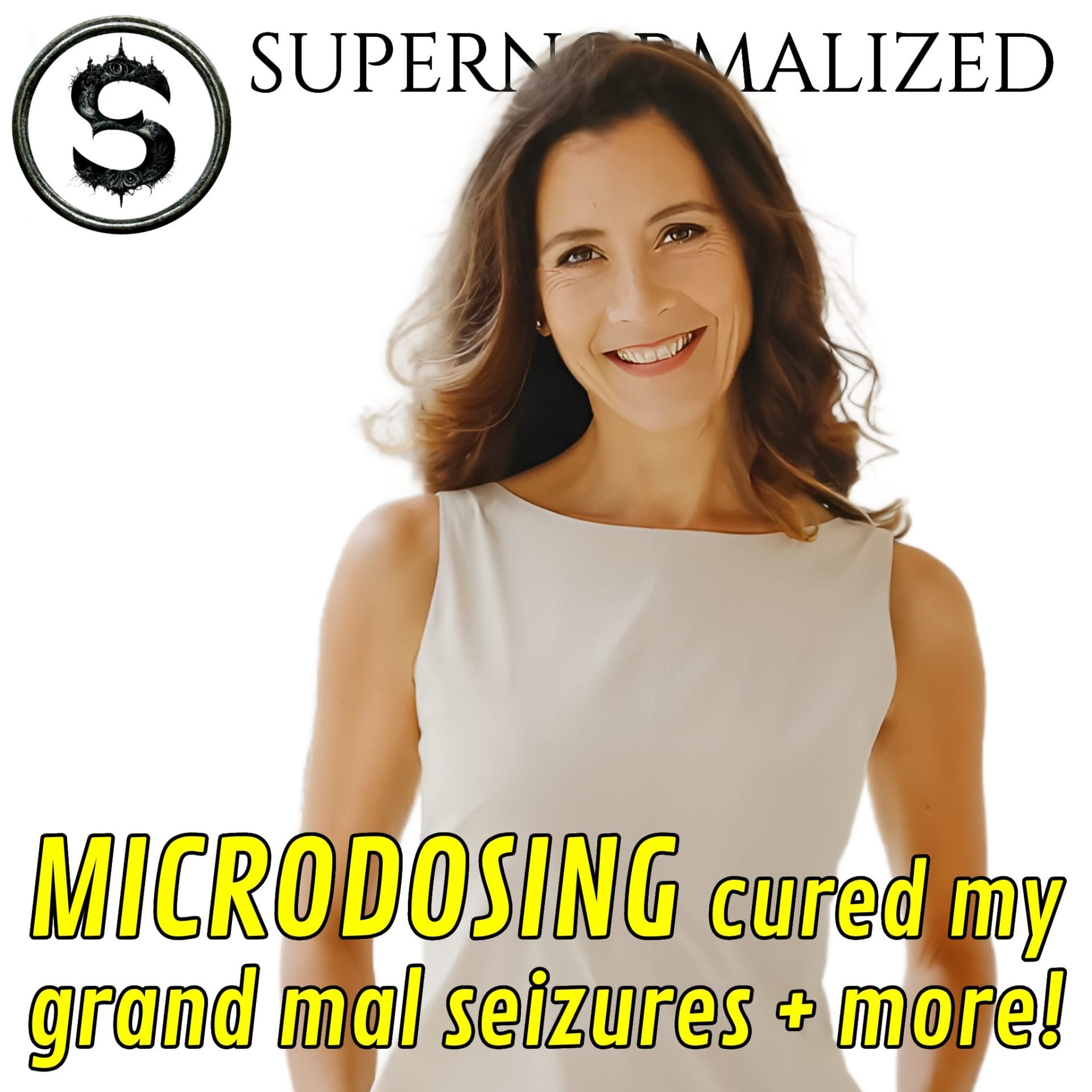
[00:00:00] Speaker A: What if the answer to healing conditions that have plagued you for years, conditions that modern medicine couldn't solve, was hiding in plain sight? What if a tiny sub threshold dose of an ancient Earth medicine could rewire your nervous system, restore your mental clarity and unlock potential you didn't know you had? For nearly three decades, Casey Garrett has been exploring the intersection of healing arts and Earth based medicine. But her real breakthrough came when she discovered microdosing. And it changed everything. She went from suffering debilitating grand mal seizures to complete healing. And she's not alone. Today, over 10 million Americans are microdosing, and the stories of transformation are undeniable. Yet most people still don't understand what microdosing really is, how it works, or why it's fundamentally different from everything else out there. In this conversation, you'll discover what microdosing really is and why it's not what you think it is, how it heals without the trip, without losing your edge, without becoming weird, real transformation stories from people who've reclaimed their lives and the ethical framework behind responsible practice. And also how to know if this path is calling you and what to do about it. This isn't about becoming someone different. It's about becoming more of who you already are. Stay with us as we explore one of the most profound healing modalities of our time and discover why the world needs what microdosing offers right now. Welcome to Supernormalize. Casey Garrett. Casey, I'm very interested in your understanding of microdosing, what that means for the world, and how you're helping pretty much everyone to find their path as not only users and experiences and the benefits of it, but also practitioners. So welcome to the show.
[00:01:49] Speaker B: Oh, thanks for having me. I really appreciate it.
[00:01:52] Speaker A: Yeah. So, Casey, can you tell us your early experiences and what first drew you towards the healing arts and how did that path unfold for you across nearly three decades?
[00:02:03] Speaker B: Unpredictably, I'll say that. I'll say that up front. So I was on as a child a very traditional path. I always wanted to go into healing and supporting people, but I was on a doctor track. I grew up wanting to be a doctor and did all the things and was studying pre med in college when I got a very strong intuitive voice which I now know as my guide. I didn't recognize it then to telling me to move across the country and I left behind a scholarship. I left behind familiarity on the east coast and listened to it gratefully. And when I got to California, I quickly fell into quote, unquote, alternative healing it took me off the tradition of the medical medic and track. I studied Reiki was my first modality, energy work. Then I went into body work, somatic, studied hypnotherapy and developed a private practice.
Eventually opened healing arts studios with a team in California. And personally, in terms of psychedelics, I had a grandma seizure disorder. So throughout my teens and twenties, I stayed away from all drugs, particularly psychedelic drugs, because I didn't. I was very afraid of destabilizing my mind when it was already quite destabilized, stabilized the way it was.
So I didn't really.
I wasn't drawn to psychedelics until I met someone who introduced me to the idea of microdosing. And I was like, what is that? And he said, well, it's a way to work with psychedelic medicines and earth medicines, but it's subthreshold, sub perceptual. You won't go anywhere, you won't trip, you won't be out of control.
And so that made me curious to try. I felt safe to try. And my seizures healed immediately. That was the first thing that happened. Also, I had a lot of incredible intuitive, deepening, nature connection, cognitive enhancement, lots of different physical, mental, emotional, spiritual benefits. So fast forward. When the pandemic hit back in 2020 and our healing art studios were closed, we specialized in touch therapy and group classes. So we were the first. We were like the first to close.
We were the first to close and we were the very last to reopen. And so just to kind of keep our community together, I thought, like, what can I do that's healing, that's supportive, that's community based. And so put a couple groups together to practice microdosing together. We had a cultivation partner that taught people how to grow their own mushrooms at home. People had a lot of time on their hands to bake bread, grow mushrooms, do things at home. And so, yeah, what started was, I thought it was going to be just a short time project to kind of tide us over and keep our community together while we were closed. But as things happened, my studios ended up closing completely. And this work just continued to grow and build and build incredibly over time. So those original groups turned into a global community, turned into a podcast, turned into a professional platform, turned into a professional training, training program to teach people how to support others in practice.
[00:05:13] Speaker A: That's fantastic. It's like the, the pandemic actually became the compost for the growth of this. I mean, what, what a, what a beautiful outcome considering how much devastation it wrought upon all of societies across the whole planet. I've got to ask you though, how did Reiki and somatic therapy shape the way you relate to the body as an intelligent system, rather than something to override?
[00:05:38] Speaker B: Thank you so much for asking this question because I spent, it's funny, I spent a lot of my. Is kind of resentful at myself that I had gone into this work. I had a lot of doubts and did I miss out in professional standing? I was just a massage therapist, I was just an energy worker. What the hell is that? Did I make the right choice? And now today, in hindsight, I realize that that was the perfect, the absolutely perfect preparation and foundation for the work I do today, which is to guide, which is to work with Earth medicines and allyship and working with psychedelics, particularly with Earth medicines. It's very much an energy medicine. They go straight to the source underneath what our symptoms and our conditions are. And now I can see in hindsight, had I gone down a traditional medical path, treating symptoms, diagnosing conditions, I would have had so much deconditioning to do to get to where I started.
[00:06:37] Speaker A: That's fantastic.
I'm curious though. You had the grand mal seizure complications and there was that turning point that actually led you to your own healing work. I mean, how much work did you do with microdosing to find that it actually had cured it? And what did you have any light markers where you said, okay, well this has actually worked?
[00:06:59] Speaker B: Yeah, I, I mean I went into it with really no expectation at the time because other than the person who introduced me to it, I didn't know a single soul that was doing it. I read any resources I could find on it. I think Jim Fadiman's book Psychedelic Explorer's Guide, like mentioned microdosing and that was the only thing I could really find discussing it as a subject. So I really went into it open minded, not knowing what might happen. I thought it might be calming and I thought it might deepen my meditation practice. But it was after a few months I was like, gosh, I haven't even had an aura. Usually I could, I would have a telltale sign that a seizure was imminent before I had them. And I realized that I hadn't had them. And I was like, oh, I wonder how if it'll keep going, I'll, I'll ever have them. And I just never have. And then I got curious when I took a break from microdosing. Will they come back? Will I have them once I stop microdosing? No, they never came back. So what I Ended up now, as I see it from witnessing so many other people in microdosing practice, it was, I don't think there was ever anything biologically wrong with me.
I just think my nervous system was so dysregulated that my seizures were a way of my nervous system trying to manage itself from trauma, from sensitivity, from being dysregulated. I had a viral infection, I had Epstein Barr very bad and was hospitalized for two weeks in a coma when I was 19 years old. And I think that the damage from that virus and that experience also too really damaged my nervous system. That really nothing, certainly no western medication could cure. But mushrooms were able to heal.
[00:08:42] Speaker A: Yeah, yeah. Do you have any lessons from your earlier years that actually still guard you and when you go to hold space.
[00:08:47] Speaker B: Today, I think today, oh, so many things. That's a beautiful question. I think to lean back and really let nature, the medicine spirit lead rather than trying to think. I know every time I think I know what's going on, I am humbled immediately by the medicine. So I think we are so as humans, but particularly in the medical and clinical professionals, so quick to claim certainty over things. And so now I think I've really, really learned over time that the less certainty, the less we're open to possibility and potential, the more we're open to receiving, witnessing the way nature and spirit work.
We have a lot to learn from them. And I think that really enables people to kind of tap into their own innate healing versus us intervening and creating it in some way.
[00:09:44] Speaker A: Yeah. How would you describe microdosing as an earth based medicine for people that are encountering it for the first time?
[00:09:52] Speaker B: Yes. I love working with beginners. I love working with people who have no idea what they're getting into. I also loved working with people who have a lot of stigma. All the Gen X kids that grew up with the dare in the Reagan years in the U.S. you know, it's, it's hard to shake all of that formative conditioning, shall we say?
So how I describe microdosing? I typically work with mushrooms. So you're working with an all natural sentient being that has many, many, many millennia of healing intelligence within it. So just know that this is not a pharmaceutical experience. This is probably going to be an experience unlike you've ever had before and hold open possibility for things that you might not expect and things beyond what you thought were possible. For this experience, microdosing is taking a small, tiny sub threshold dose. So you're not going to trip, you're not going to feel Altered in any way. I work with a lot of people who hold a lot of responsibility, have kids, have big jobs, run teams, and they're like, I can't be weird, I can't be off my game. I can't lose my ambition. Like, I don't want to be so cool as a cucumber. Like, I just don't care about anything.
And so it's a delightful surprise when people realize like, you're not only do you not lose all those things, you're actually more clear, more dialed in, more focused, more articulate, and kind of a better heightened version of you in pretty much every way.
[00:11:19] Speaker A: Yeah, when, when I first like, I. I heard about microdosing a while back, but then it seemed to get taken up by the tech bros and really pushed as a way of becoming more productive. I'm like, oh, is that really all you can do with it? And so I was really happy to hear that you're actually doing something which is beneficial for people in, in change and health and mental health. So all power to you there. What separates intentional microdosing from casual or recreational use within your framework?
[00:11:45] Speaker B: I actually welcome both. I've really evolved a lot on this. So when we first started out six years ago, we had everybody set intentions right and journal around their intentions and track your, you know, track yourself.
And I have really learned and been humbled by the medicine to shift your intentions for practice to kind of holding open possibility and just orienting your practice. So for instance, a lot of people come to heal physical conditions. I have headaches or, you know, I've been leaning on alcohol too much. I'd like to stop drinking so much. Can microdosing help me with that? But the medicine is so much more capable than sometimes than we put our attention. Our human intentions are so small compared to the possibility. So holding intentions but without narrowing your expectations too closely is how I bring to practice. And two, I work with a lot of people who have done a lot of work on themselves. People who are attracted to psilocybin, I find, are.
They're a little fearless compared to most people. They're a little courage. They're willing to face their shadow. They're willing to face their truth.
[00:12:56] Speaker A: They're.
[00:12:56] Speaker B: But they can sometimes forget that healing can also be light as much as dark. They can have fun and to be playful and joyful. That's part of the way mushrooms heal too. So when you're holding intentions for your practice, understand that like you're embracing the full spectrum and expansiveness of how we heal. As humans. Yes, there's shadow work, but there's also dancing and laughter and music as part of the process too.
[00:13:24] Speaker A: Yeah, it sounds like it encourages a childlike attitude towards life.
[00:13:27] Speaker B: Yeah, if we could only have that all the time. So we would be.
[00:13:31] Speaker A: Well, we've got to pay the bills too. So exactly what signs tell you that someone is integrating well versus pushing beyond their capacity?
[00:13:40] Speaker B: Ooh.
I think when they are recognizing their real lived experience and relationship shifting. This is, this is typically how it happens with microdosing because it can be so subtle. You're not altered, you're not really changing over in any way. Therefore it's easier to integrate into your daily life. But it's also so subtle, sometimes people miss it. And so the application and the real time integration we see is sometimes people will go, oh, I'm not noticing too much. But then they'll have something happen in life, like completely out of the blue or a curveball will come in and they come out of it and they're like, oh my goodness, like I handled that so differently than I would have six months ago or a year.
That's integration. That's like the real time. Seeing the benefit of how much you've healed, how much you've grown, how much you have kind of come home to yourself. It's, it's beautiful to see it real time.
[00:14:35] Speaker A: Yeah, yeah, no, I, I know for myself.
Cause I meditate fairly often. It actually offers a deeper sort of resilience to life and the, what do you call them, like the trip ups that we have. And instead of actually reacting, it allows you to sit back and go, what does this mean? And how do, how can I behave within this story? So yeah, I can understand that. How do somatic practices help people translate the subtle insights they get into daily life?
[00:15:03] Speaker B: This is one of my favorite things to pair with microdosing. So much of Earth medicine practice, the way the medicine communicates and works with people is moving energy.
So the mushrooms kind of remediate us just like they remediate in the forest.
They go in, they find out what's old, outdated, decayed, needing healing, needing coherence, and they kind of clear it out. But this can be a little uncomfortable. And this is why it's so different than a pharmaceutical experience, which is numbing and kind of taking people further away from themselves.
Earth medicines and mushrooms bring you home to yourself in a very honest way. So you're going to feel your feelings fully, maybe sometimes for the first time in your life. Plus you're going to be Releasing a lot of old, dormant, outdated emotions and energy too.
So body work, somatic therapy, polarity, acupuncture, any of the body practices that move energy could be so, so supportive in practice. It's funny how many times, how many clients I've had who actually had their biggest, biggest breakthrough. Not when they were actively microdosing, they were on a break from Earth medicine practice, but they had their big break when they were on the massage table with their massage therapist or things were. Yeah, they were getting a Reiki session and they could feel pain that they had had in their hip for nine years or pain in their neck that was due to a traumatic car accident when they were 17. They could feel it move and shift out of their physical body.
[00:16:35] Speaker A: Yeah, it pushes the stored energy of those traumatic events out of the body. What inspired you to create the professional microdosing facilitator program rather than a simple course or certification?
[00:16:45] Speaker B: Thanks for asking. So we did our six week immersion program back in 2020. We started with that and after a year or two of those programs, we realized we were accidentally creating a lot of guides from them. So people were entering from all backgrounds, all walks of life, and six weeks later they were like, I think I want to do this. Is that crazy? Like, I just started this. Is this crazy? And no, I mean that's. It's how the mushrooms work. They call you when it's time.
And I like, we are the spore, we are literally the spores. And they're working through us. Like, we think we're in charge, but actually they're in charge. And so it's been really interesting when I sat back and looked at, like, who is, who is getting called to this practice.
It's not an accident. It's very funny. Like in our last training program, we've had four HR directors, corporate HR directors, which you would think, like, what is a corporate HR director doing in a microdosing training program? But then I was like, ah, when I look at it through the eyes of nature, who would they want to carry forth the spores? But the people, people, you know, the people that are managing thousands of other people, have an impact on thousands of other people. It's actually very clever.
It's very mushroomy.
So what we decided after seeing so many people becoming guides, but not. They had personal experience, but they didn't have like the professional guideship experience. A lot of them were not coming from healing backgrounds or therapeutic clinical backgrounds. And so we put together more of a professional scaffolding and framework so that people can get Both the personal experience, but also the experience of what it's like to support another in practice.
[00:18:32] Speaker A: It sounds like they're a Trojan horse for the dismantling of the ineffectual society we live in.
[00:18:38] Speaker B: No pressure.
[00:18:38] Speaker A: It's like, well, I mean, they seem to have an agenda here and it's like, let's make everyone heal. And in doing so, that's going to affect all of society in a positive way.
[00:18:49] Speaker B: Yes, I think that's the larger game plan that they have.
[00:18:52] Speaker A: Yeah.
How do you teach practitioners to support clients without slipping into a fixer role?
[00:19:00] Speaker B: Yes, this is a big one. We were just talking about this in our, in one of our guide gatherings. I think it's such a challenge for all people who have like a healer heart, like a servant leader heart is you want to help, you're just a helper. That's part of your role. And so really always understanding that sometimes being the most supportive guide and support is allowing people to empower themselves in their own healing. You know, we're in this big shift now where we're moving into this very passive, submissive, top down, prescriptive, tell you what to do and moving into more of this moment of empowerment and self, direct connection to source, direct connection to healing. And it's very unfamiliar for a lot of people to do that. And so part of being a guide is training yourself to continuously reorient, reorient practice, reorient this practice back to the client's experience and the client's empowerment, tapping into their own intuition, their own somatic knowing and making the decisions from that place and creating a relationship with the medicine that's apart from you. You are just there to witness, guide and support within that.
[00:20:17] Speaker A: What sort of ethical boundaries would you feel are non negotiable when guiding and microdosing?
[00:20:22] Speaker B: I think this work holds us too and demands the highest level of integrity there is. And I say that because I hold this work in honor of nature and spirit. My guides, my ancestors, a lineage. And they're always watching us. They are tougher, they are tougher than any ethical board or city council or other people like in the Muggle world that we might report to as humans.
They're always watching. They're always watching and kind of with medicine work, if you're going to do this work and experience this work, it's signing up for alignment whether people are watching you or not. What you're doing in front of the camera, what you're doing behind the camera, they see it all. And so it really, to me Especially mushrooms demand a very, very high degree of honesty, always.
And doing things to and for your highest intention possible, knowing that when you do so, you kind of have the power. You have immense power and natural forces behind you supporting you. But as soon as you kind of get out of line and do things from ego or agenda, you get reminded very fast, no, no, no.
[00:21:39] Speaker A: What does that look like?
[00:21:41] Speaker B: It's always humbling. It's always humbling. I think a big one that comes up for people is always wanting more, always needing more. You know, we're so, in our modern humans, we're so wired to. Is that. Is that all there is? Is that all there is? And so sometimes people have tremendous healing and tremendous gifts, but there's this tendency to go, well, should I do more? Should I do another journey? Should I up my dose? Should I do a different medicine? Should I lay, like, right on? And so we. It's just our human. It's just our human. And so oftentimes when people do that, they'll. They'll do it and they're like, nothing happened. I took. So I took a super high dose and like, nothing happened. And it's like, well, sometimes not saying anything is saying everything right?
[00:22:27] Speaker A: So, yeah, now look, I experienced that myself when I was in my youth. I was following Terence McKenna and all of, all of his work. And one of the things he said in one of his readings was the powerful of the golden teachers in, in Thailand. I was like, well, I'm going to Thailand. And I went to th.
And I had a mushroom omelette one time and it was beautiful, absolutely amazing. And it totally changed my life. And I thought, I've got to do that again. And so the next weekend, I did it again and I thought, well, I'm going to double my dose. And I did it and nothing at all happened. Like, I could feel it in my system, but nothing was happening. I was like, this is so weird. And then I realized, wait a minute, they're in charge of this story and you're going too fast. And I learned that really quickly. So, yeah, I understand how that works.
[00:23:19] Speaker B: That's a perfect story. Absolutely.
[00:23:23] Speaker A: How does screening and preparation protect both the client and the practitioner?
[00:23:28] Speaker B: Great question.
There's some of the obvious screening stuff that people need. A lot of times we need to review any pharmaceutical meds or supplements.
We're very.
We like our pills here in this modern moment. So we screen people for. What else do you have going on, as well as your diet, your relationships, what's going on in your life? As much as possible, we try to take a 360 approach, not just to conditions and diagnosis, but like what is going on, like the totality of your life. Because this practice, even if you're coming for just physical conditions, it touches every cell, it touches every aspect of your life, physically, mentally, emotionally, spiritual. So it's good to have like a snapshot of what's going on with someone. How are they feeling in their life? For some other questions I love to ask and listen to the answers is how far is someone from themselves right now? Some people really have done so much work. They've tried everything. They've done every program and every modality. And they have a condition and they've tried so hard.
They've meditated, they do yoga, they eat super clean. And they still are like, I still have this thing. Mushrooms come in and it can be like, like nearly miraculous. Within a week, they have alleviation of some of their symptoms that they've had for decades. And it can almost seem miraculous or too good to be true. But the thing is, they have laid the groundwork and the foundation.
They have a long history of foundation and they have done a lot of work. They're not that far away from themself if someone else comes in and they are, have never been with themselves. Like, they really don't know who they are as a soul yet. Maybe they had a lot of trauma and instead of being counseled to work within themselves, they were directed outward. They've been on a lot of pharmaceuticals, they have tried to numb sometimes with other substances.
So if someone is very, very, very far from themselves, sometimes it's best suits them to come back to themselves a little closer before they can begin working with mushrooms. Not that mushrooms won't do anything with them for them, but it's. It will be. They'll be able to communicate with the mushrooms more if they first get in touch with themselves a little bit more. And then the last thing I like to ask people is when you go out of balance, do you tend to go inward or do you tend to go outward? Meaning that if you are, do you get sad, do you get isolated, do you get depressed, do you go inward, do you experience like, shame?
Do you fall into repetitive thinking and patterning whenever someone tends to go inward? Mushrooms love those people. It's almost always a really, really good fit when someone tends to go outward. And like the, the road ragers, right, the yellers, the screamer, the people who direct energy when they go out of balance, direct energy outward and hurt other people versus Hurting and harming themselves that I give pause to that can be successful. But I find it's interesting. It's just like as a sentient being would, they can feel that energy, they can feel that fear and they don't. They're less likely to talk to and give that person gifts and benefits that they, they do to the more humble person.
[00:26:59] Speaker A: Right, right. So those people ideally need to work on those systems that are internal first to be ready for this sort of level of.
[00:27:07] Speaker B: Yes, yes.
[00:27:08] Speaker A: What have you witnessed through the global community that individual work alone could not offer?
[00:27:14] Speaker B: I was blown away by group work from the start. I had never really done group work. All of my practices had been individual therapy at our studios. We did a lot of sessions and so doing our first group programs, it blew me away how different it was in a focused group of people practicing something together. Each had their own experience, but the power of being together to reflect. And I think just that shared focused attention and intention around things was unbelievable. Like I, I had to compare it to. I had been working with people one on one up until then and it was like a six week experience would take six months for an individ person to move through. It was really, really fascinating. And just the power of the group, Psilocybin especially is such a relational medicine. So it shows up in the interactions between people too. So we have so many wild stories of like within a group, you know, people from all around the world being drawn together who once they're all together it's like, okay, it's unmistakable. Like they just have uncanny similar backgrounds, similar threads.
We even had two people who lived in the same house in Boston at different times come into the same group one time. Like crazy, crazy. Like you could never ever replicate experiences.
[00:28:35] Speaker A: Yeah. The probability of those things sort of happening is impossible. Nearly. And you know, but you know then that there's a bigger plan going on here. Yeah. I've just been part of a six week group container for shadow work. And the amount of things that actually happen within the group has been spectacular. And it happens because it is a group. So you know, if you go to share your experience in the group calls, at least, you know, 15 other people have gone through that but aren't able to share it. But because you share it then that brings more resolution for everybody. So. Yeah, it changes everything. Group stuff.
[00:29:13] Speaker B: It does, it does. I kind of ask you if I'm. Are you a Scorpio?
[00:29:18] Speaker A: No, I'm a Gemini. Taurus rising.
[00:29:21] Speaker B: Okay.
All right. I asked because I was just like Terence McKenna shadow work Scorpio Moon.
[00:29:30] Speaker A: So I've got that edge too.
[00:29:32] Speaker B: So there you go. There it is.
[00:29:36] Speaker A: Yeah, it all makes sense to me.
[00:29:37] Speaker B: To explore these things 100%. It's your Scorpio Moon.
[00:29:41] Speaker A: Yeah, yeah, yeah.
So what role does peer discussion play within the professional guided community?
[00:29:49] Speaker B: It's is, I think, the most valuable piece. We were just reflecting last week in our group that we're at a point this year where the knowledge gap between academia and the clinicians and the research and the guides who are in the field working is enormous right now. It wasn't always that way, but like, it's really, really noticeable now. And I think it's because as it becomes more and more accepted, more and more people coming to it, there's more guides supporting people. We're learning at such a fast rate now because we're witnessing so many thousands of people together.
We've actually been talking about how do we. Because we, we talk all the time. We see each other's clients and we talk about what's happening in each other's worlds. But we were thinking it's really timely right now to start to aggregate these collective experiences and stories because there's so much more. The science is really far behind where the people are at this point. Like, the people who are just opting to empower themselves to do this are really leading this field right now.
[00:30:54] Speaker A: Why does ongoing mentorship matter more than one time training?
[00:30:59] Speaker B: For lots of reasons, but I think for this field in particular in this moment is because we're just learning so much, so much. I think I'm now six years of working, serving full time in this field and work. And I see now we're only scratching the surface of what we're going to learn, whether it's how, how these medicines work with our physical body from a scientific lens and perspective, or just how we can better support people and guide just from kind of leaning back and learning from the medicine and learning through people's experience. I think this is a field that I think we're always going to be learning from nature, from spirit, always. And that's why it's so fascinating. It's still at this point, like, I don't, I rarely have a single community call or group call that I am not learning something every week from the medicine.
[00:31:51] Speaker A: Have you noticed any patterns across Supporting more than 1400 people worldwide?
[00:31:56] Speaker B: Lots of patterns, yeah, lots of patterns. I remember starting to recognize distinct patterns after about three or 400 people. It was like enough people where I was like, okay, the medicine's doing this. And then spirit was like, yeah, bye. Finally. Catch up, catch up. So one of the things I think the medicine works with people, especially with psilocybin, is around emotions. So sometimes people have these emotions pop up and almost out of the blue, or this extreme fatigue or anger and crankiness sometimes just really rage feelings, like, not that they do anything, but just kind of like they're in like the rage fantasy of their own, or deep grief comes up like cathartic tears, just being really tender and sentimental. Nothing sad is going on in their present life, but it just feels like an old weeping is coming forth with the medicine. And so it took some time and pattern recognition to understand what was really going on there. And once you do see it in enough people, it's like, okay, it makes sense. And a lot of when you're working with natural healing, it's always bringing us into coherence, always bringing us into balance. And so lots of times people, the emotion they were feeling was so unfamiliar. Like the people that felt cranky and irritated are the people who were always nice, always very other oriented, always like, oh, I'll just go along with the program.
And they're like, what is this? Like, I've never been cranky like this. I've never been feeling this. And it's. It was nature's way of kind of lighting a little fire in them to go, what do you want with your life?
Right. Like, suddenly they had an opinion about things and suddenly they have desires and suddenly they know what they want and they started to speak up. And so sometimes people have these emotions where it's always a pendulum swing, right? Where people who were quiet and really always putting themselves aside swing into speaking up for themselves. Like, no, this is mine. No, this is mine. This is my life. And making stronger choices. And so that was.
That, I think, was one of the biggest, biggest things is starting to recognize how our emotional bodies work with the medicine and work as part of the larger healing capacity of the medicines.
[00:34:18] Speaker A: Do you think it like takes off the dampeners that stop that self expression because of conditioned behavior?
[00:34:25] Speaker B: Often, yes.
Yes.
[00:34:28] Speaker A: Okay. So which expectations tend to fall away once people engage microdosing with care and structure?
[00:34:35] Speaker B: A big one, I think, is that they're going to feel medicated or subdued or out of it, or I think sometimes people think they're going to have an alcohol experience where it's just like feeling right buzzed. It's the opposite. So I think that's a big one, is people just are always surprised, like, how clear they feel. How motiv did they feel? They're like, I'm suddenly doing all these things I've been procrastinating around.
You know, my house is cleaner, my life is just feels more in flow. I don't have as many frictions and jagged edges moving through my day to day. I'm just kind of moving with a different sourcing than I. Than I did before. Another big misconception, I think is that they're going to feel good all the time.
I think too sometimes people hear that, you know, they're gonna have 10 years of therapy in one experience. And yes, your experience with, with mushrooms can be absolutely profound and you can have unbelievable experiences. But also know that it's really embracing the full spectrum of our humanity. And so I think it's not really about feeling good all the time is it creates a new capacity for expression for us of experience, of life, so that we are able to be uncomfortable, we're able to hold sadness, we're able to hold grief, we're able to hold fatigue, we're able to hold our momentary emotions as humans in a different perspective. Rather than being overwhelmed by them or controlled by them, we see them for what they are and kind of hold our life experiences in a different way. So it's. So it's such an altogether different way of healing than we have been conditioned. So I think that too sometimes as a guide that's a big part of what we do is helping people continue to reorient into this different perspective where you're not just managing symptoms anymore. You're actually stepping into a whole different vitality in your life.
[00:36:36] Speaker A: How has your own perspective shifted through years of direct practice?
[00:36:40] Speaker B: I think I realized I know less now than when I first started. At the same time, I know much more. I also know, I'm aware, I know how little I. I do know. I think the biggest thing, the biggest factor that has shifted in my own practice has been thank you, thanks to mushrooms and thanks to practice has been the ever deepening expression, connection with my connection to source and spirit and my guides.
It's at times, at times I'm just kind of following spirit in doing things in designing programs. Lots of times they'll just come through.
Whether it's like a channeled experience or in a dream sometimes or just it'll be this is how it's to be. And I almost follow like it feels like I'm just following order. So I think that's a big shift too in mentality is I think we're such a mentally heavy species at the moment. Right. Like, we try to will our way through things and think our things and, and strategize our way to things. And this is especially true when I work with a lot of leaders and public people with lots of responsibility is their mind is so important to them in making decisions. And the more you practice with mushrooms and the more you connect with spirit, you realize your mind is actually way slower than spirit. Your mind is the slowest thing. And your mind, ideally, it's more like a passenger and a witness to when you're sourced by your soul and your spirit. And so when you are actually in alignment with spirit and source, your decisions are like this. You don't think about them at all. It's more. You do it and then your mind is there to refine and clarify and kind of bring to life exactly how it's going to look like in the 3D. But it's a completely different orientation of what drives you and what kind of animates your being.
[00:38:36] Speaker A: Yeah, right. That makes a lot of sense. Where do you feel the wellness world gets microdosing wrong and what feels quietly concerning to you about.
[00:38:45] Speaker B: Beautiful question. Thank you. I think right now a lot of people are coming to practice equating microdosing to antidepressants, for example. They think it's apples to apples. They think, like, I can replace my Prozac for mushrooms and they're going to be similar. They're the complete opposite in so, so, so many ways.
That is a big misconception that we have to. To work around. I think we're at the point too, where corporate forces and pharma forces have taken notice that after, after years of kind of just being fringe and kind of dismissed, questioned if it was placebo, questioned if it works. They just published a study. Over 10 million Americans microdosed in 2025.
And. And immediately thereafter, there were two pieces, two hit pieces, two scary pieces about mushrooms in major publications. Within a week of that study being published, of course. Of course. Right. So we're kind of in this time where being ignored. For a while we were just kind of ignored and written off and fringy. But now there's going. We're going to see the fear tropes start to roll out of. You need to be afraid of Amanita, you need to be afraid of doing this without a doctor's supervision. All of those stories to disempower people and make them fearful and eventually gatekeep by the pharmaceutical industry, we've got to keep in trial. Oh, yes. Yes.
[00:40:13] Speaker A: Yeah. Well, we've seen that throughout history, so not surprising really. What kind of practitioner do you hope your training helps bring into beautiful.
[00:40:21] Speaker B: I hope it brings people that are courageous, that are lead with service at its heart, that lead and support people to empower themselves in practice. I also very much hope that guides embody the teaching of the medicines and aspire to be like a mushroom in life. You know, mushrooms are the best model for this work. You know, they're very understated, they're very humble, they're easily overlooked. But the power that they hold in the forest and on earth is there's nothing else like it. So as much as we can guide the way they guide, I think we're, we're in good shape.
[00:41:06] Speaker A: Yeah. I think one of the biggest animals on the planet is a mycelium bed, which is hundreds of kilometers wide. And as we know, that's fully conscious.
[00:41:18] Speaker B: Really.
[00:41:19] Speaker A: How do you see alternative and earth based medicine reshaping ideas of wellness from the inside out?
[00:41:25] Speaker B: Thank God. That's my relief is the first thing I feel.
I think so much we have gotten in our modern society so, so far away from ourselves. You know, I talked about that as an individual, but I think as a society too, we have gotten so far away from the earth, all of the gifts that we already have. I mean, there's so many people I work with when we have conversations in our intake call about sunlight, how much sunlight are you getting?
How is your water? How are your relationships and your resources? What is your connection to the land you live on? They're like, what? What? But these things are so simple. They're so abundant and freely available. They're really foundational. So we have so much capacity to heal within ourselves just based on our sleep, our nutrition, our sunlight, and our kind of connection we have with the earth and land that I think starting there, rather than that being last in our healing, I think if we start with that first, our connection to the earth and our soul and our energy versus working backward like we do in the modern system, which is working with the physical body first or the mental health first and eventually getting to the soul. I think if we start with the soul and the energy, that's the future.
[00:42:44] Speaker A: What inequality do you believe matters most for anyone called to guide others?
[00:42:49] Speaker B: I think the top things I think would be compassion, empathy, and the ability to set yourself aside, which is not easy to do. It takes years of practice. I think most people, even people who are in the field supporting people. Most people are a big jumble right of projections and defenses and, you know, human. Human. It's part of the human thing. And so I think the. My greatest mentors and guides that I have learned from and witnessed and interviewed really have cultivated a quality where when they are supporting people, if anything, they are witnessing and they're channeling spirit in presence alongside the medicine for another person.
It's. It's very different than the interventions that we think of, but it really enables. It sounds simple, but it's not. It's definitely not to be able to have a quality where whatever else is going on in your life at the time, to be a really clear channel and hollow bone when you're in presence with your clients and guiding. Those would be the qualities.
[00:43:57] Speaker A: Yeah, that'd be essential, for sure. What question would you invite people to ask themselves before beginning any microdosing journey?
[00:44:05] Speaker B: I would ask them, are they truly ready to meet themselves in the most direct, loving, and honest way they ever have?
[00:44:14] Speaker A: That's huge. I can imagine that some people go, oh, not yet.
How can someone sense whether this work truly aligns with their current season of life?
[00:44:26] Speaker B: This is such an important question, I think, because we're all in different cycles, always in different transits and different things. We're going through portals of our own life. And so we have, as humans, in a fully lived life, to your point, like, we have seasons of, like, being really busy and being, like, lots of change and transformation. Then we have lulls where things are really peaceful and consistent. And so when we're working with people is. That's part of the process too. And taking that into account, you know, I've worked with some people who were so busy, like, so full and busy and overwhelmed in their life that literally the only time they had that was quiet and alone was like the seven minutes in the shower that they had a day.
And so that was how we worked with them. Like, we utilized that seven minutes in the shower to talk to spirit, talk to the medicine, communicate. And it was really. It was really beautiful. Some. Sometimes some of the things that happened within that seven minutes was pretty amazing. And then other people are retired and have lots of time to just. I've had other people completely devote to this process and pour all of themselves into it. And so I think when you're coming to practice really taking care of yourself and supporting yourself in meeting yourself where you're at, right? And know that nature, you know, nature will find a way to grow in, like, the cracks in the sidewalk. They do that with us too. And so whatever capacity you have, nature Will, will meet you there. But just have a lot of self compassion in the process.
[00:46:00] Speaker A: What feels most alive for you right now within your work and community?
[00:46:05] Speaker B: So much. Let me, let me pick what, what comes up tops. I think I'm most excited about seeing, like seeing in real 3D reality something that those of us who've been in healing for decades have only known what's gonna happen. Like had a feeling, had a prophecy. Our mentors and our elders told us about this time. And so it's really a trip like to be here now 30 years later and go, oh, this is what they said was gonna happen.
And there it is, there it is happening.
And I started to see it a couple years ago on intake forms. It was really, really striking. Whereas people up until a few years ago, they would come on an intake form and check off like, they would list their problems, they would list what's wrong with them, they would list their conditions and what they wanted to improve about, you know, their condition and manage it.
And then I noticed a shift into this isn't good enough anymore. Like I started to have a lot of people say my life is okay, and I guess I'm okay in like a holding pattern, but if I look at the next 40 years, it's not good enough. Like this isn't good enough. And it was, it was totally the, the beginning threads and themes of people knowing that we have more, that the human has much greater potential than we have shown right now.
We know these things, we kind of have these codes within us. And so it was like little signs and clues like that, that there was something in us that was starting to awaken. And so present day, the, the thing I'm most excited about is kind of being in this year of 2026 where we are real time, like waking up and these ancient codes are kind of coming to life. That's why psychedelics are coming back right now, because they help us reactivate these codes and in us. And like Terence McKenna wrote many years ago, it's going to get really weird. It's going to get really weird and it is going to get really weird. I mean, people, real time are opening to their gifts. More and more people are able to channel. More and more people are becoming psychic. More people come, like telepathy. We're discovering so much more that we're capable of that have been kind of coded within us all along. So that's, I'm excited about a lot of things, but I think that's tops right now.
[00:48:27] Speaker A: That's excellent now for people that are interested to become practitioners that are sitting on the fence. How would they make the right decision here when it comes to, like, great question.
[00:48:40] Speaker B: I think what's come up now, we're in our third cohort right now, and one of the things that has. Has taken place after, during or after the training that they're like is I think we're so conditioned to think we go become something. Like, we get training or certification, and we. We need to.
Other than what we already are. And once you're in this practice and you become a guide, you're always connected to the medicine. You're always guiding. And so you don't have to become. You don't have to wear a different hat or a different costume or have a different identity or a different shingle. You are more of what you already are. And so they come to this realization because it was when they were making the decision, it was like, am I. I'm an HR director, and I want to become a microdosing guide. Like, does this even make sense?
Like, how do I negotiate these things? How do I straddle these two worlds? And once you're in the practice, you realize there is no more straddling two worlds. Like, you are this person in all of your life, all the times, and all of your relationship. So this, like, weird, compartmentalized way that we've been living it the last 400 years is about to shift dramatically where becoming a guide just enhances and amplifies everything you already are.
[00:50:00] Speaker A: Yeah, right. So it's more of a question of not just is this for you, but does this feel. What would you want listeners to sit with after this conversation ends?
[00:50:13] Speaker B: I hope they're inspired to be courageous in whatever way that means for them. I think there's a strong pool this year to step into something new, to step into something inspiring, to take chances, take risks. You know, I think the world is so chaotic and crazy right now and upside down. Like, when we look at who is quote, unquote, in charge, there's this sense of, like, we have nothing to lose. Like, Right, we have nothing to lose.
And it's going to be us. Like, we're. We're all coming to the conclusion it's going to be us, right? To. To step up. And so I think whatever that means for you, your soul already knows. Like, you know, it was baked into you when you showed up here in this lifetime. And so I think starting to take steps in alignment with that, whatever that is for you, I think that's the most valuable takeaway I can think of.
[00:51:11] Speaker A: Beautiful. Kasey. How can people find you and your work and learn more about it?
[00:51:17] Speaker B: Easily. Thanks for asking. Yeah. Where all of our things is at, Microducing for Healing there, we have lots of info about our training programs, our community, our immersion programs, as well as the podcast.
[00:51:28] Speaker A: Excellent. All right. I'm going to sign up for that podcast myself as well because I want to hear more.
[00:51:33] Speaker B: Great.
[00:51:33] Speaker A: Yeah, yeah. Amazing work you're doing, and I can hear your passion and your love in it as well. And also hear that maybe the mushrooms have got you and they're using you for their agenda, but that's a good thing, you know? And we know that, you know, there is a healing happening to the whole planet and all power to you and the work that you're doing.
[00:51:53] Speaker B: Oh, thank you so much.
[00:51:56] Speaker A: You're welcome. Thank you. All right.
[00:52:01] Speaker B: Whoa.
[00:52:02] Speaker A: What an episode. That was really, really interesting. And I really appreciate Casey's understanding of microdosing and the benefits of it. And to hear that it actually healed her own grand mal seizures is extremely important that there's so many people out there that suffer from such things as well. I myself have what's called a visual migraine occasionally, and I'm thinking maybe I have to look into this to see if I can move that on as well. If you think this episode would be beneficial for somebody that you know in your life, make sure that you send it to them. This would be really cool. And if you're interested in microdosing and want to learn more or have any questions or anything, write them down in the comments. I'd really appreciate that. Or even just tell me where you're from and how much you're enjoying this show on YouTube. Like and subscribe. You know the drill that would really help more people find these great conversations. And for all my podcast listeners, thank you very much for listening. Please look forward to my next episode.
If you've enjoyed that episode, you'll enjoy this one, too.