Episode Transcript
[00:00:00] Speaker A: On today's episode of Supernormalized, we're talking to Mark Burnett. He came into the world at camp Lejeune in 1958 and carried the legacy of that place for decades. Unexplained nerve pain, balance loss, and eventually clinical diagnosis of Parkinson's and early Alzheimer's disease. Trained as a database programmer, Marcrie treated his symptoms like a stubborn bug to be fixed. He followed a trail from a Japanese university study to a tiny seed that is used in traditional Chinese medicine. He engineered a cold mill process, preserve frag compounds and began a personal trial that changed his life. Suddenly, he was getting fuel. Fools near gone tremors, sharper memory, and measurable improvement on his blood tests. He founded a company called APDI and My Brain Restore to make that process available to others while continuing clinical testing and legal action tied to Camp Lejeune exposure. On this episode, we'll talk with Mark about his medical test, the science behind the scene in the ultra chill milling process, practical directions for caregivers and patients, and the ethics of regulation, and questions around self experimentation and supplements and the legal and community fight tied to environmental toxins. Stay tuned for details on Mark's experience, on how he discovered this, and how he's turned it into a product that actually helps people with their Parkinson's and Alzheimer's. This supplement is changing so many people across the world, and this is a great story.
Welcome to Super Normalized Mark Burnett. Mark, it's like you.
You must have signed up to, I don't know, a pretty strange sort of life to be able to come into the world and then be forced in a position to find your way back to health. Welcome to the show.
[00:01:46] Speaker B: Thank you so much. I appreciate it. I'm looking forward to it.
[00:01:48] Speaker A: Yeah, I'm looking forward to hearing how this all happened. I mean, you know, your early life was pretty rough, and it wasn't by your own hand or the hand of your parents or anything like that. It was more so just by circumstance. Do you want go into that sort of detail and tell us about that first moment when you realize something serious is happening with your balance of memory and how that all came about?
[00:02:07] Speaker B: Right, sure. Well, essentially the. I was born in Camp Lejeune, which was a contaminated base, but of course, at that time, during my teens and my even early 30s, I didn't know really what was going on. I knew that I had some neurological issues, but no doctors could really figure it out. I had root canals in all my teeth for no particular reason. No one could figure out why my teeth were hypersensitive. And all these things kept driving me, I guess, in different directions here as to what kind of problem I had. And it really wasn't until I got into my 60s and started noticing more advanced kind of Parkinson's symptoms starting to come on, that I started thinking about that. I knew I had talked to my mother prior to that. Why do I have no brothers and no sisters?
And what had happened is, on the base when I was born, my mom was sick in her second and third trimester. And the doctors were like, we're not sure we are going to be able. He's going to be able to be born. And I made it. A lot of babies didn't there. A lot of babies did die. It was really rough, but I made it out. And unfortunately, though, I asked my mom when I was like, 13 years old, you know, you get curious like, why don't I have any brothers or sisters? And she said, well, let me sit down. She's a marine wife. Right. Okay. So, you know, straightforward to the point. Well, here's the deal. You know, I. They. I was so sick on the base with you and everything else. Didn't know why, but they kind of pushed me to get a hysterectomy now, leave that base. And she would have been fine. But no one knew that, and no one was telling anybody that at that time. So that's why I don't have any brothers and sisters. And I became an only child. And I basically, you know, once I understood what was happening and I understood what was happening in Camp Lejeune and this contaminated water, my spirits were, you know, let's fight this. Because I'm sort of an entrepreneur. I always have been. I've run programmers before and work with developers and things like that. So researching and figuring out things, working from a blank screen was something I was very used to doing. I had that heart for it. So that's how I got started.
[00:04:21] Speaker A: Yeah, I'm curious to that contamination is tce. What's that?
[00:04:25] Speaker B: Well, it's a name I'm not going to pronounce. Try to pronounce that. It's like a. It is essentially a chemical that probably most people have in their garage and they just don't know it. It is in brake cleaner fluid. Okay. It's in carburetor cleaner fluid. It's in wig glue. It's in the correction fluid that you use on paper. It is a chemical normally used to clean metals for the most part, but it's also used in the dry cleaning industry. To clean uniforms. Hence the Marines.
And everyone went to dry cleaners. And one of the dry cleaners that wasn't on base but was upstream from base dumped all their TCE that they cleaned the uniforms down the drain and that into the water supply aquifers. And I think there was like 84 wells in camp Lejeune. And they pulled the water out from 1953 on. And I was born in 58, and we were drinking water laced with TCE. So my first drink was a formula because back then, breastfeeding was not popular. And let's keep in mind, Betty Grable was out there.
So there was this sort of, oh, the Marines are like, you know, no, no, no, use a bottle.
And so that's what happened, you know, I mean, I got bottle fed in the hospital. The hospital is one of the most contaminated hospitals with the water. And my first drink was that TCE water.
[00:05:49] Speaker A: Wow. And that was polluting everybody and causing lots of drama that no one really could pin it to.
[00:05:55] Speaker B: Well, and then there was huge amount of COVID ups going on. You know, base commanders were keeping it quiet. They had put out some memos like, nothing's wrong with the water. It was only until the US government got involved much later, much, much later, and did a survey of everything that they found a bunch of contamination with TCE chemical and which was that cleaner and benzene was also, which is a form of like acid in the water system, three other chemicals. And so it was horrible. It was just drinking chemicals every day. I mean, you go to the pool. I was a little kid. You go in the kiddie pool, right? I mean, I was like 2 years old. My mom was a big fanatic for going to pools and learning to swim early. And I was in the pool all the time. So, you know, while that was fun, the end result, it wasn't.
[00:06:43] Speaker A: Yeah.
[00:06:44] Speaker B: And then I got hit with, you know, well, okay, I don't want this, you know, Parkinson's thing. How do I deal with it?
[00:06:51] Speaker A: So what happened? So your body got severely toxic, and then you started to notice symptoms of Parkinson's and Alzheimer's and early age onset dementia. How was that for you? I mean, that would have been quite disturbing to realized something was going on. You're like, well, where did that come from?
[00:07:09] Speaker B: Well, besides the root canals, which involved all teeth, eventually, I also, at a very young age, had ed, which erectile dysfunction, which was very unnormal. Even my doctors were like, this is really weird that you would have this at such a young age. And there was no explanation for it. At that time, there was a Viagra or things like that out there. So when there was, I used it. It worked for a little while, but stopped. And that's an early sign of Parkinson's that some people don't realize. After doing research, I realized that was a Parkinson's symptom, the damage of those nerves that create that capability. So, you know, I knew things were wrong, but I just couldn't get any doctors to put, you know, the sort of, you know, check mark of what it was. It wasn't until I started doing my own research and understanding There were a lot of things going on in Camp Lejeune where I was, that I started to put that together as, unfortunately, during COVID I started to bump into things. I started to take corners a little too fast or it's a little too sharp, I should say, and fall down, falling upstairs and downstairs. So either one's fun.
[00:08:13] Speaker A: Oh, God awful. Yeah.
[00:08:15] Speaker B: And you knew something was wrong. But I didn't want to go to the doctor right away because these were horrible situations going on. But I didn't want to get Covid either, and I hadn't yet. So basically it came down to I had to focus on, you know, what's out there. I eventually saw a neurologist and they put me on a medicine from the 1960s called Cardopa L Dopa type drugs, which are just replacements of dopamine. That's all they are. So they're not fixing anything. They're just replacing what's not being made by the brain. And I realized that was not good. And one doctor summed it up because they said, we call this the honeymoon effect. And I said, what is that? You know, I mean, besides what I know what a honeymoon effect might be. And they said, yeah, after about five years, this isn't going to work for you, and it's going to go away and we're going to have to increase the dose. You're going to get into worse problems. You don't beat it. You know, it's unbeatable, it's incurable. I just couldn't deal with that. My brain was telling me, no, no, no, no, no, you got to do more research. You got to figure it out. So that's what really got me on the path. And being a database programmer, being used to those blank screens and building an entire database board. Huge companies with a team of programmers. I saw a tired. I realized that solving any problem from a blank screen was possible. You just had to know where you're going, what your Results need to be at the end. And how do you get there?
[00:09:38] Speaker A: Yeah. So you're driven to actually gather all the data, all the possible data. And then using your skills as a database programmer, you would even say a computer engineer, you would say that you actually dived right into that data and started to notice patterns that actually pointed something out.
[00:09:53] Speaker B: Well, yeah, you know, I mean, I came across a somewhat abandoned. Well, I should back up a little bit. The Michael J. Fox association foundation group and the Parkinson's news groups had all done a really short article about Japanese experimenting in with a natural product.
But they were trying to. At the University of Japan Medical School, they were trying to figure out this product that they had found and why it cured mice of Parkinson's, Alzheimer's and dementia. And when I read that, I was like, how can one thing cure three neurological diseases? That seemed very odd to me. But again, that's where my brain, who thinks way outside the box always. And I tend to predict things that happen eventually. I wish I could do it better with stocks.
[00:10:41] Speaker A: Terrible.
[00:10:44] Speaker B: But I could see that happening, you know, I mean, in other words, I eventually was able to find that report, the actual scientific journals that were published. And the scientists could not figure out how to take what they had seen happen with these mice after they dissected them and realized everything was clear, everything was gone, it had all cleared out. And they couldn't figure out how to make it into a drug. They just. You couldn't beat mother Nature, okay? That's just the way to put it. And so big pharma that was paying them money said, well, we can't have a $10,000 a month drug.
Well, abandoned the project. And that's what happened. But to me it was like, wow, that's an aha moment. You know, wait a minute, wait a minute, let's go back. What did they use? And it was a plant I had never ever heard of before. And they had used the seed from the fruit of just one particular species of that entire species line. So something gave them the incline to do that. And when I was able to actually acquire that product, which was difficult to get the way it needed to be, and it had to be made in a special way. Again, I came up with new ideas how to make it using an ultra chill mill effect on our. On the mill and stuff so that I could make it just for myself, I was. It wasn't about being selfish. It was more about I had to prove to myself at work, you know, that was my point.
So that was In January of 20, 25, I started taking it and I stopped taking the Cardopa that I was taking, which wasn't really working anyway for me. And I told my neurologist, this is what I was doing. And they're like, well, okay, I mean, remember that honeymoon effect isn't going to last anyway, so go, go for it. Within a few months of going back to my neurologist, she says, you're, you know, you're a little better. Keep taking whatever you're taking. It seems to be working. So I had the sort of the salute from not the military this time, but neurologist who said go for it. And I stuck with it. And I was at stage three Parkinson's. So it's one step literally away from a walker. I mean, I was really bad at that. I also carried the gene for Alzheimer's and was feeling that coming on. So I had actually lost my way home. You know, I couldn't figure out how to get back home. Drive in my car and I knew I was in trouble and I'm too much manly and too much Marine in me. So I didn't press, you know, Google and say, take me home. Just kept driving until I ran out of gas almost. But I found a couple of roads that seemed similar. Turn made the right turn and there was home. That scared me to death. I mean, it just frightened me that, you know, now I've got Parkinson's, now I've got Alzheimer's and I'm in a terrible situation here.
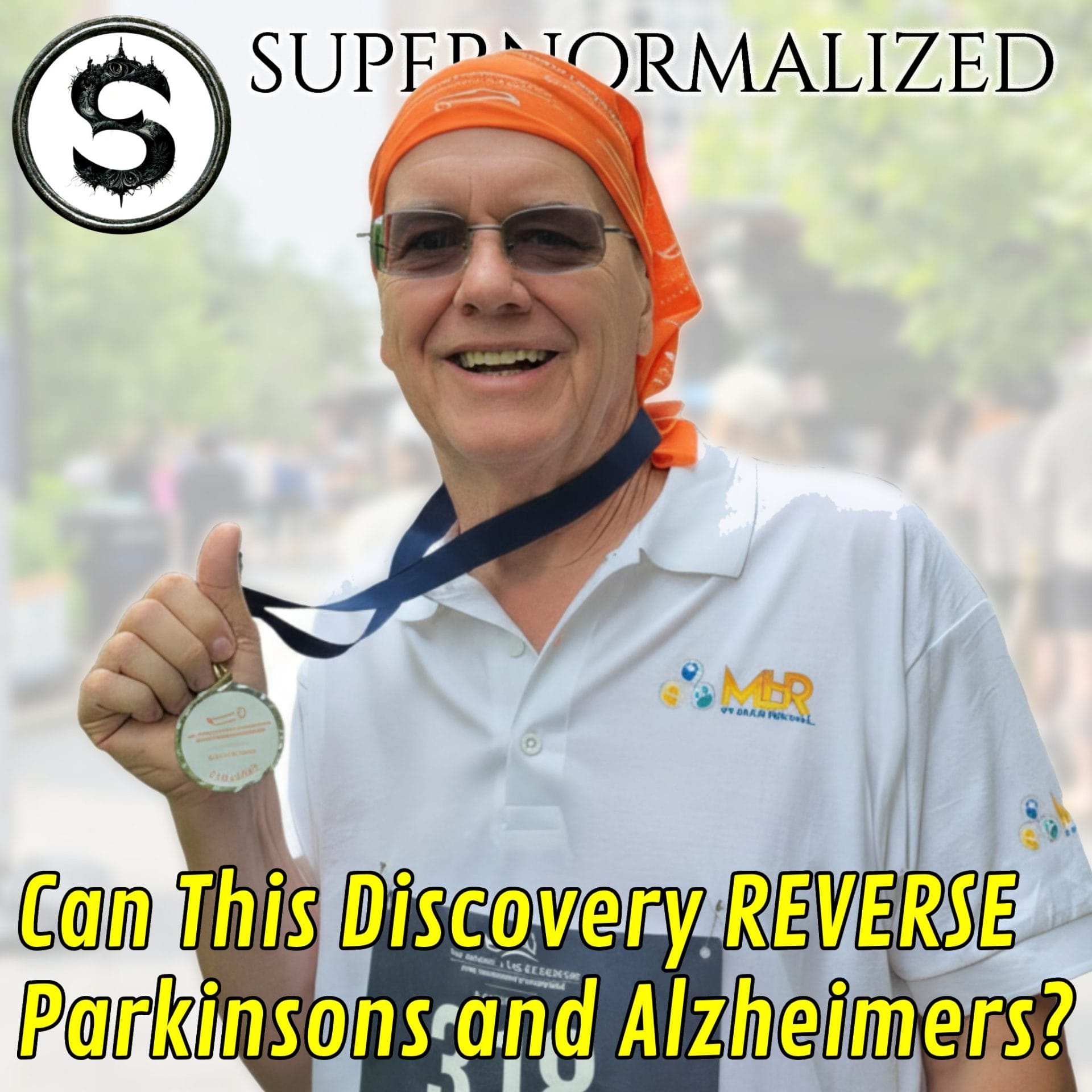
So I continued on my interest in trying to get that product to work for me. And I started, like I said, taking in January. In June of 2025, I signed up for the Michael J. Fox marathon in Washington D.C. never ran or jogged in my life. And I ran that entire two mile run and got a medal at the end.
[00:13:45] Speaker A: That's cool.
[00:13:46] Speaker B: It was like you just, you just knew, you know, I mean, it was like intervention where just. It just popped into your head, that supernatural force of I did it. But what more importantly for me at that stage and for others were people around me that had Parkinson's. Say, what in the world you take it? Because I'm wearing all the Parkinson's garb I've got. The orange hat was important that they shows your Parkinson's person and everything.
And my first sale was literally right there. And I said, look, I don't even have a label for the jar. You know, I mean, it literally looked like this. This is the actual. One of the first jars that I sent out has nothing on it. And I had people at that thing, I'll buy it, I'll buy it. And so just. Just let me know, send it to me. And so they were some of the first people that started using it besides me. I knew I was getting better every month. I had already done a really advanced Parkinson's test and a amyloid beta test, which is a blood test that sees the amyloid beta ratio in your blood, according to Google, that cannot be moved. Once you go to that, you never go back. My doctors told me, you don't go back, so they wouldn't rerun the tests. I kept saying, I feel better. This is working. I think, you know, but rerun the test. I had to call 10 online doctors, and eventually I got one who said, oh, I don't care. I'll run the test for you. I'll get you your prescription. You know, just go to the lab and get it done. I said, I want it done at the same place I got it done before, the same test number.
I don't care if there's newer ones out there. I need it to be exactly the same. And that's exactly what they did. And I moved that needle 10% better for Alzheimer's, showing the amyloid beta was changing in the blood, meaning it was getting out of the brain. And then I knew I was onto something. I had proof that I was onto something, and not just clinical, but now I had blood work that would back me up.
And I just saw my neurologist about a week ago, and she put me through all the tests, and she goes, I really honestly cannot say that you have Parkinson's right now, and it's just not there. You know, you're doing everything right like you're supposed. Like a patient that would come in here who has below stage one so that I won't call it a cure, I can't call it a cure, but it's certainly a reversal. And you see me, I'm pretty sharp here now. And I have Alzheimer's. Not really. Okay, that's clear. So I guess what's the second mouse?
I didn't mind that, you know, I mean, sometimes things that are. They use on mice don't convert over to human, but this did. And so I really got involved in the business part of it, the entrepreneur side, the really the spirit, to try to get everyone else to try it, to see if it would work. And I started noticing odd things on the website that I built. MyBrainRestore.com is the website where people can go and read all about Me and all my medical information, but also order the product. And what I started noticing was that there were drs in front of the name of people ordered. And I was like, wait a minute. These are doctors, right? So I got a hold of one, and I. And I talked to him. He goes, yeah, I'm a neurosurgeon, retired with Parkinson's, Okay. And I'm like, why are you buying it? He goes, because nothing else works. I know that. But I know if you give the chance for the brain to heal, it will, and your system is working. And that's why I'm ordering it. That's why I'm getting it. So that was really a pat on the back to have someone like that get involved in it. And since that time, I've had just emotional stories from people who call me and say, one lady was so nice. And she also was a doctor, but a PhD, and she did walking nature trail for her Parkinson's with her. With her husband. She always held his hand because she said the rocks were unstable and things like that. So she always had the oldest hand. She goes, after taking your product for about three months, I let go of my husband's hand, and I walked that trail back home by myself. And she goes, it's just amazing. I never want to miss it, make sure I always get it. And we have subscriptions. But I. I kind of comically said, well, I didn't mean to break you and your husband up, but you guys not holding hands. But, you know, it's really amazing because, you know, I get to talk to all these people. We put our phone number up there. A lot of times I answer the phone or one of my assistants. We don't use AI to answer the phone. We want to talk to everybody. You know, we want to be involved in them a lot because this is very important. And there are caregivers out there that are faced with this dilemma of, what do I do? One of my best friends died of Parkinson's and dementia with Lewy bites. And if I had had this product, it probably would have helped him, but they put him on the worst chemicals drugs I had ever seen. The side effects were outrageous. And to me, it wasn't so much about, you know, it being natural, but the fact that it was there weren't side effects. The side effects were nil. And no one really reported any side effects except for a few now that have reported, wow, I've gotten more amorous. And I'm a Parkinson's patient. I shouldn't be doing that. I'm like, okay, that's a good thing.
I wasn't gonna bring it up, but since you did. And, and, and the point was that dopamine works on the brain. You know, it works on the pleasure centers and things like that. So it kind of made sense that, you know, if you're producing dopamine naturally, you know, you then realize, you know, that other feelings are going to start to come into you. You know, you're not going to have the hallucinations that people like that may have or the depression that people like that have. And I didn't notice it right away, you know, walking straight and strength, because I had hurt myself numerous times. I mean, I fell and knocked myself completely out one time. I mean, it was bad, but I went from that to not tripping, not falling and being able to run.
And then every month it just improved more and more. And now I'm one year into taking the product, more than anyone else on the planet. And, you know, it just works. That's all I can say. It simply functions for me and other people out there, and it's a game changer, to put it mildly.
[00:19:53] Speaker A: What was the plant?
[00:19:54] Speaker B: Say again?
[00:19:54] Speaker A: What was the plant?
[00:19:55] Speaker B: The plan. Zifa. No, no, the plant is ZC5. Yeah. Ever heard of ZCFA? No. No, me neither. I have never heard of this plant. Okay. But it was this particular. There's like 100 different species of that plant and only one of them works. So the key was knowing exactly which one to get and how to obtain it. Somewhat rare in some degree, but it is out there. But it has to then be in a very cold environment.
The mills that we use have to be chilled down. Very, very cold. We call it Ultra Chilled Mill. We gave it a name and that's how we make it. So it keeps those components in and it eventually turned into this, which you can see. So now it has all its labeling, it's barcoding and things like that. It's a supplement, okay? And then on here we put what it contains. And one big thing it contains, it fixes is this glymphatic system down here. That was something that the Dutch discovered. A Dutch scientist in 2012 actually discovered what he coined the glymphatic system, which is not the lymphatic system. It's a different system in the brain that drains things that are impurities out of the brain. Now, it made complete sense. That explains why they dissected into mice. There was nothing in there. But the Japanese scientists didn't understand that Point that the glymphatic system was there. They never read the Dutch report. It was never in the report. But then you read the Dutch report where they, you know, something discovered in 2012 in medicine is really new. I mean, that's amazingly new. And then you realize, well, that system, what was happening was this natural product was working to get that system working again. It was getting it functioning, and that was what was clogging everything up. And that's why it worked across multiple neurological diseases. And even they said if that could be cleared, if it might help with traumatic brain injuries, it might help with other components in the brain, you know, just getting it to start clearing itself. So we've so far only tried it with the three neurological diseases, but it looks like it could go much further than that. I have people buying it to take it for ms, even though Ms. Is more of an insulin component around nerves.
You know, they're like, well, yeah, but it's affected by the brain also, so it might help. I think people get into situations like this where in caregivers, you know, and I watched my friend die, you know, from Parkinson's and Lewy Body Dementia. He passed away for a minute, and he was chemically exposed to Agent Orange. Actually, I didn't want to see that happen anymore. I knew that I had something, and it was important to get it out there, try to get it cost effective for everybody, but get them to understand you. It's not a miracle. You know, you got to take it. It took me a year to get to this point, to talk to you like this. I would have fallen out of the chair by now.
But, you know, other people that have started taking it have literally called me up and said, here's a plane ticket. I want to meet you. Come down here and I want you to meet my doctor. And sure enough, you know, there's a plane ticket. You know, they're like, get on a plane, go down. And I met with a bunch of people just recently that were just ecstatic about what was going on.
[00:23:02] Speaker A: Wow, that's great.
[00:23:04] Speaker B: No, it is. It's amazing. You know, I look back at it. There's an analogy here. Back in Europe, or in the British, if you think about it. The British sailed further and further out in what, maybe the 1500s, 1600 something of that area, you know, wanted to take over every country. Nothing new, right? And they basically. I looked up the numbers on it, and 2 million sailors had died in those trips that they went on out to sea. They didn't die of the sea they didn't fall off the boat, they died of scurvy.
And scurvy is the lack of vitamin C. Very simplistic nowadays. We wouldn't think anything of it. Every store has it, but back then, 2 million soldiers over a 200 year period died, which is huge. And then somebody said took lime on those boats and that's how the British got to be called limeys.
[00:23:59] Speaker A: I was going to say that, yeah.
[00:24:00] Speaker B: Like Australia and then turned it into a penal colony. Right?
Yeah, well, yeah. But, you know, the point being is, you know, there was something so horrible and horrific, but it took something so simple to fix it. But they couldn't see it, you know, and they didn't understand it. And I think that's what's happened here, you know, and unfortunately, you know, although the Michael J. Fox foundation and Parkinson's News and all these groups had mentioned these things, that this was done a one page document, they didn't go any deeper than that, which surprised me. But again, it's not a drug. And they want to fund big drug companies. They don't really want to look at something like a supplement that's just as simple as fixing scurvy. That's unfortunate.
[00:24:43] Speaker A: Well, you'd think with a supplement like this, you'd have big pharma knocking on your door to come and say, let's team up.
[00:24:50] Speaker B: Well, yeah, you'd think so. But the reason the Japanese didn't do it was that although they had the natural ingredient, which they couldn't patent, by the way, you can only patent it if you put it in a blend or something like what we have. But the point was that they didn't see the $10,000 a month capability out of it. You know, they didn't see that they could make huge amounts of dollars. And the Japanese scientists were still wrestling with every time they had thought they had gotten the right molecules or components of it, when they actually gave it to the mice, it never cured them at all. They never could isolate. So they quit. I mean, it was a supplement. And one sentence in that Japanese report by one scientist said this should be a supplement. And no one did it. And that part right there was like, wow, that's amazing. Light bulb died. You know, they didn't, you know, they knew their research was over. But, you know, I'm afraid that happens to a lot of drugs, you know, out there where they find things, but it's not what they figure they could price it out for and make the most money. Most new drugs now, gosh, I come out there Five, six thousand dollars a dose. Sometimes. They're insane numbers. Okay.
[00:26:03] Speaker A: Yeah.
[00:26:04] Speaker B: There's nothing new that comes out as cheap. Nothing, you know, and so, you know, you really have to look at that from a standpoint of. For me, I wasn't worried about that part. You know, it was, you know, how do I make it and how do I acquire it? How do I get it to people? And it's expanded now to. We actually got an order from, like, six different countries, you know, and we're still working out the international shipping rules because some of those have changed. And obviously there's tariffs. You know, the US Is running around terrifying everyone, and countermeasures, obviously, by those other countries. So it makes it a little harder this ship and a little more expensive. But in the us, obviously, we're selling it quite a bit, and we've moved forward. We're up on Amazon right now. But by far the best and easiest place to buy it from is. Is from our website, mybrainrestore.com because we support subscription capabilities.
And again, they can call us directly. We could work with the people, and we do. It's something I like to do. I like to be on that front line, if you will.
[00:27:03] Speaker A: Is this for everyone, or is there any people that are contraindicated in the use of this?
[00:27:07] Speaker B: Wow. You know, I get that question quite a bit. Like, you know, some people say, like, I have, you know, stage four Parkinson's. Is it for me? You know, I have one doctor who has a patient in hospice, of all things. I mean, he's not doing well, but he's like, I already talked to him. He said, give it to me. I don't care. You know, I'll give it a try. And hospice usually can't give things to car people, but because it's a supplement, you know, the hospice doesn't care, you know, and because it's not a drug. So we're hoping that he turns around. People have walked out of hospice. This is before, so there's a possibility that that might actually happen. That would be fantastic if he did. But I have other people, like caregivers and stuff like that, who just are exhausted taking care of someone with Parkinson's or dementia or something like that. We look at actors, you know, like Bruce Willis, you know, and things like that. You have severe dementia and other actors that, you know, have passed away, you know, that. That just, you know, it shouldn't be that way. And there's. There should be options. So my main thing was to make that option available. I think Getting across the doctors is hard. You know, they're used to seven minutes with you handing a pill to you they've been handing out since the 1960s. And that's just what they do. I get it, you know, but that doesn't mean we can't think out of the box and we can't think forward into how do we get around these things. And that's really the discovery I've made. And I backed it up with every bit of medical things. And every test I can get involved in, I have done and posted on the website. So everyone can see it. I don't hide it.
[00:28:41] Speaker A: Would you recommend this as a future preventative for people that aren't experiencing any symptoms of Parkinson's?
[00:28:48] Speaker B: Absolutely. If it is genetically, you know, something in the family that someone had Parkinson's or Alzheimer's, then we do make a preventive version, which is a little. It's the same product, it's just a lower dose. And the idea is to take it, you know, every day. It's really easy. I mean, this is a, this is a powder. Okay.
So when I open this up, it has a self sealing foam jar. So that's foam right there. So it'll. You don't peel it off, okay. And you don't peel this off because Parkinson's people can't peel that off with a pair of pliers.
So we made it so the foam seal will reseal itself. Keep this. And it's a very, very fine powder and it mixes in great with yogurt pudding. I did this for a particular reason. Number one, was it palatable? Could I tolerate it, putting it into those things? And the answer was absolutely. But more importantly, you get into a dementia patient, like my, my friend was if he didn't like the food you handed him, he'd throw it across the room at you. They get a little ornery or a caregiver. It's just, you know, like, what do I do? I said, feed him what they like to eat. You know, pick yogurt, pick applesauce, whatever. Find out it has to be cold. Do not take it with anything hot. Because the scientists found out that destroyed it completely from its neurological capabilities.
They also used it on mice at the end that were their control group. In other words, these were mice that didn't have any of those diseases and they found they could run the mazes and what's called a water maze, where they put the mouse in a container of water and there's a ladder somewhere. And that ladder might get moved around, but the mouse has to figure out how do I get to that ladder quickly. And they found that they could. They increased a normal mouse's ability to get to that ladder by 20%.
And that's substantial. That means it can be used for people maybe cramming for exams or want better sharper minds or something like that. It could be used for that. So I have also people using it for foggy brain, which comes from COVID long term. Covid is classical for that. Some people here in the US have gotten Lyme disease afterwards, they've gotten the foggy brain thing and they're using it because they want to try to stop that. And they seem to be having good results. So although that was never in this original experiments, we start to realize that glymphatic system is responsible for cleaning up the brain. And nicknamed the dishwasher of the brain, actually by scientists. And so it seems like things that are stuck in there, it moves them out into the bloodstream where the liver can break them down just like it should.
And I'll be honest with you, I'm 67 years old and I feel like I'm 30.
And I that's awesome. 100%, you know, jump out of bed and have a good time and run downstairs and don't you keep falling downstairs. I'm perfectly happy.
[00:31:35] Speaker A: That's a great result. Now I was going to ask you, how long would you expect someone to commit before they can actually safely and clearly evaluate their own effect that they're experiencing? And what minimum data set would they actually have to collect to make that judgment?
[00:31:49] Speaker B: Yeah, well, we, we actually encourage everyone and we have it up on our website under our FAQ, under free PDFs they can download actually charts which allow them to chart out. And we encourage them every month to put a 10 for my worst day, you know, walking or my worst tremors or whatever.
And we encourage them when taking the product to every 30 days, have them or their caregiver reevaluate, try to figure out things. And we encourage them not to make mistakes, especially with things like memory components. Like don't say, you know, is the person in this picture Betty? Don't do that. Because most dementia patients and Parkinson's people and Alzheimer's people say yes. They say yes to everything. I noticed my friend did it all the time. Yes. And I kept telling his wife, don't, don't prompt him, asking who's in the picture? Right. Let's him name them. And then we notice immediately he couldn't name them. And when you'd say, hey, your favorite actor is on the TV right now. Who is it? I don't know. And when they say the name, when they pick the picture and say, yes, that's this person, you know, you've beaten the memory component. But on the other side is, can they pick up screws or a coin from being on the ground? That's really, really hard to do for people with Parkinson's. You know, the dexterity of the hand. I had what's called pill roll. So I'd pick up something, my hand would do that. So I drop it because my hand would pill roll. And that's, that's a, that's an effect that happened that doesn't happen anymore. I can pick up the smallest screw during the fall here. It's winter now, but during the fall, I jumped on a 20 foot ladder, went all the way up and cleaned the gutters. My wife was freaking out.
[00:33:31] Speaker A: I wouldn't even do that.
[00:33:34] Speaker B: Normally, right.
But that's how much my balance was back, you know, and how much I walked in the room. I knew what I was doing. You know, you, you feel it. But it's always a good idea to quantify it. In other words, we encourage people to do that. We even encourage people, if they're willing to take, you know, videos of themselves. We have a couple people doing that now, as they are now and then each month keep videotaping themselves to see if the video and thing catches them. Sometimes they have droopy head. They'll keep their head down like this and talk to you. They don't want look up.
Keep in mind, people with Parkinson's and these kind of diseases are depressed. They don't want to show people this. This is not something you want to go out in public with. And that bothers them a lot. So the fact that we get them out, we get them going and everything and they're not depressed anymore because they're feeling better. That's huge. That's, that's a form. But yes, you do. We encourage that. We're going to work on an app so that the caregivers and maybe the Parkinson's people and Alzheimer's people could enter that data into an app so that they could see the results and scales and things of that order. Because everyone's different here. You know, Parkinson's affects people different. So I would say the hardest thing to get rid of is tremors. Mine has improved greatly, but it took a year, six months to run. Six months. First, you know, strength and power. I think strength and Power and balance are the first thing that comes into play we've noticed. But tremors are very hard to shake off. Literally. Don't mean that is a pun.
You know, that's a tough one that my left handed tremor stalls there a little bit. But even my doctor was like, I don't care about that the rest of the test you pass. So I could care less about that little tremor, but I'm not going to stop taking it. I mean, I don't want this back. And I do believe if you don't keep that glymphatic system functional, it's just going to work its way back in. We've come in contact with too many chemicals over the years all over the world and we all have. There's, there's no way to escape it. As a little kid, even when my father would always pick up his dry cleaning stuff, I was between two marine uniforms in the back seat that smelled horrible. So it wasn't just the water, you know, I mean those things were tce found, you know, but it's not the only chemicals. Now there are lawsuits going on about paraquat, which are used around farms. Harvard University was just doing a giant study about farms and industrial areas and people getting Parkinson's that lived around those farms and lived around golf courses and lived around industrial areas.
So I don't think it's escapable. You know, so if you have those things, the preventing comes into play to kind of stop it from happening in the first place. But if you're, you know, already have these kind of conditions, then we have what we call active 2x which is just 2x stands for twice the dose. In other words, you get, you get two jars of this instead of one. And it's the same formalization. We don't, we don't make it different. And you know, that's just the way that it, that it works. And you take, you're taking really twice the amount. We've experimented myself on higher amounts.
Notice I get a slight headache if I take a higher amount. So we like the 2X because it works. And we seem to have found what the human dosage would be versus the mouse dosage, which is kind of hard to do the math on.
[00:37:00] Speaker A: With your background in database programming, I think you would have thought of the idea of putting together a way of tracking everyone's data. So then you've got an anecdotal clinical trial ongoing. Have you been doing that?
[00:37:14] Speaker B: Yes, absolutely. No, I've. The part of the reason I went down to Atlanta Where I met with a group down there was. That's exactly what they want to do, you know, next to do human trials and things of that order. And why they're asking, you know, can you get some of your people to start filming themselves? Let's get that part started. The thing is, a lot of people don't have time to wait, you know, for that, so they want to get in and start anyway. And I understand that. That makes sense. I did. I wasn't going to wait for my doctor to approve it. I just said, I'm going to do it because what you're giving me, you already told me it's not going to work. What's the cure? Cure? None. Okay, well, then we've solved that problem.
So. But we are looking at that and trying to see how it works so we can get more statistics and things like that. We can have testimonials of people doing videos and things like that, which we're already working on so that they can show that how they're doing better. Some people have very fast results from it, which even astounded me. Some of the people I met were like, one person had a dopamine pump, okay? So they. They would have to hit, you know, their dopamine pump. They said, like, every three hours just to function, you know, this is not where you're taking a pill with dopamine or Cardopa, you know, those type of things. This is a pump which, you know, gives them. And they went from every three hours to every six hours, and now every eight hours. So they're like, I know it's working because I could never do that before, you know, so. And I'm. And I tell them to be careful because the one thing is that the brain starts making its own dopamine again. Then it's sort of like taking Ozempic and insulin at the same time. Your Ozempic is already getting your pancreas working, but you can't take insulin on top of it. So you have to wean yourself off the insulin because you get this imbalance, you know, where the brain is kicking out, or in this case in Ozempic, when you take it, it all of a sudden wakes up the pancreas. It starts making its own insulin, okay? And we don't have a way to meter things like that. And on my phone, I actually have the app, okay? So I have diabetes. So there's my diabetes for the day. Those big spikes are food that I ate. And you see that nice spike come right back down. That's without taking an ounce of insulin. I have run red component there, which means that the body, basically the pancreas overdid it, but then it pulls sugar from the cells at that point. Okay, so 114 now. And, you know, I couldn't be drinking anything more healthy than cherry coke. Okay?
So for me, you know, I mean, it's like, okay, there's my score. This is live. I have a meter right here on my shoulder, but they do not have one for dopamine. So we have to be more careful with that. And, you know, tell their doctor that they're taking this. Tell their doctor they mean. We mean you wean themselves off of that because the brain's going to come in. And if you take dopamine on top of this, you know, you're essentially double dosing yourself. We just don't have a way to Meteor looked all over and nobody's built that and probably won't. And if this product continues forward, they may not need to.
[00:40:17] Speaker A: For someone who's newly diagnosed with early onset Parkinson's or mild cognitive impairment, what five actions should they take this?
[00:40:25] Speaker B: Well, I think number one, to come to our website, My Brain Restore and read My Journey. I mean, I give away my book free. It's right there. People can go in the free. Can go to that, click on free PDFs and download my 2026 version of the book. I got to update that because I just got the new medical information that came in. But it talks all about Camp Lejeune, how I got here, all the research I did. I did a massive amount of research. As, you know, as a database programmer in the background, you have no clue what you're walking into. When you go see a company, they just say, we want to build this database. Okay, what does it do? Well, we don't really know yet. Okay, well, that would help.
[00:41:06] Speaker A: I used to be a programmer, and so many times the scope just did not exist. The marketing guy wants to do this. You know what I mean?
[00:41:12] Speaker B: It's like, okay, well, okay, let's try to put some things down on paper or on a blackboard or whatever, and let's scope it out as to where you're headed. And we built some of the largest programs for some of the biggest companies in the world and organizations. I mean, I was involved with the International Monetary Fund. Their entire system ran. We ran it for 18 years. We did all the coding on it. It was massively huge. We did Charles Schwab, aoa. We did the Pentagon. Things I can't talk about and. But we started with that blank screen every single time. And we started with people not really knowing what programming would do for them. And this is in the early days, like, well, what can we do? We don't know. What do you want to do? And with me, it's the same thing. Like, what do I want to do? I want to get rid of the diseases I have. And now everyone else who contacts me wants to get rid of the diseases they have or at least put them in remission. If nothing else, shut them down, slow them down, because your doctor is not going to do it. He's going to assign FDA approved, you know, drugs to you, and he's got that. Seven minutes in the United States is the average time a doctor will spend with you. So listening to you is they don't care. And that's unfortunate, but it's just what it's become and what big pharma has. And, you know, we have to remember that dopamine, and most people do not know this, came from a plant in 1960, from India. And for a thousand years, the people in India knew it stopped tremors.
It was only a hundred years, I think it was a hundred years ago, that a British scientist, if I'm not mistaken, had gone to India and rediscovered. Right. Rediscovered that, hey, this is a cool plant. And they were able to synthesize the dopamine from it. And that's how that got started. But it came from a plant the same way here. They just couldn't figure it out. So to me, it's take the plant.
Yeah.
[00:43:06] Speaker A: What daily routine do you have now when it comes to dosing, exercise, sleep and cognitive habits?
[00:43:13] Speaker B: Sure. Well, the first thing I did, keeping in mind I have two different diseases. I have Alzheimer's and Parkinson's, both confirmed. So I always joke with people, I say, well, I have Parkinson's. I fell down the steps and hurt myself. But because I have Alzheimer's, I forgot I fell down. Yeah.
People are like, yeah. But what I did was when I felt really strong in Alzheimer's, I went to Amazon.com and I got this game, the matching game for kids who match. You know, the two raccoons in there, there's two lions, and they're just little, you know, cards. Okay. And so they look like this, and when you turn them over, they look like that. So you can't tell. You know, you put out 36 of these, and you got to remember where they're at. An Alzheimer's person really can't do that. I played my wife. I said, I Think I'm feeling better. I think my Alzheimer's has gone away. I want to test it. That little $12 game I set up, and she's 15 years younger than me, she's quite sharp, and she goes, I'm going to beat your socks off. You know, you're not going to have a chance. And I said, okay, let's go. And when we got done, I won and she won't play anymore.
And that's what you look for, you know, you test yourself. In other words, what things couldn't I do prior. You have to set your own goals, you know, into this. But you have to look at some goals, like tremors might take an incredibly long time, over a year to get rid of, you know, taking this product. But other things you're going to see and you just have to be realistic about it, not stop. Okay, make sure you're taking it. Mix up your pudding. One day, say pudding, I'm taking it one day I'm using some applesauce the next day, and the next day I'm putting in an instant breakfast drink. I have one guy who drinks it just with water. I don't get that one. But he likes it that way. It's whatever works for you and you don't get tired of. Because anything like this, doing it every day can get annoying. So mix up what you mix it with, you know, and use that and set a timer for yourself to take it mainly in the afternoon or mainly in the evening. And the reason for that is that that glymphatic system does most of its work when you sleep. And sleeping is a hard thing for Parkinson's patients. You know, that could be very difficult, and you know it. But you know, grandpa likes sitting in his chair and he's got his head up and he's taking this. Then make sure he takes it before he takes his nap. Okay. You know, because that's when the glymphatic system is going to be at its most. It waits for the body to shut down and then it starts cleaning itself. This isn't unusual for a lot of systems in the body to do. They do a lot of repair at night when you're not active because that takes less energy. And this is no different. So I even got a wedge pillow. I tell people, buy a wedge pillow. The system works on a drainage type system.
So if you get a wedge pillow, which is, you know, that sort of V shaped pillow that prompts your head up a little bit better when you're sleeping, that's going to Help a little bit more. And I have that also. So we do a lot of things to tell people to do, and once they start doing them, they find they get better results.
[00:46:19] Speaker A: So, Mark, what's one concept that you'd like every listener or viewer to remember at the end of this episode?
[00:46:25] Speaker B: Wow. I guess, you know, don't give up. You know, don't, don't give in. You know, that's what I did, you know, don't, don't stop. If something can work, give it a try. But you have to give it a fair try. You know, I took all the supplements I could find that were supposed to be good for Parkinson's and Alzheimer's prior to this, trust me, I was trying everything.
Nothing worked. You know, nothing did what this did. So for me, that was like the game changer. And I still take some of those other supplements, but when I did my six month test, I just took this pure, you know, just to make sure it was working. So I didn't get any side effect component from something else. I had to know that it was doing heavy lifting, if you will. So I think the takeaway is you, you have to commit yourself to it. That's why we have a subscription system. We automatically from our website, send the product to you. It'll replenish each time and go out. We ship by priority mail in the United States. So it's two to three day delivery time overseas. Depends on overseas, where it's going to and everything like that. But, you know, those can take longer. But we don't have as much control over that. But eventually we'll probably set up distributors in different countries that can bring it in and then distribute it into that country a little easier. So we'll get there. But, you know, I guess for me it was not giving up hope. And for caregivers, it's an incredible relief. I have one caregiver who called me a couple days ago and just was like, my God, my husband's so much better. You know, I don't have to wait on him hands and foot as much. You know, every time he whines and moans, he doesn't want to moan, he just gets up and does it himself, you know, And I'm like, is that good for you? She goes, good, fantastic. You know, that's. We have to think about the caregivers involved here. They get worn out. You know, that's a tough job. And it's a tough job watching someone you love, you know, literally go downhill and not be able to get out of it. I've seen it, you know, firsthand and it's brutal. So for me, I think it's important that people use it, stick with it, give it six months to a year time. You're going to see differences, but they're going to be different for each person. You just got to write it down so you can say, yes, this is working. You're going to notice it. And I didn't notice it since I was the first person taking it. I didn't really have anyone to talk to. And when I first started not falling and not tripping and honestly I felt normal and I didn't even think about it. I didn't until I went back and said, wait a minute, I haven't tripped in a week. I didn't fall downstairs. I didn't take a sharp corner. Wow, that's amazing. But it took me a couple of months to realize that part, you know, and I think that's where it helps, that people make a log and be able to say it's working. If it's not working, then they shouldn't buy it anymore. You know, I mean, definitely. But I think they'll all see changes. So far, no one has dropped their subscription at all. If anything, they're calling in and giving me good results and thumbs up and everything. And we're excited about what its potential is. It's huge, Mark.
[00:49:26] Speaker A: So where can people find your products? You've actually said your URL a few times there, but I'd like to get that stamped into the end of the show here.
[00:49:34] Speaker B: Yeah, it's mybrainrestore.com and I named it after what it did for my brain. My brain is for. Okay. And the company is called APDI and so you can also go to apdi.com, but most people get those letters mixed up and either one will go to our site. From there, I encourage them first to read everything, go to my journey, read all about me, read all my medical facts that I put up there before making a purchase. If they have acting situation, that should definitely do 2x active and get the subscription. And for your listeners, they can use a code called ebook 10, which is in the book. And if you put an ebook and the number 10 as one word, then it'll assign a 10% discount on it.
[00:50:23] Speaker A: Oh, nice. Thanks for that.
[00:50:24] Speaker B: And we do that for everyone to try to help them.
[00:50:26] Speaker A: Yeah, Mark, it's been a pleasure talking to you and hearing your story and I mean, that's quite a big cross to bear. But you've actually taken that and run with it in the really appropriate way to help not only yourself, but many others. So all power to you. This is fantastic.
[00:50:40] Speaker B: Absolutely. I smile and wake up every day smiling.
I'm encouraged that I'm helping people and people that I watched before die, you know, and now they're not. So to me, that's. That's huge, you know, that I can help mankind. Womankind and caregiver, kind as a massive family, you know, it's huge. Absolutely huge. I love it. Yeah.
[00:51:01] Speaker A: Many blessings to you. Thank you very much for coming on the show.
[00:51:03] Speaker B: I appreciate you having me.
[00:51:04] Speaker A: I can't imagine what it would have been like being born into a body and then by no choice of your own, being polluted so severely that your body begins to shut down in ways that modern society sees as Parkinson's, Alzheimer's, and early onset dementia. That would be terrifying for most people to hear. Mark's story, how he conquered that through his own in depth study and research and then taking that to the nth degree and producing a product that actually works, that he tested upon himself. That's amazing. And now the fact that he's helping so many people across the world, it seems like he was born just for this. What a great story. If you've enjoyed today's show, please like and subscribe. That'd be appreciated. And if you're on a podcast app, give me five stars and share this one to a friend that might need to hear about this product and Mark's story as well. Thank you so much. And you may enjoy this episode as well. Thank you so much for listening. Until next episode. Thank you so much for listening.