Episode Transcript
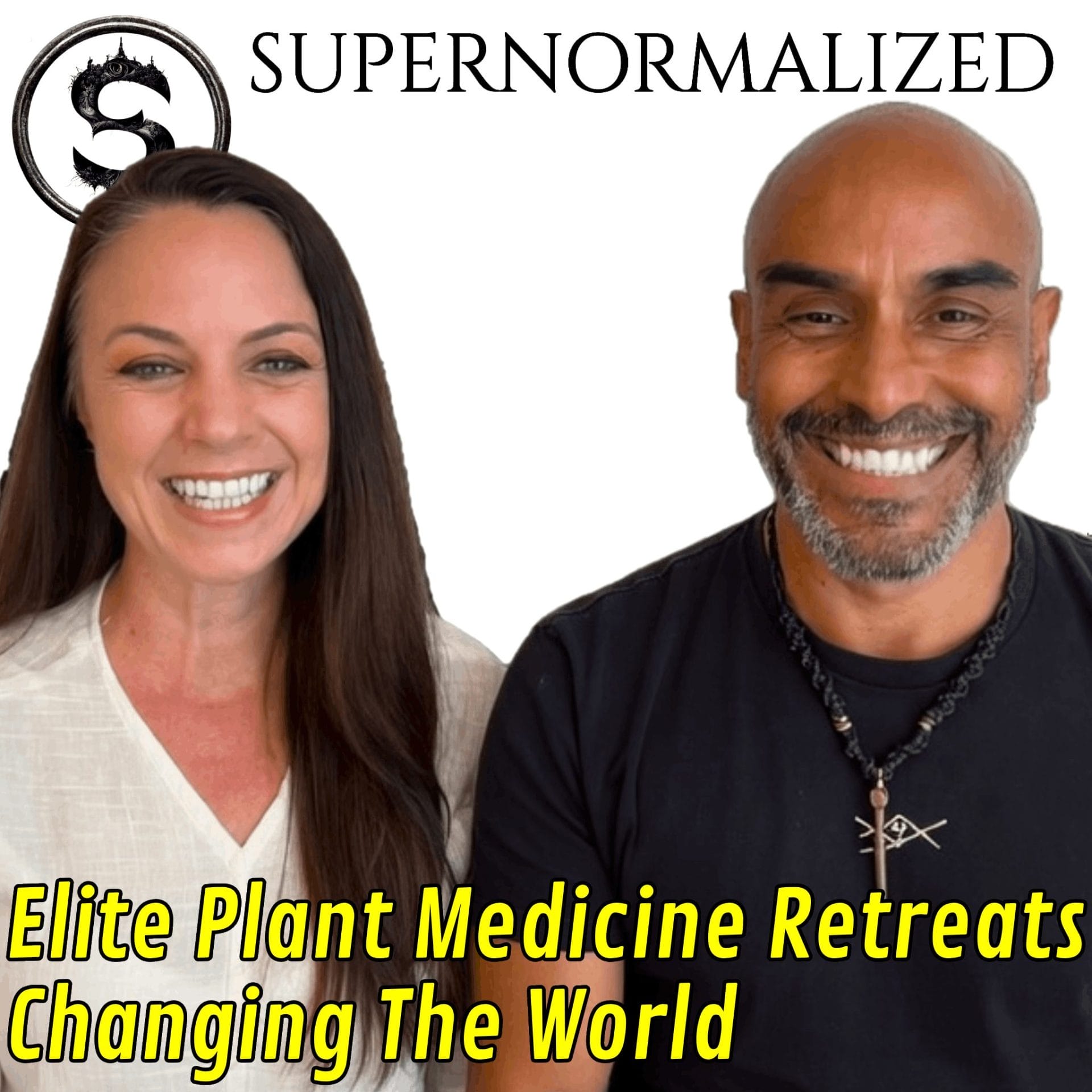
[00:00:00] Speaker A: Behold Retreats runs premium legal plant medicine retreats combining ancestral rites and modern care for thoughtful seekers, elite athletes, entrepreneurs and conscious leaders. You might have heard about Behold Retreats and their work in the documentary Enigma featuring the elite NFL footballer Aaron Rodgers currently on Netflix. Today I'm Talking with the CO CEOs Danny Yepez and Sarah Lynn Thomas. They bring complementary backgrounds with Danny's community building, biohacking and guiding experience and Sarah's finance to service transition plus on site stewardship into INT programs that prioritize rigorous screening, medical safeguards, personalized one on one guidance, preparation and integration work and weeks of aftercare. Retreats take place in luxury eco settings across Costa Rica, Mexico and Portugal and soon to be Venezuela. And they include two to three ceremonies during six to seven nights with small group containers or fully private options. This episode looks beyond headlines to ask how high touch plant medicine work can be done ethically and safely for high performing people with a lot on the line. I ask about real world integration, the business of sacred service, cultural respect, and the personal cost and reward of holding transformational space for others. This conversation is deep and both Danny and Sarah reveal that they have done the hard yards to put together a formula for service that excludes tourism to the benefit of all humankind. Strap yourself in for a wide ranging tour covering all aspects of their business, their integrity that is a backbone to their work and their life's work which is a service to others like you may have never heard of before. Listen in for how they hold space carefully, consciously, with deep awareness that not only benefits the attendees, but all earthlings. Plus also listen now for the pro tips for being on the path with heart and with intuition baked in. Enjoy. Welcome to Super Normalized Sarah and Danny from Behold Retreats. I'm very interested in hearing your story. I actually was just mentioning before that I did watch the Aaron Rodgers documentary called Enigma on Netflix and that blew my mind because I was like, wow, this guy's actually somebody that you wouldn't expect to be diving into these sort of spaces. And they featured your retreats on there and I'm like, wow, that's really interesting. And I went and did some digging and like wow, this is really cool. And then I was contacted by your crew and I'm like, yeah, okay, we're going to have this interview, so welcome to the show.
[00:02:20] Speaker B: Thank you so much for having us.
[00:02:21] Speaker C: Thank you.
[00:02:23] Speaker A: Yeah, I'm very excited to meet you too. So, okay, so I'm really curious because I mean both of your backgrounds are like CEOs and touch on different business aspects and everything. What sequence of events first pulled you towards sacred plant medicine? Medicine. And what shifted inside you after that first true encounter?
[00:02:41] Speaker C: Sure, I'll start off, I think for me it's, you know, I was in a, in a path where it was quite different in my life back then. I've been on this path for over 16 years and it was really an encounter with depression for the first time. I had no empathy for depression, I had no understanding of depression. I, I'd be the one person that would say, nah, that's just a click in your head. It's a switch you can swift. And of course it came knocking on my door and this came about from a separation of a 20 year marriage. Ultimately I come from a skeptical background. I went to military school as a kid. I was formed in this little box in life. And when I came out of that depressive state, I was able to make a decision for myself that I wanted to start anew and in a different way, in an open minded way and explore this world openly. And I had a fortunate opportunity to be on meet an old friend that was already on the path of plant medicine and said, Danny, you're, you're a controlling kind of guy. You're gonna need two nights of this thing called Ayer Washka. And I'm like, really? So let's look into that. And I, of course I dove right in and once you have an experience such as that, it's become something quite unequivocal. It becomes something that you can't unsee what has been shown and demonstrated. And that took me into a 10 year sabbatical of just dedicating myself to the knowledge and the wisdom and teachings of all of these antigenic plant medicines. And here we are.
[00:04:06] Speaker A: I've gotta ask you then, with all of that and knowledge yourself, have you ever taken up the mantle of being the shaman in a session or are you personally somebody that prefers to step back and let somebody that's been traditionally trained take that role?
[00:04:19] Speaker C: I think all of us have different aspects of what we're here to do.
Yes, I mean I can certainly take the pilot seat on that. I believe I'm still learning in my ways, of course, but I think that for us it's really developing the right team and becoming a guide for those that could really walk in. And I see myself more like the bridge person that really bridges, bridges the old world with the new world and allow people to be guided safely and going through a process that I, I myself went through. And so I think it's more of that.
[00:04:50] Speaker A: Technically that's still a shaman, so you know, bridger of worlds. So Sarah, what's your story? I mean, you left a high achieving corporate life as service and ceremony. What was the clearest fear you had to meet and which ritual or practice helped you steady that fear?
[00:05:02] Speaker B: For me, I think it was really tapping into my own intuition. I started with plant medicine 29 years ago, so when I was young and I got off of that path as I went into finance after university.
And then I came back into that path looking backwards. I know that it was my spirit or my soul pulling me saying this isn't the path for you. And I moved to Costa Rica thinking I would love to continue my work in finance and live in nature.
It was really my spirit, my intuition guiding me and I only recognized that looking backwards. And so I think the fear that I had to overcome was trust in myself and trust in the universe that I am in flow, that this will work and if as long as I am in integrity and doing the right things that the world will provide. So that was probably my biggest fear.
[00:05:51] Speaker A: Yeah, yeah, yeah. Danny, your upbringing across Venezuela, the US and Costa Rica would actually change and shape how you hold space. What cultural threads do you bring most intentionally into ceremony and leadership?
[00:06:04] Speaker C: I think I like to call myself a chameleon.
[00:06:08] Speaker A: What works?
[00:06:09] Speaker C: Moving, moving within cultures. And I think I had a really great opportunity in my younger years to be able to move around these different cultures. I was raised in the United States, but ultimately went back to Venezuela. And between those back and forth shifts, I was able to capture the different cultures of life and navigate amongst the two again, acting as what I am doing best now, which is bridging these people and these gaps between these cultures. So a chameleon I think would be the right way of phrasing that.
[00:06:40] Speaker B: Yeah, I think hold has a really beautiful and conscious effort of understanding that we have a lot of people with a western framework about to come into.
It's not even Western medicine or Eastern medicine, it's Southern medicine. So something that we hold the space during the daytime, understanding that concepts and where people are coming from so that they can experience traditional ceremonies and still get all that they can from it, whether their Western mind understands what it is similar to, something that is not understandable in the logic that we have. And so I think during the daytime we hold each, we hold our guests hands, we process together, we integrate together, even things that may never be understood. And then during the evening times they go into these traditional Ceremonies, these, this
[00:07:27] Speaker A: cultural experience sounds like a lovely process. So how do you define responsible leadership when you offer altered state experiences to high stake clients whose careers and bodies depend on performance?
[00:07:39] Speaker C: Yeah, that's a beautiful question. I would say. Yeah, the responsibility is great, whether it's high performance or not and whether regardless of the individual, the human is the human. But the responsibility is great. And for us, it's critically important for us to be stepping into a space that we're holding tightly. So we curate our containers to be well thought out and processes where they can feel what's most important, which is trust. Trust in themselves, trust in the process, trust in the medicine. And that allows for that surrendered state for them to be able to really step into this work. It's important guardianship. And within that guardianship is the readiness and the safety for the people that we're accepting. It's an invitation only aspect. So we really hold very tight our containers. We like to call it doing surgical work. So we just work with intimate small groups to be able to really tend to the needs that are there, not only to the mind, to the body, but the spirit as well. So those are elements that are important to us.
[00:08:41] Speaker B: It has been an interesting concept to know that somebody coming from a background where ego, strong ego was required and is very helpful. So high performance, even athletes, they are trained to have a big ego and we are about to softly dissolve it and make sure that they can still come out the other side with maybe a more view of themselves as opposed to being in it. And so that's a really beautiful and interesting concept to walk people through.
[00:09:08] Speaker A: Yeah, I like that idea. I've seen people at sessions here in Australia where it's. If they're control based people, it's very hard for them at times to let go and to really flow. And a lot of times it's about their stories about letting go and flowing, but then discovering that that actually is a power itself.
[00:09:26] Speaker B: Yeah, I think that's where ego disillusionment turned into the word ego death. Because the harder you fight it, the stronger it feels.
[00:09:33] Speaker A: Yeah, it can. Intense. So your screen turns away most applicants and the handling of that intrigues me because it shows commitment to the plant medicine work that I feel is important when engaging. Whether someone is psychically, spiritually or physically able to handle that transformation that they often bring.
What concrete criteria or red flags matter most to you and how do you communicate refusal without judgment?
[00:09:56] Speaker C: Lovely question. I like that. I'll let Sarah to kick off on that one.
[00:09:59] Speaker B: Yeah, so I'll start with the integrity in I think all organizations, but especially in integrity in an organization like we run is critical. So the very first thing is to determine if the human is called to it themselves. And so if they're getting pressured by loved one, then it might not be the best time for them after that. Is this calling genuinely from you? It is. Are you psychologically prepared, mentally, physically? And so this could look like a yes, no or not now or not yet or prepare. And so that could be. There's certain medications that don't go well with ayahuasca and if that person is capable of tapering off, then we have a medical team that will guide them through that process, a guest services team that holds their hand and answers all the questions. And then after that we put all of the people through a dieta. That's not just a physical what we eat and drink, but also how, what we allow into our scope. And so social media, news, things like this and openly preparing. It's the more you put into something, the more you get out of it. So say somebody watched the news all the way up until they arrived, that's okay, they'll still go to ceremony, they will still receive something out of it. If they didn't follow the dieta, the first ceremony might be some bodywork. And so the more prepare. And so that's where we really want committed people because we want to help people individually heal. And we also know that when they do, they become better husbands, wives, mothers, fathers, bosses, community leaders. And so we care deeply about the ripple effect that we are doing this work for us and then we are doing it for the planet.
[00:11:37] Speaker C: As far as ways of communicating this, it's all really dependent upon where they're at in their stage. So we typically have a seven week program that we offer and it's three weeks of prior preparation and coaching that goes through online. And then one week, what I call boots on the ground retreat and then ultimately three weeks of post somatic integration work. Now if someone isn't necessarily ready for retreat week, then this is where some of more of the coaching and the preparation state. And we communicate that with loving gentleness of course, but bringing what's morally important here, which is safety, safety not only for themselves, but for our container and for the group and those that are present within our ceremonies.
[00:12:21] Speaker A: How do you keep outcomes unconditional, offering guidance without attachment to specific results while still running a business that depends on client satisfaction.
[00:12:31] Speaker B: So on a personal level, I think sustainability is critical. And so we have created a space in which we can be sustainable without pressure. So I think our discovery guide, for example, he does not sell plant medicine, should not be sold. We either bring people to a strong yes or they're no or not now. And so within that integrity and the way in which we have set up sustainability, we never have that pressure to sell something. And so this is also a tip that people use when they're looking for where should I go?
I recommend doing research, of course, and then picking however many 2, 5, 10 places. And when you call them, if they're quick to say yes, let's sign up. That's. That's. I'm not saying it's a red flag, but it's a pink flag saying, let's really make sure that where you're going is somebody that isn't pushy, that they're making sure that you're safe, that you're in good hands. And so I think that's how we do the integrity piece. And the sustainability of peace allows for that.
[00:13:29] Speaker C: I ultimately come from a past business background, and it's. It's hard for me to use the term business and what we do. So it's something that I'm highly aware and attentive to that for me, we're here to really provide a space for people that they can be empowered. They can be empowered in their own healing and their ability to heal and come once. This isn't something about how do we have repeat guests. We don't even use the term customers because they're not customers. They're guests that are being invited in. And of course, for us, is empowering them to know that they have all the capabilities of working within their field to improve their lives and work the best way they can. So it's a tricky aspect of looking at business in this realm. Ultimately, the need is so great right now in this world, far more than we can do. And so ultimately it's with that need comes like the responsibility, of course, and knowing that we need people to really empower themselves. And we kind of work on two verticals of what we do. One is healing and one is expansion. We hope that people can come in through their doorways and discover healing right away for themselves and not ever have to come back again for healing, because that's in the past and they can now look forward. So those are elements that are important to us. And then, of course, expansion is unlimited. It allows people to come over. And ultimately, this is a. What I like to call a shortcut or a cheat of sort to come into plant Medicine, the real work lies in the integration and it lies in the practice that you're now choosing to do. When you're kind of aware of what are the things that you have to do in your life and how do you gonna connect to yourself in source without needing any ingestion at all of anything. So those are the key teachings for us.
[00:15:21] Speaker A: How do you honor indigenous lineages and plant wisdom while operating in luxury eco settings and serving well funded guests?
[00:15:30] Speaker C: Yeah, I love that. Yeah. As a matter of fact, the birth of our retreat design, this particular one, retreat design came about from a very opposite spectrum. I was working with, or better yet, let me rephrase that and say, in my life, my purpose was how can I help as many people as I can without having to deal with the masses. So it was really working with transformational leaders from around the world and how I can help them. And if I can change their vibration and frequency, then they would then replicate that within their own community. So I was leading very tough, strenuous type of retreats, four days, very intense retreats.
But that separated a lot of people that really needed this. And we ultimately discovered that the opposite style of container needed to be designed to be able to attract and bring those people that were looking for safety, for comfort, for trust.
This isn't something about status or how much you have or you don't have. It's really finding the comfort that you need to know that you're feeling safe with a family environment that you can then surrender to the work that you're doing. And that's really probably the essence for us.
[00:16:37] Speaker B: I would say about eight years ago, I used to say to myself and to those that we were working with, that everyone that's called to the medicine should have access to it. And eight years ago, to me, that meant people that could not afford it. And so we had community ceremonies. We always allowed for people to come in under scholarship. And then as we continued on this path, I thought again, everyone who's called to the medicine should have access to it. And I'm talking about politicians from around the world, people that are in the medical field. And I recognize that when we're in the malocca, where we dug the toilet ourselves and people are going into the jungle to go to the bathroom, that not everybody that are called will come to that style. And we want to make differences in the world. So we said, okay, we also need to set up where people feel safe and feel comfortable. I fundamentally know for myself and through other people that when you physically feel safe you can dive deeper and some people will not feel physically safe in the jungle. They'll be looking around too much. And so we create a very safe environment so that people can keep going deep and deeper and deeper.
[00:17:43] Speaker C: You mentioned something around indigenous cultures and traditions and that's really important to us. We, I firmly believe in tradition and this is something that's been around for thousands of years. So what we teach and present and offer within our doors isn't something new, it's something that's been around for millennia. So it's really critical for us to be able to preserve these ancient traditions in ways that has been worked perfectly for years. And of course there's an evolution of the medicine which is of course, how do you optimize things and make them work where they can be aligned maybe with the western way of thinking where they can find that, but still preserving the traditions and holding the spaces within that.
So that's critically important for us as well.
[00:18:27] Speaker A: Yeah, sounds like you're honoring many things many times, which is good. How do you train or assess the non plant practices like for example, breath work, movement, sound that actually frame ceremonies so they do not overshadow the medicine work itself?
[00:18:41] Speaker C: Yeah, you know, I would say that what I mentioned earlier, that these antigenic plant medicines are great teachers and they're there to teach us. But there's a point, we graduate from that teaching and we start to go into the work and doing the practice. So complementing breath work and all these different styles of work, that is what we like to introduce people so they can know that there's a path. Because ultimately the shortcut and cheat of plant medicines, for instance, it gives you an opportunity, a very special opportunity, number one, to be in an altered state of consciousness in a short brief period of time and achieve that.
And of course, once you ultimately see the light and see the tunnel and feel most importantly how that feels like, then you can ultimately then create a path and a route for yourself to achieve that same feeling without the ingestions of any plant medicines, but actually with these type of modalities of either breath work and sound healing, et cetera.
[00:19:39] Speaker A: Yeah, walking the path.
What client impact integration and measurable change would you say is consistent with behavioural and neurological changes that you observe among athletes and executives who compete. Sorry. Complete your 3 weeks plus of post retreat support. So how does that actually roll out for them afterwards?
[00:20:03] Speaker C: So ultimately what we look to achieve here is the proper guidance that starts with really understanding where each individual guest is at in their life. Everyone is in a Different stage in a different phase in their lives. So for us to guide them through this path that kind of shows them what it is that ultimately that they're looking at within that reflection or mirror that that mother Ayahuasca tends to provide.
It allows you then to. Within the malleable state. And this is where the responsible aspect begins, is when we find our guests in a malleable state is. Is really the most important one because it's almost like when you're going to a gym that you need those three weeks of constant training for things to really be embedded into that memory cortex.
So it's fundamentally important to follow the process of the guidance. Take advantage of finding yourself in the altered state of consciousness, allow for the guidance to help establish those neural pathways. And ultimately the responsibility lies in the individual himself. We can only do so much of the work. And then from there it's up to them to really hone in those aspects of what they've gained and the wisdom and knowledge and up leveling that they've been able to achieve within our ceremonies.
[00:21:19] Speaker B: And I think awareness is a big key. For example, in your question within, like high performers or athletes, sometimes people are coming in wanting to unblock something or they're working out of fear, or they're working out of ego. And how can they maintain just as much action and even more energy through positive, positive forces. And so that's what somebody can gain through ayahuasca. They want to be a better leader, be a better team member, be a better, more focused and receive information more clearly. And so like meditation, breathwork. This is another tool in which people can use in order to not have to work so hard to have grand ideas, for example. And then we've also worked with people that are changing careers. And when you have defined yourself as a certain identity. I am this person. And who am I going to be when I am. Am no longer X, Y, Z. That can cause a lot of fear. And working within the. The retreat and the program and then the ceremonies, of course, the direct connection, people can start letting go of some of those identities, really loving themselves and in turn loving, loving others and showing up in a way in which they're more healthy and happy.
[00:22:29] Speaker C: Yeah.
In order to really reach any levels, it starts with within and really solving any internal issues that you're having within yourself. Sometimes issues that we aren't even cognitive of aware. And this is kind of where the medicine will bring that to light and show you and it'll kind of help to optimize in that Sense. So it's a beautiful biohacking modality. I'd like to say that the medicine is intelligence and allow us to come in and really do some fascinating work and shows you the three things that I always say ayahuasca brings, which is awareness, awareness, awareness, love.
[00:23:05] Speaker A: That I know from reading a lot about people that have been heavy on the use of say DMT for example, that sometimes the spirits on the other side just lock them out and say no, you can't come in and nothing and it doesn't work anymore. I've experienced that myself with psilocybin mushrooms in the past and they've just said no, no, you can't come, it doesn't work. Do you actually have any sessions or have you had any guests where it's said no, you're not ready for this, the medicine has actually locked them out?
[00:23:36] Speaker C: I would say no.
[00:23:37] Speaker B: Wow, that's great to just theoretically go down that conversation because I think it's fascinating. I watched video and it was showing somebody who wanted to serve bufo to the highest level meditator that he could find in India. And finally the gentleman agreed and it was for Bufo. A common phenomenon is you meet God and he thought that bufo was going to blow this man's mind and then he smoked it.
And his phrase was very simple, now are you happy? Just saying I'm always with God and so I can see a level at which we're going to have, have an experience, for example, be the highest version of myself in ayahuasca, get some direction on how to walk that path. Now this is just theoretically, when I like this, this flow, if I'm already the highest version of myself every day, which I'm not every day, but if I already am and I go sit in some of these medicines, is there something there for me? And so far we have found, and I have also found there's always a nugget for me could see how that could happen, how somebody that has the answers might not find another answer.
[00:24:40] Speaker C: But so far when it comes to dmt, it's, it's again an interesting thing as, as this just becomes more readily available in the mainstream world. And of course it, there is a level of honor and sacredness and respect when it comes to these antigenic plant medicines. And that's why there is no need to fear the aspect of addiction within them.
This isn't a joyride. There's no, you know, oh, it's definitely not a joyride. It's not considering for entertainment purposes, for sure. And this requires a certain amount of, you know, devotion and reverence to it. So I think it, it on one spectrum, I think it's the need is so great out there that something is better than nothing. So if people are experimenting with this, and it's not what I advise, but if people are experimenting with these, it's ultimately the possibility of them encountering a self awareness state for themselves that can lead them to the path of being a better human. Then I'd like to say something is better than nothing. But it is something to be very mindful about. DMT can create exhaustions within the mind and ultimately block you out or even have serotonin releases that you want to be mindful of. So, so it's like anything else, nothing can be abused, of course, and this is one that really can't be abused either.
[00:26:05] Speaker B: I think to follow an example that I began at the start of this conversation about the more you put into something, the more you get out. I was in a ceremony where I was sitting for myself and I am there and I am receiving what some people would call downloads. And then I heard something in the ceremony space and so I got distracted and then I come back and I get distracted. And then the medicine taught me, do you think you just get to show up to ceremony and get the secrets of the universe? And I was like, well, yeah, kinda. She goes, you need to meditate more. And so I got that lesson, if you focus more, you get more. And so I went strenuous meditation practice and then I came back six months later and I sit down and again I get more, I get more and then I'm ready for a bit more. And then the download was, do you think you just get to meditate and show up without movement and you get the secrets to the universe? And I was like, I did the meditation and they're like, you need movement. And so I said, okay, less meditation, more movement. And it was no same meditation, more movement. And so it is mind, body, body, spirit. The more we put in, the more we get out. And I'll still get out even if I am not fully trained. We've had people that didn't follow Dieta. There's still items and nuggets for everybody, but the more we put in, the more we get out. Yeah, which is why we really request commitment from the people that come.
[00:27:21] Speaker A: Yeah, that makes a lot of sense. How do you assess whether a change is spiritual growth versus a temporary emotional high? And can you name any specific metrics or indicators that you watch out for
[00:27:33] Speaker C: yeah, I like to say that mentioning earlier how ayahuasca only does a certain part of it right, 50% of the work is done there, the other 50% is yours. And of course once you have the level of awareness that you have gained, it's up to you where you have to now fine tune your life and start to making the corrections and changes that are, that are needed for that.
So I think it's really important to have a deep understanding of that work and that commitment to kind of obtain what you're looking to achieve.
[00:28:03] Speaker B: Yeah. And I also, I got great advice from my dad when I was younger, reading different things and different spiritual or religious backgrounds. And I would ask a question, I would say this doesn't make sense to me. And many times in ceremony things are not going to make sense and sometimes even will come out. As you said, is this real or was this a psychological effect?
And my dad said to me, what is the lesson you need to learn and move forward with that? And so I don't have to figure out were those angels real or were they not? What was the lesson learned and how can I bring this into my life to benefit myself and my family and my friends and my community and especially with that Western mind, Our Western mind wants logos, we want it to be measurable. And what we work with is not measurable. And so it's what is the path.
[00:28:47] Speaker C: Our methods are quite well defined and, and with years of practice and really honing in, what really works is it's really the guidance. And if usually people follow the program, the program can be highly successful. But ultimately it relies on them at the end because if you came from toxicity and found yourself coming to relieve yourself from that toxicity, but only end up going back to toxicity, then ultimately you'll find yourself back where you came from.
So the real benefit here is how much of that discipline and commitment you have once you have the awareness and how you're integrating that along the way.
[00:29:25] Speaker A: As co CEOs, how do you divide responsibilities? So care, safety and business stability all get equal attention.
[00:29:33] Speaker C: Anything that's business related, I leave it to Sarah.
[00:29:38] Speaker A: So.
[00:29:39] Speaker C: But we, we work in, in so much harmony aside from the love that we have from one another. And I think that is probably the first element that we provide is the first medicine is us, ourselves, our team, our people, when they step into our container, that's what they receive. And then the next of course is the nutrition, the food and everything that we provide along that. And ultimately whether it's mother ayahuasca or Any of our antigenic plant medicines. Those are the ultimate real teachers that play the role here.
[00:30:09] Speaker A: Yeah, I can see a lot of beauty between you both. So that's really nice. How do you ensure staff and guides do not burn out or develop harmful power dynamics with participants? I mean, some people can get a bit egoic about their roles. Is there any concrete structures that you have in place?
[00:30:26] Speaker B: Yeah, absolutely. And I feel like this is one of my main roles. When we are on retreat, it's my job to make sure that our team shows up in their highest. So did they have nutrition? Did they eat? Did they rest? Did they have the time to do their own daily practice? Sometimes there's retreats where the person playing music is also the chef is also the facilitator. And their example, exhausted, they're burnt out. And so we really take care of energy. I've been to places also where the guests eat different food than the team. And I think, why would you not give high nutrition to everybody? And so that is something that we care very much about, that when our medicine team, for example, is in ceremony, they have everything they need to be in their highest to be of service. Another thing that we do, we call it the container that we create. Everybody, before they join our team, goes through a gathering and a meeting at which we say, this is the importance of the work that we do, and this is how we do it. And here is how we also expect you to show up. And this was a working document. We all created it together. And every time we have this meeting, people have the open ability to ask questions, to say even this one word should be changed to something, because we need everybody to be on board so that we're all centered, that we're all working in integrity. And then we do this a few times a year where we remind people if somebody, even the silly, even a small thing like we follow the dieta when the guests are present. If somebody brings out a coffee, say, not in the space at which we're on dieta. So that's something little. But we remain in integrity even on the little things, so that everyone always knows how important it is that we stay within this dynamic. And then on the medicine team, Danny is close communication all the time. Sometimes I'm like, let's talk more action. But that talking really is important. That's why he leads me for certain things and Danny for certain things, to just make sure that people are in tune and that they're leading with their heart, their mind, their heart.
[00:32:17] Speaker C: Also the guardianship that we have in other words, our people that are going through the onboarding process with us. And it's a very strict process. It's one that brings a really sense of commitment and ultimately asking people to leave their ego behind before they come in. So we try to work with that and that really sets the stage for the proper respect that is required for this kind of work. And it honors everyone else that's coming in also.
[00:32:44] Speaker A: Yeah, no, I can hear the integrity in this and how you choose for a residence that is there for your guests. It's just beautiful. Now you operate across Costa Rica, Mexico and Portugal with future plans for Peru. How do legal or cultural differences change the program design from country to country?
[00:33:03] Speaker C: Yeah, I'll make the correction from Peru to Venezuela.
[00:33:06] Speaker A: Oh, sorry.
[00:33:07] Speaker C: We are excited to be opening up that stage. But and going to your question, it really is, you know, we're in a world right now where things keep shifting and evolving and so we look to work within the right frameworks that allows us to operate safely and legally and in a way that honors the work that we're doing.
So we have these countries that we've selected. It's particularly because of that we can then sustain in a way the work that we do.
[00:33:35] Speaker A: Where do you see most risk for providers in this field as public interest grows and what legal or ethical guardrails should should policymakers prior to.
[00:33:44] Speaker B: Yeah, I like that second part of your question, the legality portion. I'll use a non plant medicine example just so it doesn't feel too close to home, but we can come back to it if something is legal. That means that there's now a government agency that gets to tell people how to do their work, which is very important. So if it's a restaurant business, that means people need to be trained to wash their hands. Somebody may say, in plant medicine, you have to have a western minded doctor to serve this medicine. And then it starts shifting for how the integrity of the person serving the medicine. And so I think it's important that people have alliances and they have councils where they can communicate these things. And that's also where people with the strong loud voice also need to speak up so that the people, our dear friends in the south of Costa Rica, that would maybe never be able to afford having a medical team on site can still do their beautiful work. And it's because we come together with a solid voice and hold each other with integrity.
[00:34:44] Speaker A: Have you ever had to say no to wealthy famous guests because you believe their presence would disrupt a group or the medicine work that's a good question.
[00:34:53] Speaker B: Yes.
[00:34:53] Speaker C: The answer is yes.
[00:34:55] Speaker B: We really come from a place of wanting to serve, be of service and to serve the medicine. And so there have been times where we have uninvited somebody from a group retreat and offered a private retreat so that the integrity of the group will still be solid and that they can can still be a very vibrant, active, moving human being in the space.
[00:35:16] Speaker C: But we pay close attention of again, both the readiness and who is being invited into the retreats. And it's really important that we can separate those that are coming not because they want to be part of a conversation in their next dinner gathering, but rather that they're coming from the space of really, truly stepping into this line of work. That's what we look for. We want people that are seriously looking to do this. And that's why we even struggle with inviting people that may be gifting this experience to someone because that comes with a different energy altogether. So it's really being mindful in that process of selection.
[00:35:56] Speaker A: What are five concrete things that participants should stop doing 30 days prior and five things they should begin doing?
[00:36:04] Speaker B: Yeah. So we send out a guide that really outlines this. And so there's one, the physical ingestion, which Dani can speak to that more than I can. But we give a guideline that says these are the foods that we recommend you cutting out four weeks ahead of time, three weeks ahead of time, two, three days ahead of time. And so that would be one thing, the dieta, the food and drinks that we consume. Also, as mentioned, our medical team will give instruction on what needs to be done to make sure that their body chemistry will work well with ayahuasca.
And let's see, five things out and five things in. I might have to skip around a bit, but if somebody can start a meditation practice or some sort of practice at which they are quiet and alone with themselves, they'll really benefit when they come into ceremony. Did you want to add any of.
[00:36:54] Speaker C: Actually, I wanted to share the aspect of sometimes how the mystery of how plant medicines work sometimes. And it's funny to see, and I say this in a serious note, how the medicine really starts to work when someone is saying yes to it. So the real preparation takes place once they've realized that they've just committed themselves to taking on this path. And it's incredible to witness how people immediately starts to make their own self adjustments and changes and those. And of course we were mindful for those that are not doing it right, they're contrary, they're not Necessarily following those footsteps. And they want to just rush to get here and think that this is going to be a silver ball bullet that's gonna take care of everything within that week, and then they're gonna go back at it again. So it's being really mindful within those ways. But the beauty is the medicine starts to work as in the moment you say yes to it.
[00:37:47] Speaker A: What daily practices do you recommend after a retreat that produce the most consistent integration results for high performers?
[00:37:55] Speaker B: Yeah, towards the end of the retreat, we go through an integration workshop where we really fine tune for specific individuals. So as, for example, say that there's 12 areas of our life that we want to improve on. We don't want people to go home with 12 new things that they have to do. It's not where you're setting people up for failure. And so we really say, okay, is it your health? Is it your wellness, Is it your family? Is it how you talk to yourself, your inner dialogue? And then for each of the individuals we request, we'll, we'll go through that process, we'll request commitment and how or who will keep hold you accountable?
And so that's, to me, the back end is more important than the front end for lasting change. The front end can help you get the most out of ceremony. And then the back end is the difference between five years later, somebody saying, oh yeah, I did ayahuasca once. It was really profound and saying, yeah, I did ayahuasca once and it changed my life. And just as a secret, it didn't change your life. You changed your life. You got a whole lot of awareness and tools through the ayahuasca ceremonies. And then you changed your life by following this path. And so that could be a daily practice. And you would decide, am I a morning person, an evening person and late night person. And some people that, for example, are living in anxiety or depression, a lot of that can be cleared out. And then it's when it comes back up, I have the tools to make sure that I keep that closed, that I keep that closed. And so those are the things that we work on.
[00:39:21] Speaker C: People come with a level of, of attunement that they discover while they're here. And ultimately they end up discovering that they're more powerful than they think in the sense of activating senses that they have been dormant. One of the things that these antigenic plant resonance creates is ultimately it awakens an area of the brain, let's say, that has been dormant or stagnant or even atrophied. For the majority of your life. And now that there's this new level of awareness that's there and it's active and then of course that can be compounded in the benefits of the attunement where you now are optimized within all your other senses. Whether it's the gut feeling or the ways that you're perceiving things in life. So that is being as optimized as you can in the world of performance.
[00:40:10] Speaker A: Let's say for guests that can't take time off work or travel. Do you offer scaled options that still respect the medicine path and provide direct you it's.
[00:40:20] Speaker C: That's a tricky one because you either have the time to dedicate to it. Now we, there are variations that we've done for instance and there are, you know, we work within the certain spectrum of antigenic plant medicine. So for instance the 5 Meo DMT, BUFO various allows us to really have short periods where someone can come on a weekend getaway and not necessarily just take that whole time and commitment that's needed. And BUFO is, is a great start for certain people. It's a peak experience.
It's a five MEO experience that can show you a lot. You know, there's, there's a lot of therapeutic value there. Probably a lot more with ayahuasca as you're processing a lot more. But these are at least some of the designs and curated experiences that we have put together at least to allow for someone to come in. Maybe they don't have all the time for the dieta. So the, you know, in this case Bufo or 5MEO allows us to really have someone step into the container without all of that pre required.
[00:41:19] Speaker A: If the plant medicines could give you a directive about how to steward their gifts to the next generation, how and what do you imagine that message would emphasize?
[00:41:28] Speaker B: Love yourself and love others and take care of the planet. Take care of yourself. I think the hippies had it right.
[00:41:35] Speaker C: Exactly.
[00:41:36] Speaker B: Everybody, even strong. What you would say might be alpha people will start talking about love and I'm like, like you've got it there.
[00:41:45] Speaker A: Yes, exactly.
[00:41:48] Speaker C: The thing that is often shown in these ceremonies and in these plant medicine retreats is connection. Connection to yourself. First and most foremost, connection to your higher self, connection to nature, to plants and ultimately all that just brings, you know, what's really important in your life. And that's the level of awareness that we spoke of before. So it's beautiful for us to witness and, and see how people are looking at this after they can get to see a wider, broader spectrum of their life with connection.
[00:42:21] Speaker A: What should someone ask themselves honestly, the week before applying? And what would you say to someone who's equally curious and terrified on the
[00:42:29] Speaker B: first part of the question? I would say if, because I already know the answer will be, yes, they will. But if you were to receive something on retreat that would make your life better, are you willing after retreat to take the step? And if they are, then come spend the time. We all know that it's not easy. It doesn't have to be difficult, but our retreats are not easy. They're very powerful. And if you're not willing to take the steps afterwards, I would wait. I would wait until you said, I'm going to commit to being elevated, to taking the time to make sure that that is a lasting change. And then the second part of people that are afraid, afraid and on the fence, that it's worth it, that you're guided and it's a loving experience, challenging experience, but a loving one.
[00:43:10] Speaker C: Yeah, I think intuition is really where it's at and people will receive the calling for us. It's just really broadcasting the frequency and then people ultimately receiving that and that their intuition will guide them. And sometimes fear is just the fear of the unknown, but it's really filled with excitement because it's an opportunity for you to connect with your spirit and it's a opportunity to really transform your life if you're ready to make that commitment in that step.
[00:43:36] Speaker A: Excellent. Thank you so much for sharing your understanding of your work and the honoring of the path that most people, I think, would really love to take up themselves as well. If people wanted to connect with you, how would they find you?
[00:43:51] Speaker C: I think we're easily searchable, so whether through AI or even just the search modality of beholdretreats.com, but behold retreats, just adding in there, you'll ultimately find us. Yeah. If you're searching, you will find. And here we are.
[00:44:08] Speaker A: Thank you very much, Sarah and Danny, for coming on super normalize and sharing your understanding. It's been beautiful. I've really appreciated your words and your wisdom.
[00:44:18] Speaker B: Thank you so much for having us.
[00:44:19] Speaker C: It was nice.
[00:44:20] Speaker B: It's been really enjoyable.
[00:44:21] Speaker C: What a treat. Cj thank you so much.
[00:44:23] Speaker A: Thank you. What an awesome episode. I love talking with Danny and Sarah. They're such great people and you can hear the thread of total integrity through, through all that they do. All power to them, all honor to them. And I really am glad that these people are doing the work to assist people in their personal growth and change on the planet. Be sure to like and subscribe. And if you're on a podcast app, five Star would be really nice. And if you've enjoyed today's episode, you'll like these ones too.