Episode Transcript
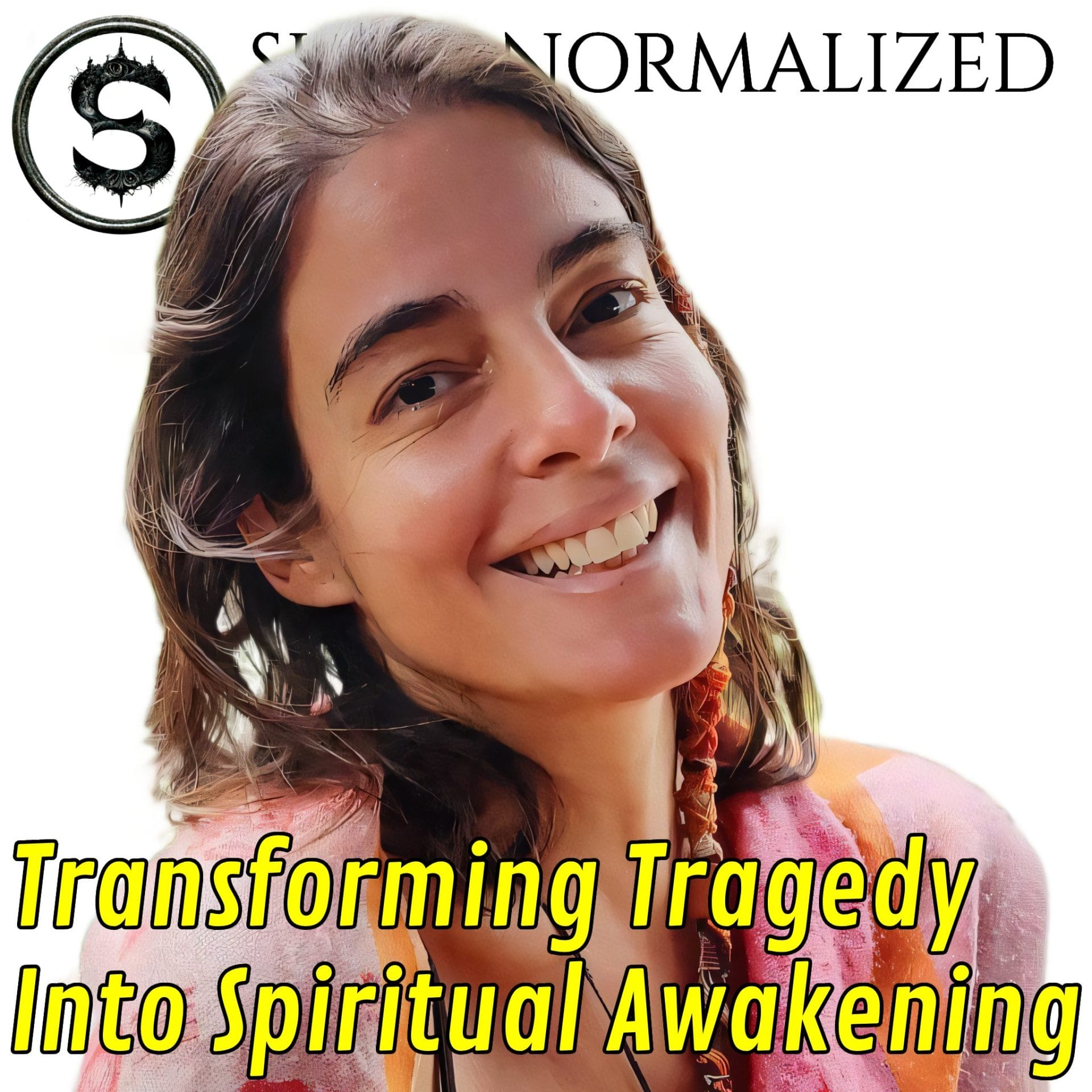
[00:00:00] Speaker A: Today on Super Normalized, we step in the depths of human experience, blending ancient wisdom and modern insight. I'm your host, CJ Barnaby, and today we're joined by Kartia Batalha, a psychotherapist, holistic coach, yoga philosophy teacher, author, and mystic whose journey from personal tragedy to profound healing shapes her work in guiding others towards self awakening. Kartia's path began in turbulence, but the deep loss became a catalyst for her transformation. Through tantra, yoga, and later shamanic tradition, she discovered not just healing for herself, but a way to share this wisdom with others. Now she weaves together Eastern philosophies and Western psychology, offering tools that go beyond theory, inviting us into an embodied experience of transformation. If you've ever felt lost or ready to step deeper into your own awakening, this conversation is for you. We'll discuss the power of presence, the role of diverse traditions and healings, and what it means to live in alignment with your highest truth. Listen all the way to the end of some real pro tips there from Katya, and this one is deep. I'm sure you will enjoy.
Welcome to Super Normalized. Katya Batala Katia. I'm interested in hearing your story because you've been through quite a lot. And that deep loss and turbulence became the catalyst for you to explore yoga, tantra, and shamanic traditions that you use now to help others. And so, Kasia, welcome to the show.
[00:01:21] Speaker B: Thank you so much. I'm very happy to be here. C.J. thanks for inviting me.
[00:01:25] Speaker A: Awesome. Okay, so can you share more about your personal tragedy that became the turning point for your life? How did that lead you into yoga and tantra?
[00:01:34] Speaker B: Well, I guess the tragedy came off the back of living a very isolated and oppressed life. A very strict upbringing. And I survived it with the thought of, one day I'm going to have my own family, and then everything will be okay because I'll be able to create the loving, kind, thoughtful, free environment that I've always longed for. And so it's been almost three decades of that thought kind of getting me through it all, and. And finally I got pregnant and I had a stable partner. I had a stable life. We got the house in the suburbs. Like, everything seemed perfect. And I got pregnant straight away. And I had this huge conn with the baby that was inside of me, and everything was looking good to change my life. And it didn't really work out that way. I had a miscarriage and I lost it all. And with that loss came the loss of all the dreams and all the decades That I had that thought that got me through it all. So it really felt like my world crumbling. And it was one of those really big tragedies. But I see it now in a different way. At the time, I was inconsolable, but now I see it. If that hadn't happened, the walls wouldn't have crumbled, and that wouldn't have given me the spaciousness to create a whole new world. From there, it needed to be all destroyed, all burned to the ground, so that something new could emerge.
[00:03:10] Speaker A: Sometimes we have to be surrounded by darkness to be able to see where the light actually is. How. What were some of the immediate changes or insights that you experienced when you started practicing yoga and tantra? What sort of yoga were you studying and practicing and what sort of tantra as well? Because there's lots of different branches there.
[00:03:28] Speaker B: Yes. So I studied classical yoga with a tantra background.
And I just want to say that some people think of tantra as, you know, the art of good six or something. And it's not that what I studied is classical tantra, which is.
I call it the. The science of awakening through every circumstance in life.
So that means that for anything that happens in life, whether you're in a relationship, whether you're eating an apple, whatever you're doing in life, there'll be depth behind it and there'll be teachings, universal teachings behind it. And that's what tantra teaches. It teaches what's behind every, you know, the spirituality, the psychology, the philosophy behind it all so that we can understand what it means to have a more peaceful, fulfilling, joyful life.
So it's interesting that tantra didn't really come into my life until that moment where I lost the baby.
And then it came right at that moment, you know, so it's kind of when the student's ready, the teacher will come kind of thing. And it did come at the right moment to carry me through it all.
Yeah. So that's the tradition.
[00:04:48] Speaker A: Yeah. That's interesting. It sounds like the use of tantra as a method of communicating with the universe in bringing yourself to an understanding of what your needs are and how to grow.
[00:05:02] Speaker B: Yes. Yes, it is. And it kind of opened my eyes to a whole new reality about everything. It's hard to describe because the moment I got there and they started talking about the laws of the universe and how it all works, I thought, this is going to change my life. And it felt almost ancient, as if I recognized it somehow from another life or, you know, just some deep wisdom that I had Inside somewhere, even though I never heard any of that before. So as the teacher was explaining the. He started to explain the philosophy of the chakras and, you know, the energies that rule us as human beings and how it all connects with our emotions, with our body, with our psyche, and with spirituality.
I felt like that was almost familiar information or. Or somehow a wisdom that I recognized.
And.
And so we went through a process of exploring in depth each and every one of those energies. And as we received that theory that was also accompanied by yoga postures and practices and things like that, I started noticing changes in me that were exactly the changes that they said were gonna happen, you know, that were related to that chakra that we were working on, if that makes sense. And that's how I knew that it was real. Because I'm. I'm a skeptic. I don't really believe in things until I see them in front of me, basically. And this is why I describe tantra and yoga as a science, because it's not something subjective that you go like, oh, this will become a bit better, or something like that. No. When we study a chakra, we know what organs of the body it relates to. We know emotions of our psyche it relates to, and social patterns and things like that. And if that chakra starts to awaken and be balanced, we expect to see certain results. And I did see those results, so. And then that's why I started to integrate, okay, this is actually real like this. This is actually all happening. And some things were very, very specific.
If you work on the first chakra, which is the root chakra, relates to safety and stability and, you know, consistency, the ability to. To choose something and stick with it for a long period of time and to feel safe in the world, et cetera. That chakra relates to the sense of smell. This is just to give you an example. So each chakra will relate to one of the senses. And they said, if you work on this chakra, you'll be able to develop a sense of super smell, you know, that is very, very accurate. And go. And can be something very far away. And I was very reluctant with this one because it was the first one. So I didn't have any experience. And also, the sense of smell is. Was almost kind of absent in me somehow. I had some. I don't know what, but I didn't really have it very heightened. And by the end of it, I could smell things from so far away. No one else could smell something. And I could smell something that was like, a few blocks away, you know, that kind of thing. So. And this, for every chakra there's examples like this. I don't know if we need or want to go into that, but examples that are just so hard to say this isn't the case, you know, that I actually started to not only believe that, but later on when I became a yoga teacher, I started to see that in my students. So it's not even like I was imagining it. Oh. So I could really see it again, you know.
[00:08:30] Speaker A: Yeah. How did yoga mesh with your tantra studies? In that case?
[00:08:35] Speaker B: They were one and the same. So I guess modern yoga separates all the things. You've got Hatha, which is more about the postures, and Vinyasa, which is yet again another more flowy movement type of yoga. And you've got some forms of devotional yoga and it separates everything. Then there's Kundalini yoga, more about awakening the energy. Whereas classical yoga and tantra are, it's kind of inclusive of all it has all the practices. And this is why, you know, the course that I'm in is a 30, I think 6 year old, 36 year course that, that I'm in and that I've studied. And it's.
Tantra is kind of the background for it all.
And in a way we don't really see a separation between tantra and yoga. It's just we're ultimately talking about the same things. And I guess some things could be considered a bit more tantric than yoga. And people tend to think of yoga more around the postures and the practices and tantra more about the energies and that movement of energy and what that brings. But ultimately we, we use them as the same thing.
[00:09:52] Speaker A: Were there any immediate changes or insights you experienced when you started practicing yoga and tantra besides that change in sense of smell?
[00:10:00] Speaker B: So many, so many. Okay, more examples. So let's say then we moved on to the second chakra. And the second chakra is about social interactions and sexuality, sensuality, it's the element of the water.
So fluidity, adaptability, you know, those emotions of, of being adaptable, going with the flow, being socially active and connected to other people and other things and, you know, kind of being in love with the world and the senses and the sense of pleasure, what it's being driven a bit by what gives us pleasure. Actually a lot of the world is in this state of consciousness about following pleasure. So second chakra.
Most countries have a particular level of consciousness that rules them and for most countries it'll be Swadistana, the Second chakra. And so as we started studying that chakra, the teacher said that his experience was that when he started doing the postures and awakening it, he started noticing that people were just drawn to him. The social aspect, people would approach him on the street and would just want to talk or connect and like all the acquaintances would just reach out on social media, that kind of thing.
And I was like, okay, that's interesting.
And then of course, this started to happen exactly like that. People who haven't reached out in ages, years, would just suddenly message me and, and, and people would just talk to me in the supermarket and want to engage in conversation. So yeah, it was really pulling that energy because when we, when we vibrate something, when we awaken, you know, we do this work of, of yoga and we do postures for that specific chakra, we awaken that chakra and that energy in us and then energy attracts similar energy. You know, the law of attraction.
I just started to attract all these social circumstances.
[00:12:05] Speaker A: Wow.
So how has your journey evolved from initially seeking healing for yourself to becoming a guide for others?
[00:12:17] Speaker B: I had a strict upbringing and it was pretty disconnected and isolated. And what that resulted in was that when I became a teenager and got out of my Catholic, all girls type of school and had a little bit more freedom, I found a boy who was interested in me and seemed to love me a lot. And I didn't know what love looked like in a way. So that felt like everything to me. It's all I ever wanted was to be loved. So I really held onto that relationship because it felt like everything I'd ever dreamed of. And what I didn't know at the time was that it was a controlling, possessed, super attached relationship where he defined everything that I could do, who I could speak to, what I could dress. Pretty much controlled every aspect of my life. But because my life was pretty controlled until then, I didn't really see that as not normal. It was pretty normalized. That's the danger. And because I was so disconnected and the adults in my life were so oppressive, I couldn't really talk to anyone about my relationship because they would just forbid me from dating and take away the one thing I really loved about my life. So that resulted in a three and a half year relationship of abuse, essentially and oppression. And what I now recognize is that because at the time I just thought, okay, that must be what love is, because I don't know anything else. And that at that time my body started showing me things or trying to show me because I wasn't Listening, and I wasn't looking, so. But it was trying to show me through symptoms that something was not okay. And I didn't have even the wisdom to understand that the body speaks to us. You know, this was something that I was taught in yoga. One of the many things at the time I started developing, for example, sexual symptoms, as in pains and kind of illnesses that related to sexuality. And this was because I was. I was being sexually abused. I just didn't know that that's what that was. At the time, I thought it was my responsibility to say yes to my partner kind of thing. And even saying no didn't really work. So I had no one to really guide me. But my body was always trying to say, look, this isn't okay. And it was developing all these symptoms and.
And one of the symptoms was a chronic autoimmune disease which was horrific. It's called urticaria, also called hives. But it's a very serious form of hives, where it feels like being bitten by 100 mosquitoes at any given time. And this was for years and years and years and years. But because everything is connected, it also symbolizes our emotional protection in the psychosomatic world, which is something I later specialized in as a psychotherapist. The body speaks in a kind of mysterious but fairly clear language. So if. If you've got a headache, it's not going to mean something about your stomach kind of thing. So you probably too much in your head or, you know, it's pretty direct. If you've got heart pain, it's probably, you know, something about your heart, like love and kind of grief or disappointment.
So the immune system is about protection and not being protected and the world being an unsafe place. I started to have this horrible autoimmune condition, urticaria, that I didn't really know what it meant at the time. And it was only through, even after yoga, because with yoga I started to understand, okay, this means something. What on earth is it? And then it was only when I studied psychotherapy and then actually went into the psychosomatic field and I studied under Dr. Brian Broome, who's very well known in New Zealand in Auckland Hospital, and then the psychosomatic world. And then I started to see a trend between autoimmune conditions, particularly urticaria and sexual abuse and feeling like the world is an unsafe place. And so after I had whole healing process around, my God, I do feel like the world is an unsafe place. And I feel like men are unsafe and all these beliefs around that and I started to discover my beliefs, you know, that I'm responsible for pleasing men. I'm responsible for saying yes.
I need to do as I'm told.
I can't express my feelings. I put myself in dangerous situations emotionally. So I had to unpack all of that, which took a while. But once I felt like this healing has happened, I actually don't feel unsafe in the world anymore. And I'm okay with men I'm okay with. I feel like I've got good boundaries. I feel like I. I can say no. I say no easily now. Then the disease just stopped. And this was a disease that doctors said, no, there's no solution for this disease. Just take medication. Life. And we can only treat the symptoms because no one knows what it's about, despite kind of worldwide conferences and people looking into it and all the best doctors involved. And yet, you know, through this work, the disease is no longer here.
[00:17:39] Speaker A: Wow, that's fantastic.
It's amazing when you realize what connections there are to the body and the story it's trying to tell. And all power to you for being able to recognize that and to move through it and make that healing happen. You blend ancient wisdom with modern psychology.
Can you describe how these two worlds meet in your practice?
[00:18:03] Speaker B: Psychology is a strength in the Western tradition. Whether we think about psychotherapists or counselors or psychologists, we all study the same theories. I think there's limit limitations to what this. Normal, I guess normal. By normal I mean Western psychology offers in that it misses out on some crucial parts of the human being, essentially. So it misses out on the body quite often. I see many psychotherapists that don't even ever talk about the body or ask the person, you know, what's happening with your body, what symptoms do you have? Which is such a, for me, such a gap because the body's telling us what's in our subconscious. Of course, anyone can tell you what's in their conscious mind. But what we don't know is what's unconscious, basically. And the body is speaking from the unconscious. So it's such a relevant form of information that we miss out on if we don't include it in therapy. Then there's nature. Nature is such a source of healing and often it's. It's just missed in psychology. There's community and something that here in New Zealand we actually do value quite a lot, especially because of traditions, you know, the indigenous people of New Zealand and yeah, there's a big connection with the land and reciprocity with the land and acknowledgement of the impact of the land in our being.
So, for example, people living in the city, they're constantly overwhelmed by 100,000 energies, and they don't even know it.
Like the energy of cars, of other people, of sound, of all of it lights is constantly intruding in our system and creating this stress or this tension and all of that. And then people think, oh, I'm stressed, there's something wrong with me. But actually, a lot of the time it's not just. But the environment plays a big role in that. And again, something that's overlooked.
Then the influence of our ancestors. For example, another part that Mauria quite connected to, you know, where do we come from? And how did those before us contribute to who we are today? And there was that and their support.
Then spirituality. How do we connect with our higher self, with our spirit, with whatever we want to call it, that light in us. And so these are just some aspects that psychology often just does not kind of mention even.
And then it focuses a lot on problems, you know, as a result, because we look at what's. How is the person feeling? And then, you know, and that can be.
It's. You know, sometimes we have to focus on problems because they exist, but also they're not the whole picture. And the whole picture is.
Well, according to these ancient traditions, we are a soul on a journey of awakening and reaching our full potential. And it's through looking at that big picture, connecting with our soul, looking at the, you know, all. All of our past, even to identify why did the.
All these things had. Have to happen to me? What was I attracting and what was I trying to awaken in me? What part of my potential was awakened because of these traumas and these unfortunate circumstances? And through that understanding, okay, I'm here to awaken this part of myself for it's. It's an empowering journey of fulfilling our potential.
So if you don't have this, you might just get trapped in the problems. I have this problem at work, you know, my boss is like this. And we might be missing, like, actually, your journey is a journey of empowerment. And you need to be able to speak up and share your wisdom or, you know, guide others. Whatever is the journey, it's different for everyone.
And plus, if you do keep focusing on those problems over and over again, you create resonance with these problems. Meaning, as I said before, energy attracts energy.
So if you start resonating, for example, with the fear that you felt, you know, at that time, or the.
The jealousy or the anger, whatever it is, and we really go into it over and over again and don't really focus on, you know, soul aspects or the big picture. Then you actually are in danger of creating that resonance more and more and getting more and more into fear rather than liberation and light. Does that make sense?
[00:22:48] Speaker A: Yeah, it makes a lot of sense. And, you know, you're talking about that environmental stress back there and how that I see that as like a cage or a prison that we can actually get caught in and then realize you're in it. I mean, I lived in Sydney on one of the busy, noisiest streets in Sydney for seven years. And it was like I had a nice quiet room, but, you know, it was otherwise noisy all the time.
I didn't know how noisy it was until I moved three suburbs away. And I was sitting in the house thinking, oh my God, it's so much quieter here. And then I was sitting out in the backyard one day and just tuning into it. I was like, wait a minute, it's not quite here either.
And eventually I moved up to a forest which was like, you know, the. The polar opposite of that. And the change was spectacular. And it just. Just being there allowed me to open up to myself and to my connection to my body and the world in a way that could never happen in that environmental stress. It's just something that can't happen when you're constantly in a state of. I don't know, it's almost like a hyper vigilance. Cause you don't know what's going to happen next. So, yeah, it's good that, that, that you explained that and you. And you recognize that and how it changed for you as well.
Now, do you have any practical tools or techniques from ancient traditions that you find particularly effective now when working with clients today?
[00:24:05] Speaker B: Hmm.
I think that one thing that I find really, really important is the ability to listen to our intuition. We have deeper parts of us that are eager to tell us how to live, and we are often not listening. I look back and, you know, even to the relationship that I talked about earlier or, you know, when I was living in certain places or in certain environments, and my body or my intuition was somehow telling me that that wasn't right.
And I just wasn't tuned in to that intuition. I wasn't listening. Listening is a huge part of it because it's a guide and the body's a guide.
There should be nothing wrong with the body. People think, oh, I have menstrual pain and that's normal. I have headaches and that's Normal. I have back pain and that's normal. I often ask clients, you know, do you have any body symptoms? They'll straightaway tell me no. And then I ask specifically about these things. Oh yeah, I have neck pain all the time, you know, so stomach problems all the time. So it's like they've normalized. Pain and pain should not be there. Our bodies are functional. If they're saying something, there's a reason and we need to look at that reason and investigate further. So having that curiosity and that openness and that ability to listen is a huge thing. Another thing is make time for what matters.
So make, you know, even if it's half an hour of your day, an hour, 10 minutes, it doesn't matter. But take time to set intentions. Like for your, not for your work. Not the, we call it the horizontal path. Things. Horizontal path is like the, the things, the activities that you do in life, whether it's work or your garden or, you know, those kinds of things. When you die, they die too. So from a spiritual perspective, they're not very important.
So what matters from a spiritual perspective is the vertical path, which is the path of awakening the consciousness and reaching our potential, you know, awakening our ability to love, our ability to have intuition and freedom and determination, empowerment, self esteem, safety. The qualities peace, bliss, joy. That's the path of like and inner vision, you know, more high level things. So that's pretty much what truly matters. From a spiritual perspective, we would say, of course, you know, everyone gets to have their perspective on what's important. But I'm just talking about how yoga would see it. And so to have goals, intentions, for example, working with, I don't know, two or three intentions that we set, like having a, for example, an intention could be having a more peaceful mind or identifying our triggers in life when, what ways, in what ways do we lose our peace and doing that kind of personal development work.
What are the main egos in our life? You know, are we angry a lot of the time or sad or lonely? What are the egos and how can we work on them?
So anyway, defining goals for that inner work and then reassessing at the end of the day those goals and how have we worked towards those goals on that day? Because often we let things that matter least be on top of things that matter most because the day just kind of calls for attention. So from a yoga perspective, we need to put our priorities first, or at least they need to be in there, you know, throughout the day.
So to have set some time aside for those Practices, whether that's yoga, that's, you know, breathing techniques, meditation, whether it's a martial art, whether it's journaling, whether you just look at a candle and connect with the fire, doesn't matter. But to set time aside, to have the spaciousness to reflect on how am I really going on the vertical path is really, really important. And then things unfold from there. Because once you set an intention, you start attracting things that will help you work on that intention.
And so things will unfold and you'll attract things into your life that will help with that.
[00:28:32] Speaker A: Yeah, it sounds like you come into resonance in the right way and manifest the better story for yourself.
So you talk about healing as a profound process.
And what does healing look like in its most transformative form from your experience?
[00:28:50] Speaker B: It's because healing is such a vast word and vast process. It's hard to.
Hard to kind of narrow it down.
Like, I'm even thinking of all these examples. I've recently written a book called Echoes of the Timeless that goes through my whole healing process and the journey, you know, that through each chakra and what healing happened in each of the things. So it's a very broad spectrum that includes all the levels. But what I can say about it is healing happens at all levels. On a physical level, as I said, the body should be healthy. So looking at all those, what we eat, what we how, what we're breathing, like what, the quality of the water that we drink. So anything that we put into our body, that becomes the cells of our body. So what cells do we want? You know, do we want things with chemicals and, you know, like antibiotics and things coming into our body and ruining our gut? Or do we want food that's cultivated with life and without nasty products? For example, do we want the clean air of the forest, as you say, or in my case, I live on an island in New Zealand, the air of the ocean?
Or do we want the pollution of the city?
And are we looking at our illnesses, our tensions?
So this is just the physical aspect. Then there's the emotional aspect. What are the emotions that are ruling our days and disturbing our peace? What are the mental aspects? Is our mind agitated a lot of the time or is it calm? Do we have clarity? Or does the mind stay foggy all day? It's not normal. I mean, sadly, it's normal, but we're not supposed to feel foggy a lot of the time, and many people do. It's hard to think. And then they use coffee to compensate for that and try to get A bit more clarity and energy. I do that and you know, it's, it's an option because from a yoga perspective, nothing's right or wrong, but it's more about where do you want to be heading, you know, and what are the things that are leaking your energy. You talked about living in a forest or a calm environment versus a city. In cities our energy is constantly being leaked by the noise, by the distractions, by social media. Is, can be a horrific thing like in terms of energy leaks, doom, scrolling through nothingness, you know, so all these ways we are leaking energy that should actually be our energy and then we have no energy and then we drink coffee and it all seems fine because it's a castle of cards that it's somehow working because we have all these things in place. And then my head hurts, but I'm taking aspirin. And then, you know, we put all these. It's, it's a real castle of cards that we have. And then it seems to be working. But it's a huge. And if we strip away all those things like coffee, like alcohol, alcohol can make it seem like, yeah, I have, I have a fun life and everything. We'll take away alcohol.
See how much fun you have in life, how much joy you actually have inside.
[00:31:58] Speaker A: Yeah, yeah, yeah.
That would speaks to the idea of like choose your inputs carefully and consciously because they become you.
[00:32:10] Speaker B: Yeah, definitely.
And for good and for bad.
[00:32:15] Speaker A: Yes, true, true.
Sometimes people choose bad inputs because they want the stimulation. They're thinking it's entertainment. For example. Now you did talk about before, I actually did mention before that you've studied a bit of shamanic traditions as well. Can you share about how that has informed your work and what shamanic practices you use in your work?
[00:32:35] Speaker B: Yes. So my training was for a very long time on the yoga and that helped me balance the overall system. But what I did feel for myself was that somehow I was missing a lot of the grounded practices like nature based connection to the earth. Ultimately spiritually and emotionally I felt very free, you know, free from ego kind of patterns, you know, not, I'm not saying like I'm free from ego, but you know, like just that initial kind of release of things that were not meant to be there anyway and just feeling really free, feeling really connected and feeling really light. But I still felt a kind of disconnection from this earth and this life here.
And then more shamanic traditions started to come into my life. The and to me they felt very grounding. And so some of those traditions are purification, they have purification techniques. They're very good with that. They have, for example, what in English we call sweat lodges. Have you heard of sweat lodges?
Yeah. So sweat lodges like a structure that you. It's a spiritual experience, but the structure that you go into that in which there's immense heat and you sweat your impurities out.
But also you can sing like some indigenous songs or you know, play some travel instruments and. And it feels like. I remember my first sweat lodge. It felt like a death of the ego. Like it felt like a letting go physically and psychologically and just stripping away anything that wasn't real. And because it's so hot that you feel and it's for so long, it can last two, three, four hours.
So it can feel like, oh my God, I'm dying now. And of course I wasn't, but it felt that way. And I let go of a lot of things in that way. And it's also a really good purification because I tell people, people often ask me, what should I eat? You know, it's better to eat carrots or do I eat meat? Or all these questions. And I usually say, your body holds the wisdom. Like obviously eat organic, non chemical things, but then about specifically what to eat. Let your body tell you. You know, go to a supermarket and let you, let yourself walk to what attracts you, what feels alive in you.
And people say, well, what attracts me is chocolate and candy and alcohol.
And that's because there's a level of purification that is needed so that we can really listen to the body. And yoga recognizes that as well and has lots of purification techniques. Yeah, sweat lodge is an example. There's many purification techniques that I could go into. There's particular traditions that have certain ceremonies where you go into the forest for four days, no water, no food, and you just connect with yourself during that time because there's no water or food, you start to enter this lighter and lighter state where you can actually feel your.
Like I don't want. I don't know if soul is the right. You know, like you, you get the access, direct access to that intuition into visions and source, connection that through which you can see things like what is my purpose, what direction should I take in life or what can I choose? You know, because you strip away everything and you're just being nourished by the elements for those four days. And there's traditions that are about, you know, prayer and not the prayer as we know it in kind of Catholic traditions kind of thing, but more like a state of gratitude for everything that we're actually given in recognition of what a miracle life is. And then there's more psychedelic aspects in some traditions.
So plant medicines that can help reach very, very elevated state with very little effort. In yoga, you'd probably have to do yoga practices for a long time before you start having those very elevated states of consciousness. Whereas if you do plant medicine journeys, of course there's a process of purification that you go through if you're, if you go, for example, this is an example from my book as well. But if you go to a, a retreat, you know, a shamanic retreat in the Amazonian jungle in Peru, you might do a dieta, like a diet for a couple of weeks before you can really do ceremonies with plants, the major plant medicines. And, and even then the plant medicines still purify you some more before you can actually enter more elevated states. But it often doesn't even take that long. And from those states you can see the interconnectedness of it all or the meaning or have very elevated teachings that just come through. You know, no one's telling you what to do or teaching you in conversation with someone who really follows that path very strictly. And she said to me, I don't like it when teachers tell me what to do. I resist that. And it feels like a closed, structured framework. I don't like it. But medicines, it feels like the teaching comes from within and we sort of then just have to unpack that and see how it applies to our lives.
So yeah, those are just some examples of natural medicines and how nature based practices that can assist us on, on our path and they go very well with therapy, for example, you know, because it, it's helped from every angle.
[00:38:28] Speaker A: I'm curious about your book. Do you have it there at all? You can show it.
[00:38:32] Speaker B: All right, I'm back.
Okay, show it.
[00:38:37] Speaker A: Echoes of the timeless. Okay, so I need to know more about this book. What, what drew you to write this book?
[00:38:43] Speaker B: Even the process of writing this book was quite synchronistic. I wasn't intending to, but I found my, myself isolated in a particular town and I had nothing on me and I couldn't do anything because I got severely unwell for an entire month and I had only my laptop on me. So I started writing and then this huge downlo just poured through me. I was trying to keep up, you know, with typing. And I was in it at the time, so typing was easy, but still I was racing to just put down everything that was coming through. And then I would do this from morning to night, like in a day and then in the evening, I would stop because I really had to sleep. And I would just think, oh, my God, what just happened? And probably tomorrow I'll have nothing to write about because, like, all these things, amazing things just came through and that's probably it. And then the next day, huge download again, and tried to keep up. And so this happened for pretty much the entire month until the book was written. And. And then the. The. My condition just vanished. And I was.
[00:39:52] Speaker A: Well, sounds like the spirit set you up there.
[00:39:56] Speaker B: Yeah, I was really set up. I just wanted to surf. I went to this town to. It was a surf town in Portugal. I just wanted to surf, and I didn't surf once. And then.
[00:40:07] Speaker A: But you wrote a book.
[00:40:08] Speaker B: I wrote a book.
[00:40:09] Speaker A: Not many people can say that.
And who is this book for? And what sort of content would they expect to read if they read it?
[00:40:18] Speaker B: The book is for people who are curious about these things that we've been talking about.
What is there to awaken in us? How do we reach our potential? How do we heal?
And.
Yeah, and it's about a journey of, I guess, spiritual awakening. All these learnings about the universe that a young woman has when she was not expecting anything from life after a trauma that she's just had.
[00:40:51] Speaker A: Wow. Excellent, excellent. Now, you mentioned that you are all about empowering others to awaken consciousness. What does the awakening process look like in early stages? And how does somebody say somebody that. That's usually numb to these sort of things, how would they recognize it?
[00:41:09] Speaker B: I think it's important to recognize when we are in.
In the ego, let's say. And by that I mean we are emotional, or life doesn't make sense, or life feels empty, or we're angry a lot of the time, or afraid, or our body's got tensions or illnesses, or, you know, life isn't really going very well. Whatever feelings we have, whether that's sadness or anguish or hatred.
So ego manifests in all these ways. And.
And so when you start doing practices, and it doesn't have to be yoga practices, you know, there's all these traditions. There's Buddhists, there's Sufis, there's Gnostics, there's so many esoteric traditions that have their own practices, but ultimately they're all doing the same thing, which is the. Our emotions start to become more stable and they start to become more in our potential.
And by that I mean. For example, let's talk about. I talked about the first and second chakra, so let's go with the third. So if that Chakra is balanced, then we might feel empowered. We have power within ourselves, we'll feel healthy self esteem, we'll.
We feel like we, we are in a position to achieve things, to be engaged in the world, to take action. Whereas if this chakra's not balanced, then we might feel on one hand, pride, arrogance, stubbornness, a feeling of, of lack. Or on the other hand, disempowerment. No self esteem, like we can't really achieve anything.
So what that awakening process looks like is moving from the unhealthy aspects of having imbalanced, not activated chakras to the potential of the chakras, to the balanced emotions, balanced mind, healthy body, connection to spirit, connection to the world around us in nature. So we start to feel, to move from disconnection to connection, to feel. Our heart is more awakened. For a lot of people, people, they just live in the mind. It's very common these days. You know, all the things to think about, but not really a heart that's awakened and caring and loving and that can hold others and that feels like love towards the world. A mind that is connected to the deeper layers of reality. We have visions, there's intuitions, seeing how everything is connected.
A healthy, balanced social life, like feeling like we can connect with others. No social anxiety.
It feels fluid. We're able to adapt. We feel safe in the world.
Yeah, we have creativity.
So the, a lot of the world is pretty much in a, in a state that is often very, just logical and we were missing out often on the feminine, on the creative aspects. You know, whether that's music or that's actually an aspect of indigenous traditions and shamanic traditions that I, I haven't actually even mentioned, which is song. You know, there's these ancient songs, tribal, indigenous songs, but some are already in Portuguese, Spanish, even English, some in Maori. This, all languages have medicine songs. And it's something I feel personally very connected to. For example, it's these songs that bring healing and put you into a different frequency. And yoga has its own variety version of that, which is kirtan and songs in Sanskrit, you know, mantras that bring a certain vibration. So, yeah, so when I was saying that the world is pretty much on the logical side and has a bit lost access to that, the spirituality, the intuition, the creativity, the inner vision. So, yeah, walking towards balance. Yeah, I could go on for a long time, but these are just some examples of what it feels like to stop moving into our potential.
[00:45:22] Speaker A: Now we're moving towards the end of the podcast. If there's one message you wanted to get out there to people who are on their path and starting to feel a little stuck and looking for a way through.
What sort of wisdom would you share there? Maybe as a sentence or a phrase that just helps them to understand that all is not lost, you're on the way.
[00:45:43] Speaker B: I would say follow your inspiration because that is a guide to where your potential might be. So anything that makes you or helps you feel alive and there's some tingling feeling inside or something that feels exciting or just curiosity about a certain, I don't know, podcast that you've listened to or that's probably an indicator that there's something in it for you and that your soul wants to explore that. So go for Excellent.
[00:46:16] Speaker A: Thank you very much, Katya for your wisdom and your sharing and your vulnerability in all of this episode. I appreciate all that you shared and how can people find you?
[00:46:26] Speaker B: Thank you, cj. It's been great to talk to you and yeah, it's been beautiful. I'm on all social media as author. Katya Batalha and my website katyabatalia.org and yes, also my book Echoes of the Timeless is everywhere that you can find a book, including audiobooks. So excellent. Thank you for asking.
[00:46:46] Speaker A: I'll include those links down in the show notes. Thank you very much.
[00:46:50] Speaker B: Thank you. Thank you.
[00:46:54] Speaker A: All power to Katia for getting through her experience and then using that to gain a greater understanding of herself and her way in life and in doing so, being able to bring that through so that she can help others. I've really appreciated this conversation and learn a few more things that I needed to know about myself because of what she was saying. I'm doing a parts work deep course right now with Gordon White of Rune Soup and it's intense but I'd say it's probably the best thing I've ever done. Thank you very much for listening and if you enjoyed today's show, like and subscribe and if you like that, you'll like these ones.