Episode Transcript
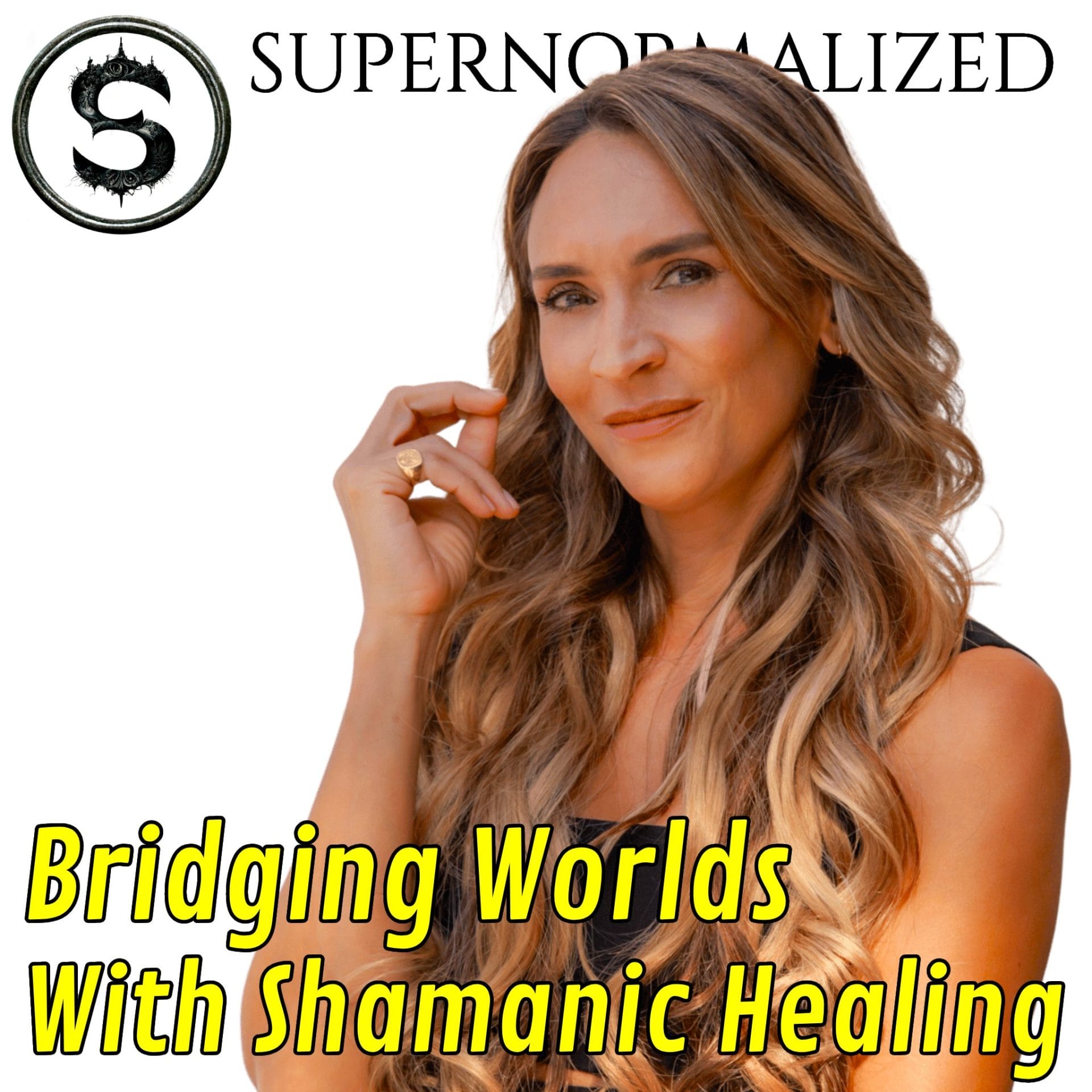
[00:00:04] Speaker A: Welcome to Super Normalized. I'm your host, CJ Barnaby, and I like to challenge what's considered normal and invite people just like you to share your story, wisdom and truth. Each week I explore deep healing modalities, supernatural abilities, spiritual contact, and the often unexplained, whilst leaning into acceptance, personal growth, and real healing. If you're ready to step into a world where your story matters, you're in the right place. Enjoy finally being so supernormalized. Today on Super Normalized, you'll meet Sylvia Sollitt, a rare voice at the crossroads of high finance and deep spiritual practice.
She's a certified accountant, CFA and chief investment officer who has stewarded over a billion dollars, but also has been trained indigenously. Indigenously as a medicine woman with three decades of spiritual and energetic healing. Her life asked the potent questions, can we awaken while staying fully present as a parent, partner and professional? And Sylvia says yes. And her story today shows how so. Listen to the whole episode. At the end of it, you'll. By the end of it, you'll, you'll have greater understanding of how you can actually bridge your life between two worlds. And in doing so, do so consciously.
And yeah. Without further ado, on with the show.
Welcome to Super Normalized Sylvia Sollitt.
Sylvia, you've had a life living and also bridging both worlds, like the normie world of being, you know, a high flying, corporate sort of person.
And now you're moving into like a shamanic sort of role, guiding people on their path. Welcome to the show.
[00:01:53] Speaker B: Thank you. Thank you for having me today.
[00:01:56] Speaker A: So, look, I need to know, first of all, what was the ordinary life that you had before and how did you wake up?
[00:02:04] Speaker B: No, if I ever had an ordinary life, unless you were to go all the way back to my early childhood. I was born to a father who's an immigrant from Iran and a mother who was American. They met in college. I'm actually the product of them falling in love when they were still college students. I was actually born to students on a college campus and lived on college campuses until my dad finished his PhD. And so I would say that was the most normal time of my life.
I had the either the luck or the curse, depending on what your frame of reference is, to have had my first awakening experience when I was about 19 years old. And so after that, I would say I was kind of indelibly marked and oriented towards a life of awakening.
[00:02:51] Speaker A: What was the first moment that you sensed that awakening could happen inside your sort of normal life? There as a mother, partner and professional.
[00:02:59] Speaker B: Well, I, I had, you know, I think if, if people, you know, who are listening to this, you, you know that you're being called to awaken in some way, shape or form, you're going to feel these sort of subtle calls to awakening. For me, those first started in dreams.
So I would have a dream where I was hurling into infinity and I would reach the sort of outer edge of what we understand about the universe. And I would hit this edge and I'd be like, wait a second, nobody knows what's going on beyond this edge. Like as a child I'd be like, does. Has anyone asked the question, what are we doing here? And how the universe is still? Because I'm wondering.
So like. But we all get those kinds of whispers.
And I love that, I love that the, the call to awakening is so personalized. The universe can offer it to us in these really tiny whispers that are perfectly designed just for our soul to start the awakening process at exactly the right time.
So for me to have had that start when I was a teenager, it made it easy to realize that the purpose of the human lifetime is to wake up and take. To get obsessively curious about that.
[00:04:15] Speaker A: Yeah, yeah, yeah.
So you actually had a contact with a teacher or I would say like an early experience that changed your trajectory the most.
Who was that and how did that happen?
[00:04:29] Speaker B: I was doing an apprenticeship in college in between sort of my junior and senior year. And I was apprenticing with an herbalist in Boulder, Colorado.
And Boulder, as you know, is a very potent place on the planet. I think a lot of people have experienced a kind of quickening of awakening in Boulder. And for me there was convergence of many factors that summer. The first is that the herbalist introduced me to the plant medicine ayahuasca, which this is a really long time ago before anyone was talking about it, had heard about it. And so she initiated me that summer when I was still quite young. So that was the first kind of big portal opening to awakening and within a 10 day period.
I also read a magazine article by. It was like an interview with a teacher named Gangaji. And Gangaji is part of the Advaita Vedanta tradition. She is a student of Papaji, who was a student of Ramana Maharshi. And this is one of the ancient traditions in Hinduism that really points to the non dual nature of all reality. And that the main sort of spiritual practice is the question, who am I? And really using that question as a profound inquiry into the nature of the true self, which ultimately leads to stillness and silence as the primary spiritual transmission.
So that all happened to me that summer within sort of a two week period that the universe was like, have some ayahuasca. And also, by the way, here's your spiritual teacher. And when I. Now when I look back at it, so what a perfect design. Because I think that plant medicines in and of themselves, without the guidance of the non dual consciousness can end up bringing you down a lot of different, you know, dualistic paths. They can be quite, you know, they're magical substances and you could, you could get lost in psychedelic universes. But if you pair the power of the plant medicines to amplify consciousness with the understanding that stillness is at the heart of consciousness, if you can take that stillness and, and merge it with the potency of the plant medicine world, I think that that's a really good, profound kind of alchemy.
They work really well hand in hand together. So I feel lucky. Initiated in both at the same time.
[00:07:04] Speaker A: Do you find that, that delving into the who am I? Actually helped to ground your understanding and give you a greater sense of self and non self at the same time?
[00:07:16] Speaker B: At the beginning? No, at the beginning, my mind was. I was like, just barely entering adulthood. So my mind was very unkempt, very disorganized, very chaotic.
I was, you know, very identified with the mind.
And in the beginning, the question who am I? Was almost.
It was too difficult in the beginning for a mind like mine.
I was attracted to it and I could feel the resonance with truth.
But it was very hard for me to sit in silent meditation at that age because, you know, my mind would be like, yes, but that boy. And oh, do you remember what she said? And oh, I. What am I doing here? I'm gonna go and get some snacks with my friend at the health food store.
Like, it was like, you put the question, who am I? Into that mental field.
Um, you know, it's not easy.
[00:08:21] Speaker A: Yeah, yeah, it's gotta filter out and balance within that.
[00:08:26] Speaker B: Yeah. I'd say today the question has even more palpable resonance in my spiritual practice than ever. But it's taken me, taken me a long time to really cultivate that level of inner stillness.
[00:08:43] Speaker A: What did you do to cultivate that inner stillness?
[00:08:46] Speaker B: The, the first part of the journey for me was to really face the things that were inside of me that I didn't really want to face. So I'd say the first was really just the process of telling the truth about what is actually present and in My particular case, which I don't think is uncommon for a lot of young women, the first sort of layer of inquiry, you know, I could ask myself the question, who am I? But what was really bubbling up to the surface often was a lot of worthlessness and self hatred.
And that is part of the sort of like, this is like a cohesive cultural fabric of self hatred in the feminine, particularly in the US I don't know about Australia, where you are, but in the US it's, it's pervasive. And it's pervasive in so many of the ways that we want to look a certain way, behave a certain way, be acknowledged in a certain way. I mean, the feminine looking for approval is, is alive and well in the culture of the United States. And so that first layer was to just tell the truth about these places inside of me that were containing this kind of worthlessness or self hatred and to be sort of unflinching in, in that inquiry.
So if we think about, you know, stillness as a quality of consciousness, for me, what was powerful in the beginning was just to be as still as possible and then face the darkest shadows and not move.
As I was learning to face them and be completely present with them so that they could be seen for what they were, which was just false energy, you know, that could be dispelled with truth.
The first was facing some truths that need to be faced. And then the, the second was learning to work with the body, processing, you know, just conditioning through the body. I had many years where I was very devoted to movement practice, um, sometimes yoga, but also I would do five rhythms, dance, which is a dance modality, which was developed by Gabriel Roth. And the five rhythms were really instrumental to me at that time because again, it was really hard for me to sit down and just say, who am I?
But I could dance and move through my body. All of these different energies, also as a form of self inquiry, but just a self inquiry that had physical movement attached to it. So I'd say the, the, the facing, the unfaceable, the processing energy through the body, those were important components of being able to curate a deeper stillness inside myself.
[00:11:37] Speaker A: Yeah, no, I totally understand that. I did some work with five rhythms way back when myself. And at first few times I went there, I was like, well, these people are just dancing like hippies. Because that's the way I saw it.
Within six weeks I got it and I was dancing the same. I was like, I know now why this makes sense.
[00:11:58] Speaker B: Yeah, like back in the day, like Gabriel's Classes, they were amazing. And they used to be like an incredible network of teachers.
So you could be in almost any major city in the world and go and dance the five rhythms back in the day.
[00:12:12] Speaker A: Yeah, yeah. It seems to still hang around in places that are spiritually aligned or spiritually aligning as well. So that's a good thing.
[00:12:20] Speaker B: Or full of hippies. Or places that are full of hippies.
[00:12:24] Speaker A: Yeah, well, same thing, really.
So you did some work in Argentina co founding a transformational institute, shaping your sense of service. What was that institute and how did it actually shape you?
[00:12:40] Speaker B: It was conceived of in many ways as sort of like a sister school to the Esalen Institute in Big Sur, California. So one of the other co founders, a woman named Ingrid May, she was part of the original Esalen Bodywork crew. And again, this is. It's like. It's like we're going into the hippie archives and this kind of stuff. But the. These were golden moments in the history of the self, you know, human. Human potential movement.
Esalen Institute is where Rolfing was really developed.
Gestalt therapy, holotropic breath work. And they also developed a kind of bodywork which is called Esalen Body Work. Which is most distinctive quality is these sort of long, flowing strokes that go all the way, you know, from the foot to the hand. It's this very kind of oceanic, enveloping sort of massage therapy. And Esalen Massage Therapy really touches with presence. So it's very important that the therapist be completely present when she or he is laying their hands onto somebody. And it's actually that quality of presence, presence that's so healing. And through Esalen Body Work, you also can induce these sort of states of stillness. And oftentimes the last movement in the body work is to actually, as a craniosacral move where you're really helping the person to enter into the still point. And so Ingrid was one of the founding members of this crew that developed this kind of body work. And so she and a third partner who was Argentinian, had an intuition that bringing this to Argentina would be welcomed because this is in the mid-1990s and there weren't a lot of modern forms of therapy in the culture yet.
I primarily had a lot of Freudian psychoanalysis was what most people were doing for self help at the time. So to bring a modality or many modalities that were more somatic was at the time kind of revolutionary.
And it created a phenomenal community which grew and actually continues to exist today. The school still stands today in Argentina.
[00:14:57] Speaker A: Awesome. Okay, so where did your spiritual training challenge your identity the hardest?
And what stayed with you after the dust settled?
[00:15:07] Speaker B: I mean, when did the universe kick my ass the most?
[00:15:10] Speaker A: Yes.
[00:15:12] Speaker B: I think there's. There's been progressively harder ass kickings.
[00:15:18] Speaker A: I don't think anyone wants to hear that, but. Okay, but that's the truth of it, right?
[00:15:23] Speaker B: It's like. Well, I mean, let's be real. If, when I was 19 years old, if somebody had said to me, okay, like, I thought that, like, spiritual awakening was going to be this, like, awesome thing, and I was going to be this improved version of myself, like, maybe even slightly angelic, and that it was going to buffer me from suffering. But that's not how it works, actually. And maybe if somebody had told me that, I might have been like, no, no, no, thank you.
Like, no, thank you. I'm gonna just. Where. Where's the exit door? I'll be.
[00:15:56] Speaker A: Yeah, exactly.
[00:15:58] Speaker B: No, I mean, the. The. The. The curious thing about awakening is that it can always go more and more deep.
And there are ways in which you can even be alchemizing awakening, not even just for your own individual self, but. But in some ways for the collective. And, and so it makes sense that the challenges would get bigger and stronger, because what the universe is looking for is. Is channels to be able to alchemize suffering back into. Into love.
So maybe the first.
First sort of alchemy that I had to go through was heartbreak. You know, when I was younger, I think that that's very common for women. I do think heartbreak is one of the great portals to the divine for women in particular.
So much of our identity is wrapped into relationship.
So heartbreak has kicked my ass.
Really brought me to some profound spiritual realizations.
You know, about 10, 11 years ago, I went through a divorce from the father of my children. That was a second sort of portal of initiation where so much disillusionment had to be alchemized into love.
And in each of those, you know, I would find the aperture or the, like, the capacity to be able to widen and to hold even more pain, just grew. It's like a muscle. It's like a spiritual muscle. I was becoming more spiritually resilient, which, with each of these sort of initiations.
And then in the past two years of my life, I would say I was really have been in this process that's been the hardest of all, which has been primarily around business complications. You know, things going sideways in business transactions and having to deal with people's disappointment and people's upset around money. That's been a whole other sort of ass kicking spiritual initiation that I've, I've been processing.
But with each of them, what's really amazing is that as you turn and you face and you're completely present with whatever the universe has put in front of you, if you can actually be completely present with it, there actually is no suffering. There's nothing to be afraid of in any disaster. Truly.
[00:18:34] Speaker A: If your younger self asked for one clear instruction about purpose, what would you say?
[00:18:39] Speaker B: Now, I was very keyed in to try and figure out my life purposes when I was younger and I did, I did, I did understand that my life purpose was to love. I understood that at the time. But if I was gonna say I think my younger self was like, that's like a crap life purpose because I don't know how you make money from love. So it's like I was a little bit disappointed, but it was very clear to me. I mean, like received that in a kind of like profound meditative download.
So my older self would tell my younger self to, you know, to, to really enjoy that as a life purpose. It's an exquisite life purpose. And today I understand that love is actually an organizing force of the universe. It's a form of intelligence. Everything is evolving towards love.
So to have a life purpose that is to love is to actually have a life purpose that's aligned with that level of intelligence and then letting that intelligence be the organizing force of all things that you touch in life, whether it be business, investing, relationships, your body, health, all be organized through love.
[00:19:54] Speaker A: Yeah. Yeah.
So that brings me to the ideas of the bridge between capital and consciousness. Now, what criteria guide when deciding whether money is moving in the right way in relationships? So what would you think of as the right way to decide which way money should be going?
[00:20:12] Speaker B: Yeah, it's a beautiful question. Well, I don't think it's, it's not crazy to invite yourself to sit and meditate before you're making financial decisions.
[00:20:26] Speaker A: That makes complete sense to me. I wish I did it more.
[00:20:30] Speaker B: Like, it seems like, it seems like it's pretty obvious. Well, I don't feel like it's obvious to, you know, people don't talk about it. So I don't know if people are actually doing it. But the, the reason why I say that is we want to, we want to track in our body and in our mind what is our state of consciousness when we're making a decision, when, as it pertains to money.
So if you sit in Meditation, which, by the way, you can even sit in if you're, you know, in an, in an office environment and you need to make a decision. Like, I'm not, I don't know if you, I wouldn't say do this if you're a public markets trader on the stock market and you're trading stocks. Okay, I'm not talking about those kinds of. Because that's a whole different animal. But let's say you're, you're looking at your own personal finances and you're wondering, should I buy this house? Should I, you know, put more of my savings into the stock market or keep it in cash? Like, like there, there's the financial analysis, which is we can do on our own, or we can have somebody help us to do the financial analysis. The financial analysis, there's just one piece of that information. It gives you one dimension of what you should do with your money.
The second dimension is an inner dimension, and that relies on the quality of your consciousness when you are making that financial decision.
So you want to feel that your body is expansive, is rested, that your breath is regulated.
You want to feel that the mind is quiet. And then what you really want to track is, are you, are you pulling away from something because you're afraid?
Are you rushing towards something because you have FOMO and you want or you feel greed? So if you want to track that, either pulling away or pulling towards and you want to come into neutral, neutral consciousness is the best decision maker when it comes to do with your. What to do with your money.
[00:22:26] Speaker A: Absolutely. Yeah, I totally agree with that.
Now, when a CEO, CEO says we want purpose, what is the first boundary or practice you ask them to adopt?
[00:22:37] Speaker B: Is this for CEO to find his or her own personal purpose or for the company to find.
[00:22:44] Speaker A: It could be both, actually, because personal purpose should be aligned with company purpose, as far as I understand it.
[00:22:49] Speaker B: So this is a question of somebody saying, how do I find my life purpose? Yeah, yeah, the. It's a really profound process, is what I would say.
To really find your life purpose can, can take a minute.
You want to unwind, you need to unwind a lot of the conditionings around who you think you are.
You want to unwind. Any conditioning you have around wanting to be significant, wanting to be relevant, wanting to be seen, wanting to be valued. You know, you have to unwind all of that because those conditionings are like veils that can cloud us from seeing our life purpose because we're, we're so conditioned that our life purpose should be something that's going to make us feel valued, seen, recognized.
You have to let all of that fall away and then really beginning to tune in deeply to, to your soul.
And there, there are different ways to tune in. So some of it is really looking at who you were when you were young.
What were the things that brought you joy when you were a child.
That can be a clue.
Your life purpose can often be attached to those joyful young parts of yourself.
The second clue that you can look for is the life purpose can sometimes be connected to your greatest trauma or your greatest pain because it's the inverse. You know, often a gift that we have is actually the inverse of a shadow that we had to process.
And so an example of that might be somebody who grew up in a broken home might have a life purpose that is really attached to the well being of the family, for example.
So you want to listen to those young parts of yourself. You want to look at what gifts have come out of any kind of pain or trauma that you've lived through.
And then the third element, I think is just open, deep listening.
That's how my life purpose came to me is I just literally kept asking the universe, what is my life purpose? And sitting in meditation and listening until I really heard it. So that's also available. And then Eva, today, what's funny is with AI, there are these tools that I think are becoming supportive to people in this kind of inquiry. There's one which I think it's called like your massive transformative purpose. It's an AI tool that was developed by Peter Diamandis and it's a free website. You can just go on and you can begin to put in, you know, ask you a lot of different questions about yourself and your, your interests and who you are. And it helps you to find your life purpose through AI. And some people might find that useful too. But what's important is that everybody has a purpose.
And you know, I think if my purpose is to love somebody else's purpose, this is actually the purpose of someone that I worked with not too long ago. Her purpose was in creating beauty.
And because we live in such a capitalistic society, we may not think that creating beauty has value, but beauty is a incredibly balancing healing frequency in the universe.
So to create beauty is profound. Life purpose actually just may not be one that you think you're going to find on a LinkedIn page. I don't see any job postings for creating beauty.
[00:26:33] Speaker A: Not yet anyway.
Well, you need a new LinkedIn.
So looking at awakening as a framework for the self.
You actually mentioned that every event is a curriculum.
What are core lessons? Most people seem to skip the ones.
[00:26:53] Speaker B: That are painful, of course. Yeah, you know, this is Loba, my puppy.
We're no averse to pain.
And that, I think is a pity.
So maybe that, you know, this could just be a moment for everyone to sort of feel that invitation inside yourself that learning to face pain is extremely powerful.
And there's a difference between pain and suffering.
So pain is just the heart breaking open.
It's just like, just the sensation of the heart breaking open. The suffering is all the stories you're telling yourself about that feeling.
And so it's really powerful to not touch the mind's stories around the pain and to actually give yourself the direct experience of pain. And inside the direct experience of pain is a tremendous amount of liberation, of awakening of truth.
I don't know why the universe is designed this way, but pain is an incredible catalyst for, for, for growth and awakening.
[00:28:12] Speaker A: What's your living definition of enough? And how does that change across life stages?
[00:28:19] Speaker B: Enough is, you know, I often say that enough is the core frequency of abundance. Some people say, like, what is an abundant mindset?
What isn't it a mindset that attracts abundance?
It's the mindset of enough.
It's like, it's like, it's like faking out the universe, being like, I've got enough universe. Like, really? Okay, let me give you something more. Then it's like there's something magical about that level of gratitude of. And, and just, just feeling it inside yourself. There's nothing lacking truly. There's really never anything lacking truly, truly, truly.
So the sooner we can anchor that feeling of enough in our lives and live it daily, that is a very sustaining, balanced, and regenerative mindset for creating a lifetime of abundance.
The.
But what when we say enough, it's not just enough money, it's enough everything.
So when we talk about the scarcity mindset, sometimes people say, oh, scarcity mindset is like, you're just afraid of money. But it's not just money. It's, I don't have enough attention, I don't have enough time, I don't have enough love.
That, that's. We, we have all these kinds of belief systems inside of ourselves.
It was really just in the past few months that I finally understood that I, I didn't need more attention. I mean, this was operating on me in a very subconscious way where if I was like at a dinner party or if I was at a social event, I would want to engage in the conversation so that my, you know, people would hear me and pay attention to what I was saying. I didn't even know that that scarcity was still operating in me at such a level. And I was like, my God, like I don't need anybody's attention ever. Does that make any sense? It's like, really?
[00:30:27] Speaker A: Yeah, it does. Yeah, it does. It makes a lot of sense.
It's a calm centeredness that is all pervasive. Once you get there, things don't matter.
The only thing that matters is your centeredness and that peace that you can actually be in. And you know, then you are enough and the world is enough.
[00:30:46] Speaker B: Yes, everything is enough. It's an incredibly beautiful, prolific design. I mean, master consciousness is like very, very wise and can be trusted.
So that's that sense of enough is something that I work with across all dimensions of my being.
And one of the kind of life hacks that I have really works well for me is if something is happening to me, something happening to me, I'll just reverse it and I'll say, no, actually my consciousness is happening to the thing.
So just reverse completely around so that I'm not the victim of like, oh gosh, like today it's raining and I couldn't do this and I couldn't do that. No, it's the opposite. My consciousness envelops the rain. My consciousness envelops everything that's around me. You shift the perspective in that way and then nothing is missing ever.
[00:31:45] Speaker A: It's like inviting in the fact that you are co creating it anyway.
[00:31:51] Speaker B: Exactly.
[00:31:52] Speaker A: What daily micro wit ritual that you do keeps you honest when the days get fast and noisy?
[00:32:01] Speaker B: Yeah, if I start to feel busy, I do hold myself accountable for that.
[00:32:06] Speaker A: How do you do that?
[00:32:08] Speaker B: I say, wow, look at you. You're really busy right now, aren't you?
And I just bring awareness to it.
The, the. It's a very deep practice for me right now that the state of consciousness is the most important thing. Success is the state of consciousness each day.
Not did I finish all the things on the to do list each day?
Because the to do list is never ending and there's always something to do.
So for me, holding myself accountable, really trying to keep myself from being busy, even saying it, I feel like somebody's gonna like criticize me for that, you know, like, it's like really, like people are really, really into being busy in our culture and they value it so highly.
[00:33:01] Speaker A: Oh yeah, yeah, I do.
[00:33:03] Speaker B: Signaling, like so can't put up.
Right, like when's the last time something you asked me, oh, how are you doing today? And I was. If imagine was like, yeah, I've been really like, like profoundly like, just trying to create a state of consciousness where I'm not busy, but I'm just trying to be present moment to moment. People like, what are you talking about?
[00:33:24] Speaker A: Oh, look, I'm going to say that, you know, if you're getting that now, then, you know, if we talk in 10 years, you'll be like, oh, no, everyone's doing it now.
[00:33:33] Speaker B: Are you making a prediction here that.
[00:33:35] Speaker A: Oh, absolutely, yeah. Because I've seen it, right, I've seen it. So if we turn back even 20 years and look at how the world was then and how people were experiencing it, you can actually feel the change and see the change in the people around you. People are tuning up just because we are, right? That's what happens.
So the energy that we embody spreads into the world. So you're embodying that already. People are going to get it and they're going to just start absorbing that and adopting that as a method of being just takes time.
[00:34:07] Speaker B: I was just watching the documentary of John and Yoko ono. It's called One to One, and they had all this incredible footage from the 70s of this activist, revolutionary work that the two of them were doing.
And they had all these old clips of, you know, Allen Ginsberg fighting for gay rights. And it's a stunning, astonishing. You think it was. It's not that long ago and people's consciousness was so limited at that time.
And so you had these like, you know, sort of very future thinkers like Bob Dylan and John and Yoko and, and Allen Ginsberg. And it was very inspiring to see how they planted so many seeds that really have come to fruition in the culture today.
[00:34:56] Speaker A: Yeah, we're all planting seeds.
So how do you measure progress on the path without turning awakening into another achievement game?
[00:35:06] Speaker B: You know, what you're really asking is how do we avoid the spiritual ego?
[00:35:13] Speaker A: Yeah, that's what I would say. Yeah, that's another way to say it.
[00:35:15] Speaker B: Spiritual ego.
[00:35:16] Speaker A: Yeah.
[00:35:17] Speaker B: Well, I, I think that the best barometer is to, to really notice how people feel in your presence.
So if you are, if you're in the spiritual ego, your. What comes out of your mouth is likely going to bore people, alienate people, turn people off.
You know, you're not going to feel that depth of connection. But if you're really, if you're really, really making true spiritual progress, your very frequency, the tone of your voice, the way you move in the world. Just the way you, the slightest, smallest transaction, like paying for groceries, like, you will see that people will receive your presence, and you'll see there's, you know, they'll breathe a little more deeply, or they'll share something about themselves with you, or they'll walk away from those interactions feeling more centered and more connected.
So I think it's important to really look at what's happening in your environment as a sign that your path is progressing in a way that is good and that you're not just in some kind of spiritual ego bubble.
[00:36:34] Speaker A: How did becoming a mother refine your sense of power and surrender in both boardrooms and ceremony?
[00:36:40] Speaker B: You know, I don't know if it did.
I don't necessarily derive a lot of identity from this role called mother.
I feel like I was destined to have my sons. I was destined to become stepmother to children. Like, that was a destiny.
It was a karma.
And that I'm so, I feel so profoundly complete for, for, for, for having that. You know, I feel complete in terms of my karmic, like, responsibilities and, and I, I, I love them. I mean, there's some of the. They're the loves of my life, but I, I don't necessarily know that. I feel like it brought anything in terms of, like, power or perspective to who I am in the world or how I, how I work in the world. And, you know, and also maybe what I would say is that I think everything is work, right? So, like, how you, how, you know, they say this thing, how you show up for one thing is how you show up for everything.
So the one thing that I would say that I did learn from having children was a tremendous amount of stamina and resilience.
[00:38:07] Speaker A: Kids. Kids can be like that, you know.
Yeah. I've got a daughter, and.
Yeah. There's so many times you can answer that question. What is that? Why, why, why little.
She's now 19, but when she was little, she asked a lot of questions, like, a lot of questions.
But, you know, she's a very intelligent girl, and she's doing really well, so I'm very happy for her. So.
Yeah.
What does relationship feel like in the body and not the mind?
[00:38:39] Speaker B: Like. Right. Relationship to another person?
[00:38:42] Speaker A: To anything.
[00:38:43] Speaker B: Anything.
[00:38:44] Speaker A: Yeah. How's that?
[00:38:45] Speaker B: Determined, you know, maybe that's one of the, the gifts from the years that I worked with Gabriel Roth is she, she was a very intuitive person, and she, her body was like a, A tuned instrument. And I think that her movement practices helped her body to be a tuned instrument.
I Did a super hot yoga practice this morning. I think that that helps my body to be a more tuned instrument.
So I take a hot bath every night with Epsom salts. I think that helps my body to be a tuned instrument. And for me right relationship is something that is really felt in the body.
It feels good, you know, it feels good. And, and I, I think that that principle of what feels good can apply to so many domains. So it's right relationship to food, eating, what feels good, intimacy, being with someone who really feels good for you.
Friendships, being surrounded by people who feel really good. And you know, I, I don't always listen to it. Like I do have some relationships that don't feel so great in my body and yet I still keep them around. And I always wonder why I do that. And you know, time will probably tell, but I try, I try to only surround myself with, you know, with things that my, my body says to me. This is good for you.
[00:40:12] Speaker A: What energetic hygiene practices do you recommend for people to stay clear?
[00:40:18] Speaker B: And the first is the hygiene of your own mind.
So that's the most important like everything else. You know how they say like no people take all this stuff for longevity. It's like I know people take like 40 pills a day and they, during the red light and hyperbaric oxygen and the PMF and the fit and then that it's great. But the truth is all the signs will backing up most important things with longevity is sleep, food and exercise.
That's like 90% of protecting your body.
So I think it's the same with protecting our energy.
Yes, the vast majority is in the domain of your own mind.
And we are at a critical stage of human development right now.
I think AI is part of this, that the mind is a super tool for humanity.
The mind is what has given us dominion over the planet, dominion over other animals.
And as a superpower we've over indexed on the mind.
So we're completely identified with the mind. Most of us we think that we are our thoughts. We have no separation between our, the source and the thoughts.
And because we're completely identified with the mind, we can't control it.
Because how do you control something if you think you are it? So the mind is, got too much power in this day and age. So the most important hygiene is to become aware of the circular, repetitive in like obsessive nature of thinking itself and to, to begin to put that superpower on the altar of your heart and, and, and pray for, to, to be, for something different to be revealed for you.
And what is revealed is consciousness itself, which consciousness is the ultra intelligence and the ultra organizing force beyond, above and encompassing the mind.
And because the we can, we could talk for a whole other hour about how the mind is messing a whole bunch of stuff up on the planet right now.
Through wars over consumption, you know, politics.
So we're at such a critical juncture that the most important hygiene is really to stop identifying yourself as the mind.
24, 7, 365. That is the ultra hygiene is begin to discover who you are beyond the mind.
That is the most protective thing you can do by far.
But in every everything else, I mean, I, I, I could say, oh yeah, in shamanic practices, you know, we like ring bells and we burn seed, tie belts around ourselves. But that's nothing compared to the hygiene of becoming still beyond the mind.
[00:43:36] Speaker A: What practices for stillness would you recommend to the listeners that you found work really easily for those people that say they can't sit still? Because some people actually have that monkey mind still and they're out of control. I know that because I've been there. So I know what it's like.
[00:43:51] Speaker B: Oh my gosh, there's so many good practices. And so I can just name some that have helped me. So in the realm of movement, I really like to use Thich Nhat Tan's Walking Pure Land meditations.
So you can look that up. That he developed, you know, an entire meditation practice that's a walking meditation practice.
So I think walking meditations can be helpful.
Obviously, movement practices like dance yoga practices can help you to begin to have that sort of stillness of the mind. I mean, actually yoga was, is, as I'm sure most people know, was actually developed as the precursor to meditation to help the mind to be still.
So all those kinds of movement practices, then the next is you can find spiritual teachers that you really resonate with.
There's so many good Advaita Vedanta teachers. You have Rupert Spira, Eckhart Tolle, Gangaji Adyashanti. These are beautiful teachers that you can find recordings of.
And those recordings can have a very stilling.
Like it's almost like a crutch. It's like a stillness crutch. You can't get that on yourself. You can like get on the little Eckhart Tolle crutches and like use them to feel a little bit.
[00:45:07] Speaker A: Yes.
[00:45:08] Speaker B: And then I do think, you know, plant medicine ceremonies can help people to have some of these breakthroughs. Because plant medicines are when used, you know, correctly with facilitation in jurisdictions where they're legal, such as South America, with the right use, they are consciousness medicines.
And they are, they have the ability, again when used correctly, to push the mind to the very edge of ego death.
And that's a, it's very powerful. It's, it's, it's so difficult to get to these ego death states. You could, you could, you could get there through breath work, but it's, it can be harder to get through through breath work.
Um, that kind of like full dissolution of the ego, which is a spiritual death, is something that's measured actually in what's called the mystical scale. It's a scale that's used in clinical studies involving psychedelics. And the higher you get on that mystical scale, so the more you can actually go through that egoic death, the more correlation there is to outcomes for, you know, the, you know, betterment of anxiety, depression, ptsd.
And so when we think about the stillness of the mind, the, if you can experience a spiritual death, you can experience the death before the physical death that is very curative for the mind because the mind experiences firsthand that there's something beyond the death of the body.
[00:46:49] Speaker A: Yeah. That's very important to touch on that while you're alive so you have a greater sense of self and self responsibility, I think, and it does make you more connected.
Sylvia, how do you work with people as a healer and what is that process like?
[00:47:05] Speaker B: So it, it depends.
I occasionally do end of life work.
That's probably my favorite work to do because it's just such a precious, precious portal for consciousness.
So sometimes someone will call me and say, you know, you're needed.
Then I'll just go and be there at the, in those, in those moments or those days before someone passes away.
You know, my, that work is all just done on a volunteer basis.
And sometimes I will do retreats. So I do retreats in primarily like in Costa Rica, sometimes Jamaica, Colombia.
And my what we're developing now, I'm working with a team where we're developing retreats for people who've had either sold a company, exited founders, people who've had a kind of windfall in terms of capital in their lives and are asking the questions, you know, what is my life purpose now that I have had, now that I've achieved the success, what's next for me and what am I supposed to do at this capital?
And these retreats are where wealth holders are coming together to have these experiences of awakening and deepening their consciousness because they want to awaken the doer, so to speak. So that that next phase of whether they build another company or they deploy the capital through investing or they become philanthropic, that their consciousness has evolved as much as possible before they make that next set of decisions. And that kind of work is done in. In retreat settings.
[00:48:55] Speaker A: Nice.
So, Sylvia, we've come to the end of the podcast. How can people find you when you work?
[00:49:01] Speaker B: You can go to the Sylvia.com and there's a free newsletter. I also take people's questions. I occasionally answer those questions in in future newsletters.
And my book, which is called Soul Naked, which is all of these initiations of awakening that we've been speaking, speaking about. It's stories of people who've gone through each of these initiations, be it bankruptcy, death, litigation, cancer, all the bad things which aren't actually bad things. That book is coming in May of 2026.
[00:49:36] Speaker A: Excellent. All right, well, thank you very much for sharing all of your consciousness and wisdom and understanding and offering people a bridge between worlds, I'd say. And yeah, I appreciate your time.
[00:49:49] Speaker B: Thank you. Yeah, I hope everyone who hears this feels an invitation to awaken in their heart because it's a very powerful seed.
[00:49:57] Speaker A: Yeah, I think it's necessary.
[00:50:00] Speaker B: All right.
[00:50:00] Speaker A: As I say goodbye to the listeners.
That was a good interview with Sylvia. I really like the way that she describes her path. And by the sound of it, it's actually been a thread for her whole life to be in alignment with her truth. And she hasn't been very distracted by all of the normal world, it seems, as she always had this thread that went through everything that enabled her to bring that understanding to help others. Now, if you've enjoyed today's show, go and visit Sylvia at her site and the links in the show notes. And if you've enjoyed today's show and you're on YouTube like and subscribe, that'd be really appreciated. That'd be really cool. And if you're on podcast app, give me five stars and say something nice. I'd like that too.
And please share it to a friend that you think may enjoy it. So thank you so much for listening and watching. Until next episode, it's bye for now.
Sam.