Episode Transcript
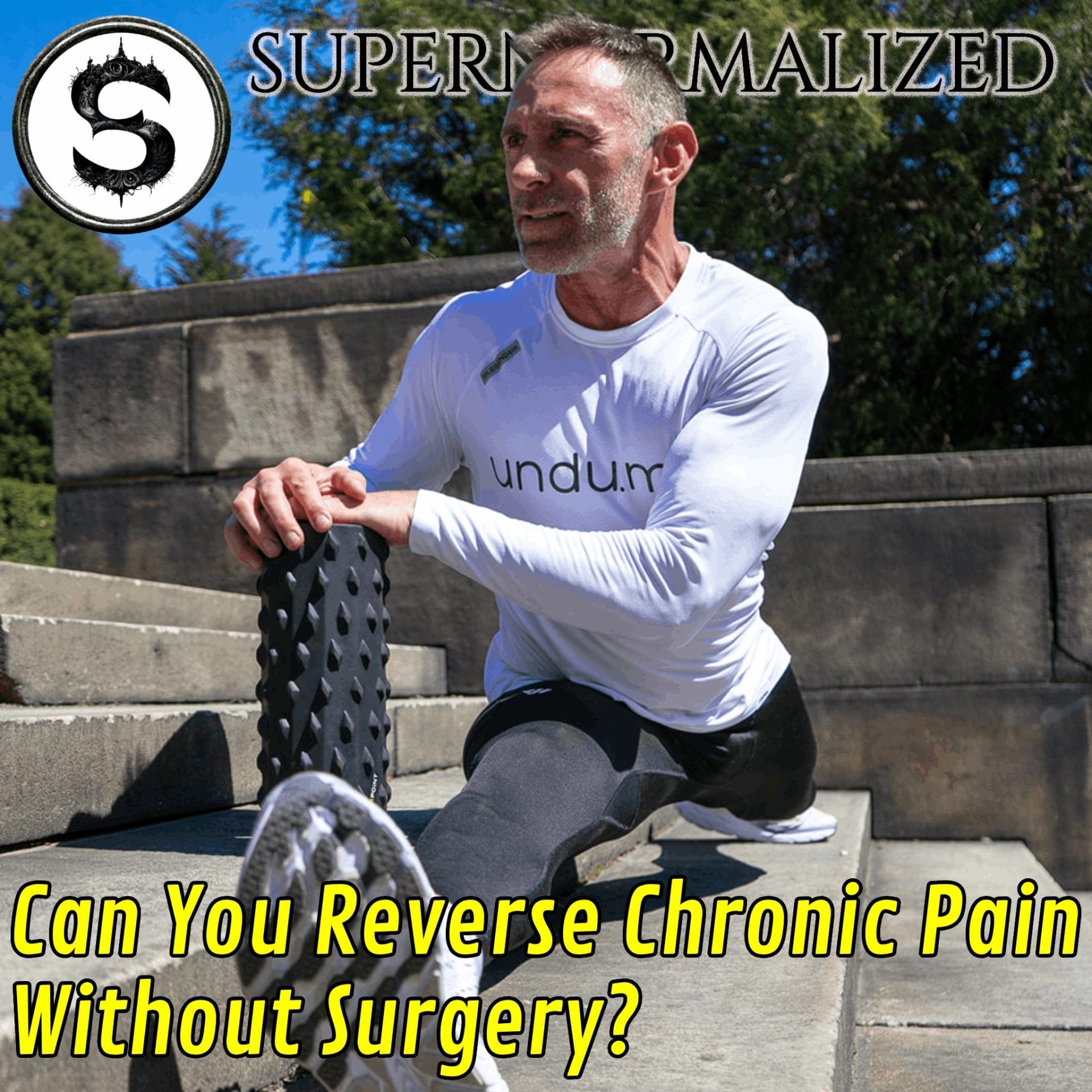
[00:00:00] Speaker A: Today on supernormalize, I talk with Daniel Esposito. He went from being told he needed four joint replacements to becoming a world ranked master sprinter and two times USATF Masters champion. He calls himself a chronic pain warrior and created the undo method after reversing severe degenerative arthritis and fibromyalgia through lifestyle, movement and targeted nutrition, fasting and a preparatory subloom brand. Today we talk about everything to do with that, his lived experience, faith and the disciplined experiment that led to measurable comeback. Stay with us for timelines on deep protocol details, safety questions and real world client patterns that matter. If you want to find a way for yourself out of chronic pain, this could be the way Daniel's experienced it, lived it and has solved it for himself in such a way that makes a lot of sense.
Welcome to Supernormalized. Dan Esposito. Dan, welcome to the show.
I saw some of your shorts. I've watched some of your videos.
The crux of it, you've been through physical hell and we're being misled down, we call it, big industry path, but you discovered the natural way and recovered yourself. So welcome to the show. I'm interested in hearing this story.
[00:01:21] Speaker B: Thank you. Yeah, yeah, I'm glad I can share it with you and anyone else that sort of needs the hope to fight through autoimmune chronic pain conditions and to know that it's not a forever diagnosis if you don't want it to be.
[00:01:36] Speaker A: Yes.
[00:01:36] Speaker B: You know, some, I mean, you know, there's some very rare genetic, you know, not, we're not talking about polymorphisms, but mutations that, you know, are just, that's the card, you know, that you've been dealt with those mutations. But, you know, if you've not have a mutation and you know, some doctors blame something on your genes without telling you which gene it is and never running a genetic test, then it's most likely not actually your genes that are causing the problems. It's what we're doing to the genes that make them slow. I mean, just since we're on this topic, your genes can be slow. You know, it doesn't mean that they're broken, just means that you need to make sure you're not putting junk in the system to slow them down even more so they can't perform critical functions. So, you know, the blaming it on your, your DNA is sort of a medical gaslight, I think.
[00:02:29] Speaker A: Yeah.
[00:02:30] Speaker B: In most cases. Yeah.
[00:02:32] Speaker A: Can you walk us through your story to explain how that all rolled out for you, to give you that Bigger understanding of where you are in life and how you got to where you are now.
[00:02:43] Speaker B: Yeah, yeah. So I like the. I like to. When I tell my story, I like to go back to when I was a child because a lot of the theory which has never been proven is that we store these unprocessed emotions, like in our fascia or something like that. And that's just, you know, there's no scientific research that proves that. And, you know, I've had a lot of, you know, trauma as a child. I, you know, my mother divorced very early, married two more men, you know, in secession after that that were alcoholics, very abusive.
And, you know, I was in five elementary schools growing up. I was in one middle school, three high schools. And, you know, as a child, I found very early on, because of all the moving that I was doing, that sports was the way that I could connect with people. So it was very sort of instrumental. I mean, thank goodness I was just naturally gifted at sports.
But, you know, it. It allowed me to, you know, sort of fit in, you know, when these times were tough. So, you know, as much later on as I lost the ability to be active and, you know, dancing and running and, you know, doing the things that I was good at, that was part of sort of integral to my personality.
It was very humbling. You know, it really kind of hits your ego when you look at yourself in the mirror and you're like, ooh, I look like I'm an old man. You know, I'm moving like an old man. And I used to make fun of my uncles, you know, as they were getting older and they couldn't show up to our touch football games anymore. And it's like, what's wrong with you? You know, just figure it out, you know, get through it. But, you know, so I, you know, I didn't start playing football till I was a senior in high school. I walked on to a small Division 2 school here in Pennsylvania, was fortunate enough to have four contracts in the NFL.
I was with the Redskins straight out of college. They cut me early when they broug in a veteran running back and then signed me back.
Ended up breaking my jaw on my first play. First game ever. Oh, God.
In two places. But I played the whole game with a broken jaw in two places. I didn't let it deter me. So, you know, I'm comfortable with certain types of pain. You know, chronic pain just kind of. That wore me down. But then the next year I played for the Saints.
Sort of a similar story was in camp. I Broke my jaw in camp again by getting punched by a teammate that I was beaten pretty good on. One on one drills came back after the broken jaw. They released me. Then they signed me back the first week of the regular season. I was there for about a quarter of the regular season. And then, you know, at this point, my shoulders really started, you know, not healing. And it was the first time that things just weren't healing with me. And, you know, but I didn't want to say anything, and so you're not playing up to your ability. So I got released again and then, you know, moved into the, you know, regular life and, you know, started working and all these kind of things, still being active, but much later on, I started getting very, very stiff. And I had already had a few surgeries for shoulders. And my shoulders were the first things that started really to. To bother me. And I was getting these scopes and stuff, and the doctors were like, yeah, we really don't know what's wrong. You know, you've got some, you know, tangled muscles in there, but there's no structural damage. And I was like, well, I can't move my shoulders. You know, I mean, at one point, both my shoulders were locke knocked down to about, I mean, 4 inches, 5 inches off of each side. I couldn't get them any higher. And so now, you know, I'm able to almost get them up completely without any, any impairment. And then it's coming. But anyway, so I started getting these, you know, just not understanding why my quote unquote joints started going bad. And the things that the doctors were telling me, you know, since it was due to football. And I was like, I didn't really play much football. Played one year of high school. I sat the bench for three or three and a half years of college, and I had almost no reps in the pros. So I like, there's many, many men who have had much rougher football careers. So I just didn't believe that what was happening to me was based on, was my joints themselves, and it definitely was not from football.
So then I started.
So in my work career, I used to be a wholesaler for Washington Mutual in the banking industry. And then that industry collapsed, and I decided I needed to start a business and something that was on the forefront of some industry that was happening. So I decided to start a commercial energy brokerage. And I did this with absolutely no experience in the energy field. I just knew, here's one rate, here's the other rate, and hopefully I can get a low rate, but we grew that into one of the top 100 fastest growing firms in Philadelphia two years in a row. But I was getting very sick at the very beginning of starting this business. And what had happened was, is I was working so hard to try to figure this out that I would probably eat six full pieces pizzas per week.
Right. It's just like. Yeah. And I, you know, and I would just consider. Yeah, Domino's had a special and it was buy one, get one free large. So say at lunchtime, I'd buy that one, I'd eat that one, most of it for lunch. And the next, you know, couple hours, I'd eat the next one, I'd go to the gym, come home and eat the other one. And then basically what happened was all, you know, this inflammation started happening in my body, you know, that plus, you know, just not eating well in general. You know, the seed oils became a staple in my cooking, you know, at home. And I didn't realize that seed oils were so damaging to you.
And so what had happened? Because of all the inflammation that was happening, my lymphatic system couldn't keep up. And so I started just getting puffier and puffier and puffier. I sat all this muscle underneath. I still, you know, couldn't move that, you know, I was having trouble moving. Not the full on arthritis, fibromyalgia, yet.
And so I decided to look at Netflix to try to get my health education. Like, how am I going to fix this puffiness? Something's going on with me. I have all this brain fog and fatigue and I'm sweating and I'm losing my hair. And you know, the doctors were just like, oh, you're fine. You know, your, your labs are normal. We can't find anything wrong.
And you know, they just didn't look hard enough. I mean, just by looking at me, you should have been able to tell if you had any medical knowledge whatsoever. I mean, I just looked so puffy. And that comes from lymph for the most part, and that comes from an over active immune system due to the white blood cells constantly trying to destroy some foreign invader that's in your body. And in my, you know, you know, story was probably most likely the gluten, all the glyphosate that was sprayed on the thing. You know, you've got all the folic acid that's in the pizza as well, which basically a garbage molecule that blocks your body's ability to do what it's supposed to do by utilizing folic acid.
And so the anxiety was really starting to set in as well.
And so I started juicing fruits and vegetables because I heard of this thing called superfoods and juicing was so good for you. So I actually made it worse because a couple of the things that I were juicing was spinach, beets, Swiss chard, and all of those have a little plant defense chemical called oxalic acid. And that is basically what creates a kidney stone.
But if it leaks out through your gut, in the case, when you juice these vegetables, they're going to leak out through your gut and then start forming basically kidney stones all throughout your body. They can go anywhere. And I know your previous guest indicated she had a hysterectomy. They're one of the major reasons why women have to get hysterectomies, because the doctors, you don't know how to just cleanse them out of your body naturally. But so anyway, this started happening and in my body just. They just tear you up internally because they're like diamonds, you know, crystallizations inside your soft tissue. And then they inhibit sulfur production, which helps resynthesize collagen. So now my, you know, collagen is able to form thicker and thicker and thicker because it's not able to break it down. By utilizing sulfur, they steal hyaluronic acid away from the soft tissues. So your collagen, which needs water to glide, and you need the presence of hyaluronic acid to hold onto that water near the collagen and your muscle fibers. And so the gliding of my muscles stopped. And, you know, I wasn't building my collagen correctly in the first place. So when you do that, it becomes unstructured and more like, like Elmer's glue than rubber glue. So all these things are happening at the same time.
And then all of a sudden everything just locks up on me. Like, I mean, I couldn't turn my neck like this if I was driving. It was very dangerous because I wouldn't be able to see, you know, to the left and to the right of me. And so now, you know, I've got pretty much full range of motion in my neck. And so, you know, I fell forward a bunch of times. And really the crux of it was I have a, almost 15 year old son and then I have an 8 year old son. I'm 53, going to be 54 next month.
And so I. And my, you know, my second kid's mom, she's 20 years younger than me. And I was like, okay, I'm 265 pounds, I can't like reach in the cabinet for a can of soup, you know, let alone be useful around the home. Plus my mood was just getting worse and worse and worse because, you know, when you're in chronic pain, your body's in a constant state of fight or flight. And then when you put all a certain synthetic nutrients like folic acid, your body's not able to regulate the histamine response very well. So now you've got this fight or flight status going on, and then you've got this histamine going off, and then you can't regulate how much histamine is going off. So now you're in this fight or flight mode. And this is where I think most people like to blame trauma because during that time I started blaming everybody for my problems in life. My father this, my brother this, but da, da, da, you know, And I was just like, that's weird. I've never blamed, blamed anybody for anything. It was always on me, right? And so now. And I think that's because when you're in fight or flight, you're looking for the enemy, right? There is a feeling of an enemy around. That's your basic instinct to survive is, is fight or flight. So started blaming everybody for everything. And you know, I just decided three months before my second son was born, after every doctor, you know, the doctors told me I needed four joint replacements to start at 50.
And so I think I was like 47 at the time.
And I said, I'm going to fix this. I said it out loud to the universe. And this is where, you know, my belief system started, like changing from being an atheist into like, hey, this universe has been listening to me.
And in fact, the two reasons biblically that I pointed to, because of all the abuse I had as a child, I thought there could be no God. And then I looked at the Bible and said, don't eat swine for it's unclean and don't mix linen and wool. And I said, see, that just proves that an almighty God would never make up such arbitrary rules. The only two things turns out to be one of the two key points that I point out in the undo method on things that cause chronic pain.
So when you eat swine, it causes an event called glycation in the body, which is a film, thicky, filmy substance. Your body can theoretically get rid of 15,000 of these end products, you know, per day. One strip of bacon is double that, right? So now these people who are doing these keto diets and they're eating like Five, six, eight, a pack of bacon a day or even a week, they're causing all this glycation. Now that glycation is gonna cause oxidative stress, which is a free radical doing damage as well as inflammation. Right now the inflammation is gonna cause your collagen to respond, right? So now if you haven't built your collagen correctly with not only the four amino acids, but the four cofactors in the proper, you know, ratios, then your collagen will not form correctly. So now you have this oxidative stress that until you get a free radical antioxidant in your body, it's gonna stay a free radical, right? And then so it's gonna continue this cycle over and over again. So it's never like just one thing that's happening, right? It's a mixture of like five or six events that are constantly perpetuating within the body that causes this chronic pain. But anyway, so I'm at the gym and I say I'm going to fix this when everybody told me I couldn't fix it. And then, so at 50 years old, instead of starting with my joint replacements, I won two gold medals. United States Track and Field Masters National Outdoor Championship in Kentucky. I'm now, you know, at this point, a five time All American master sprinter. And last year I was ranked in the top 15 in the world as a master sprinter. Be running at Penn Rel this month. And then I've just signed up for the Mid Atlantic Championships and the national championships again to see if I can get, get a gold medal in one of the individual events. So my, my two gold medals are in relays. So for full transparency. Yeah, yeah. But you know, I could barely walk. Like, I couldn't walk like even stopping, like just stopping to turn around was painful because you're using muscles to do that. And when all of this stuff accumulates in your body over time, it's, it's literally like having glue, twigs, fishing line, plastic bottles and rocks in your body. Like, that's what it feels like and that's what the structure of these things are, right? And obviously inflammation is the number one thing we want to look at. And you know, people say, you know, the doctors always say autoimmune, autoimmune, autoimmune. And we've got this autoimmune disease. And even, you know, previous guests had talked about, she had six different autoimmune dise.
That's not like actually what autoimmune is, that's inflammation, right? Autoimmune is when you do a biopsy and you actually find a T cell in healthy tissue, right? So it's mimicking, it's, it's molecular mimicry. It's basically attacking something that's healthy.
What inflammation is, is just an event that's happening because your cells are stressed. And so when the cell is stressed, it gives off the inflammation, starts the cycle, which is a healing cycle, right. It's not your body attacking itself, but the byproduct of this is junk that's left behind. Right. And if you don't manage that part of the inflammation cycle, you're going to be left with this, you know, fibrin, fibrosis, thickened collagen fibers, oxidative stress which causes cell death.
You know, even if you have, if you've been juicing the spinach and then this, the oxalic acid gets into the cell wall, it turns it into a bone producing cell, right? So all these, this soup of mess can be happening at the same time. And for most of it it is. Because in America, 75% of our food choices are manufactured foods. Every time you do that, it's a stressor to the cell because it's a foreign bot, foreign entity in the body.
Now here's where ground zero is, and especially for Americans. The cell wall must be comprised of a ratio of no more than 4 to 1, omega 6s to omega 3s. The omega 6 is the inflammatory fire starter. Basically it should be a 1 to 1, but 4 to 1 should be the max. The average American is 15 to 1, right. Because of all these seed oils, right? So now those tiny stressors against the cell wall, whether it's heavy metals that you don't even know are in your body or due to a vaccine or some medication you're on, or the water that you're drinking because of the microplastics, that signal is over exaggerated by, you know, by let's just say 15 times.
So then it's going to cause a much bigger inflammation event that's going to persist longer and they're just going to say you've got an autoimmune disease. They're not even looking at the structure of the cell wall to start because that's really where inflammation starts at, by the body's response. It's obviously starting from something that's foreign in the body. It can be mental stress. It's very slight, right. If you've got your histamine managed and under control, then mental stress will not create this huge inflammation event within the body. But yeah, I mean It's. It's really important to really just look at the cell wall, and that's inflammation. Then you got to make sure you're building your collagen correctly. Then you make sure you're not eating foods that are causing glycation, making sure you're not oxidizing yourself with, you know, things that are causing free radicals, drinking good water, and just making sure you have the 90 basic nutrients that your body needs to perform all the stuff that it's supposed to perform. And if you kind of followed that and then. So anyway, and then in my method, I teach you how to break down each one of these byproducts of the problem. And it's basically the same way WD40 works. You're donating an electron to the chemical bond of these things weakens the chemical bond. And now through movement or time or just your body's natural processes, it will start breaking down those junk end products, you know, the rocks and squigs and sticks and things like that.
[00:20:12] Speaker A: Wow.
That was comprehensive. And maybe too much.
[00:20:16] Speaker B: I tell you, sometimes I just keep going.
[00:20:18] Speaker A: But, yeah, yeah, no, I actually like it because it gives me a whole raft of questions to come to. But one of the things I wanted to go through first of all is, can you walk us step by step through your personal protocol? And what failed experiments did you go through first to.
Yeah, tune it.
[00:20:36] Speaker B: So the first thing that happened was it completely on accident, you know, through all this inflammation. I was super puffy. I was still trying to play sports, you know, and I had played for a men's baseball league, and I was a catcher growing up, and our catcher didn't show up. And even with my bad knees, I'm like, I'll do it. And then after that, my knees stayed swollen for eight months. I mean, they were like two softballs. They were huge. And I just couldn't get them to go down. And I had a friend of mine, she, you know, is in the ayurvedic medicine, and she's, you know, been on her own health journey. And she comes up to me, she goes, dan, why don't you rub some castor oil on your knees? And I was like, oh, Lord, what are you talking witch, telling me to rub some oil on my knees? And, you know, doctors and medication, that's the way to go. Don't you know that? But. But she was so adamant that I do this. And so I was like, all right, I'm just going to go get some castor oil. I'm going to rub it on My knees. And so I rubbed it on my knees, rubbed it on, like, my own under underarms and my groin, you know, lymph areas, then went to bed. The next day, I woke up, and the knees were completely fine. All the swelling was gone on my knees. My face had lost all the swelling, my arms. And then I just started blowing stuff out of my face for the next three days. And it was clearing up all that lymph because the ricin and the castor oil breaks down all the junk in the lymph nodes and gets it going again. So it's a really good, you know, catalyst for maybe if, you know, if you want to do some other lymphatic massage or shake plates or something like this. I think you always need a catalyst, right, to help break it down more. Just like if you have rust on a piece of metal, you're going to want that WD40, because just rubbing it off isn't going to get it there. So what I talk about completely is catalyst. So I started with that, and then I realized I had all this oxalate damage because I acupuncture myself, and I would come across these things in my body. I was like, what the heck is that? It was so painful. Thankfully, I listened to a podcast where a lady named Sally Norton was talking to Dr. Mercola about oxalates, and I was like, oh, my gosh. That's what's in here. So I did an oxalate cleanse, right? And this is how I kind of lay out my whole protocol. And the oxalate cleanse is basically high doses of pure lemonade with a little bit of water and then some binders, because the citric acid will break down the oxalate and then start chipping it away. The binders, like calcium citrate, magnesium citrate, will bind to it and then pull it out through your skin. So, like, if you looked on my Instagram, you could see a huge rock, basically kidney stone passing through my chest. It took about two weeks to come out. But typically it's just a whole bunch of, like, it looks like sand coming out of your.
Out through your skin. So I do, like, five bags of lemons. Drink that over the next three to four days, and, you know, you just notice all this muscle twitching, and things start kind of coming out through your skin.
Then there's a heavy metal cleanse, because you really want to make sure you're getting rid of this many underlying factors that are causing inflammation that are unseen. So we talk about doing a heavy metal Cleanse, which is.
Was super impactful for me. I was having like dementia problems or just memory problems. I couldn't see, I was forgetful. I left the stove on probably five times and left the house.
And finally I tasted my tongue. And I believe they're coming from above us. You know, I'm a chemtrail guy. Like, I know that those lines in the sky aren't natural. My grandfather worked for Lockheed Martin. I'm, you know, around, you know, mechanical stuff, you know, so it's. And so, you know, you see the trees are dying and all that stuff. So. But I tasted my tongue. I was like, that feels taste on a tallow. So I went and got my lab work done. Both my aluminum and mercury were in the red. And even though I was sauna and doing the sauna three, four days a week, it was still way up there. So I went and got some binders and within three days I felt cleared up. So I constantly do something like that, you know, every couple days or weeks or something like that, I'll throw some heavy metal binder into my flexibility fuel.
And then we talk about a parasite cleanse, which is super interesting because you have to do it for 10 days, then stop for five days. Because in those five days you gotta let all the eggs hatch, right? Which is gross. And then you get the next round and the next 10 days. So in my, you know, my method, we talk about just doing those four cleanses to kind of get the system as cleared out as possible.
And then we talk about, you know, how do you break a fibrin down and da, da, da, and I give you all these supplements and foods, but I made it like really simple and created a supplement called flexibility fuel that provides a catalyst for each of these things. So my regimen is literally, I wake up in the morning, I do a quarter, three quarter scoop of flexibility fuel in the morning, right? And so what that's doing is mimicking what the body can do, right? So to break a fibrin down right after the inflammation event, your body basically needs to be rested for or fasted for 20 hours. That releases enzymes from the liver. They're gonna look for misfolded proteins like the fibrin or the scar tissue. Right. But most of us aren't fasting for 20 hours. So if you can take endogenous enzymes, like, you know, the ones I put in here or in pineapples or, you know, you buy them off the shelf at the store, that will get into your bloodstream and look for these misfolded Protein aggregates and snip it, right? Snip that chemical bond, leaking it. So now the body can break it apart.
One of the most, you know, I. I drink a lot of water out of glass jars, right? You really need to stay hydrated. I think most people are clinically dehydrated, hydrated, they're drinking a lot of water that's in plastic bottles that is purified and has no mineral content. Therefore, your cellular function will not be able to do critical repair and restoration processes. So you need to make sure you're drinking, like, spring water as much as you can out of a glass jar.
I'm in the sauna two, three days a week. I stretch.
Like, that's 90% of what I do when I go into the gym. I use the weights to move myself around into places that I typically can't reach.
Just stretching on my own, maybe do a little bit of weights, and then that's pretty much it. I foam roll, you know, three, four times a week.
But I think one of the most important things that I do is. Two of the most important things that I do is acupuncture. Dry needling, right? Because when you get that thickened scar tissue, it envelope, it envelops a lot of tissue, and it doesn't let blood flow to get in. So to really move things around, you need to go see an acupuncturist to kind of pull, poke some holes. And all that scar tissue really opens things up very quickly, moves you forward very quickly. And then once a month, I do a glutathione drip. It's your, you know, the master antioxidant. And then I get right into a hyperbaric oxygen chamber, right? And so when I do that, and I've got my supplements in me, it really lets the blood flow get into places where it's hard to get. That's another strategy that just moves you so far forward that it's just, like, magical. And it's bad because after three or four days, you stiffen back up a little bit. You know, not as much as you were, but you were hoping to feel that good forever. But, you know, it's like this huge, really relief, and then a little bit of a step back from the greatness, but you're never going all the way back. But one thing that can happen is when you break these things down internally, it's going to activate your pain receptors differently. So it can seem like you're creating some new pain. But really what's happened is you've broken those Things apart, they're kind of sticking in a place. But since you've broken them apart, the body can start removing it. It can't remove it because it's insoluble. Right. They say until it's cleaved. Now, when it's cleaved, the body's able to actually start sort of whittling away the rest of the mess. Right.
[00:28:28] Speaker A: Is there any part of this process that is at all contraindicated for people? I mean, I know that sometimes when people actually get a cleansing process, they have that Herxheimer type reaction and can, you know, feel like they're getting really ill.
Anything happen like that with his cleaning?
[00:28:47] Speaker B: Yeah, absolutely. When you do an oxalate cleanse, that can definitely happen because you're pulling that oxalic acid a lot of times out of the cell. It's going to leak minerals and nutrients when you do that. So this thing called oxalate dumping, it's like oxalate flu. So that's why you try to resupplement back with some electrolytes like the calcium, magnesium and potassium citrate. Kind of helps replenish that. I never really had that reaction with that. I think the biggest one is. Yeah, I mean, when you're breaking this stuff down internally, sometimes you have a big load that kind of dump, like a big. I'm gonna say, without seeing. Weird, but. Whereas a lot of stuff kind of feels like it's happened at the same time and you have this malaise for a couple days and you're like, oh, no, I feel like I'm never going to get out of this. And all of a sudden you just feel great, like way better than you did before. So there is sort of some ebbs and flows that go along with it when you do this, because your body's going through. Through a lot of stuff to clean, to clean this up, and it needs a lot of resources. And if you're not really, you know, providing your body with the right 90 nutrients, you know, 16 vitamins, three fats, nine essentials, and then the minerals, then it's harder on the body. So, you know, for me, when I first started doing this, I still kept the bad diet. And then as you go along, you're like, I'm slowing myself down. Like, I'm making my recovery process a lot slower. And so I finally gave up ice cream this year. You know, that was like the big one. You know, I rarely.
[00:30:14] Speaker A: Coconut ice cream.
[00:30:16] Speaker B: I'll have some coconut ice cream, actually. I really like coconut, but. Yeah, no, don't it's the sugar that gets me, right? There's so much sugar in it. And it's like, I used to get a Dairy Queen Blizzard, you know, two, three, four times a week. And that's, like, enough for, like, three weeks worth of sugar right there, you know, so. But plus, it's highly glycating. You know, every time you have sugar in your body, you have chance for glycation, which is going to cause that downstream effect of inflammation and oxidative stress.
[00:30:45] Speaker A: Yeah. It does seem like our society right now is pretty much built upon, like, fast food, processed type living, even down to, like, clothing. Like you talk about, talked before about linen and wool, natural fibers and their importance. I mean, I've seen a lot of things on social media talking about how pretty much everything that all of the women are wearing, you know, when it comes to the Lycra, is pretty much poisoning their bodies. I mean, that's the same for guys as well. I mean, you know, where do you sit with that when it comes to the understanding of linen, wool?
[00:31:17] Speaker B: Yeah. So I'm actually friends with Dr. Heidi Yellen, who did the research on the frequency of fabrics. And when I say friends, we're Facebook friends. We've talked once or twice on instant messenger there, but she does really interesting study where they tested the frequency of fabrics. And this goes back to my biblical rejection of don't mix linen and wool. So everything has frequency. Your body has a frequency of, like, it's a measurement. I'll just tell you the numbers. It's 85 to 100 where linen is 5,000. So it's actually donating electrons back to your body, stabilizing the free radicals. Same thing with wool. It's like 5,000 plus.
When you mix those two fabrics together, the frequency becomes dead, right? So now the charge, the polarity reverses. It's now pulling electrons out of your body, causing a free radical. Every electron donation to your body, I mean, to your fabric, causes oxidative stress as well as glycation in the body. But now you need more ATP to replace that lost energy, Right? So that's where you're getting this chronic fatigue because you're losing your energy to your fabrics. So when you wear polyester, the measurement is 15. So it's a constant, slow leak of energy. And I don't know if you've ever taken off one of those shirts and it kind of sticks to you.
Right. That just shows you there's an energetic reaction happening there. But when I take those off, because I have a few Left still. And then I put another shirt on. I can just feel that I breathe better almost immediately. You know, grounding is one of the most important things in my protocol. Just getting your feet on the ground. I sleep with a grounding blanket.
It's super, super important. It's going to rebalance your electron load, and it's also going to help blood flow more naturally throughout your body and just get you back closer in touch with nature. And to me, nature is God. God is nature. Everything around us, consciousness comes from him. It's the light. And we just pass through it all the time and don't interact with it whatsoever. And so when I finally was able to slow down and just realize that I was being fed this information, rather than I was coming up with it, is I was just, like. It just became very apparent to me that I was sort of on this path as a child to figure this out for people, you know, And I can't think of it. Anyway, I don't want to act like, hey, I'm the chosen one, or whatever, but, you know, once I opened my mind to the Akashic records or the, you know, the plasma, the, you know, the everything.
I mean, just if I could tell, like, one day, like, you know, with my energy business, we were. We qualified for a golf outing up in the Ozarks.
First of all, I had to start an energy business, right? Which is interesting because everything is energy and healing is energy. And it's weird that that became what I chose to do, had to qualify for this event. And then everybody got food poisoning. And I was like, okay, why? Including me? And so I was like, so now everyone had to get food poisoning. They had to serve pineapple. Because the first thing I said was, maybe it was the pineapple. And then my brain said, pineapple contains bromelain. And I was like, what? Like, what is bromelain? I didn't even know what bromelain was. Maybe I did and I forgot it, and that's definitely a possibility. So I googled bromelain immediately, and it says. And I thought everything was collagen at this point. And oxalates. I didn't even know about fibrins this few years back.
And it says bromelain is used as a commercial meat tenderizer to get rid of the fibrosis in farm animals. I was like, I had a tear come out of my eye. Like, how did I just stumble into that? Right? Like, that's everything I needed to know right there. And so I started supplementing with the pineapple powder, which I put in my supplement.
And so what happened was a big piece of plaque had come out of my mouth. A few days later I thought my teeth were falling apart because I hadn't been to the dentist. Covid was still going and went to the dentist and I said, hey. I said, she's like, you need a deep cleaning. You know, it's gonna cost a thousand dollars. And I was like, I don't wanna spend a thousand dollars on my teeth, right. I have no cavities, you know, like, I generally had like fine teeth. She says, well, you can lose your teeth. And she's scaring me in the chair. And it's like, okay, okay, okay, go ahead. And then I said, but hold on, isn't there like some sort of thing you can spray me with? I can come back later and it won't be as hard. Nope, nothing we can do. I was like, all right. And I was like, you know, another dentist did that for me before. And then. So I said, hold on. When the tech came in and I googled proteolytic enzymes, which, you know, bromelain is proteolic enzyme, dental plaque, National Institute of health. And like 30 studies came up. It showed how effective they were. And I was like, okay, just give me the regular hundred dollar cleaning and I'll keep doing my pineapple powder, you know, so which for that shot that everybody got, that's what helps get rid of that, you know, leftover scar tissue, you know, and also another side effect of that is that it the studies show that they make the cells constantly leak cytokines, right. So it's not long Covid that you have, you're under constant inflammation because the cell walls have been become permeated and now you're leaking cytokines.
And really the only way to get rid of those cells is you have to go through a long fast and get to apoptosis, right. Which is then going to tell those cells that cannot function normally, cannot repair themselves, that they need to die. So you can then regenerate new cells and get rid of those leaky inflammatory claws and cells?
[00:36:44] Speaker A: Yeah, yeah.
You've got a playbook that you actually present to your clients.
How does that playbook look and work? And can you give us a bit of a rundown on how people use it?
[00:36:55] Speaker B: Yeah. So I would say the undo method is the playbook and my supplement together, they really. You should do them at the same time. The playbook is a series of videos where I basically break down the protocol, right. And then I give them a detailed look at to what each one of these conditions are. And everything in it is backed by medical studies that have already been published, that are well established, that have been around for a very long time. And then I talk about what are the chemical bonds of each one of these things that are causing pain, comprised of covalent bonds, peptide bonds, whatever type of bonds there are.
And then what the catalyst for those are so you can make better food choices to help break these things down, help the body break it down, or you know, buy your own supplement blend based on what these catalysts are. And then, and then it goes through a bunch, a bunch of videos on certain techniques such as, why does breathing through your nose work? And here's the science behind it. Why is grounding beneficial for chronic pain? Here's the science behind it. Why is cold plunge good or not good for, you know, like there's. So there's a bunch of different practices.
Um, and I think no, you know, nose breathing, nasal breathing is one of the really interesting ones because I'm someone who has a tough time breathing through his nose. Um, so obviously it contributes to anxiety. But what. When you breathe through your nose, your body takes an amino acid called L arginine, turns it into nitric oxide. So when you have that nitric oxide present, it's harder for the fibrin chemical bonds to bond together, right? So if I'm eating the same piece of pizza that you're eating and you're breathing through your nose, you're creating nitric oxide to make sure that fibrin doesn't form. And mine's now setting in, right? We've eaten the same diet and the one difference is I'm not breathing through my nose. And so now I'm going to collect more fiber and over time, because I'm not being conscious about breathing through my nose. So. And breathing through your nose also helps reset your ph in your body. So it's really important on a whole bunch of different levels to really breathe through your nose. And so when I tell someone, hey, breathe through your nose, I mean like, you don't tell them why, right? It doesn't make any sense to them. They're not intentional about doing it. So I think creating intention is like what I've done is like, here's the education, here's how you can utilize it, here's why it works. And most of the things that are in there are very fast acting in terms of how you feel, right? You can either feel the fibrin break, you can you get some type of release, you Feel blood flow back into an area.
So yeah, that's basically. And then the supplement itself is an essential amino acid based supplement because it hits one of the four essential categories. And then a mixture of about six different compounds that have all been, I mean, since the 80s, been clinically shown to add an electron or disrupt the electrostatic interaction of the major things that are causing chronic pain. Right. And I think just. And I also teach people what, what pain actually is because most people don't actually know what pain is. Pain comes from pain receptors from the central nervous system. Right. It's not your, your body over processing pain.
There can be components to that. But the first thing must be that the, the pain receptor is being aggravated. Right. And what's aggravating it is what you need to address. And it's usually just scarred up tissue, you know, oxidized tissue, you know, collagen that's formed too much in that area. And when you find that these things break down, you find that that relief comes and that pain receptor is no longer sending that valid signal to the brain now where it can be processed a little bit more inefficiently, meaning it's over stimulated.
You know, folic acid, which I think is just poison and garbage, basically blocks the ability for the blood brain barrier to get an enzyme that regulates dopamine and serotonin correctly. So it can feel like the pain is more substantial because you have less dopamine and serotonin neurotransmitters in the brain. And that's mainly due to folic acid or greatly contributed by the addition of folic acid in your diet because it just blocks what folate is supposed to do.
[00:41:20] Speaker A: Looking at some of your client outcomes, have you noticed any common success or failure patterns?
[00:41:28] Speaker B: So some common, you know, every once in a while, like I give the bottle away to somebody, you know, I'll see somebody and I know I didn't feel it and I don't know if they've taken it or whatever. But the mo. The success ones that are common is that people quickly notice some type of relief. But the fun ones are the ones that don't notice it until I reach out to them. So I reached out, out to one buddy who is very athletic. He didn't seem to have much chronic pain, but he was dealing with a shoulder injury that wasn't healing.
And I didn't expect much. Right. Because he didn't have. It's more noticeable when you have widespread chronic pain. But when he, when I called him about 30 days later, he's like, saw my name pop up on the phone. He's like, oh, I didn't tell Espo how. What I thought of this supplement. And as he reached for the phone, he noticed his shoulder pain was gone.
Right? So I'm telling that story to the head of my NFL Players association in the Philly chapter, and he goes, you know what I just realized? I had my arm around my girlfriend all night last night, and I didn't need to move it, right? So sometimes pain just goes away, because it'll go away in your sleep, and you're not reminded of it, because when pain goes away, it's like the sock that's not sitting on the steps anymore. Like, it's not there, so you don't make a big stink about it. But when it's there, you're like, ooh, when's someone gonna pick that up? But when it's missing, you just. You totally forgot it was there. So pain is kind of the same way. And so when it goes away, it's really weird. It's almost like an old friend leaving. Like, it's like, oh, shoot, I'm not. I don't have to deal with that anymore. And it's like, I've dealt with it for 10 years. You know, one, you know, guy, I was, you know, trying to sell this into a retail location locally, and a guy came in. His wife is a professional ice skater, and she was having an issue with her ankles, and he had been having shoulder issues. And I have this posted on my social media somewhere. But he called me up two weeks afterwards to buy four more bottles, and he was like, dan, I said, I didn't think anything was going to help this other than surgery, because it's not completely gone, but it's significantly reduced. And that's just after two weeks. Now, once again, I'm not saying this is a cure or a treatment for anything. This is providing catalysts for the body to actually break down the things that you don't want there anymore, Right? So it's very therapeutic in a way that in terms of what it can support in your body to make things function much more efficiently.
But one thing that's bad. So one thing that I had that was bad, and this is the sulfur msm, right? So when I would take sulfur or sit in an Epsom salt bath, my body does not remove sulfur very efficiently. So I would get a massive amount of anxiety after I would supplement with sulfur or do an Epsom salt bath. And then that would. I mean, it would be bad. Like, I'D be screaming at everybody, driving, you know, just like. And like, oh my God, Dan, control yourself. And I'm telling myself to control myself. And the next word out of my mouth is me yelling at somebody that's driving too slow. And it's just like, once again, it's that fight or flight response that you get into because of all that. That sulfur response causes the histamine response. And then eventually, you know, the cousin to anxiety is depression. So then I'd go through like a two week place where I'd just be in a hole. And so then I finally figured out how can I clean out sulfur more efficiently from my bloodstream. And that's with Glutathione and CoQ10. And so those, you know, problems have been, you know, limited to like a day or two instead of lasting like two, three weeks.
[00:44:51] Speaker A: Wow, that's a good move.
How do you integrate high level training like your master sprinting, without flare ups?
[00:45:00] Speaker B: You don't.
So up. Yeah, I mean, up until. So, you know, the pain, like, you know, I would not be labeled somebody with fibromyalgia. Maybe they would stay. I still have a little arthritis, but it's really just stiffness. But, you know, I, like I told you I did, you know, three baseball games I'm coaching this past week and I did all this work and I woke up this morning, I was pretty sore, like pretty stiff. And now I'm better. But normally that would have taken me out for two weeks.
Right. It would have been, you know, me just in depression and not being able to move, not being functional, et cetera. But in terms of my training, this is what's, you know, sort of an anomaly. And I want to be transparent. I just show up to the races. Like, I don't train at all. Like, I'll, I do my stretching in the gym and I'll do some, a little bit of plyometrics. But what I, what I'm experiencing is I'm becoming looser as most men are becoming tighter.
So this plateau is sort of in reverse for most men. As they get older, they become stiffer. I'm 75% looser than I was four years ago. Right. So it's like I'm just, my stride is longer, I'm able to, you know.
Yeah, I mean, I'm just able to move a lot quicker because I've gotten rid of all the junk that's preventing the firing of the muscles. Right. Collagen is the big one for that. Every muscle fiber in your body's wrapped In a thing called an endomysium, paramecium, epimysium. They're all collagen based, right? So as they become thickened and you don't grow, you know, create them correctly, you're not able to send good, you know, signals to the muscles to fire. And they're kind of gum. They're gummed together, literally. So you're not going to get performance unless you can break down, resynthesize that old collagen. And zinc is a major co factor for that, for your mmps, these pro protease enzymes that your body creates to break that down.
And most people, you know, most people don't know where they're getting zinc from. But anyway, so you want to break all that down. And so this is the first year where I'm heading into nationals and stuff, where I'm doing a little bit, a bit of training and it's finally going to where like, okay, I'm gonna wake up stiff, but my whole day is not gonna be ruined.
[00:47:10] Speaker A: Wow, sounds like an easy life in the end.
[00:47:12] Speaker B: Yeah, I mean, most people don't want to do. I think I figured I had to do this for people to believe in this, in the method or the theory. Right. Like, I just. Most people just want to tie their shoes without pain or just play with their grandkids or, you know, whatever it is. And that's 100% possible. If I wasn't training so hard, I'd probably never have a painful day ever again in my life. But. But I still pushed myself, you know, constantly.
[00:47:35] Speaker A: I see part of your drive is your spirituality that you have hinted at throughout all of this conversation.
Has that something that's been with you since you were a child?
[00:47:46] Speaker B: No. I mean, I think, I mean, I would say I was still atheist agnostic up until about two and a half years ago.
I believed in evolution, right. I believed in these things. And then I started. Once I started understanding the body and how the body worked and how DNA worked and how genetic mutations work and just the impossibility of it all. Like, it's. Every time a gene mutates, it does not mutate in a good way, right. Something goes wrong. So the postulation of evolution is that you've had millions of genes mutate with every species on the planet in pairs of man and male and female to be able to sustain a population.
Right? And it's just the, like, there is a zero percent chance when you feed that potential into an AI, you know, software, they can tell you there's no chance it's ever gonna happen. And then so when you look at the Bible as a healing tool, rather than like this religious dogma that you have to. It's really about being spiritual, being full of light.
And here's some things that you should follow in order to stay healthy so you can remain spiritual. That's how I started looking at it. And then, you know, just the obvious. It just, you know, I felt it in me, I felt it through me.
[00:49:04] Speaker A: What other practices do you do as well as, you know, your, your health and. And fitness practices that you. You think that a lot of people should probably take up themselves?
[00:49:16] Speaker B: Yeah, I mean, just sitting with nature is super important. You know, I was driving around the other day in the mid Philadelphia area and I was thinking, oh, you know, mules used to bring barges up the river here. And I was like, that's about the speed we're supposed to be moving at as humans, you know. And I didn't even last night or the night before. I was just. I took some time, you know, in the winter. It's really tough for me here, you know, in Philadelphia. I grew up in Florida. It's tough for me to fight through the depression, you know, that I would say depression, like I'm sad, but just the malaise of the winters here. And so I don't. My practices sort of wane a little bit and then I get a little sun in my body. And so I started doing my meditation. I have this meditation I created called 33 breaths, where the first 11 are for you, the next 11 are for your gratitudes. And the next 11, you connect with the, with the maker. Right. Connect your pineal gland. And so, you know, I started doing that again. I was like, oh my God, I feel so much better. Like it's like drinking water. Like, you know, you need to do more of it. And if you can just get through those 33 breaths where you're 33 in, 33 out, I think it'll make a huge difference in everything in your life. Little bits of everything will get better if you can do something like that and go ground sit on the earth, do it while you're grounding, you know. Yeah. And they're free. You know, those are the free things, the hyperbaric oxygen therapy and acupuncture. Pretty expensive, but these things are free and they make a huge impact in not only your mental, but your physical well being.
[00:50:45] Speaker A: I've seen this pattern across so many people that I've interviewed that this big call back to nature is happening. And also this Extra call to connect with spirit of whatever form that takes for anyone.
And yeah, all power to you that you, you've, you've found that same path yourself as well there. So I was going to ask you what's next for the Yundu method? I mean, any plans for more Data collaborations with MDs or expansions?
[00:51:14] Speaker B: You know, I'm just. So, we're really just, you know, last summer, toward the end of last summer, is when I launched the supplement. That's basically when I launched the program as well.
You know, I'm in this phase where I've got a whole bunch of former NFL players and I'm finally getting some current NFL players to start taking it.
I don't know. You know, I'm here to be a resource for people in pain. I feel like it's more of a calling. Like, I know I want it to be my complete business. Right. Like, but the fact of the matter is, is that it's, it's not a, a fully operational business where I can sustain myself on. I still have my energy brokerage. So as I'm going through this process of finding who I can serve the best, I think I'll start focusing on, you know, because the chronic pain community. You know, I hope to reach people in that community, but when I go into the message boards and I'm like, hey, I'm one of you. I'm someone that reversed my own fibromyalgia and degenerative arthritis. And then they tell me, you're a liar, you can't reverse these things, you're a scam artist. And I'm like, part of me is like, I understand because they are in chronic pain and they've lost hope and they've probably tried things that have not worked.
And so I thought I was going to come into these places and be like, hey, I'm a hero. But I've been banned from like Reddit things for like, I can't even. Some of it wasn't even self promoting anything. I just felt like I was giving like really strong, solid answers to things that are all based in science. But it's a tough community to, to really penetrate. So it's. What I found so far is that the people who use my supplement the most are men, you know, who are in their 40s, 50s, 60s, you know, because one, you know, I, you know, men need to be useful, we need to be functional. It's what gives us our dopamine rush. Right? Like we've done something good where women are more communal. And I think they're okay to, I don't say commiserate, but sort of lock hands in, like, hey, we've been dealt the bad deck of cards. And they sort of commiserate where men are like, hey, let's figure this out. Let's get, get to work at this. And so, so far, that's been my best, you know, group of guys, people that I've been able to help.
[00:53:32] Speaker A: Yeah. Yeah. Well, I'm not surprised that some of those Internet forums weren't helpful for you because it seems like there's a lot of closed minds there. I mean, I do understand when the pain body is lashing out that it's going to not listen to anything. I've been in depression myself in the past when I was a lot younger, and it's very hard, you know, that sort of pain doesn't allow any information in because you've only got your limited number of choices to deal with at the time. So.
[00:54:00] Speaker B: And you don't know what the reasons are. Right. Like, you've never been told, like, oh, it's just, you know, men haven't talked about it before, but the reality is the foods we're eating are driving it. I mean, folic acid is a major driver of depression because of what it does to block folate from being able to work. And so I think a huge reason why a lot of women have postpartum depression is because once they come off of those pregnancy pills, then they're now deficient in so much stuff after their body has just done this magical thing. And the folic acid is blocking the folate receptors from utilizing folate.
And so you need that folate for the serotonin, for the dopamine in the brain. And so it's.
Yeah, it's. And then every manufactured food is folic acid, all the bread, folic acid, you know, in seed oils. And so, yeah, you just don't know where the depression is coming from. And, you know, most people don't even look at their DNA. For me, both my vitamin D receptors and my methylation cycle are impaired. So when I moved up from Florida to Philadelphia, I started getting seasonal affective disorder, right? And I was like, why am I getting this low mood? And then eventually I went into a full depression at one point when I went vegan, because I'm not supporting this. These genes with the proper nutrients, because you're not getting nutrients out of plants like their plants are medicine. There's some nutrients that are a little more bioavailable in some plants, but in the most Part if you're not getting your meat, you're missing so many vitamins that drive methylation that's going to cause you to have a good mood.
[00:55:34] Speaker A: Yeah, look, I tried vegetarianism myself for a little while there and it did actually make me a little crazy to be honest and like beautifully passionate towards, you know, protecting animals and everything. But, you know, the, the body is, is made, you know, to, to have an intake of meat and, and meat products. Otherwise without that you can't function. I find anyway, and I know for
[00:55:57] Speaker B: myself I put together, if somebody joins my community, it's free. It's, you can kind of go there through my website. I, I put these free resources up there and one of them is called the world's greatest shopping list and it has the four essentials that you need. You know, the vitamins, the minerals, fats and amino acids. And then I break down the food categories by your meat, you know, your animal products, shellfish, nuts, legumes, you know, vegetables, fruits, and what the most bioavailable source of that food is in each category. And you're going to find that you're going to be massively deficient in so many things if you're a vegetarian or vegan or not, or even if you're trying to be a, you know, a carnivore, but you still need plants, like there's certain fruits and things that you need like vitamin C and stuff like that that you need for healthy collagen. So the best diet that you can do is just focus on the 90 essentials because after that there's nothing else you, you need to add to your diet. It creates all the co factors and critical, you know, mechanisms to, you know, to heal and nurture a healthy body.
[00:57:05] Speaker A: So, Dan, we've come towards the end of the podcast. How can people find that information and methods?
[00:57:12] Speaker B: So My website is www.undu undo and it's spelled that way because of the Eastern or medicine Hindu type of philosophies in there. But it's undo me so U n D U M e and then all my socials are undue method right U n D U M E T H O D and that's the best ways you can find me. And then so it, you can only buy the supplement in America. But the good thing is I have all the ingredients listed there. So if you want to go on Amazon and you're in Australia, you want to make your own concoction, please do that, like try it out. I mean, it's going to taste terrible because the way I had to formulate it to make it taste good. But it's going to be super effective. Like, I guarantee it. Right. I'll say what effect it's going to have, but you're going to like it. And then.
And then you can link. It takes a link to the community that I'm building of people who are intentional and positive about healing themselves.
And I give them all these free resources, and then they can have access to the undo method playbook right there. And it's. It's very simple. So, you know, once again, the people told me I was trying to rip them off by selling for $196. I'd have gladly paid $196 15 years ago when all this stu happened to me. It would have saved me thousands and thousands of dollars in other nonsense I spent my money on.
But then I also make it available for $13 a month, and you can get through it in a week, you can get through in a day, like, literally. Right. So if you only. You don't have much money, you're not working because you're in chronic pain. Just give me 14 bucks, basically for the 10 years that I've lost of my life in chronic pain. And then I figured this out for everybody.
But, yeah, I'll think. I think that, you know, once they start implementing these practices and obviously under the care of, you know, your doctor to start to make sure there's no contraindications with supplements, I think you'll find that things start moving in a better direction. You know, you have a guidebook, you have a playbook. It's like the football thing. You know, if you go out there without your playbook, you're going to get cut from the team. You need to know the playbook so you can win. And without knowing who the enemy is, you can't. You can't defeat the enemy. So I make it very clear who the enemy is.
[00:59:21] Speaker A: Thank you, Dan, for sharing your understanding and your wisdom and your story. Seriously. That's quite a story. And how you've got through there and how you're helping others. All power to you.
[00:59:33] Speaker B: Thank you. Thank you. Yeah. And if anybody reaches out to me, like through social media and has questions, I will easily ask those questions. I want to funnel you to someplace to pay me anything. I'm here for this community.
Yeah. So, yeah, feel free to try to get a hold of me.
[00:59:49] Speaker A: Excellent. All right, thank you very much.
[00:59:52] Speaker B: Thank you.
[00:59:52] Speaker A: There's a lot of great information there from Daniel, and I really like that he actually goes into such detail around the understanding, even the science of pain and chronic inflammation and how he solved it for himself. Really good information and I really love this. So if you've enjoyed today's show, remember to like and subscribe. And if you're on a podcast app, please give me five stars. I'd really appreciate that. Now, if you are interested in solving your chronic pain, reach out to Daniel. He's totally open to talking to anyone and there to help you as well.
So yeah, thank you so much Daniel, and thank you very much for listening. And if you enjoyed this episode, you'll enjoy these ones too.
[01:00:38] Speaker B: There's.
Sa.