Episode Transcript
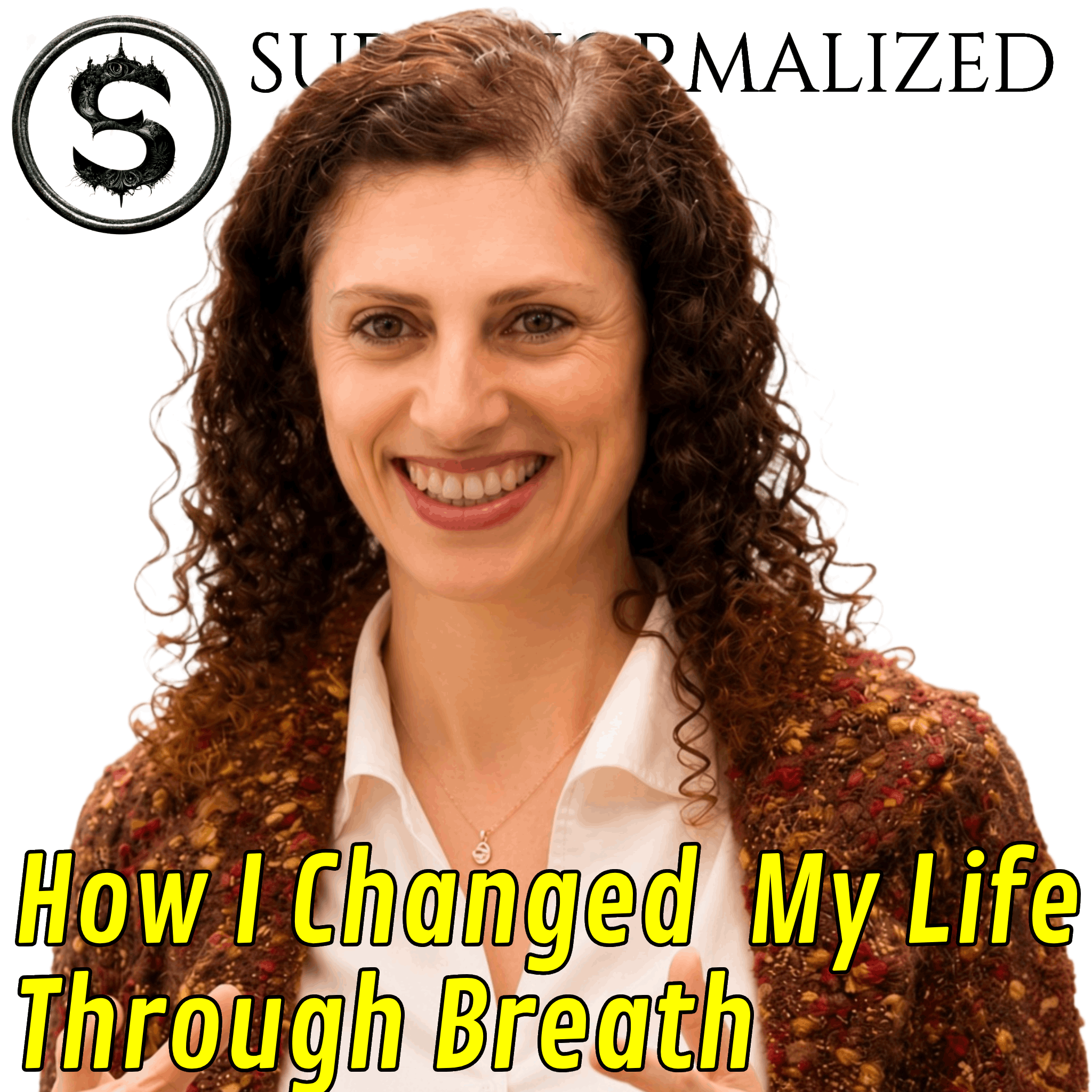
[00:00:00] Speaker A: Today on Super Normalized, I'm talking with Anneliese Richmond. She grew up in a military family,
[00:00:05] Speaker B: moving around a lot, trying to find her place in the world.
[00:00:08] Speaker A: Was actually shy at her early age and then learnt her way into life through yoga and breath work, which actually allowed her a greater connection to people and to her body and to her experience of life.
She takes that understanding and then turns it into a method that she actually now helps other people with. And she's the director of Sky Campus Happiness, and she's also a senior Art of Living trainer and a former Metropolitan Opera ballerina.
Quite the story. And her mission is to bring happiness to the world, and that comes through on this show. So enjoy. Welcome to Super Normalized Annalise Richmond. Annalise, you've had a quite a twisty sort of life that has led to you helping people with their halves to change through breathwork. I'm interested to hearing about that story and where that inspirational came from. So you started off, like, as a shy military kid first that was bullied, and then went into a profession of dancing. So how did that work for you?
[00:01:21] Speaker C: Yeah, I was a pretty shy kid. I did not like to talk to, you know, new people, like most of us don't. But I moved every two or three years, so I had to make new friends every two or three years. So actually, I'm thankful and grateful now for that background because I was forced to learn to meet people all the time. And also, maybe even more valuable in my adulthood is forced to step into different mindsets. Like, everywhere I move, people had different mindsets, cultural opinions, backgrounds, beliefs. So that was a pretty amazing. But, yeah, it was hard. I got picked on, for sure. When I moved to Texas, it was like I was from a different country, even though I moved from the East.
That's how Texans are.
Texans think it's their own country. And they're like.
They were like, your accent is so weird. And I was like, I'm not the one with an accent.
That's what I.
[00:02:17] Speaker B: So you actually got forced to become flexible in your world and adapt to it.
[00:02:24] Speaker C: Yes.
Yeah. And in a way, I really believe. I mean, all the things I teach through the Art of Living foundation and through Sky Campus Happiness are the yoga discipline.
[00:02:36] Speaker B: Yeah.
[00:02:36] Speaker C: And I believe that's real. Yoga is flexibility up here in the mind. It's like your adaptability, flexibility so you don't get so stressed.
[00:02:44] Speaker B: Yeah. Yeah. Well, that's. That's probably the best way to actually put it is that the more flexibility you have, then the Less stressed you can be because you know that, well, this isn't gonna be just like that all forever. So. Yeah.
[00:02:56] Speaker A: Yeah.
[00:02:57] Speaker B: So breath gave your body a chance to change. That actually helps stop the hurting. And a mind that stopped attacking yourself when you're on stage.
[00:03:07] Speaker C: Yes. So, yeah, I would say how I really got into all this, actually, I started my ballet career. And, you know, it's a tough career. You're like. It's high pressure. You're in front of audiences all the time. You're being reviewed on a daily basis. And I did this back in the day where they were still allowed to tell you, oh, you look like you gained a few pounds today. Like, your directors were allowed to say that. I don't think they're allowed to say that anymore. But anyway, um, I did that for many years. Then I got badly injured, so. And I danced on that injury. Then I couldn't walk for, like, a year. And that kind of got me, like, into spiritual seeking. I started reading all these books and, like, figuring out did I really believe God or the divine exists, you know? And after that year, I somehow got back on my feet, miraculously, where I wasn't supposed to be able to dance again. According to three doctors I saw, I wouldn't dance again. But I somehow got back on my feet with this wonderful physical therapist, and I got my dream job in New York in the Metropolitan Opera Ballet.
[00:04:14] Speaker B: Wow.
[00:04:14] Speaker C: And, yeah, and then when I moved there, you know, it was higher stakes because the.
It's a big theater. You're performing six nights a week. It's in front of, like, many more people, three or four thousand people. So I. I could. I just couldn't shake the stage fright. I always had it, but it was, like, worse now, you know, And I. This was, like, probably my ninth year of dancing professionally at that point. And I was going to yoga class because my physical therapist said, you'll only survive if you do yoga class, you know? But I didn't realize there was something so much deeper.
And my building was telling me, oh, you have to go to this course. It's called Art of Living. I'm like, what is that? You know? And he's like, no, he's like, if you're taking yoga, you haven't gotten the deeper parts of it. The, like, the deep, deep meditation and the breath work. He's like, you just have to go. So I went to that, and I didn't really know what to expect. I just thought this guy was passionate, and he had a big smile. He looked happy and he was from business school too. And so it is after, it was just a four day weekend kind of experience. And I remember feeling at the end of the four days that my body felt so light and pain free, which doesn't happen to dancers. You're just kind of always in pain.
And I had done this really powerful breath based meditation called Sudarshan Kriya. And it kind of purges your whole system. Like it purges everything, any old impressions from the past, negative emotions. But I didn't realize it would do something for my body. So that struck me first. I was like, whoa, my body feels like I'm 18 again.
And then my teacher said, oh, do your practice every day. So I was like, well, let me try this.
And I did it almost every day, you know. And then after two weeks, two to three weeks, I remember walking on stage one night and I was just like relaxed. I, I was just like, wait, I'm on stage. This is weird. I feel like very aware but not, not nervous.
Yeah. Not anxious. It just had like.
Yeah. The stress response was like vanished. I couldn't sum it up either. I was like, yeah, there's people, no big deal.
[00:06:20] Speaker B: Fascinating. So it makes me wonder though that, does that mean that the, the mind was manifesting the stress of the body?
[00:06:29] Speaker C: I think, I mean, what I've learned now, I've been teaching this Sudarshan Kriya practice, or it's called sky for short, sky breath meditation for about 26 years now. And I think this removes the impressions in your nervous system. It removes blocks and impressions. So my, maybe my, you know, deep fear was like being in front of people, like most people have performance anxiety. You're like, oh my God, there's so many people. The stakes are high, I gotta do well. And like, that's like a bunch of knots in your nervous system, you know, it's also maybe like I felt like it expanded my purview, broadened my vision of life. And so suddenly a performance doesn't seem like as big of a deal.
Somehow the practice does that because it puts you in such a deep meditative state. I don't know really how to describe that, but because you have this deep meditative experience, you have this meta view of your life and you're like, this is just one small event, no big deal. That's how I started feeling like a broader vision of it all. And I noticed for people it gives a broader vision of life and it releases all these weird stresses from your nervous system. So when a problem comes, it doesn't Feel like it's such a big deal.
You're just like, okay, I. I got this. Like, it's okay. It's just a problem. And that's how I started feeling. And that's what I hear from my students now. It's like, oh, a problem comes, and I'm like, oh, it's not such a big deal.
So it's almost like it retrains your nervous system how you're going to respond to stressful stimuli.
[00:08:02] Speaker B: So you started teaching when you still had that terror as well, and it helped you to overcome that fear.
[00:08:09] Speaker C: Yes.
[00:08:09] Speaker B: That you jumped into the fire. That's pretty wild.
[00:08:13] Speaker C: I mean, yeah, it was almost like I had no choice. Like, I really didn't choose it. At the end of my four days in my Art of Living course, my instructor came up at the end and said, you want to become an instructor, don't you? And I was like, oh. Like, I don't like to speak in front of people, you know, And.
But I did have this little feeling like, oh, everybody needs this practice. I had that thought in the back of my mind. Maybe he read my mind. I felt other people need it, but I didn't think I was going to be the one giving it to them. So he kind of planted that seed. And then I did feel like over those few weeks, it helped me so much. I was like, everybody needs this. It doesn't matter if you're performing or not. Living in New York is so stressful, you know? And I started telling my dancer friends about it, and then my dancer friends started coming to the Art of Living class, and then they loved it. So then it became like that. Then I thought, okay, you know, this is needed. Why don't I become a teacher of it?
[00:09:04] Speaker B: That's cool. That's cool. So, yeah, it was that with Guru Dev that. That happened.
[00:09:11] Speaker C: It was with Guru Dev, Sri Sri Ravi Shankar. Yeah.
[00:09:14] Speaker B: Okay. And so that actually just, like, helped you to walk the talk of the understanding?
[00:09:22] Speaker C: Well, when I first met him, I was like, he walks the talk.
[00:09:27] Speaker B: Okay.
[00:09:28] Speaker C: And I was just. I realized over my whole life, when we move from, like, place to place, we would change churches, we would change denominations of Christianity every time, according to. And I realized I'd always been looking at the pastors and the preachers. I realized all these years I've been evaluating, do they walk to talk? Is it exactly how it's said? Is it, like, changing something in their life? And then when I somehow, when I met Gurudev, I was like, this person walks the talk, you know? And I was like, this is. Yeah, his energy. And his energy says it all. It's kind of beyond words. You just feel the energy. And I was like, this. I gotta learn from this person. Like, this is gonna be my teacher, you know?
[00:10:08] Speaker B: Yeah, yeah. I think everyone radiates sort of some sort of signature energy, and then you can really feel it when somebody is embodying what they're teaching.
[00:10:18] Speaker C: Totally.
[00:10:19] Speaker B: Yeah.
[00:10:19] Speaker C: You almost learn just from the presence, like beyond words.
[00:10:23] Speaker B: That's it. Yeah, absolutely. Yeah, it's beyond words. It's like they're resonating it and then you just start to pick up the resonance and you're like, oh, yeah, I can be cool too.
So.
So people hear breath work and picture either yoga class or a social media, Social media hyperventilation trend.
What is sky breath meditation and what's it actually doing in the nervous system? Overall,
[00:10:51] Speaker C: it's a very good question. Well, if you look at it, I'll maybe explain it. First, from the yoga tradition or discipline side is there's all these limbs. There's like one way that yoga is categorized as eight limbs of yoga, you know, and it's supposed to be from the more surface to the deepest and the deepest. The last limb is called samadhi, which is transcending completely where you're, you know, you're one with the universe and you're in bliss. And so all the other limbs are to get there. And the first limb is about, like outward ethics, actually, so that you're like, compassionate to others. You're doing nonviolence outwardly. And the second limb is inner ethics, like nonviolence towards yourself and all these, like, cleanliness and all these things.
Then only you get to postures. You get like, you have to. You're supposed to have mastered all this stuff. Then you get to yoga postures. Then by like the fourth limb, you get to a little bit of breath work called pranayama. And so the sky breath meditation does start with a few types of pranayama, and many.
That pranayama does many things.
I would say if we want to look at spirituality and science together, those pranayamas that are selected for sky breath meditation, they make your subtle body strong.
If your subtle body is strong, you can withstand stressful stuff without really losing your center or your strength.
And you have emotional regulation. That's what it's being called now, emotional regulation. When your subtle body is very strong, you can withstand all kinds of craziness without getting too shaken.
And I feel like that's why Gurudev selected Those types of pranayama. But on a physiological level, it's expanding your lung capacity. It's making you go from the 20 to 30% lung capacity that most adults breathe with back to the 80 to 90% lung capacity that you used to breathe with when you were two or three years old. And you wonder why those two and three year olds have so much energy. Right. It's like they're, you know, they're using the lower, middle and upper lobes of the lungs. So part of the sky breath meditation, the beginning of it, is opening the lobes of the lungs and it's also strengthening the subtle body and it's also making the whole body more healthy through the use of the breath and a second pranayama. This is just the warmup, I would say the second pranayama breathing technique.
Recently I had a lecture on it in one of my classes by an anesthesiologist. He said, you know how they got the term brainwashing? He's like, this one literally washes your brain. I was like, wait, what? You know, he was like, you know, they tease brainwashing, brainwashing. He said, at night your brain washes itself and your pineal gland can get cleaned. But you're usually, you can't do that consciously. It happens only in deep sleep. And if you don't get the deep sleep cycles enough, your brain doesn't get cleaned as much and all kinds of proteins add up and you then you're more prone for Alzheimer's and all these kinds of things.
[00:13:59] Speaker B: Yeah. Wow.
[00:14:00] Speaker C: One of the types of pranayama that's in the sky breath meditation, he explained that the cerebral spinal fluid which he studies because he's an anesthesiologist and in the body, it doesn't have a pump, but it needs to be pumped. Everything else in our system has a pump. And he said, this one pranayama that we do, where we pump the arms, he said, it's pumping the cerebral spinal fluid up and down the spine, which shoots over and cleans your pineal gland, which otherwise only will happen in deep sleep. So he said, it's actually restoring the whole system. Yeah. And I was like, wait, what? I said, you need to tell this research to Gurudev. So he did.
It was just really cool because he said, there's an. You said in US there's studies that by higher teenage years, many US teenagers have calcification around their pineal gland, which means that that pineal gland decides your biorhythms, your sleep cycle circadian rhythm. So if it Gets calcification. Everything is messed up. Your sleep, you get anxious. Everything, you know.
So just one of the type of pranayamas. In that practice, it would clean. That would get calcification off of the pineal gland. So it resets your rhythm. But the deeper part of the practice is the last part, and that's a rhythmic breathing meditation, which, in a way, it resets the natural rhythms in your bodies, which is your body is actually like. And your brain is like a frequency analyzer. It's catching all the waves from the universe, you know, and it's this sudarshan kriya part. It aligns you with the rest of the universe in a way by using natural, innate rhythms in your own breath.
And what that is doing is it's clearing all the restlessness and all the noise out of the mind. It's helping change the thought waves, which are happening at a certain frequency. And so by the end of that practice, the thought waves are so calmed, you just, like, naturally go into a deep state of meditation without making any effort.
So that's what I love about the practice, is you are like. Like you're just dumped into this deep, deep state of meditation. And so it's very rejuvenating.
[00:16:12] Speaker B: That's cool. Yeah, yeah, yeah.
So the rhythms in breath work actually govern internal systems. How do we explain that to somebody who's a bit skeptic and think this is just a placebo?
[00:16:26] Speaker C: Well, I think there's plenty of research nowadays that they could read it's just breath. I mean, there's a reason breath work is coming up and up in the world is the new thing. Like meditation used to be the thing, now breath work is the thing. Why? But I feel it needs to be the right breath work. It's not just like any, oh, I'm gonna get online and do a bunch of deep breaths. That's okay. But I would say yogis have been practicing these kind of yogic breathing techniques for thousands of years, and they all have very specific purposes. Some create more heat in the body, and that's scientifically shown. Some create more coolness. Some can make the mind, like, really energized, and some just bring complete calmness. But there's plenty of research that, I mean, of all these practices, but particularly sky breath meditation, there's so much research where it's taking you from parasympathetic, it's taking you from sympathetic mode of the nervous system. You're in fight or flight, and your hormones are pumping and your cortisol levels are High, which is the stress hormone. And it. There's so much research on how it lowers the cortisol level, the stress hormones in the system, but also it takes you into parasympathetic mode, which is the rest and digest mode. And then there's plenty of studies of how it changes the brain waves.
So it increases beta waves, which are the waves that are associated with focus and heightened alertness, and it increases another wave that brings calmness. You actually get alertness and calmness at the same time, which is really beautiful. And that there's so much research behind, behind it. But the newer research shows that Sudarshan Kriya changes your gene expression.
So you could have some. Some genes. It's good that they don't get manifested some genes that could.
We give you procliv, proclivity to some certain diseases or something. So it changes the gene expression, but in a way it's cleaning the cells. So I would say there's just tons of research. I mean, there's research on how it lowers your blood pressure. That happened for my own mom.
She lowered her blood pressure so much she came off medication.
[00:18:31] Speaker B: Wow, that's.
[00:18:31] Speaker C: And lowers your bad cholesterol. It does all this, but maybe more intensely. It brings people out of trauma, Post traumatic stress disorder, ptsd, it can bring them out of that in seven days. They. So when we have studies with Sky Breath meditation on ptsd, they have a longer program, five to seven days. But it was done on war veterans in the US and who all had ptsd. And at the end of seven days, they didn't qualify anymore for ptsd. So it's really, really powerful for trauma. So I think for this, I like skeptics because they're willing to look. They're like, yeah, for sure.
[00:19:12] Speaker B: They're interested.
[00:19:14] Speaker C: Yeah, yeah. But there's plenty to read about and see. And it makes you, makes you kind of amazed and curious. Like, let me try this. There's something to it. Let me try.
[00:19:23] Speaker B: Yeah, for sure, for sure. Now I'm just finding we are levers for other people to get in. So fast breath, slow breath, psychic breath, when do you use which. And is there any risk in teaching advanced Kriya without a container?
[00:19:37] Speaker C: Without a container? Is that what you said?
[00:19:39] Speaker A: Yeah.
[00:19:41] Speaker C: What do you mean without a container?
[00:19:43] Speaker B: Like, so if, if, if people are practicing fast breath, slow breath, or cyclic breath, when do you use which of those? And is there any risk of teaching advanced Kriya breath work like this, without a container?
[00:19:57] Speaker C: Okay, so I would say many people nowadays need more calming Breath. So there's many types of pranayama that can be used for calm and bringing the mind more into the present moment. I think most people are not in the present moment. Mind is racing, right? Your mind's racing to the future, then to the past, future, past, future, past.
So I would say, according to the person, you need that present moment awareness. You need the calm. There's certain techniques, there's other techniques that are used for energy energizing the whole system. With my experience, I mean, I've been teaching this since 2001. I started teaching right before September 11th hit and I was living in New York, so that was like, super needed. We taught like crazy after September 11th because of the trauma. But I would say that Sudarshan Kriya needs live instruction. It's why that we've never put it online on YouTube through the Art of living, because it's a very powerful technique. You can't underestimate the power of it. And it needs a trained instructor because a lot can come up for people, emotions can come up. If they're a war veteran, they could relive some experiences, but then at the end, they feel free from it. So for that, you really need a facilitator in the room, and you really need a facilitator who knows what they're doing. Like, I think this will come up in research eventually. Right now, everybody thinks, oh, breathing techniques are just breathing techniques. But no, they're like, there are many levels. And in a way, a kriya. There are a couple kriyas taught on the planet now, right? In a way, a kriya is a much more advanced technique. Back to those eight limbs I was talking about, the pranayama breathing techniques are only the fourth limb. Kriya is like between the seventh and eighth limb. It's a. It's a technique that purifies the system and brings you into samadhi, or the. The transcendent state.
So that needs to be taught, like, very properly.
You don't want, like, if we bring about such powerful techniques, which Gurudev did, knowing it was such a powerful technique, he brought it out again. He says these are thousands of years old. And when he tried to go outside of India to teach it first, all swamis and saints and people said, no, no, you can't give away. That's like the sacred knowledge and it needs to be honored. It should be practiced in a very certain way. It's very delicate with the human nervous system. He said, no, no. This is the time on the planet where this is needed. It's needed everywhere. Otherwise like violence will be erupting all over the planet. And he like, look what happened now. Right?
[00:22:34] Speaker B: Exactly.
[00:22:36] Speaker C: You said it has to be like, it has to have an instructor. Like it's that powerful that you don't want to play with those techniques. The right dose should be given and the right way to do it and then guidance for a couple of days. So that's what I believe.
[00:22:51] Speaker B: Yeah. Perfect.
So you built Sky Campus Happiness because of what you needed at that age. What did 20 year old Anneliese not have?
[00:23:05] Speaker C: Yeah, I think I probably didn't have the confidence just to be myself and the ease. Like, like I could just be me and everything's gonna be okay. I didn't really have that. Like it was like, oh my God, I'm in this high pressure career. Like, like every day is like, you know, that kind of.
You feel like the water's coming up right underneath the nose.
And maybe I didn't have as. I mean, at that point my whole mind and world was dance, dance, dance, you know, because that's kind of how you're trained in the ballet world. I don't think I had a broader sense of like what I could do for others in life, you know. And that to me later on that brought a lot of joy. Like I can help so many other people. I can serve other people, make their life better. Not just worry about is my career doing great. Which I realized after a while that tunnel vision makes you miserable, you know, like, oh, it's me, me, me, and I gotta do better and I gotta get higher up or whatever. I gotta get the role. And I think that's what meditative techniques did for me. And learning from Gurudev was like, free me from that self obsession. Like, like, you know, like the more I can help others, you know, I also become more happy when I help others be more happy.
[00:24:22] Speaker B: Truth?
Yeah, absolutely. Yeah. Yeah. So when you're running a Sky Campus, what do you see in the faces of the participants in the first hour as opposed versus the last?
[00:24:35] Speaker C: Oh my goodness, I wish I could show you pictures. Right now we teach like a three day retreat, right? And Sky Campus, we call it the Sky Happiness Retreat because it's about happiness. Right. But we are always like, oh, we should have taken picture pictures on day one. But they'll think we're weird. Can we take your picture on the first day? The first hour especially? Yeah. You see like some people look like a deer in headlights and you don't really know what's Going on inside. You're like, what's going on in there? You're like, do they not like it? Or they're petrified to say anything or they're just wondering, what does everybody else think of me? But yeah, some people look like a deer in headlights. Some people.
Our courses are very interactive. We ask questions. Some people won't. Young people won't respond. I mean, they're kind of shy. If it's a group of 80 people or 50, like, they look stiff, they look very anxious. I mean that's how the body and face looks anxious, you know. And sometimes in their first sitting of sky breath meditation, they seem like, like it's a little nervous and then you see that thing start to melt, you know, even at the end of the first night. I mean now we dive in really fast. Our course used to be six days, now it's three days. So we teach them our sky breath meditation or Sudarshan Kriya the first day. So by the end of the first night even they look very relaxed, like a puddle on the floor. They just look like, you know, like if we were on a slumber party at that moment, I think most people would take seems like that because it would come in on a Friday night. But on the last day it's just, it's really beautiful, C.J. to see. It's like they look truly happy.
They, they've done kind of three doses of Sudarshan Kriya, which it first gets all this old stress out of your system. Sometimes on the first night you just feel like, I just need to go to sleep because it's like very purifying.
And the second day still purifying. Third day, usually their energy comes up, you know, and so yeah, on the last day they just look very happy and very free.
Yeah, like many of them will share on the last day. Like I haven't felt like this since I was like three or four. I almost can't remember feeling like this. They'll say like, I feel like really like myself and like. And very free.
[00:26:59] Speaker B: Yeah, that's inspirational. I was going to ask you though, because you compressed it from six to three days. How did you do that? I mean, is there any difference in what happens to people? Or is it just. Did you just realize that over time three days works just as much and just as well as six?
[00:27:16] Speaker C: I think if people had the six day attention span, that would be wonderful to still do. But in a way, I mean, Gurudev as a kind of yogic and meditation master really moves with the Times. And when I started teaching these art of living courses in like, 2001, yeah, they were five or six days.
But I also.
He's the one who started saying, we can shorten, shorten, shorten. And this is how we would do it. And, like, he's like, the minimum is three doses. The minimum.
He started doing this especially when it came up to the pandemic. He's like, okay, let's shorten. Let's put. We now we need to put it online because people need it. And, like. And then we went back to in person. But it seems like in a yogic way, maybe back then also, the consciousness needed more and people needed more to release it all. And it seems now to me as an instructor that it's almost like people's stress and nervousness, anxiety is more on the surface, and it doesn't take so long for it to come out. It's like after two sessions, it's like a lot of it is already out. And I also think maybe in general, the world consciousness is more open to meditative techniques. So that's something that the conscious human consciousness is changing.
So it's almost like not as much doses of these powerful techniques are needed to create, like, a big change, you know?
[00:28:39] Speaker B: Why do you teach Social Connection and Service in the same program as Breath?
[00:28:45] Speaker C: Well, human beings are multifaceted creatures, right? So I always tell my college students or university students, like, okay, you're not going to be sitting in a closet meditating for the rest of your life. You're going to be running around interacting with people. You're gonna. You're gonna do interviews, you're gonna have a job, you're gonna manage people. You're gonna have a family.
And the knowledge of what you experience in meditation needs to come alive in your life. You know that. That needs to be brought alive. Like, if your meditation practice is not making your life better, then, like, maybe what's the point? You know? So social connection is there because they're. We're human beings. And in a way, it brings the experience of what they're experiencing, those deeper meditative states than when there's social connection. It brings it into their everyday experience.
But also that the loneliness levels are insane. They're going like this, this, this, this. Like, now I'm the international director of Sky Campus Happiness, and I travel to different countries. It's like, when I look at the stats, I was in the Netherlands. Like, the loneliness is like 70% of young people say they're lonely. It's like, it's it's sad. Like, it's.
[00:29:56] Speaker B: That's crazy.
[00:29:57] Speaker C: It breaks your heart. It breaks my heart to see that. And like in UK was the first country to have a ministry of loneliness through the government. And so people need that social connection. And what young people tell me in our retreats is like, oh, this is like authentic. Like, everybody's just themselves. This is so nice. So they, it's the thing, it's like authentic connection, they'll call it. Because I think if they're meditating together, everybody's relaxed. They actually just act like a normal human being. They're not putting on all the pretenses. So the social connection is super, super important. Like facilitated social connection in a nice environment where you're meditating together. It feels very real. It's like, feel like you're getting in touch with your real self and you're sharing your real self with someone else. So I feel like that's kind of, it's a healing experience, you know, Healing
[00:30:49] Speaker B: from exposure to social media.
Yeah, because it isn't social, right?
[00:30:55] Speaker C: Yeah, exactly.
[00:30:57] Speaker A: You're.
[00:30:57] Speaker C: You're in a room being social with all these wonderful people and you're, you stopped comparing yourself. Like, that's so funny.
[00:31:03] Speaker B: Yeah, yeah. Or, or yelling about how good that plate of food looks.
[00:31:11] Speaker C: But from the internship and service, like, I believe, I mean, I've learned by studying with Gurudev all this time, it's like, okay, first you teach someone to take care of any mental stress and ickiness. They get it out through the practices.
And you teach someone how to fill themselves up with energy with, in yogic terms, called prana life force energy.
One, they know how to take care of themselves truly, and their life force energy is high. The next step is how can I help someone else? You know, like, that's like, it's almost like going in the inner circle. The inner stroke is half the circle. Like, I'm gonna go inwards, I'm gonna fill myself up with prana energy and I'm gonna get rid of all my stress. And then there needs to be an outward stroke. And that is like, now what can I do for others? How can I use a little bit of this energy that I cultivated through my practice?
How can I spend it on others or help another? And that makes it like an ultimately fulfilling circle. When you do some service for others, you actually go deeper in your practices. It's like a thing.
[00:32:19] Speaker B: Yeah, yeah, yeah. It's a feedback loop.
[00:32:21] Speaker C: Yeah.
[00:32:23] Speaker B: Nice. So when people actually are doing credit classes or orientation is, well, being becoming a Part of the degree.
[00:32:33] Speaker C: Yes. I think what happened during the pandemic for us because we started the Sky Campus Happiness program under Art of living in about 2012 and Art of Living started in like 1981, you know. So we were slowly, slowly going to universities and fitting it into academia in some way and some places prioritized well being or wanted to have breathing techniques or meditation. But in the, in the pandemic we were suddenly meeting a university administration like every day on, on Zoom. And they would tell us the good, only good thing about the pandemic is mental health of students has gone to the top of the list for the chancellors and the presidents. Like it suddenly became the priority and they said it wasn't before.
So everyone was suddenly more interested in having well being solutions, practical solutions. And everyone seemed to want many types. It used to be they'd say oh we have mindfulness to us now they're like, oh yeah, we have mindfulness. But we want to offer stuff that has breath, work and social connection and they want to offer like a menu of well being stuff that so people could connect with, you know.
[00:33:42] Speaker B: Yeah. I think find it encouraging that they've realized the benefits overall of these being included as a part of just normal life, you know. That's fantastic.
[00:33:54] Speaker C: Yeah, I mean, yeah, it's a thing. And I think more, some med schools we're part of, they want to offer at least part of our programming in their orientation, which is good because med schools and for doctors the suicide rate is actually really high, which is very sad.
So they're really realizing even to integrate these things in orientation.
In some places, like in Stanford, we have it as a credit class and it's like been housed under, they have a whole well being department, you know, so that's easy to fit it in.
In some, in some places we're more through like the rec center, but the rec center sends it the recreation centers.
If they see there's not enough well being on the campus, the rec center takes charge of it for the university. But they send it out to the whole campus.
[00:34:43] Speaker B: So that's cool. Yeah, yeah. These things are so needed right now. And yeah, all power to you in your organization for getting it out there. So what happens when you're working with say some people and you know, got an authority figure or a parent that is a bit concerned, like is this religion? How do you answer that in one minute? Because I mean some people might actually misconstrue what's going on.
[00:35:07] Speaker C: Yeah, well, I would say everyone breathes,
[00:35:12] Speaker B: I Hope so.
[00:35:14] Speaker C: It doesn't matter what happens. You. Yeah, I hope so. I wouldn't want to meet a.
That's not breathing. Yeah. What. Whatever religion you're from or you're not from any religion, you don't ascribe to it. You breathe.
So this is a tool that not just takes care of your physiology and your health. It can unlock the potential of your human consciousness, you know? And I would also say, okay, just because breath, work and meditation really originates mostly in India, right. From the yoga tradition. And the yoga traditions from India, like, you don't say, I'm not going to eat butter cookies from Denmark because they're from Denmark. Or you don't say, I'm not going to have Chinese food because it's from China.
Or you don't say, I'm not going to have a Swiss watch. Like, Swiss are about precision. Right. I'm not going to use this watch because it's just because, you know, these techniques or this technology, it's a technology evolved in India. You can just say, oh, so it must be, like, connected to their religions or whatever, because it's. I would say yoga discipline evolved as a whole thing of itself, you know?
[00:36:22] Speaker B: Yes. Yeah, yeah.
[00:36:25] Speaker C: And that's accessible to the whole world. That's why, like, International Yoga Day has grown. I think now half the world practices yoga on that day. That's why it's grown and grown and grown. Because people have realized, okay, yoga isn't beyond, like, religion. It's not really connected to religion.
[00:36:43] Speaker B: As a part of your work, you've taught psychiatrists and gang members in the same room, and also fourth graders en masse. Which room taught you the most?
[00:36:54] Speaker C: Oh, my God. That's a hard question. Yeah. I first taught adults after September 11th.
That was shocking because they would come to my class and they would kind of be in shock. They might have seen someone fall out of a building. Like, you know, and then I didn't. I was like. I was a new teacher. I was like, oh, my God, this is gonna be hard. But then after three days, I would see them come back to life.
So that taught me a lot that people could, like, overcome, like, a really traumatic experience in just a few days. I was like, wow, this stuff really works. Like, they would look like a normal human being. Their face would get flushed again.
But then the first time I went into a school, it was fourth graders, and that was challenging. I think I learned many other things. Kids need structure. We took. We tried to take the desks out of the room on the first Day. Was that ever the most stupid decision ever? We had a hundred.
[00:37:49] Speaker B: What happened?
[00:37:51] Speaker C: Well, we have our class, we have our yoga mats. We want them to practice their sutra shankriya. We want them to lay down after on a yoga mat. Because that's the nice part. Yeah, what, what high schoolers would later call the sleeping part, you know, But I, I didn't know that. When you take a structure out of a room for a nine year old, they're like, you know, running, running.
[00:38:10] Speaker B: Wow.
[00:38:12] Speaker C: Yeah. But that was an amazing experience we had. We actually had to put the desk back. They, they would sit, they would do the games and the Korea at their desk and they would just put their head down. But they would say the most beautiful things. They would say, we'd say, how was it? And they would say, well, I feel like I'm in the clouds and like we're having school in the clouds.
That would be their experience.
[00:38:34] Speaker B: I love that explanation. That's a really nice way to say it.
[00:38:38] Speaker C: Yeah, but maybe. Yeah. When I taught people who are in gangs in New York, I realized the practicality of this yogic wisdom and maybe what Gurudev is bringing to the world through his courses. Like, I had a guy point out to me when I was teaching in a teenage course. It was kind of like a detention center kind of situation.
It was our sky teens course. And they pointed to me like, okay, miss, in those courses they only call you Miss.
Miss.
See that? They have red bandanas in their pocket. They have blue. They're from rival gangs. I was like, like in my class, I was like, oh, okay. That was an education for me. So I was teaching one of our kind of mindful awareness points that goes along with our practices, which is act, don't react. And one of the guys was like, yo, Miss, that's the stupidest thing I ever heard. Because I'm not gonna do that in a fight. I don't have time to stop and breathe for a moment or think to act. I have to react as fast as I can if I'm in a fight. So he's telling me all this and he keeps disagreeing with me. And I'm teaching. I'm like, okay, fine. Okay, I get it. I don't know, let's see, maybe it doesn't apply. I said, fine, maybe you're right. But I will, like, think about it tonight. But I don't know, let's see, you know, so he came back the next day. I kind of like, did his, like, he had a little saunter the way he walks in, and then he's like, yo, miss, this stuff really works.
I was like, what? This is what he said to me. And then I like, okay. And, you know, they've been doing, like, Sudarshan Kriya every day, so they've been really, like, getting a lot of stress out of their system. They were definitely looking much more calm. You know, he's like, last night, I was walking in the hood, and two guys came up to me with a knife, and I. I'm going, like. And he goes, you know, I thought about what you said. I just look him in the eye. I took a deep breath. I remain real calm, and. And then they saw my calmness, and they put the knife away and walked away.
[00:40:54] Speaker B: Whoa. Defuse the situation.
[00:41:01] Speaker C: I mean, he was trying to tell me, yeah, you can do act or don't react. But he didn't say that, but he was just like, oh, it really works. You know, I was like, that's cool. Yeah, I like when you're calm.
Other people, like, like, they. They reflect your energy. Right?
[00:41:15] Speaker B: Exactly.
That's right.
[00:41:17] Speaker C: That was huge. I was like, wow. Like, even in, like, that kind of a situation, and he had the presence of mind to, like, apply it. Like, it came to his mind. That was pretty amazing to me. Yeah.
[00:41:27] Speaker B: That's wild. That's wild.
[00:41:29] Speaker C: Yeah.
[00:41:30] Speaker B: So for the listeners that are exhausted, spiritually curious, and allergic to both the hustle, wellness, and guru culture, where do you think they should start doing this work?
[00:41:43] Speaker A: And how.
[00:41:43] Speaker C: Where should they start?
[00:41:45] Speaker B: Yeah,
[00:41:47] Speaker C: well, I think breathing techniques are a must. You know, I love if they're starting with, like, an app or something. They want to start really easy light. My favorite is Bliss app, which is, like, has lots of, like, baby, baby meditations. Only three minutes. So you're like, okay, that was nice. Let me normally try five, eight minutes. And it has breathing techniques built in where you can just like, click a video and try it. I think once you try that stuff, you're like, okay, this is working.
Then you need to move on from an app to, like, live instruction. I feel like there's nothing like live instruction.
So I would passionately encourage any listeners to do an art of living course across the world. You know, it's all. It's in 182 countries, so it's offered a language. We have instructors all over the world. We have 35,000 instructors, or if they're in a university, we have our Sky Happiness retreats in maybe 300 universities at this point. But I would say dive in. You can be Skeptical.
You can definitely be skeptical. Skeptics learn better because they're, they're like, they're like when you teach them the home practice, they're like I'm going to try this just to prove that it doesn't work and they'll do it and then they should.
[00:43:02] Speaker B: Yeah, I've seen that same thing with a lot of astrologers. Some of the best astrologers that people are like I'm going to do astrology to prove that it doesn't work and they become really good astrologers because of it. So.
[00:43:11] Speaker C: Exactly. Yeah. I mean yeah, I would say the proof is in the pudding. You just go, you try it. You try your day one and it's more that you feel it inside viscerally. It's like a physiological thing that's happening, you know.
[00:43:25] Speaker B: So what outcome would make this episode a success for you?
[00:43:31] Speaker C: Oh wow. I mean I would love if it inspired people to learn to meditate, to learn to do breathing techniques every day.
That makes me happy because I know other people are going to become very happy and I feel like if you have the right practice it puts your state of mind and your well being in your own hands.
I would like love for people to not otherwise we keep blaming it on the people around us or circumstances, we blame them but it's actually in our own hands. And yeah, I would love people to learn. Sudarshan Kriya. It's such a beautiful, easy, accessible practice.
Any meditation, just meditate.
[00:44:12] Speaker B: It sounds like your objective is to bring happiness to the world.
[00:44:16] Speaker C: Yeah. Oh for sure.
[00:44:18] Speaker B: That's lovely. How can people find your work?
[00:44:24] Speaker C: Okay, we the Art of Living has a website, artofliving.org and our Sky Campus program is skycampus happiness.org I can be found on Instagram, LinkedIn all over. They want to find me. My name is. I don't know if I need to spell my name but yeah, I'm there all over and you can find out on those platforms how to take a class with me too. But the Art of Living is a beautiful community in so many countries. I just did a training with all our Australia teachers last week.
[00:45:00] Speaker B: Oh nice.
[00:45:02] Speaker C: Yeah, so it's a, it's a beautiful mindful and positive community to engage with. So I encourage people to check it out.
[00:45:10] Speaker B: Well, I'll provide those links down in the show notes as well. And thank you so much Anneliese for coming on to supernormalize and explaining your process, your understanding and how you got there. That's, it's fantastic.
[00:45:20] Speaker A: Your mission to make people happy in
[00:45:22] Speaker B: the world is a noble pursuit.
[00:45:25] Speaker C: Thank you, cj. I feel like you're doing the same thing. You're exposing people. All these amazing mind shifts.
[00:45:33] Speaker B: Yes.
I'm trying to normalize the. Yeah. The unusual things, but they're not that unusual anymore, so it's good.
[00:45:40] Speaker C: Exactly. Right. It's all been normalized, just like you're saying.
Life, we. We thought it was weird, but it's not anymore.
[00:45:49] Speaker B: Right, Exactly. Exactly. Thank you so much for coming on.
[00:45:53] Speaker C: Thank you, cj, for having me.
[00:45:57] Speaker A: What a great episode. She's really cool. I really like her mission, and I'm actually inspired to actually go and learn this method of breath work. I'm really into breath work. My wife is a breathwork practitioner as well, so this could be a new way to clear out any of the extra spiritual emotional resonance debris in such a way that makes me more connected to the world, so why not, Right?
If you've enjoyed today's show, like, and subscribe, also, go and see Annalise's work at her website and say hello and say that you heard her on supernormalize. That'd be really, really cool. Thank you very much for listening. And if you've enjoyed today's show, you'll enjoy these ones, too, if you're on YouTube. And thank you so much for listening.
If you're on a podcast,