Episode Transcript
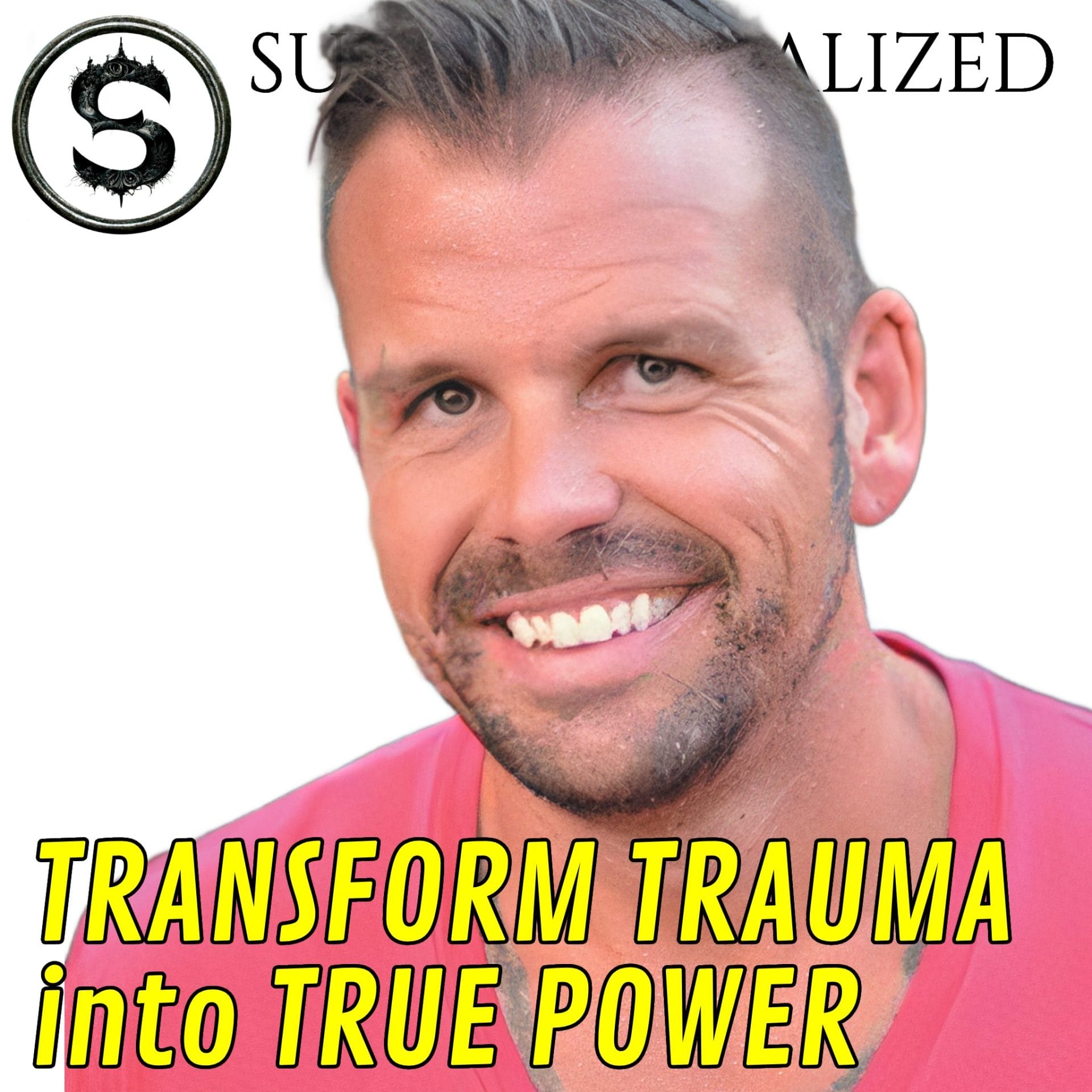
[00:00:00] Speaker A: Join me today as I sit down with Justin L. Shaw, a mystical comedian and Author of Sorcery 101. Thirteen Rungs to a higher elevation of consciousness. From stand up comedy to spiritual transformation. Justin shares a raw, hilarious journey of overcoming addiction, trauma and discovering the power of source energy. Listeners will learn how to alchemize their own emotions, break free from spiritual bankruptcy and tap into their inner self. Sorcerer.
[00:00:30] Speaker B: What if everything you thought was holding
[00:00:32] Speaker A: you back was actually preparing you?
[00:00:37] Speaker C: Yeah, so I like to kind of start a little bit with a little bit, a little bit of my background. I've got it down to pretty lean 10, 12 minutes, so I won't go on too long about it. But it's important to know, kind of, you know, that's when you're, you know, dealing with people in their pain. It's important that I want people to know that I have empathy rather than sympathy. You know, sympathy, you're hearing the pain with them. Empathy, you're actually feeling the pain with them.
And you know, my, my upbringing, it was, you know, that it was a kind of an emotional vacuum growing up. I grew up, it was just me and my mom most of the time.
And they were older parents when they had me. My, my dad, mom were together when they had me.
But there was a crack in the marriage around the time I came around, which morphed into a canyon over the, you know, the years of my toddlerh divorced when I was younger and so it was really just me and my mom.
But even if I had my dad there, he's also an emotional vacuum. So they, neither one of these people are very good with the concept of love. They don't, they don't have a good understanding of it. They're not able to verbalize the word first of all. So that was not a word I heard growing up. And I had a very strange relationship with it. I couldn't say it like, because I never heard it growing up.
It was.
Made it so unfamiliar, this, this concept of love, which is, which is just, you know, it's just critical. I mean, every human, you know, you know, babies in newborn clinics, right, that in the 1920s they found out that, you know, if, if they didn't hold the babies, they die. And you know, if you think about, if you think about the biological, that doesn't biologically make sense. If you take care of something, you change the diapers, you feed it, you. Biologically, it does not make sense.
It should be living. So like, that says something about our nature and love.
So it Was a very important thing I missed growing up. And it led to a lot of issues. You know, my mom did, God bless her heart. I never liked to talk bad about her. She.
She had a lot of things going on. She had, she had a tough childhood and, you know, she. She internalized her pain. She wasn't the type of. And I'm grateful for this, you know, to some people, like keep their pain and then they inflict their pain on others. That was not my mother. She kept it all in. She focused it all in on herself. She was a kind person to other people, but she just all in herself. And so she'd have these depressive moods where, you know, she would go in and, you know, she'd lock the door and, you know, be in a room and, you know, just. And so I kind of had this upbringing where I kind of, you know, the TV wasn't just, you know, a babysitter, it was a full blown parent.
So, you know, and that's kind of when I got my, my comedy shows and my kind of comedy thing kind of came together. And I loved laughing and, you know, I found things that took me out of my pain. And pop culture, American pop culture is what did it for me. Whether it was video games or movies or TV shows or sports or American pop culture was what took me out of my pain. So it is, it is a massive part of who I am. It's a massive part of the book. It's a massive part of everything because I believe the secrets of the universe are hidden in the nooks and crannies of pop culture. I truly believe that. So.
[00:03:45] Speaker A: But laughter could only carry him so far.
[00:03:52] Speaker C: That's what took me out of my pain growing up. And you know, in. In high school, I found this other thing that took me out of my pain and that was drugs and alcohol. And so, you know, I didn't start too early, which I'm very grateful for, you know, the developing human brain, you know, like starting, you know, drinking and smoking at age 12 and stuff. I'm very grateful that that didn't happen for me. I was still very much a kid at 12, but, you know, 16, 17 is, is. I think that's when my first drink and smoke. And so, you know, and once that happened, you know, it's like this instant like, oh, I want more of that. Because now I don't feel, you know, like now I'm. All this feeling that I had before is gone. And so I want more of that.
So naturally this is where addictive behavior Comes in. You know, no one has addictive behavior that. Not suffering. I can tell you that right now. It's just. Addictive behavior doesn't just happen. It is because the spiritual bankruptcy of someone and it, there is reasons for it, for it all.
So. And that certainly was the case for me. And so my 20s was a dumpster fire. Just. Just a complete and total dumpster fire. Like, it's just I spent time in jails and rehab centers and halfway houses, park benches. I mean, like, it was truly dreadful. It was a dreadful time period of my life.
And so, you know, I was, I was, I actually graduated college somehow and I was living in LA at the time and trying to do stand up comedy, but also had a massive drug and alcohol addiction. So I went to rehab and I went to rehab in California. And the first time I went to rehab, I just. This whole spiritual mumbo jumbo, I was not about. I was like, you know, you can keep all that. The reason I'm struggling, I know best, okay? I know me. And the reason why I'm struggling is because I have all these drugs in my system and I'm withdrawing and I can't. And I just need to be put away for a while. Have these withdrawal symptoms go away within a week or 10 days or whatever it is, and then I'll be fine because then I won't be withdrawing and I just won't want to use drugs anymore and I'll go on with my life.
Well, that lasted 90 days, which I'm actually surprised lasted that long.
So there we go, another couple years of struggle.
And so I came back in the second time and I kind of said, okay, maybe I don't know everything.
I'm going to listen to you guys now. What do you have to offer in terms of this whole spiritual thing? Because this was not really part of my life. I loved the paranormal. So that's what kind of almost got me into my spiritual spiritual. Because, like, I've always been a fan of the paranormal. I believe people's stories. I don't think that, you know, everyone is lying. You know, when they tell these fascinating stories of aliens and ghosts and I just, maybe some of them are. But there's no way everyone's lying.
So, you know, that kind of brought me into this whole kind of, okay, there's something going on here that is not the materialist point of view.
There's something else going on here.
And the paranormal is my introduction to that. So I was like, okay, all right, the spiritual thing, let's. Let's roll with this. So I went to a faith based treatment center and it was a Christian based. And you know, so I did the Christian thing and the AA thing. You know, they really go hand in hand together because AA is built on a foundation of Christianity. It's, you know, it's disguised kind of Christianity.
So they went really well together. And you know, I, I was sober for about five or six years. Looking back on it now, I was living a really mediocre life. But that sure was better than the dumpster fire of my twenties where I, you know, I was in jail. And so to me, I was living a great life because I didn't understand that mediocrity is not as great as I could. Is not, it's not as high as I could go, right? Like, I thought mediocrity was as high as I could go because it's like, well, I'm not, you know, I'm not in jail, so therefore I'm doing pretty good.
So that's where kind of that whole thinking and belief system got me, was a lot of mediocrity. And unfortunately what happened, you know, to really shake the foundation and completely change me was my mother was pronounced terminally ill. And about year six of sobriety and you know, the year that she was passing, you know, her body was falling apart, her mind was falling apart, the dementia, the cancer. So watching that was traumatic enough. But this programming I had in my head from Christianity saying that, you know, my mother was never went to, never talked about God, never went to church, therefore she was a hellbound heathen.
And that was the programming I had. So, so when I'd go visit her, and this last year was, I mean, the trauma was amped up by a thousand times because it, that messes with you, right? Like, that messes with you. Like my mother is going to be punished and poked and prodded by Satan for the rest of her life. Like the, for eternity. Like, I can't, I can't wrap my hand around my head around that because sure, she had her issues, but I have my issues too. And like, I mean, come on, like, that's just not right.
So it was after she died that I really started questioning things. So, like, unfortunately, like her death, I was still on board with the possibility that she was hellbound. But afterwards I really had to do some deep digging because, because I had relapsed at that point I'd gone right back to drugs and alcohol, you know, because what was supposed to help me through this, the Christianity failed me. Miserably not only did it fail me, it was the reason. It made everything worse.
[00:09:41] Speaker A: At his lowest point, something unexpected began to crack open.
[00:09:47] Speaker C: So I decided, you know, to maybe start investigating things. And I found out that Christianity is like this. This beautiful metaphorical mansion, right? This metaphorical mansion. Like when I first got in to Christianity and A.A. and I moved into this mansion, right, like this, 17 bedrooms, and they got 16 bathrooms. And there's a game room and there's like, you know, there's a. There's a pool and there's a bowling alley. And like everything you possibly want is in this mansion.
But when you move into the mansion and you're there for a while, you realize that part of the deal with living in the mansion is you can't leave the mansion. You're not allowed to. That's kind of leaving the mansion is, you know, investigating other religions doing things outside the box of the conformity of Christianity. These are not okay. These, you know, they tell you that it's death and destruction. There's a zombie apocalypse outside of the mansion. You don't want to go out there. You know, the programming, right? Like so.
So. And the problem with this mansion is that it's also built on a cracked foundation of fear, judgment, and control.
So for me, the mansion, some people live in the mansion, the whole lives without it crumbling. But for me, it crumbled with my mom. And so I had no choice but to leave the mansion because it had crumbled, the foundation was cracked, and it just fell down. So I left and found out that life is beautiful outside of the mansion. And there's all these things I've learned. You know, I replaced my pastor with a shaman, and he helped me through meditation, starting to question beliefs both of. In adulthood through Christianity and through my childhood, limiting beliefs that were kind of placed in there before the age of seven, that, you know, society kind of placed in there that, you know, you're not good enough, you're not worthy, you're not that great, you can't accomplish whatever you want. You know, those kind of things that we don't even. We're not even aware are there.
So I started mining my subconscious and one day I had a bliss attack. And that's the only thing I can call it is. Is it's a. It was a bliss attack. And it was like, you know, I wasn't meditating at the time. I was just. I just gotten home from a gym at. And I was stretching and it was like three hours of just this. These waves of bliss and love, like, it was like a panic attack if you replace panic with love.
And it was just three hours of this. And.
And I also was getting, like, downloads from the universe. And I realized my entire life I had spent in airplane mode. And at this moment, I had been turned off airplane mode. And all the messages start coming in. All the texts and emails and phone calls and all that stuff started coming in to my mind and heart and spirit. And it started. And I knew these were truths because of how I was feeling at the time. I knew whatever I was being told in this moment was truth.
[00:12:37] Speaker A: From that moment, everything changed. And Justin began building something, a map for others to follow,
[00:12:45] Speaker C: and a lot of the illusionary nature to reality. And all these things were coming to me. And so, you know, it was fascinating. And after that, like, things were different.
And, you know, and I've had several of them since then.
And one of them was for the book, which is. Which is essentially a blueprint or a map for other people to have their own bliss attacks. And so that's where the whole concept of the book came in and how to structure it. And all these amazing things all came during a bliss attack.
[00:13:17] Speaker B: And.
[00:13:17] Speaker C: And so I can't predict them. I don't know. I can't force them. I can't. I'm not at this stage where I can, like, okay, I'm gonna go have a blitz attack right now. Like, they come randomly. They're. They're very. They're just. They just. I can't meditate my way into them. They just show up, and it's just. It's the craziest thing. But I know what's happening when it's going on, because, like, I can't. Like, it's very obvious.
But, you know, that's when I realized we're surrounded. And the book is called Sorcery 101. It's spelled with a U because it's not about, you know, wizards and. And, you know, hooded robes and cauldrons and stuff. It's not that kind of sorcery. Spelled with a U, because it's source energy. Source energy is what surrounds and binds the universe together. And explaining source energy to someone is like explaining water to a fish, which is a very difficult concept. But I imagine for a fish to understand, like, what is. What is water? Like, explaining that to a fish would be difficult. And so explaining that to a person is just as difficult. But I can tell you that once you're the fish that sees the water, all you want to do is go around and tell other fish about the water. And that is what happened with me. So that in a nutshell is kind of what happened.
[00:14:33] Speaker B: Look, there's so many great nuggets of information in there that people need to hear. And I love the way you put metaphors around them that make them more accessible as well.
So during your, your journey there, how did comedy serve you as a healing mechanism, as a part of your recovery process?
[00:14:52] Speaker C: Yeah, it's, it is, I mean, it is, it is the healing mechanism, I think. And you know, when you can, there's just so much healing in laughter.
So I like to tell, you know, like I say, like I'm mystical comedian because I'm no longer interested in just making people laugh. Laughter is a big component of who I am, but I also want to make them think and feel as well. So laugh, think, feel. And those three things equals growth.
So when you laugh, think, feel your way through something, you have now absorbed that information better than if, you know, you were absorbing it in a different energy, maybe like a more fear based energy or, or a concentrated energy. If you're like laughing, it's, it's, it's going to be absorbed better.
So like I said before, you know, the, that's where the comedy had come in was, it was an escape to my pain. It was, you know, the early 90s when I really first discovered comedy, you know, you know, here in America at the time, you know, Saturday Night Live, I would stay up late and watch Saturday Night Live when I wasn't supposed to at, you know, 8 or 9 years old. And that was, that was this, that was the greatest cast ever. That was, that was Adam Sandler, Chris Farley, David Spade, Chris Rock, Phil Hartman, Dana Carvey, like, it was just, it was the greatest lineup of SNL ever. And I would stay up late and watch them and then like emulate them and I would kind of see their mannerisms and start, you know, pretending to do that. And, and like, I found I had a kind of a knack for it.
So, you know, it was, it just, just all those things that growing up at the time, because we didn't have content, okay, so all these kids don't understand, now they have all these things to watch.
Well, in the, in the 90s, we did not have all these things. There's no streaming, there's, I mean, the cable is very limited.
So the amount of content and programming that we had to choose from was very limited. So when, when I was finding something I liked, I would, I would just watch it over and Over.
[00:16:51] Speaker B: That's right. And it was time locked. So you're like, I know when that's coming, and I've got to watch it at that time.
[00:16:56] Speaker C: Yep. Yeah, yeah, yeah. Oh, yeah, the cable. Yeah, right, Exactly. Yeah. And it's just so I would find something I liked, you know, and Jim Carrey was always my hero, and I love Jim Carrey movies and, you know, Ace Ventura and. And the Simpsons. And so I taped these things and. And then watch them later because it was like, I found something that I liked, and I would rather watch something I liked, you know, five times rather than something I'm just okay with once.
So I just keep watching these things over and over, and it just programmed it into. And so that it made me funny. I made myself funny by watching these things over and over and over again.
So, yeah, it's. And I have found that it's. It's just. It's.
It's a way to have people kind of put their guard down. So you can only accept, believe and surrender to a concept by the energy that you're currently in, if that makes sense.
So, you know, like, I look to use the doctor analogy. So if you're. This is. This is the more negative aspect. I like I'm the positive aspect of this. But, you know, if a doctor comes in and says, you know, I've got bad news, you've got cancer. Well, okay, so right now, that news right there has put fear into their psyche, into the heart and mind.
And then they ask the question, well, how long do I have? And they're only willing to accept, believe, and surrender to whatever matches the energy they are currently in.
So when the doctor says six months, they accept that as their reality, because that sounds. That. That's depressing because they're already in a depressed mood, so they want more depressed stuff. It's like anger junkies. They're just trying to get other people angry and feed their anger. And so you're only gonna accept, believe in, surrender to the energy that you're currently in.
So flip that around in the positive. And that's. That's where I. That's where the sorcery comes in. So it's. It's. It's having people, you know, be open to these ideas by making them laugh. And by making them laugh, they're more open to these ideas.
So that. Yeah, that is the importance of comedy in this whole thing.
[00:18:59] Speaker B: It sounds like your comedy is like your metaphor explaining water to the fish.
[00:19:05] Speaker C: Yeah, I mean, it's. It's. Yeah, it's really is. And. And, you know, it's. It's. And just like a. And this. This moment that I. This. This bliss attack that I would love other people to have.
It's like a fish being. Like a fish that's lived in a pond their entire life. So fish has lived. You know, they've just got the.
They only know the pond, the water. They don't know anything.
They have no idea what is outside that pond. And so if they get caught by a fisherman and get pulled out of their pond and they see this whole world, they had no idea absolutely existed, this whole thing. Right? And so in this moment, you're like. You're looking around. It's like flying forest, and there's land and maybe there's other oceans. There's people like, what is all this going on? And then they get thrown back into the pond. That's what happened with me. So I had this extreme moment, and I was like. I was taken on a boat by a fisherman, you know, metaphorically. And then I was thrown back into the pond, you know, three hours later, only to try to explain to other fish what had happened. And no one would believe me.
So, yeah, it is. It's. It's just. It's the whole fish. It's just a good analogy to help people. Like a parable, you know. But what made Jesus such an effective spiritual teacher is he spoke the language of the times, and he spoke in parables that people could understand.
And, you know, aside from, you know, the fish. But pop culture, technology, humor, these are things I use to explain this energy and try to illustrate the point, because that is the language of today is pop culture, technology, humor. That's the language of today. So if you can take all this source of stuff and be able to explain it in a way that people can understand, especially the youth. Like, the youth can really. I'm focused on. On the youth and trying to bring them up, and I have to speak their language. And their language is pop culture, technology and humor.
So that is. That is the language I speak.
[00:21:04] Speaker B: Well, one of the things that you pick up on in your book is the source energy from the Force in Star Wars. And to me, that was a massive film as a child. I've actually seen it 58 times because.
[00:21:16] Speaker C: Wow. You know the exact number. I don't have an exact number. I know it's an exact number. Yeah, that's. That's impressive. That's a true hardcore fan right there. You're a nerd. Yeah, me too.
[00:21:26] Speaker B: And it changed. It changed my Life as a child and, like, gave me, like, a sort of sense of focus and like a Zen, like, perspective on life personally. But for you, can you break down what it actually means in practical terms when you're comparing that source energy to the Force in Star Wars?
[00:21:46] Speaker C: Yeah. So I actually have a covered book here. So the. The exact quote from Obi Wan Kenobi, I. I open the book with.
Not quite open it, but it's in the opening part. But I like to get the. The quote is exactly correct. So, you know, and that. And that's, again, speaking the language of pop culture. So source energy. Source is the Force I write in every book that I sign. May the source be with you, because it is. It is the same thing.
So it is the exact.
I've made that up. Isn't that clever?
So, yeah, because it is the same thing.
Source is the Force. And so Obi Wan describes it purposely. He says the Force is what gives a Jedi or sorcerer their power. It is an energy field created by all living things.
It surrounds us, penetrates us, and binds the galaxy together.
And so that's a direct quote from. That's Obi Wan Kenobi saying that in the very first Star wars to Luke and trying to explain what the Force is. But that's.
That's it. And when I. And when this thing happened to me, that's when I realized, George, he's. The Force is real.
The Force is. That's the best. And that was my understanding of it, is that there is. There's a Force, a source. It's. It's a field of information, and it's out there, and it's.
And it guides us, and it's in all of us, yet at the same time, it's outside all of us. And it's everywhere. And it. But Star wars nails it, so they just. They just nail it. And, you know, I went. My whole life, they don't think, like, loving the Force and loving Star wars, not realizing that that's the truth. The truth is the Force, which is. Which is crazy, but it is. Like, it really is. So, yeah, that is. That's. Yeah. Yeah. And. But that's. That's the best definition for it, for source energy that I've ever come across is Obi Wan's quote from Star Wars.
[00:23:41] Speaker B: Yeah. Yeah. And that.
I mean, the source nowadays would be pretty much been relabeled to being the field, which everyone calls the field.
[00:23:50] Speaker C: That's the science term, the quantum field.
Yeah, that's. That. Yeah. But. But it's. You Know, religion will call it God, you know, they call it chi prana, but it's all the same thing. And so, so, but the field is. That's, that's, that's, that's the science name for it. Yeah, but it's all the same thing.
[00:24:08] Speaker A: Justin didn't heal himself. He built a system, a framework he calls the rungs of healing. And the first rung is the one most people have never heard of.
[00:24:18] Speaker C: You know, the first one is the most important one. So it's probably, I would say it can be the most difficult. And that's shadow work.
And the shadow is something that most people are completely ignorant about or unaware of. You know, I found amongst struggling people that the most common denominator is a lack of awareness.
And so we all have a shadow and it's generally created. Some people's shadows are dormant, maybe had a great childhood, haven't experienced much trauma as an adult.
Your, your shadow is dormant. It's, it's, it's there, but it is, you know, you know, a trauma can bring it bringing, you know, like if you had no childhood trauma and you had a great adulthood and all of a sudden your husband dies, you know, the shadow is going to start, you know, it's going to start messing with you.
So it is there and it's important to know it's there in all of us.
And it's, it's the side of. So I like to say it's, it's like driving a car. And, and, and I have had the shadow in each one of these positions throughout my entire life.
So if the shadow is driving the car, it's gonna drive it off a cliff every time. Every time it's gonna aim for the cliff and drive it off a cliff. And that was my 20s. That was my 20s. It was, I was aimed for the cliff and it was jails and rehabs and, and park benches and I couldn't function, I couldn't get a job. I couldn't hold on a unfunctional. So we know these people, homeless people. I mean this is, this. They're out there. And so when the shadows drive in the car, their shadow is just driving. They're not aware of it, but the shadow is driving the car now in. When I got sober and I did the Christian thinning it, the shadow moved to the passenger seat, which is better than it driving the car because it's not going to drive it off a cliff.
But it's still heavily involved in your life. A passenger, you think, you know, when you're in a car, they're talking back and forth. And so it's that voice talking to me was that voice of mediocrity. It was this voice of, who are you? What do you think? You can just do anything? Like, no, you're not, you're not special. You're not, you can't do these things, you know, you're not enough. You're not good enough.
All these things are. And, and the, the, you know, from the, the Christian point of view, you know, hell and, you know, the, the fear and damnation and Jesus is going to come back and rapture us and he's going to pick autos with all his favorites and, and to hell with the rest of them. And so that, that was part of my shadow too. These fear based beliefs and these limiting beliefs. Fear based beliefs and limiting beliefs. And they would talk to me in the passenger seat and hold me back from true potential.
[00:26:57] Speaker A: Once you face the shadow, the next rung is transformation itself.
[00:27:02] Speaker C: Where you want the shadow, you can't kick it out of the car. It's not possible. Has to go in the back seat. That's where you want it and that's where it is. For me now it's like, you know, you check on the kid in the back seat, you know, like, you got, you got your little bag of Cheerios back there, kiddo. You know, like, is the, is the A.C. okay? You know, like, is there anything I can get you? Like, check on it? Yep, yep, I'm good. But most of the time, the, you know, anyone in the backseat, they're just chilling, looking out the window, hanging out. They're not, they're not most, I'm not real involved in the conversation. They're just, they're just there.
And that's where you want your shadow.
So I like to say, I love to say, you know, one of the things I came up with was that I'm a little bit Deepak and a little bit Tupac. And that really, that really sums me up really well. Like that, like that.
I don't know where that came from. That was, you know, like, there's all kinds of stuff in the, in the, in the book that I have no idea. It came from the field. It certainly didn't come from me. But that's one of those things. It's like, that's too clever for me to come up with. But it, but that's, that's it. That's the, it's the divine and the shadow. It's, it's the reactor, the Shadow and the responder, which is the sorcerer. So, you know, you become the responder over the reactor, you know, and. And there's. It's a slow process, but it's a concept that I think people will struggle with. The first. I have no idea. The shadow thing, this side. Two sides of us, and, you know, the natives, you would say, you know, we have a Light Wolf and a dark wolf that lives in us all. That's what they say. And the one that dominates is the one you feed most. So, you know, like, if you're feeding yourself, you know, trash TV and, you know, like a lot of, you know, anger and hate on the news and you're. You're feeding these things, you know, you're feeding your dark wolf, and it's. It's going to come out your personality.
So it is, it is. It's those two sides. But I would definitely say the shadow is. Is. Is.
Is. Is probably the toughest thing to wrap your head around if you've never heard of that concept, because it was for me. So. And that's why it's the first rung before anything else. It's like you need to get your. You need to get your footing on this one. So you can call, you know, it's an climb to another rung, but you got to get your footing on this one because it's really important.
So that. Yeah, that's what I would say is the most important one or the toughest one to understand.
[00:29:15] Speaker B: Yeah, I completely understand that. And I've got to say, I'm just at the tail end of a shadow work course by Gordon White of Rune Soup called the Shaman's Devil, which actually goes right into all of the deep shadow stuff. It's based around the book no Bad Parts by Richard Swartz and other notable people in the IFS sort of field. And it has, like. I went in thinking I've probably got something to work on, but I'm not really sure. And because of the. The depth of the course, it pulled everything out.
I'm like, it feels like my head's spinning around. Basically, everything blew up. And interestingly, as a part of doing it, I found that the parts in me that wanted to distract everything and keep everything down started to manifest all this work for me that kept me super busy and distracted at the same time.
[00:30:16] Speaker A: It's like, oh, come on.
[00:30:17] Speaker C: That's how it works. That's how it works.
[00:30:19] Speaker B: Weird, right?
Because it actually has the sorcery power. It actually does start manifesting things in reality to keep It. Keep it all in alignment, but in the way they like. But, you know, once you start to talk to those parts and settle them down, then things start to get easier and you find more energy in life and a bit more clarity. And you don't have a, you know, the, the. What would you call it? Like you were saying, the.
The shadow in the passenger seat telling you to do stupid things, telling you
[00:30:53] Speaker C: you're not enough and you can't. Yeah. And holding you back. The shadow of the passenger seat is holding you back from your potential. Essentially. It's better driving off a cliff, but it's holding you back. Yeah, that's right.
[00:31:02] Speaker B: That's right. So, you know, you learn about all of the. The triggers around those things that cause those things to happen, and it just seems to dissolve it and make life a lot more easier. So, yeah, definitely, that's a major step, and I'm glad that you actually have that as one of your major rungs there now as a part of the work.
How does a person recognize they're experiencing a spiritual bankruptcy?
[00:31:29] Speaker C: Yeah, that's. That's. You have really good questions. Well done.
So it's.
Will manifest in different forms. And I. And, and. But it. And the fascinating part is it's. It's all the same thing. So it will manifest in forms of anxiety, depression, autoimmune disorders. There's a lot of physical things. Cancer.
Yeah. It could be addiction.
An addiction to everything, anything. The biggest addictions I see now, you know, it's no longer drugs and alcohol. It's the phone and food. That's. That's. That those are the biggest ones here in America are just. I see lots. And they're not conscious of the fact that because these are things we have to use every. But, but they can also be abused. Like we have to use the phone, we have to eat food. But they can be really abused. And, and that's. That's what I'm seeing the most of. And people aren't recognizing it because it's like, well, I can't not use my phone. Well, but you can regulate it and not abuse it.
So those are the best things to look for, for spiritual bankruptcy, you know. And, and, and, and the phone is a great one because it's so.
It's so universally used. And, and if you can't put your phone down, you know, for an extended period of time and just be.
That is your soul calling out to you, that there's healing that's needed. Because if you're constantly being a human doing, then you can never be a human being. And so if you're struggling being a human being, then that is. That. That is your soul saying there's an issue.
And obviously, you know, the obvious ones, of course, of drugs and alcohol, and, you know, they're not manageable. You know, you're getting fired from work, and those are really obvious ones. But the sneaky ones, like, like food and the phone kind of go under the radar and they go unnoticed. And so, you know, it's because. Because you can manage your life by being dramatically addicted to food and. And the phone. Whereas. Whereas drugs and alcohol are a bit different. You show up drunk at work and, you know you're inebriate. They're going to get fired, and you're not functional, and, you know, the drugs, you know, mess you up. And so. But the food and the phone don't do that.
So those are the ones that I would say for people to. For the most, to really keep an eye out on, you know, you know, if you have a drug or an alcohol problem, you know, like, there's. There's something that, you know, it's just like, I am drinking too much. There's an. There's an inner voice that says, this is, you know, this is not normal. My other friends aren't drinking this much. And, you know, like, I've, you know, I can't seem to put these pills down or whatever. You know, sex is a big one. Gambling, you know, like, I'm bankrupt, and I, you know, I. So those are obvious ones. That's like, okay, I am struggling. I. I am now massively in debt. I have no money, and it's all because of my gambling.
That's a problem.
So, you know, those are more obvious ones, but they all say the same thing. But the one I like to tell people the most is. Is the phone and food. You know, if you're really. If you're abusing the phone and food, that's your soul telling you there's. There's an issue. And all those other things to depression, anxiety, all, you know, they're all labeled. They want to say, you know, you know, go see a doctor for, you know, you know, get some pills for your anxiety. Go see it, you know, go talk therapy for your depression, you know, go to AA meetings for your alcoholism, go to NA meetings for your, you know, your drug addiction. And, you know, keep them all separate. And because they're all different things, it's not true. They're all the same thing, and they can all be. That's what sorcery is, it's not for drug and alcohol addiction. It's, it's just for, you know, like I suffer from drug and alcohol addiction. I suffer from gambling addiction, I suffer from, you know, anxiety, depression. Just ended it. I suffer, just end it there. That's all that matters.
[00:35:13] Speaker B: What radical steps would you recommend for a digital detox then? I mean, obviously people need to actually recognize when they're picking their phone up just with the excuse of oh, just gotta check that, you know what I mean? And doing that a thousand times a day is ridiculous. But that's what people do because we're pretty much chained to these devices nowadays through all the apps and attention seeking notifications. What would you suggest to people to help them to break free of that?
[00:35:40] Speaker C: Well, have, you know, have phone times and places. You know, the car should always be a non phone time. If you're using the phone in the car, that's a big no. No, that's like, why are you using the phone in the car? Like, don't, there's no need, like, there's nothing that needs that pressing. So have spaces and times where, you know, like in the mornings, like you wake up and need to get the emails done. And you know, like I like to, you know, go through emails before I meditate because then it's like out of my mind and then I put it away. And so it's just, it's, it's, it's creating that healthy experience. And every phone now has screen time on it. Obviously jobs come in and they make things a little bit more difficult. And you know, like if you're, if you're, if you're at a job where you have to be on your phone. Okay, but you know, a lot of these jobs that you're on the phone are, you know, are not hourly jobs where you can be on the, they kind of bleed into your life and then they, you know, the phone starts taking over and all of a sudden now if you're including, you know, all the times that you're on the phone for, for work and so now you're working like 80 hours a week, you know, because, because you've, you've, you've bled that time into it and you think you're being productive, but really you're just wearing yourself out and, and that, and burnout comes really quickly. You know, people think they're going, eventually it catches up.
So, and there's all kinds of, you know, guides and books out there to have healthy relationships with, with the technology, you know, not to be so plugged in.
But, you know, and here's the problem with, with the technology. If you're constantly in a convergent focus, which is what we're in right now, and it's what, you know, most people enter most of the day. You're playing with the kids, you're doing work right now. Like, we're in a convergence. Our focus is converged on something worldly.
The only way to truly grow and to blossom as a human is to. Is to once in a while, every day, certainly for me, I get in the divergent focus, which is a broadening of the focus.
And what happens when you do this every single day? First of all, you gain superpowers. Like, I can read people. Like, I, I immediately. I know who people are. I know what they're struggling with. I know that they've gone through childhood trauma. It's all in this. This aura field. And I get people's. And this is. This is superpower that happened after I've been meditating for five years now or something. But it happens over a long time. And. And you. You start to have, you know, they're not superpowered. I can't fly. But. But they are superpowers.
And so, you know, getting in this divergent focus, it's like.
It's like if you go up to a brick wall and you stand at the brick wall with your nose on the brick wall, all you're gonna see is, like, a blurry shade of red. So that's the convergent focus. We're constantly in every. That's. That's representative of the convergent focus. Well, if you take a step back now, you see that it's. Okay, It's a brick. All right, let's take another step back. Well, now, you see, there's bricks stacked on top of each other. Okay, let's take another step back. You kind of see. Okay, well, okay, this is a wall. Take another step back. This wall is attached to something. And then you go even further back and you see what was originally just a shade of blurry red is actually a magnificent castle. And now you've reached a divergent focus.
So that is one of the most important things for people to understand about the technology abuse is essentially, you're constantly telling the creator of the universe, source energy, that you're busy all the time. And sometimes we are busy. That's okay. Source energy is not going to talk to us when we're busy because we're busy. We're not paying attention.
But if you don't take Time and pay attention and just be.
Then you're not going to get these messages and you're not going to get the guidance that you should be getting. So that is the most critical thing when you're, when you're dealing with technologies, start meditating. Like, start taking time. And if that's hard and you're, you're thinking about your phone during your meditation, keep going because I was there.
And eventually it starts to get less and less and you. It's, it's time. It's rewiring neuroplasticity. It's rewiring the brain, which takes time.
Time is an illusion. You know, this, the old, the Shakespeare. You know, the whole world is a stage and all the women merely players. Well, time is like a prop on this stage. We have to pretend it's real, but you know, it's not.
But it, it is part of what, you know, bolts us down to reality. So, so things take time.
And that's, that's the most important thing. When you're, when you're trying to rewire and you're trying to change and trying to create something new, you're trying to transform.
It's not going to happen overnight. It's not. And it's just not. So, so to stick with the course, but the change will happen. And I always tell people, don't give up before the miracle happens. And the miracle happens when you have programmed yourself with the ideas of like, what success looks like. And so that is, that is now your rope. That, that is now your road. So that's the road you naturally go down. I was programmed for failure, so it took a long time for me to like, to program myself for success.
But once you program yourself for success, that's, that's the automatic road that you go down. It's just whatever. You're going to choose the successful option no matter what, because you're programmed for success.
So whatever options come up, you're going to always choose the successful one because you're programmed for that as opposed to before. You're programmed for failure.
So, yeah, that's, it's, it's all very interesting. It's all.
I've learned a lot over the past few years.
[00:41:24] Speaker B: Yeah, no, I fascinates me that some of your description there. Recently I got a new phone and I thought to myself, well, do I really need email on it? And I just didn't even install the email. I was like, I don't care anymore.
And you know, because it just, it's just an extra thing that's gonna get my attention. Do I really need to have that many things telling me about things that are happening anywhere else in the world? I mean, I'm right here. If something's important, they'll call me.
[00:41:49] Speaker C: I get 102 emails a day, and probably three are actually important.
[00:41:54] Speaker B: Yeah. Yeah. So that's where I was at, too. I was like, I don't care about
[00:41:57] Speaker A: this stuff that much.
[00:41:58] Speaker B: You know, I can wait until I get back to my computer to do stuff later.
[00:42:03] Speaker C: That's great.
I like that. That's, That's. I don't have that, but I like that.
[00:42:07] Speaker B: Yeah. Yeah. And I now, I also run my phone most of the time on really low volume and really low notifications, so sometimes I might miss something, but I don't care.
[00:42:17] Speaker C: I have no notifications is a big one. And that's the one. I like to tell people to turn off all notifications because every app is going to ping you and say, hey, check me. You haven't checked me in a while. Every app is going to do that and they're going to have these little red bubbles to, like, cause you stress and anxiety. It's like, oh, I got to see. I got to get rid of that. I got to get rid of that red bubble, you know, like, so it's going to mess with you. So turn off all notifications. All, you know, other than like, text and call. You needn't. But everything else, turn off. So, yeah, that. There's, there's tricks that. And, and they know how the human mind works in the subconscious. All these tech companies, they're very aware, and so they're programming you. You're being programmed.
So awareness, again, key.
[00:42:58] Speaker B: Absolutely, absolutely. The, the, the companies have done all the studies. They know how to actually keep everybody engaged. And, and it is their ultimate aim to keep you engaged because, you know, you are sold.
[00:43:12] Speaker C: Yep. That's the money.
[00:43:14] Speaker B: Yep.
[00:43:15] Speaker C: Product.
[00:43:16] Speaker B: How can someone weaponize their trauma into personal power instead of letting it control them?
[00:43:23] Speaker C: Yeah, that's, you know, it's, it's alchemy. And one of the, one of the things is, is, you know, one of the rungs is emotional alchemy. And the concept of alchemy, of course, is, you know, taking gold or taking, you know, lead and base metals and turning it into gold and silver and expensive metals. So. So it's a, you know, it's a, it's a thing for actual sorcerers in medieval time. You know, it's. Science says it's not true, but you know what science can be kind of boring sometimes, let's say, you know, but emotional alchemy, it is very possible because I do it every day.
And so that is, you know, that's taking your trauma and alchemizing it into wisdom.
So. And the process of that is, is.
Is simple to understand but hard to do.
So when you alchemize your trauma into wisdom, you have disconnected the emotional response from the memory.
So and once you do that, your trauma can no longer.
Is no longer in charge of your life. It does not trauma, you become your trauma if you're not aware of it.
And when you alchemize the trauma, it turns into wisdom. Your trauma turns into wisdom. You've learned you're a wiser person because of it, but it's not controlling your life.
So, and doing that is, is. There's, again, there's no simple solution for alchemizing trauma into wisdom. It's just, it's a matter of, of becoming conscious and aware of your shadow, because that's going to be a part of your shadow. These, these traumas and things that cause reactions over responses. Look for your reactions.
That's. That's key. You know, look at things that make you react, because that's all part of your shadow. If you're reacting and not responding, there's something that needs attention.
And so that's all part of alchemizing your trauma into wisdom because you will no longer react to things. You will respond.
And it's just, it's amazing what happens when, when you're able to do that and you're able to disconnect this, this emotional charge with the memory, like when you're able to actually do that. And it takes time and effort and, and really getting at it. And, and it takes, you know, crossing, you know, on the other side of fear is freedom. But, you know, that wall of fear looks, you know, it's an illusionary wall, but it looks like, you know, a fortress.
But it's illusionary, but it looks like a fortress. So getting through that and the other side is freedom. So, you know, that's all part of growth and going through and alchemizing that trauma into wisdom. And it just, it just takes time and effort. But, you know, it's, it's. It's easy to compare to, you know, like a physical injury. Like if you, if you break your arm, you know, and you don't go to the doctor and it doesn't heal properly, it's going to be sore forever because it did not. You did not get it set you, it didn't heal properly.
So, so you're always going to be aware of your arm, right? Like you're always going to be kind of, you're, you know, you know, don't touch my arm. You know, like it's, it's sore, it's messed up. Don't touch my arm. And so it's the same thing for emotional trauma. And you know, so like you're holding these emotional traumas and in the end when someone does touch the arm, there's a reaction. And that's the same thing with emotional trauma. It's like they, oh, they touch something, they touch the spot and then you react out of, out of, you know, nothing. That's why you see all these people and they get, it just sucks. They get, you know, like recorded at their worst moments. You know, the whole, the whole Karen thing, it's just, I feel so bad for all the ladies out there actually named Karen. I'm not apologize for that right now, ladies. But like it's, it's seeing these things and these, you know, these people having these horrible instances right in front. It has nothing to do with the cashier at Target. It's nothing. You know, like that cashier has, you know, like they're having a bad day and they hit a nerve and now they're taking the energy that they've harbored against the father that left them at 5 years old out on the cashier.
And so that is, that is the importance of healing. And, and it's, it's, it's alchemy. And that's, and that's, that's how you do it. It's, it's, it's, it's in there.
[00:47:57] Speaker B: Do you have any practical exercises from your sorcery system that you'd like to share that listeners can implement immediately?
[00:48:04] Speaker C: Oh yeah. It's the most important thing that you can learn as a human being. And I have no problem telling this one because this is just information everyone should know. And actually, you know, I'll, you know, I'll provide my email if people, I'll send a free copy of the book if people are interested in it because I just like to get the information out there.
But it's, it is intuition over instinct and we're our lives. So I have to explain this a little bit. But you know, our lives are dictated by that instinct.
And instinct is different than intuition. They're not the same thing. Everyone uses them interchangeably. They're not the same thing. Instinct is a fear based reaction. So and it's very good. It's not a bad thing at all. You know, if you're, if you're walking home from work and you see a car coming towards you and there's a, and there's a guy with a gun hanging out pointed at you, this is an instinctual moment that I need to run and duck and dive and get out of here. Run. Just whatever it takes. Like that is your instinctual.
You don't, you know, you're not going to sit there and get heart centered and meditate and think what should I do in this moment? You know, like we need instinct. It was there from the time of the, you know, the saber tooth tigers and the lions and the bears just the problem is co workers and in laws have become the bears and lions. They're the things we fear that are creating the same things in us that the bears and lions created. But we're also. So we're pressing the gas and the brake at the same time.
So that's really bad for engines and it's really bad for us. So that instinct, you know, and I use the card, you know, once someone gets home from you know, having a drive by shooting, they're traumatized. So you know, and from that day forward, you know, you know they still need to walk home from work, they need to take that same route. But so every car that approaches, they're going to be hyper focused and they're going to be looking for a gun. They're going to be ready to jump into the bush. They're going to get home, close the door and never want to leave. And that cycle can continue.
And people will have lived very limited lives because of an overactive instinct.
So the way to get over an overactive instinct is to get in touch with your intuition.
And your intuition is your higher self. It is, it is the player character on the other. It is the observer. It is you, you know, the observer. So we're, you know, this body is the computer. My mind is, you know like the software who you are and I am and everyone you know, we're the person on the computer.
Body's the computer, mine is a software but we're the person on the computer. And so that is your key. And so to do that and I go over the book to explain how to never make a wrong decision again. It is, it's, it's, it's a bit like a gps. You know, source will, there is no really wrong decision. Decisions we make.
Source will recalculate your route. But you know, the Easier, softer route is the best way to go. Always, you know, like we're gonna get there. But why recalculate? Why make a wrong turn if you don't have to?
And the way that is the intuition. And so it's, you have to clear your mind. I like to do four, five, six breaths. So there's five, four, five, six, four in, hold five out six and do that five times because you have to have your mind clear.
And once your mind is clear, you can now ask a question, place your hand in your heart because you want the answer coming from your heart, not your mind.
And you know, the mind thinks, but the heart knows.
So that is, that is, that is where you, you're asking, you want your, your answer coming from here.
And once you start playing with it and you ask yes or no questions, close ended questions, you know, you can get a sense of what yes is, what no is. You know, you need to get a sense for that. What does that sound like? It's, you know, some people, you might hear something, you might, I get kind of like, you know, the word in my mind kind of thing. Everyone's different. So you need to get a search for your, like yes or no, what does that sound like? But then you start asking questions and over 30 days you just ask it, just whatever questions. Should I go meet my brother for lunch? Should I, you know, go run this errand?
You know, just ask it really menial things and get a sense for it.
And then you can ask a beggar questions and it will guide you every time you ask a question. This is, this is how you know the answer.
You ask a question and before you finish the question, the answer will be there before you even finish the question. That is the answer that provides the easiest, softest route.
And you can, now we want to be like no, like, because the answer's there for everybody. You could do this, I swear, like you can ask a question that you've been wondering about. You'll get an answer immediately and your first thing is going to be like, I don't believe it, I don't, I don't believe it. So now you're going to run this whole thing through your mind. Is that real? Is that accurate? Is that so? So the key is then to just trust, trust that that answer is the answer and keep moving forward and develop trust. And you can do this over like 30 days.
And now my intuition guides me and you know, I'm on my best path because of it. But it's the most important skill as a Human.
We should be learning. It should be taught in schools around the world, around the. Every, every human should, should know how to do this. It like get in touch with your heart and listen to that voice. So that is, that is definitely the number one thing out of there.
[00:53:44] Speaker B: Yeah, thanks for that. It would actually make for a beautifully spiritually engaged society if people did that too. So.
[00:53:50] Speaker C: Oh, yeah. Could you imagine we'd have a utopia. Utopia, absolutely.
[00:53:55] Speaker B: How does one differentiate between responding versus reacting in challenging situations?
[00:54:01] Speaker C: So, and it's, it's, it's, it's going to be obvious. And for, for people with, with anger issues, they're reacting.
And so how, you know you're growing is, is, is, it's very fascinating because for me, like, I come across situations where I realize I'm responding instead of reacting. And it's really interesting because, like, this is a scenario and you, you'll know, you'll know in that scenario. It's like this is a scenario I used to react to, but I'm not reacting and I feel better. I'm not angry and I'm not pissing people off. And so you're going to know because, because the reaction is always negative. It's always going to end up in a negative form of some sort. You're going to, you know, people are going to, you know, think of you, what they will, or you're going to say something and you're, you know, you're going to do something you regret, that's reacting. So it's very obvious, the reactors, but when you start responding, you start realizing you're responding. And that's the really fun part, is like, you, like, I am growing. This is the situation in which I would have definitely reacted. And yet here I am, cool, calm, collected, handling the situation and responding. And that those are, those are the greatest moments. When I first started having those, like a couple years ago and like, really was doing the deep work, it was just the coolest thing. It was just like, wow, this is, this is, this is one of those situations.
And so it's just, it's, it's very obvious the reactors out there, and, and there's the, and the anger is, is the biggest one, you know, and it's, it's the biggest problem. And, and anger is extremely addicting. It is an addicting emotion. Highly addictive. It's a very unpleasant hyper high, but it's a high nonetheless.
And so people chase that high. So, so people continue, will stay in the reactionary mode and not even realize that they're feeding an addiction. So. And, and I lived with a woman that's very addicted to anger and she would try to find things that made her angry because she wasn't, she wasn't feeling angry. So something in her psyche was. She was in a very abusive relationship before.
So. And this relationship ended for me. It was not a fun time, but it was an amazing, like. And this is one of those things that, like, you'll see that's like, okay, this was really painful at the time, but now I see why I went through this. And seeing her with her anger addiction and trying to find things that weren't true or that were very menial or trivial to create an argument and feel high, you know, and, and that is that, that is, that is the reacting. So, you know, the.
You'll know. But, but it's. It. But once you start healing, it's so cool. Yeah, it really is so cool.
[00:57:04] Speaker B: Oh, I can totally relate to that. I. One of my exes was very much like that and she was very addicted to anger and would stir up things and then stare me in the faces of like, I'm wanting you.
[00:57:16] Speaker C: They love it.
Yeah.
Digging in the chaos.
[00:57:21] Speaker B: Yeah, yeah, yeah. But I was already moving into that, you know, like Teflon sort of awareness where I was like, ah, things just wash off.
[00:57:28] Speaker C: Yeah.
[00:57:29] Speaker B: You know, I can still stay calm in this. It doesn't.
[00:57:32] Speaker C: Well, you learn so much from it. Right? Like, I mean, even though that was sucked at the time and afterwards and you go to the breakup and the whole, that whole thing. I mean, my mind was traumatizing while I was in the relationship and then was traumatizing after the relationship. But, but then, but now that I've healed, it's like, I'm really grateful for that relationship because I learned so much from her. So that is, that, that's again, that's something that my intuition. Had I been, had I known about this, my intuition would have guided me away from her and said, this is not, this is not right. And it would have guided me away. But it recalculated the route. And so it recalculated it and said, well, you're still going to get there. We're going to recalculate this. You're going to learn something from it. But you could have been in touch with your intuition and avoided the whole thing.
[00:58:15] Speaker B: What daily practices help you maintain your spiritual connection?
[00:58:19] Speaker C: My meditation and yoga is the biggest one. Working out, too.
Physical activity is huge.
You need to look at your health like a sandcastle.
You know, you can, you can you can see these. These amazing. You know, they have these competitions out in California where they have these crazy, amazing sandcastles, just incredible sandcastles. But, you know, after. After a day, you can last a day, a couple days, and, and it'll. It'll be okay. But it, you know, it starts to dwindle after week, and after two weeks, it's almost unrecognizable. And that's kind of what happens with, with health, right? It just starts to dwindle away for not maintaining it. So you can get to the peak, but. But if you're not maintaining it, it's just gonna fall apart.
So physical activities, nutrition, physical activity. But every day I start my day with yoga and meditation. I have these apps now. I do it in my living room. 20 minutes or 30 minutes of yoga, somehow you get the body loosened up and your meditation is 10 times better. If you do yoga before meditation, your meditation will be, like, way better because something about loosening up. And yoga is meditative too, and it just brings this energy. And then I'm able to sit down and actually do a. Like a guided meditation and for about half an hour. So it's about an hour that, that it takes for me to get to. To feel not insane.
I, you know, I wake up. I wake up every day. Like, I, I'm. And my focus is just retrieving my sanity. Like, I wake up, it's just like, okay, I gotta retrieve my sanity somehow. And that's how I do it.
So, yeah, that's. That. That is the most important.
You. You can't. You don't have to work out every day. You know, nutrition, something you need to keep track of every day. But. But yoga, meditation is something I do every, every single day. And all these things come together. It is mind, body, spirit.
And that is the trifecta that must be taking care all three. So taking away from one will take away from the other two. When you're taking care of one, it will take care of the other two.
So you can't. You have to pay respect individually and equally to all three of those things. And that is where healing lies.
[01:00:24] Speaker A: Justin Shaw came from an emotional vacuum. He found a way through laughter and lost it again through addiction. He rebuilt himself through faith, and then lost it again through grief.
And then on a gym floor, stretching after a workout, the universe finally got through.
[01:00:42] Speaker B: What misconception about healing do you most want to dismantle?
[01:00:46] Speaker C: That one size fits all.
Yeah, that's. That's the biggest one. Like, and that's why I created like, the book and the sorcery is this, like, it's all very new and you're. But I'd love it. It has potential, but it's, you know, it's, you know, here in America, you go. And it's just.
You've got this route of, like, I went in. In rehab. They. They try to get you on this.
You know, that's the route that works religion and aa, and that's what. That's the route that they try to get you on, because that's the route that is supposed to work, but one size doesn't fit all. And that's because it, you know, that did. And it did. It did work for a time until it didn't.
So, you know, it doesn't work for everybody. There is no one size fits all when it comes to trauma. There just isn't. And so that's a. That's a massive misunderstanding. You know, people go in with kids that are wayward kids and, you know, they listen to the doctors and they're not really thinking for themselves and just say, well, the doctor says AA is what's best for you, so therefore, that's what's best for you. And it's just that may not, you know, if they're religiously traumatized, like so many, you know, they're going to walk into AA, they're going to see the 12 steps. They're going to start feeling. It's going to start feeling like church again. They're going to start getting freaked out and they'll leave.
I don't know how many people have not gotten sober, because they are. They don't vibe with, you know, the religious foundation of aa.
So it's one. One size is not fits all. And that is. That is the biggest thing I want people to know.
[01:02:17] Speaker B: Excellent.
So, Justin, we've come towards the end of the podcast. How can people find you and your work?
[01:02:25] Speaker C: Yeah, so there's.
I believe the book is on Amazon. I've also recorded on audio, which is fun because I get to tell my own jokes and do voices in it. So that's really cool. So it's on audible, I think it's on Spotify. It's also on the website, which is awakenthesorcerer.com spelled with a U.
And I was off social media for five years, which again, was. That was something that really worked well for me, was. Was in 2020, when everything was just nasty with COVID and the politics. I just deleted all my social media and it was just wonderful. I'M back on social media now and I'm using it in a better way. And it's very. It's a very different relationship I have with it now, five years later. But I'm on Instagram. It's the only one I'll do because I have Facebook PTSD. But it's. It's sorcerer_13 with a U. Sorcerer_13 on Instagram. And then my email is sorcerer13mail. And if you want a copy of the book, I will gladly send you a PDF because I just want the information out there. That's the. That's the most important thing. But if you want a physical copy, it's on Amazon, on the website. It's there and it's fun. It's not. Not a shorter read, for sure.
[01:03:31] Speaker B: I'm gonna actually hit you up for that book, so I want to read it now. And yeah, thanks for so much for sharing your. Your understanding and your, I would say, like your reframing of this connection to the intuition and the field and the importance of that as a part of our everyday life. When it comes to healing and moving on, those shadow stop us from being fully effective. It's been. It's been a pleasure. I've really enjoyed our conversation.
[01:04:00] Speaker C: Yeah, no, it's been great. This is my favorite part, meeting people like you. And it's just fun. Whole thing.
[01:04:06] Speaker B: All right, thank you very much.
[01:04:08] Speaker C: Thank you.
[01:04:12] Speaker A: What a great episode with Justin. It was a pleasure talking to him just now, and I really appreciate his framing of his understanding of his path and how openly he shared of it.
And to be honest, it's a very good inspiration for most people because you see, people don't realize that there's so much we have to go through to get somewhere. And for him to come through and alchemize all that and turn it into something that actually can help others.
So much credit to him. Thank you so much for coming on, Jocelyn. And if you enjoyed today's show, remember to like and subscribe.
And if you're on a podcast app, give us five stars and say something nice. That'd be very appreciated. And if you thought this episode was really helpful, please tell me down in the comments below. I'd really appreciate that as well. And thank you so much for watching. Until next episode. We'll see you then. If you enjoyed this episode, you'll enjoy these too.