Episode Transcript
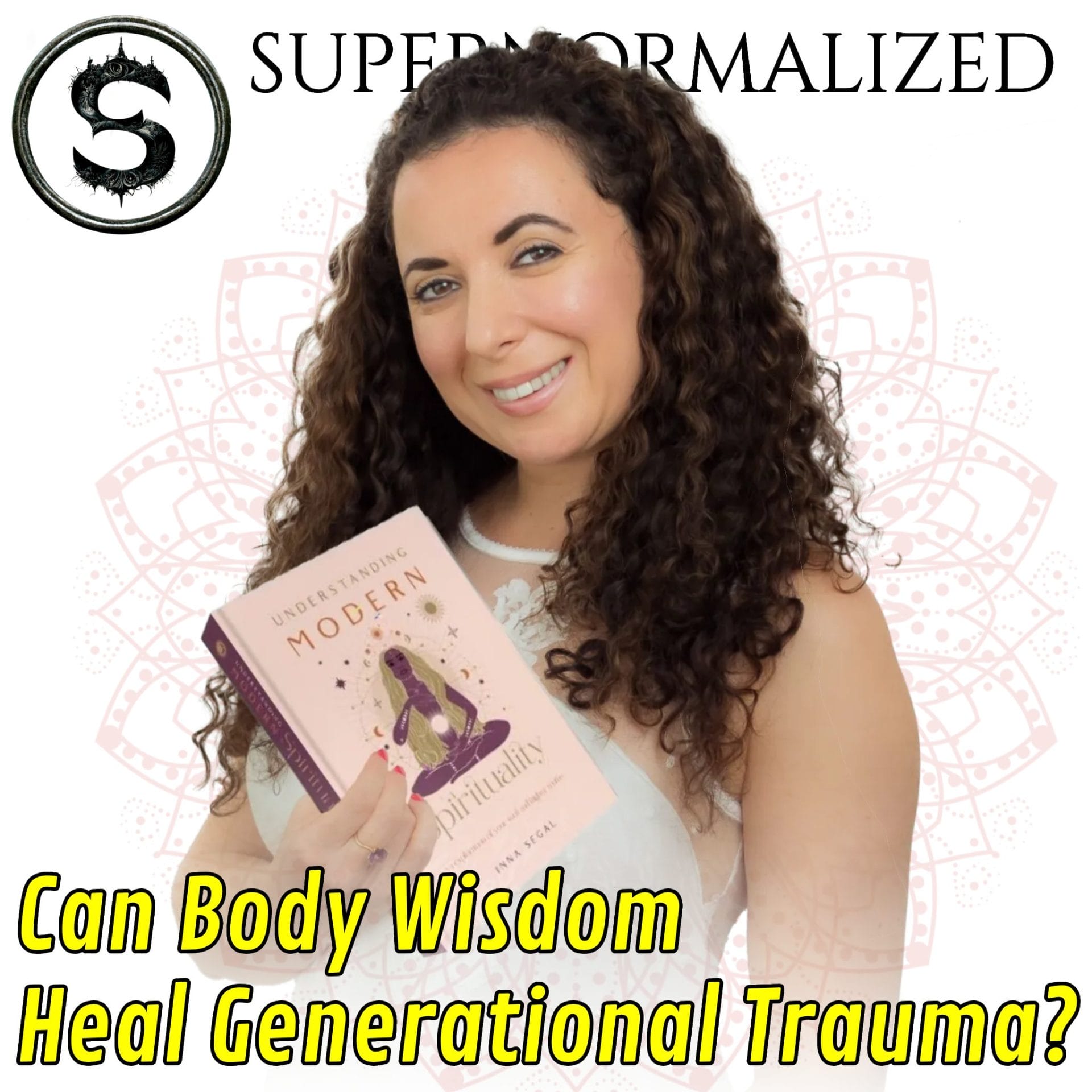
[00:00:03] Speaker A: Today on Super Normalize, we have Inner Segal. She's a powerhouse of a healer that went through her own healing crisis that left her.
Well, first of all, she was basically just almost disabled from pain in her back and skin issues and everything and didn't know what it was. She had no idea what it was. And her intuition opened up after some greater understanding given to her by her chiropractor. And she discovered her way into intuitive healing, being able to visualize what was happening, work with it, and then change it completely. It echoes the story of, I think of the work of Dispenza, Joe Dispenza in his work as well, with a greater understanding and opening up to allowing the spirit to come in and heal the body in different ways. She's gone and written many books and also healing decks that actually help you to nose and figure out ways through your process to find your way. It's a really good episode. Listen all the way to the end. There's a lot of really good points in here about understanding of the body, how it works, how some things aren't actually physical, but are emotional, but storing in the body as pain and symptoms and then how they can be moved on. So if you've been. If you'd enjoy something like that, this one's really good. I'm sure you'll enjoy on with the show.
Welcome to Super Normalized Inner Cigal Inner.
You've had a life of extreme health challenges that you found a way to overcome through getting in contact with your deep body intuition. I'm very interested in hearing your healing journey and how that came about and how you're helping so many people in the world discover their own way towards their healing. Welcome to the show.
[00:01:55] Speaker B: Thank you, C.J.
great to be here as well.
I guess it's been, you know, when I talk about the journey, it's always hard to know exactly where to start because I had digestive issues when I was pretty young. And later on I discovered and understood and put all the pieces together. And the first piece was of the puzzle for me was that I was born into a family that had gone through enormous amount of trauma. So my grandmother had lost her mother and her seven brothers and sisters when she was 13 and survived the war on her own for four years.
Just survived, I should say. And my grandfather ended up in Siberia in a gulag, in a work camp for something he didn't do.
So. And then they didn't talk about it.
And later on, I was. As I was tracing everything back, I realized that everybody in the family has digestive issues.
Whether it's to do with their teeth or it's to do with their actual digestive system, it's pretty much across the board. And I was one that, I was constantly having issues with my stomach, I couldn't go to the toilet, I was bloated. I just was constantly struggling with this even as a child.
And then we moved to Australia from Eastern Europe and we had spent about nine months in Italy and I loved Italy. So I just, I fit it in. I could speak the language very quickly. People just loved me. And so I was expecting to have the same experience when I came to Australia, which I didn't. And so when I came to Australia it was quite the opposite because I, I didn't know one word of English. I was bullied at school and I found it really hard to, to be connected to my own self.
And immediately, well, I should say within months of this I started having psoriasis appear all over my elbows and knees which was also a condition that lots of people in the family had.
But I was, I was really struggling because I felt like I was very young to be, you know, dealing with something like that.
And then I was as I was constantly struggling and saying things about the school. I said to my parents, I, you know, I just don't feel safe in this school, I need to go somewhere else.
And so there were several schools that I, I was just going from one to another. And then I finally ended up in this private school where they had allowed a certain number of people from Eastern Europe to come in. But most of the people were really, really wealthy and I never even come across people that had that type of wealth in my life.
And this was a completely different conflict that I was put into because even though I could speak so you know, I could speak the language, by that stage I wasn't in the, you know, I had not grown up with wealth and my friends and I were really attacked for it and put down and we were walking around in this self protect mode constantly.
And quite a few had developed scoliosis or all sorts of issues with their back. Mine was in my lower back.
And so I started feeling like, oh again, I'm just not quite in my body. My psoriasis was getting worse.
I started having kind of anxiety and just not, not sleeping.
And this kept going and I kept changing schools to be fair.
And this just kept getting worse and worse.
And at one point I met my part, my ex partner and he was really open to, to going to seeing all sorts of different health practitioners. Up until then, I was just jumping from one, you know, physiotherapist or doctor, but now he was open to all of this alternative people. But I was showing up with this kind of. With this idea that I knew nothing and they knew everything and they were going to fix me.
And then I decided.
I realized that I. I got pregnant, and I decided that I was going to keep this child, even though it wasn't kind of in my, you know, not how I saw myself. I saw myself having children when I was 13, not when I was 19.
And that just made everything worse. My whole body just, you know, wasn't, you know, wasn't working the best. And I. I could hardly walk.
My back pain just became so. So inflamed. And then something happened that I never considered, which was at eight and a half months, the baby died. So I. I gave birth, but I didn't even know that it was possible in Australia at that time to give birth to, you know, like, it was a stillbirth.
And I started crumbling. Like, I was, you know, I was in this victim mode. I was crumbling. And then I ended up at this chiropractor's office who, in agony, who basically said, you know, your body's stuck. It's like you. You just want to hold on to everything, basically, and you don't want to get. Get better.
And him saying that just awakened something very deep inside of me, which was. I didn't even understand the word responsibility for my own health, but it was like, oh, you mean there is a language that I don't know, that I don't understand that's in my body? And so over the next little while, I really started connecting to my body in a way that I didn't. Had never connected, which was through breath, through touch, through asking lots of questions and exploring things. And this incredible thing occurred where I awakened this ability that might have been there early on, but I didn't know.
And I was able to see into my own body.
And eventually I realized I was able to see into other people's bodies.
And that just gave me so much insight because I realized that my body was holding all these memories and experiences, both of what happened to me that I've just described, that it kept showing me, but also the fact that my grandparents had gone through this pain and trauma, and it really connected into my own loss.
And I was just a sponge of taking everything in.
And over some time, I just started working through all this, and. And incredibly, the pain left the.
As you can See, I have no psoriasis and never had it since my anxiety went down.
It took quite a while to work on my digestive system, I have to be honest, because that was so intertwined with my grandparents and their trauma, I feel.
And then I realized that I could help other people.
[00:09:40] Speaker A: That's wild.
So the generational trauma from what your grandparents had experienced had embedded itself in the family.
And you, as a focus point of that growing up, got to experience all of the negative sides of, say, the environment that you were in by being in schools with people probably being racist to you and then also being, what would you call it, wealthist.
You know, these odd things all just pressuring you to see yourself in a different way and being pushed to heal. That's. That's. That's really heavy. Now, you said that you learned to see this inside yourself from your experience with the chiropractor.
What do you mean by.
[00:10:29] Speaker B: See, there's just this moment where out of nowhere, just as I was connecting and I was literally really working with breath and touch, and this thought came into my head and it was like, I wonder if I could see my back. I wonder what it would look like.
And in that moment, it just felt like this light switch went on and I literally could see it. I have to say, I was shocked and confused at the beginning because I was like, oh, I didn't expect it. I just. I was very, very skeptical because I just felt like nothing had worked for me at that point. And so when I saw it, I was just. I kind of went, oh, okay.
And then weeks later, my mum was one of these people who was super, super supportive, and she. And I can't actually remember exactly which came first.
So my mom asked me something and also my ex partner's friend came over. So it happened, I think in the same week. So I don't remember which came first, but I was with my mom. She called me and she said, oh, your dad's been at work and he hurt his leg and he's having issues working. Can you do something? And I went, do what? Like, I don't know what you want about it. And she said, well, you've had this amazing experience of healing yourself. Why can't you do the same for your dad? And I was like. Like, I'm not even in the same room. Like he's at home or wherever he is.
I don't know what she was talking about. She just said, you just concentrate. Just focus like you did on yourself and tried. And I thought to myself, oh, my God, she's gone mad. So I'm focusing on my dad's knee and I keep seeing these images of boats over and over and over again.
And I'm thinking, did he hurt his leg at work? Like she's saying, I think it was on a boat.
So I called her back and I said, was he at work or on the boat? Because I really didn't know this.
And she said, oh no, definitely at work because she didn't know this. And then a few minutes later, I get a phone call from my dad and he's like, what are you doing? I said, oh, you know, you know, I've had this healing in myself and mom's asking me to do it for you.
And I just need to know from my own sanity, were you at work? Are you on a boat? And he's like, well, I was on a boat, but I didn't need you telling your mum these types of things.
[00:13:08] Speaker A: Was he secretly out fishing?
[00:13:10] Speaker B: Yeah, he was out fishing. And I remember just sitting there and going, okay, because I was so skeptical and I was like, hey, I didn't make this up. And then around, like I said, similar time, I was, I was actually studying to, to do writing.
So I had an assignment to give to my teacher and we had this guest over and she was a great writer, so she was a friend of my ex husband's. And I said to her, could you just look at my writing? You know, could you have a look? And she was sitting right next to me, next to the computer, and I'm typing. And then I looked over her and all of a sudden I'd never had this experience before.
There was this cartoon looking liver above her head. And I was thinking to myself, oh my God, I've gone crazy again. And I was opening, closing my eyes and she said, is there something in your eye because you keep blinking. And I said to her, oh my God, can I ask you the strangest question? And she said, okay, sure. And I said, do you have liver problems? And I remember thinking to myself, oh my God. When I was at school, I paid zero attention to any parts of the body because I thought, I'm going to be an actress and I'm going to write, why would I need to know anything about the body?
And I did the same with French. Oh my God.
And so when I didn't even know what the liver did, and I didn't know where it was in the body, as I said, I'm saying these things and I'm thinking, this is crazy. And as I said, it she said, oh, my God, I've had it my whole life. How do you know?
Which I didn't know. But at that moment, this image changed. And I saw her grandfather, and her grandfather had been in a concentration camp. I knew it just from seeing the picture. So I asked her this and she said, yes. And I said, do you get nightmares? And she said, yeah, I do.
And then I said to her, I thought to myself, oh, my God, this could be so wrong.
I feel like your issue is, you know, is in your DNA.
And two years later, she actually had all these tests done, and that's what came, came through. But then I told her all this stuff that was very personal, it was about her family that she didn't know. And she said, I'm going to have to call my mom. So I was 21 at that time. She was 25.
So she called her mom and her mom went, yes, everything in a said was true. And so we both sat there after the phone call and she's, you know, staring at each other and she just said to me, feel like I know so much more in the last half an hour about my whole family that I knew in the last 25 years.
And I kind of went, what do I do with this? I, I don't. It's, it's like this is not something I had ever considered would happen in my life. So it's, it's like what I do with this.
[00:16:22] Speaker A: It sounds like you're battling with the inner skeptic with this, because it's like you're like, what is going on? This is happening again.
And it took a while for you to get an understanding of what you could do with it and what benefits it had for other people and maybe even your path in life to help people with this understanding.
[00:16:45] Speaker B: Absolutely. Because I, I, you know, in my mind, I was like, I had actually, at that point, I had written a play and somebody took the play and, and made it into, well, you know, had actors and directed it and so on.
And so in my mind, I was totally focused and committed. I am doing acting. I was doing a lot of acting classes. I'm going to write.
Look at 21. I have this play that's been out and got quite a bit of Public City. And I was very excited about that path. And when this happened, I was just confused. I just kind of went, obviously there's something I need to do with this at some point, but I don't know.
And at the same time, I, I really, because I was writing, I wanted to, I Thought to myself, well, maybe, maybe I could learn things and do some courses around, you know, people obviously teaching about this.
And I can interview a lot of people because I love learning, I'm very teachable.
So I'm gonna try and learn and, and go to these people's workshops and interview them and get to know them and get the interviews published. So I was like, how can I link all this? How can I actually keep doing what I do, which is writing at the time, But I, I'll also learn and then I'm gonna decide what, where this takes me.
[00:18:25] Speaker A: So when you had that first vision of your spine and the pain shifter, did you take any practical steps the next day to actually confirm that was a repeatable healing or how that.
[00:18:34] Speaker B: Absolutely, I was doing it for like, for weeks because the next day the pain had reduced by about 70%.
And I was like, oh, should I just not move? Because it was the biggest relief that I'd had for such a long time. But I'd also had relief before. So, you know, because I'd been to chiropractors, I'd been to kinesiologists and other healers.
So I was like, I wonder if I should just stay in bed and not move or maybe I should connect and find out and ask more questions and maybe I, you know, and so for the next several weeks, weeks, I was pretty much like, what question can I ask today? How, you know, where can I breathe in? How do I connect this to, to all the other issues that I had? And so I, I honestly just kept doing it. And to, to be honest, I feel like I'm still doing the same, well, not exactly the same process, but every day when I wake up, I kind of scan my body and go, what do you want to tell me what's going on today? You know, what's stored?
How do I, you know, how do I keep connected? Because it's so easy to be disconnected from your body. It's so easy to get into your mind and to get numb.
And what I wanted to do and I still, you know, try and practice is how do I be awakened to what's going on inside of me?
Because I really, I studied a lot. I, I am a stud now.
So I understand that, you know, in our first 21 years we kind of create a foundation for everything, our health, our relationships, our own relationship with self.
And then what happens is we have these seven year cycles and we come back in this cycles and we rediscover. What did I suppress and push away and didn't deal with and how can I see this in a new way or a new perspective?
And obviously as we get older, we have kind of we double the cycles. So we might be going through, let's say you're 50, you could be going through a cycle of something that happened when you were 30 and when you were 15 or when you were 7. You know, it just depends on what's connected and what's intertwining. And so as I started to understand that, I went, oh, I have a lot of opportunity here, both to understand myself, but to understand my family and to transform my perspectives, transform how I'm seeing things, transform things through energetically transform it mentally, emotionally, actually in all ways.
And so I went to see this chiropractor six months later after I'd really felt like it was holding because that was my issue. It wasn't that I could never have pain free days, but nothing helped. So I'd have, I'd feel better for three days visiting someone and then I'd be in worse pain.
And this time, after six months, I had no pain to point where I was like, oh, maybe I could wear high heeled shoes. I wonder, you know, because I was very girly in that sense. And I was like, I can, you know, I can do things that I couldn't do before.
And so I went to see him for a checkup to be, you know, just, you know, not because I had pain.
And he said to me, I don't know what you did, but whatever you did, keep doing it, because it's incredible how your body feels, you know, and everything in your body softened and you know, in terms of a spine, obviously he was working around my lower back and, and I went, okay, I needed that. I just needed that acknowledgment from him as well to go, this is, I want to explore this more. I want to go further.
I want to help people.
[00:23:04] Speaker A: Awesome.
It has echoes of the dispenza meditation methods that I've read that I'm hearing in that too. Like you actually get into a focus sort of point of consciousness and then scan your body and then point healing at that body and let the universe look after it. So what are the simplest, most reliable signs someone can use to know their symptom is carrying an emotional message rather than a purely biological pathology?
[00:23:31] Speaker B: Well, one of the easiest things is if the pain moves, does it move around your body?
So if you connect with it, if you were to. And I've done this with tens and tens of thousands of people, if not more and you place your hands there.
And I really do encourage people to place your hands on whatever part of the body where you're having pain and start exploring it by breathing into that area first and then asking questions as the beginner, beginning thing. If you start asking questions and you start going, is there a thought pattern here?
And a thought pattern comes to you and then you go, is this thought pattern connected to an emotion, connected to a feeling? And a feeling comes to you and sometimes feeling numbness is a feeling.
And then you go, if is this connected to any experiences in my life story? And you start to become aware of kind of experiences flashing or memories coming through, then it's definitely connected to, I would say not just an emotion because there's many layers to this, but an experience, potentially several experiences, emotions, because it's not just one emotion, it's all just one thought. But as you start asking, essentially your body's trying to go, oh my God, I've been waiting. So it will to, to give you these insights. So you will start having these insights come into your mind if you have none.
And it's something. And you don't just do it once, because people do it once and they go, ah, never done this before. I've done it once. Nothing happens. It must be physical.
Well, very few things from my experience are just physical.
I mean, you can take a poison and then it could be physical, right? You've just taken something that's poisoned your body and that could be all sorts of things and it, it goes directly into the body and starts causing issues. So that is a physical thing.
But majority, majority of issues that show up physically are not, you know, they're not coming from just a physical perspective.
[00:26:10] Speaker A: So they're emotional and spiritual.
[00:26:13] Speaker B: They're mental, emotional, spiritual. They're, they're based on what we've seen in our lives, what we've experienced, what we've absorbed.
So it's, it's kind of like when children are ill, we really need to look at what's going on in the family.
You know, how are they trying to fix whatever is happening, how are they absorbing? And this is not about actually finding fault with anybody, but it is about understanding that as a child I'm actually in the energy of the person who's looking after me the most in the energy field. And whatever they think and feel and believe, I'm going to start to absorb. And if there's two people or three people, whoever, and they're in conflict with each other. So like when I was born, I was leaving with my grandparents and my parents because you, you know, in Eastern Europe, you didn't have an option of just going and living on your own as a family.
And so I was absorbing what was going on with everybody. And then we had my uncle and aunt next door.
And so whoever's around, we're. We don't have that boundary that we have as we get older and go, no, I'm not like, this is not mine. This is your belief system. We just absorb.
And so as we are absorbing all this, it's affecting us. And then we build on it because now we have developed a particular understanding of how to live our lives based on what our parents and grandparents and whoever's around us thought.
And we're doing that. And so, for instance, with my family, there was always enormous stress around money and finances as I was growing up.
And this was also affecting everybody's digestive system.
So because of, because the stress is often held in the solar plexus.
Interestingly, when I started connecting lots of pieces together, I realized that this is the timeline where, you know, from around 14 years of years old, where we're a teenager now, if I look back, my grandparents both went through enormous, enormous traumas when they were teenagers and then they suppressed it.
So, you know, so we start to carry our ancestral. But also what we saw traumas from a perspective of maybe worry, anxiety in often in similar areas, but not always, not always because there's different parts of the body that have wisdom. And they, like kidneys, hold your ancestry, the blood holds your ancestry. And so when we start to understand, we start to go, oh, there's wisdom that the body is trying to share with me.
[00:29:27] Speaker A: Can you walk us through like a concise version of the body mapping process that you have?
[00:29:32] Speaker B: So. Well, if it's somebody, I mean, I can talk through what all the different parts are really saying. And also when somebody has an issue.
So just to understand, firstly, we need to understand the basics of the body. We need to understand that our minds are, you know, in a, like, we connect to our thinking in our head. So this is a thinking area. Right. So everything to do with listening, hearing, thinking, logic is connected to the head area.
And so and the brain, obviously.
So when we start having issues around the head, we start going, is there overwhelm where the brain and the head can just cannot hold it. Too much going on, too much stress, too much pressure, we're pushing ourselves, we're straining too much, and we're just not coping with life. And so this is where nervous System problems occur. This is where problems with the head and the brain, including Alzheimer's, like my grandfather, ended up having that because, again, it was obvious to me that he.
Rather than talking about what went through and processing, he would make jokes, he would deflate, you know, all of this. And this is also how depression occurs. So this is an area that is so connected to all our thinking and what. Our perspectives on life and also what we hear through our ears and what we take on and what we see through our eyes and even the, you know, even the smells.
So this is kind of our, you know, how we.
Our foundation in terms of how we think about everything, whether it's logical or illogical.
And then we have this area coming from kind of the chest and the heart that is all connected to feelings, you know, and it includes the solar plexus.
And so here we're looking at the heart and we're going, hold on. Well, the heart is about intimacy.
It's about our relationships. It's about our connections. So what we hold here and in our chest is all about our relationships with people.
So when we. When we are hurt, when we are rejected, when we feel that, the grief and sadness, we hold it in the heart and the chest. So we start to understand that. And it's the same thing in our stomach when we feel intense stress.
It's like something happens with your children and you don't know what to do with your partner, and you're trying to figure it out. We often block this area, and we just. We. We absorb other people's stresses in the solar plexus.
And so we start to look at the body as this wisdom, you know, and then we might break it down to the left and the right side of the body and might go, well, the left side of the body is connected to the heart.
And the heart is much more of a feminine kind of essence. And so is the spleen. If we're looking at the organs and where they are, it's all about us, you know, being softer, being more open, being more understanding.
And all of us obviously have the feminine and masculine. We're not saying feminine as in a female. We're saying qualities of internal reflection, of love, of self nurturing, of self connection, of creativity, of, you know, who am I?
And then we have the right side of the body, which is much more of analytical, masculine, part logical. Let's get things done.
And so here we're looking at, you know, in particular the liver and how it functions and what it does and that.
And we're you know, and all of this that I'm talking about is not something I've just made up. I've tuned into it.
But so many, you know, like, we have Chinese medicine, and so much that is saying similar things.
[00:34:14] Speaker A: Yeah.
[00:34:14] Speaker B: And so as we start to break things down, we start to understand, oh, this is what my body's saying, that if I don't communicate and push things away, I'm gonna have problems in my neck. But I. You know, we have sayings like, he or she's a pain in the neck.
Right. We already know that in the language.
And so, you know, we understand if. If I push, if. If I cannot communicate with that, I'm gonna say that to people.
So I'm very logical, and I love logic. And so for me, it was always like, how do we bring wisdom? One of the things I did find when we start to look at the. The mapping, so to speak, of the body, is I wanted structure. I really like structure.
And what I found with emotions that very few people have ever thought about is that if we say.
Let's say, well, if I ask you, what's an emotion you struggle with?
[00:35:21] Speaker A: I actually don't think I struggle with emotions. I do a lot of meditation. So a lot of things just are really easy for me. Most of the time, I actually get surprised by people being angry. I think it's.
I find it amusing, and I don't know why.
[00:35:37] Speaker B: Right. Okay. Well, if you. If you were to experience, for instance, deep grief, would you find it hard to be super vulnerable and feel and really go through the layers of grief? Because most people do. But you may not.
[00:35:54] Speaker A: I feel it, but I'm allowed to. I allow myself to let it flow through me quite easily because I have a cosmology that allows me to know that this. This experience is very temporary.
And I've got lots of friends on the other side. I. I have contact with spirits all the time. So me. To me, it's normal. I'm like, well, they're not dead.
They're just elsewhere.
So. Yeah.
So I think that makes it easier for me.
[00:36:22] Speaker B: Right. So let's say most people have. They.
When. When you talk about vulnerability and going through the depth of sadness and grief, they are very fearful of it.
And what they'll do is they'll generalize it, and they'll go, you know, I am really sad. And what I would say, okay, where is the sadness?
And they would go, okay, I have some sadness in my chest. Okay.
And then I would go, where else? And they would go, I feel Sadness in my throat.
Okay. Where else is there anywhere else that you feel sadness? And they would go, kind of feel sadness in, like, in my kidneys.
And so it depends on the depth that we'd go to. And I would say, well, can you recognize that it's not the same sadness in your throat as in your chest, as in your kidneys? And they would go, yeah, it doesn't feel the same. And I was like, what's the story? Let's. Let's look at the story.
And they would go, well, here I'm really sad that I couldn't say something to this person in a way that they could hear me.
And in my chest, I feel like I did something, and I'm really sad.
I feel like I need forgiveness, and I haven't forgiven myself.
So I've done something and I've never told anybody.
And in my kidneys, I don't even know, but it feels old and heavy.
And so I would be going, the more detailed you become, the more you can actually work with something and understand it, the more generalized you are, the more you're gonna go round and round in circles. But as you become detailed, you understand.
And I started going, well, let me look at what. What has been done in psychology before?
And so really, I really connected to Jung's work in a sense of archetypes.
And I had been, you know, exploring archetypes from. From when I first discovered this.
But I wanted to go deeper because, you know, because I always want to kind of connect things in a deeper way. And I realized that a lot of these archetypes were connected to certain timelines, but also they had this story that they held, and then they had the emotions, and they had a very specific way of seeing and experiencing life.
And some of them were very stunted in people where they just. Just didn't grow because we ignored and pushed them away. And some of them were. Grew into really wise parts of us.
And so I realized that I can really help people by helping them to. To see the structure. And rather than going, I have this.
I am like this.
Separate that and go, there is a part of me that is like this.
And how do I befriend this part and understand?
[00:39:46] Speaker A: Sounds like the.
I am like, this is like a diagnosis and that's only a box you've put it in, rather than expanding deeper into the story that underlies all of it.
[00:39:56] Speaker B: Exactly. And, you know, and this is where, as you just. With your question earlier, it's like when I create a map for somebody, we're always looking firstly at the center. What is it that you really want to work on? Let's specify it and then let's start to go which aspects and parts are connected to this story.
And let's then work with both processes as well as, you know, archetypes that help you to grow and help this part of you to change that perspective so that all of you can. Can then get to more wisdom.
[00:40:46] Speaker A: Yeah, yeah.
Are you able to tell the difference between a present life imprint and an ancestral transmission that's lodged in the body?
[00:40:55] Speaker B: Well, very often, yes, just because I am also aware which parts of the body hold this, you know, so when I, if I was to explore it with somebody and they're telling me that things are, like I said, in the kidneys, immediately I'm looking at.
I feel like, let's explore what happened with your ancestors.
If it's, you know, if they're having a lot of intestinal and stomach issues. I know it's a combination. And so I'd want to look at both. Both. Obviously you always want to look at both. But you know, for sure, if it's a blood issue, a hundred percent that I would look at both because I just know that blood's connected to it.
But, and also if they were born so, so, you know, like, they're, they're, let's say they're born with eyesight issues.
I'm looking at, well, who in the family has this or, or they discovered it at 6, you know, that they're. The vision is blurry. So then I'm really interested in connecting all the pieces of the family together. So the answer is yes, we can, I can definitely tell.
[00:42:09] Speaker A: Yeah. I'm curious then, because if you're going into present life, family imprinting, that could get a bit hairy if you're trying to unwind it and they.
That affects the whole family because, I mean, if you can unwind it in one person, do you, you ever find there's blowback in the whole family when things change?
[00:42:30] Speaker B: Times. But I also often find that it's so much better, like, because as you unwind as one person does, I mean, there's two things that can often occur. Either people are really open to it or they shut down and they become very threatened by it.
[00:42:48] Speaker A: Yeah, right.
[00:42:49] Speaker B: You know, and, and you just have to.
I guess it's about navigating and also going.
The person that, who wants to do that work also needs to learn how to have boundaries and what is a healthy boundary. And also because I've had this in my own family, where I've gone, some people have gone, oh, my God, I love this. Amazing. And others have been quite attacking. I should, you know, and in there, you know, there was a lot of.
There was a sense of disappointment and kind of like, oh, my God, I really thought that I was helping this person, and they've turned on me and then realizing, hold on a sec. But they're seeing things in a completely different, opposite way to me.
And the only way that I can work with this is to have a healthy boundary by actually understanding that we're so different and their journey is really, really different, and that's okay.
And I, I.
And I think in that point, you can let go of a lot of stuff because you just go, I understand.
Just because we're in the same family doesn't. I guess what it means to me, having studied it from all different perspectives, is that we have some kind of a karmic exploration here that we can do. But it doesn't mean that I have to be there for them to treat me badly, you know, because they don't understand.
[00:44:30] Speaker A: Yeah, yeah. Let them understand in their own way. That's okay.
[00:44:34] Speaker B: Yeah, exactly.
Where can it. From afar.
[00:44:38] Speaker A: That's it.
[00:44:38] Speaker B: Love them.
[00:44:42] Speaker A: So many listeners have done years of therapy without any durable change. What one thing are they most often missing that your work can address?
[00:44:51] Speaker B: Archetypes. I really feel like, yeah, they're missing because they're just talking, you know, they're talking through therapy and they're generalizing as opposed to really specifying and going, let's say somebody has depression. Right.
From all my study of depression, it usually happens either because you've had a really intense trauma and you're just like, oh, my God. Or it happens slowly through childhood.
And what people want to do is they want to work on it directly on now, like, tell me a story. And again, tell me, sorry. And it's like, how many times can we say the story? And they're. They trying to use the head as opposed to realizing that even though it might affect you around this area, it actually affects the whole body.
You, you need to find where these, these aspects have started.
And then there's people who say, well, we just need to go to the root cause, which I can't stand as well, because I don't believe in that, that there's one root cause. I believe that there's seeds that create foundations of challenges that then potentially erupt into something physical or mental or emotional.
Because there's been so much that have been created and Unwinding this is understanding that it's not like we can go to every tiny experiences, but we might be looking with five or six very particular timelines in your life where you're holding something around, you know, a trauma or a storyline or even a physical condition. If I can give a quick example. I was working, I had rarely do one on one sessions now, but I, one of the things that I've been doing is to help people connect some of these pieces is these sessions where, where I can guide somebody towards what's really going on for them, you know, where they should work.
And there was a lady who had done some work, we had done some workshops with me online and she was maybe mid-70s and she said, I have issues with my bones, but I, you know, and she was talking about osteoporosis and I'm working on my inner child and I just, you know, I can't seem to get any, you know, changes. And I'm also taking, you know, doing all this physical stuff and taking all the supplements and things are just not moving.
And I said to her, hey, so when, when did this start?
When, you know, can we look at this?
And she said, well, in around 2000 when I lost my job and I was told that I'm not going to be able to work with women. And she was a midwife and a nurse and she said it was almost like everything kind of started to fall apart and, and for whatever reason she believed it and struck. But you know, it's kind of struggled against it, but it really affected her.
And to me, bones are structure.
And I know that when the structure of your life is either kind of is shaken, let's say there's often issues with bones or spine or all sorts of things that happen.
And so I kind of went, oh my God.
Well, you know, inner child is really important. She said, well, you know, I felt like when I was younger I was mistreated and I, you know, and my feminine was kind of suppressed. And I went, it's great. And it's, you know, working in the inner child will help you with that, but it won't help you with the bones. So if you're trying to work on the bone issue that is like it doesn't matter how much you work on the inner child, that's not what's going to help you because that's not connected to that.
Not especially, like, not in this story.
And you know, in your story you need to be working on the feminine and the masculine parts of yourself and sure, oh My God, how would I have ever known this?
And part of this, why I do what I do, is to educate people because they don't know this. And so they try things and. And whether it's talk therapy or other therapies, and they're going round and round and round in circles because they're actually not working on the thing that causes it, you know, and we had to connect and go, but what's causing it now? Tell me about, you know, three years ago. And she said, oh, this happened with my, you know, my son. And, you know, now something else happened. And so as people connect things, they go, oh, my God. I actually now know what to do within, you know, within.
Building my internal self.
Yeah, building it.
[00:50:28] Speaker A: Wow. So when people are working with you and they're going through this processing and they uncover all traumatic memory, for example, is there a way that you work with them so they actually can process it even if they don't feel fully safe in that moment?
[00:50:43] Speaker B: Well, well, I think the safety is so important.
And so when they're working with me, and often at this point, I'm doing a lot of online kind of courses, and what we do is, because I understand what you're saying in terms of safety, is I try to guide them before we ever get to the. That trauma release, to a place of having that sense of trust with me and that I can guide them one and safety in their own wisdom and knowledge. And so we'll work with things like let's strengthen our sense of self, and let's understand what that means first before we dive into a huge trauma. And, you know, and let's create kind of little rituals where we'll create a circle, and I'll call it the circle of safety. And I'll say to people, well, before we do any trauma release, we're gonna. Because I. I actually guide people through processes when they're standing rather than sitting or lying down.
And part of this is to be in your sense of self, because as I'm talking to you and I'm. I'm sitting, I can feel my stomach is kind of, you know, like, you know, different parts of my body are not fully awakened. You know, I'm. I'm kind of not breathing as deeply as I would if I was fully connecting to my whole body, you know, and I'm not standing on my legs. You know, I'm just kind of doing something. And so we also have subtle bodies that work much better when everything is aligned and we're actually standing and we're in Our, our, let's call it sense of self or I am ness.
And so really guide people to stand in that space and develop that first. And we do all sorts of processes. I'm a big, big fan of Rudolph Siner's work and he taught something called Eurythmy.
And Eurythmy is actually how to connect both to your body and also to the higher being spiritually.
And so we will do, each time before we enter into this circle of safety that I talk about, we will do processes to connect us to our sense of, to our heart, warming our heart, our strength, our wisdom.
And I'll say to people in that space, anything, you know, you can explore anything.
And when you step out, you're going to step back into your wisdom. And so we'll ground, we will, you know, do these in gestures that, that awaken and connect us to these beings and ourselves to make sure that we're, you know, we're safe in the experience. And I don't push and force. I, I'm against any pushing or forcing of any old traumas as opposed to meeting it and discovering it in the time where your inner wisdom allows it.
[00:54:09] Speaker A: Yeah, I was just thinking about that from other experiences I had with working with spirits. And it's like I got to a certain point where they put it simply one day, they said for you to really get all of this, you have to allow rather than project your understanding because projection is assuming, you know already. Whereas when you allow it, we can teach you.
[00:54:38] Speaker B: It is, it's such a powerful thing because that you've just, you've just said, because it's, it's that teachability, it's that openness. And, you know, if we, if we were to, you know, and I know we're probably out of time for this, but if we were to ever explore the, the whole spiritual world, which, you know, I wrote a book, Understanding Modern Spiritual, on this. You know, in there, so many people, the reason we have so much confusion, so, so much confusion in our kind of spiritual belief systems and understandings is because people do exactly what you've just said.
They actually believe that the spiritual world is the same as the physical. And what they'll do is they'll, they might have a connection to a spiritual being, but they'll project their own understandings or something they've read, as opposed to being open and actually receiving and learning in that way because they're scared. And so, and, and so they will not risk actually get the real truth because they're just projecting what they want it to be, you know, and. And then saying, well, this is what I've received. And it's like this is where again, where we have to learn to be one, discerning from what we hear from other people.
And two, actually logical. There's so much logic, right. Of it makes complete logical sense that if we want to learn about the spiritual world, we're not putting on our ideas, but actually being open and exploring to the higher beings and what's possible.
[00:56:23] Speaker A: Absolutely, I fully agree with that. Now look, you've written a lot of books and also you have your tarot decks or card decks, I should say, that you use for like a single pool function sort of diagnosis. How does that work with a full body mapping session?
[00:56:39] Speaker B: Well, with the cards, I feel like when a person is really clear on what it is that they're exploring, and I have so many different decks now to give people guidance, essentially. So I've just had ancestry healing cards that are coming out this month.
And I had a friend over recently, and so she's had a lot of issues around family.
And so we pulled a card and she just went, oh, my God, I'm going to have to sit with this and I'm going to have to go deeper into this exploration and this understanding of what. What's going on.
And I really feel like cards are there as reminders and as kind of as giving us guidance. And so I have ones on color. I have ones on more of kind of understanding our healing journey and archetypes. I have ones that are connected to. More to do with our heart and, and heartbreak and when people have, you know, really disconnected from their feelings and themselves.
I have one to do with more understanding karma and spirituality and destiny from, from that perspective and how things work more spiritually from all my study. And again, I always say to people, you know, this. It's still your journey, obviously, to discover.
So I feel like each one kind of gives, you know, guidance and, and there's more that I haven't said, but each one gives guidance based on whatever it is you're. You're dealing with. I have one on understanding the wisdom of your soul in relation to emotions and how that shows up.
And so as people obviously kind of go, where am I at?
We might go, well, let's pick a card on ancestry and one on. On the heart and one on just what's happening to you at the moment. And this gives them some guidance to go away with because I also always put processes.
I just feel like you've got to Take charge of your own health, you know, which is what happened to me. And so.
So they go away and. And they have an opportunity to. To keep the.
The expansion going and to also keep coming back and going.
This is where the challenge is lying, because I keep getting the same card or I keep getting something the same that's guiding me. You know, my daughter and I have this connection where whenever we have some time together and she comes over, we're like, you know, do you want to do. You know, do you want to do a reading? And we'll do it on each other.
At times, the things she said to me, I've gone, oh, my God, wow. So you see that from these. These cards.
And it also. I feel like if you do do it with people that you. You're around, it, it's not as direct.
So it's like, maybe she could have told me some of these things and gone, hey, mom, you know, I think you could do this or that. And I've gone, whoa, that's too much. But when the cards show it, it's like, oh, do you reckon? Okay? Yeah, you're right. I could be doing this.
I could be seeing it in a new way.
[01:00:26] Speaker A: That's great. It sounds like a nice bridge for healing for people when they maybe even have some blind spots.
[01:00:34] Speaker B: Yeah, for sure.
[01:00:35] Speaker A: So, you know, we've actually come to the end of the podcast, and we've only got halfway through my questions, so maybe we'll have to have another chat.
[01:00:43] Speaker B: Definitely. That would be great.
We could do it in person.
[01:00:48] Speaker A: Yeah, that'd be great. Yeah, I'd love to do that. That'd be fun. Okay, so it's really good talking to you. How can people find you and your work?
[01:00:55] Speaker B: The best way people can find me is to go to my website, which is innaseagle.com but even a better way is to go to innessiegel.com masterclass masterclass. And actually explore.
I like to kind of give a lot. So often when I do masterclasses on different topics, I take some time to do processes with people so that they can literally, whatever I'm talking about, whether it's archetypes, whether it's pain and how to heal pain and how to connect and understand the wisdom of the body, or particular topics, such as I'm actually going to do one on sole purpose, which is going to be really interesting, and how we receive it and how we block it.
So with all of this, we have processes where people can go, oh, my God, I can feel this inside of me. And either this works for me and I want to go further, or it doesn't. And maybe, you know, I need, you know, I. I'm not the right person for them, or it opens the door for them to find another teacher.
You know, we're all different, so, you know, we might go, this person opened the door. But now I'm, you know, this is why I'm here. This is why I've gone down this path.
And so what I really want is to inspire people to just to discover that internally there is so much that they can do and transform in their lives if they are guided how to. And whether it's me or somebody else, you know, we want people who think for themselves. We want people who are empowered and inspired and who actually, you know, I guess, in my journey, who become their own inner healer. And this is why my kind of foundational program is about awakening the healer within. Because I don't want to be your healer. I want you to be your healer. Right.
I want you to be able to create maps and put all the pieces of the puzzles together and know yourself in ways that nobody else does. Because that's how we grow. That's why we're here, I really believe, is to really grow.
[01:03:27] Speaker A: Yeah, Brilliant. I'll put the links to your masterclass down below there in the show notes as well. And I thank you so much for what you've shared today. It's been appreciated and, yeah, again, wonderful. Thank you.
[01:03:43] Speaker B: Thank you.
[01:03:44] Speaker A: All right, I'll just say goodbye to the listeners. All right. That was perfect.
Yay.
I really like the way you explained all that. We've only got halfway through my questions. It got so many questions, and I'm looking at them going, wow, there's so much stuff we haven't got into. I wanted to get into talking more about your work with doctors and as a clinical interface as well, and also about emotional depth and trauma and then more about your books. And then, yeah, we're going to talk more.
[01:04:17] Speaker B: Yeah, I am definitely open to doing more of this.
[01:04:22] Speaker A: Excellent.
[01:04:23] Speaker B: It's great. And I'm loving it. I'm loving it. I mean, my, you know, cycle of doing podcasts at the moment. And so I just. Just, you know, I'm so enjoying the, you know, the different. The variety and the ability to share with different hosts like yourself, you know, from various perspectives. And then quite a few have gone, can we do this again? Because there's more that we want to explore.
[01:04:57] Speaker A: Excellent. Well, look, I've got your email, so what I'll do is I'll pop you an email and we'll. We'll see if we can figure out another time and if it works for you and your partner and we can, you know, catch up in person. Brisbane, or if you're coming up this way, to Tambourine. My wife's a shaman as well. She actually uses your book Secret Language of the Body, so I think that's great.
[01:05:15] Speaker B: Yeah, well, he has a motorbike that. He's like, I love going down Tambourine Mountain. And other.
A while ago I was like, do you think I can sit on the back for that long? And he's like, maybe.
[01:05:34] Speaker A: Yeah. From Brisbane, Sometimes the traffic is a bit bad, but the roads at the end, where they're nice and windy. They're nice, but.
[01:05:42] Speaker B: But, yeah, you know, let's. Let's explore whichever way. Depends on the timeline, you know, because.
[01:05:49] Speaker A: Yeah, for sure. I know you're a busy person. I can understand. Understand that.
All right, thank you and I hope you have a lovely day. So when you leave the room now, just hit leave. Don't close your browser, and I'll then record the intro and the outro for this show and I'll edit this up. You're actually due to come out on the 7th of January for this one. So it's perfect timing, I think, because that's when people are starting to think about making good change for their lives. So, yeah.
Yeah.
[01:06:16] Speaker B: Thank you.
[01:06:18] Speaker A: All right. All right. Have a lovely day.
[01:06:21] Speaker B: It's so nice to talk to somebody in Australia.
[01:06:24] Speaker A: Yeah, it is, isn't it? No, I was like. When I saw the time, I was like, 9:30, and then I looked and went, oh, Brisbane. Oh, my God. She's just up the road. That's great.
[01:06:34] Speaker B: Yeah, thank you.
[01:06:36] Speaker A: All right, see you. Oh, you got to click Leave. Hello, Hello.
Oh, there we go.
[01:06:42] Speaker B: All right, so do you want me to press leave just so that I know?
[01:06:46] Speaker A: Yeah, you have to click leave.
Thank you.
[01:06:49] Speaker B: Thank you.
[01:06:50] Speaker A: All right, bye.
What a great talk with Ina. I. I gotta say, we only got halfway through the questions, so I'm hoping that we can actually meet up again soon. We both realize she's only up the road from me, which is in Brisbane, and I have invited her and her husband to come down and he can. She can have a chat with. With me in person, which would, I think would be a nice way to have a second episode. So hopefully we can actually make that happen. If you've enjoyed today's episode, reach out to Ina on her website. I've provided a link down there on the show, notes to her mystery school.
And yeah, take it up. I'm sure you'll actually learn some more things about your body and how you can heal yourself and the processes involved in that now. Also, if you've enjoyed today's show, remember to like and subscribe.
And if you're on a podcast app, give me some nice comments. If you're on YouTube, why don't you just leave me a comment and tell me where you are? That'd be really. That'd be really awesome. I don't get many comments about where people are in the world that are listening or watching, so if you could do that, I'd really appreciate that, too. So thank you so much. Until next episode, it's bye for now.
[01:08:03] Speaker B: It delight.