Episode Transcript
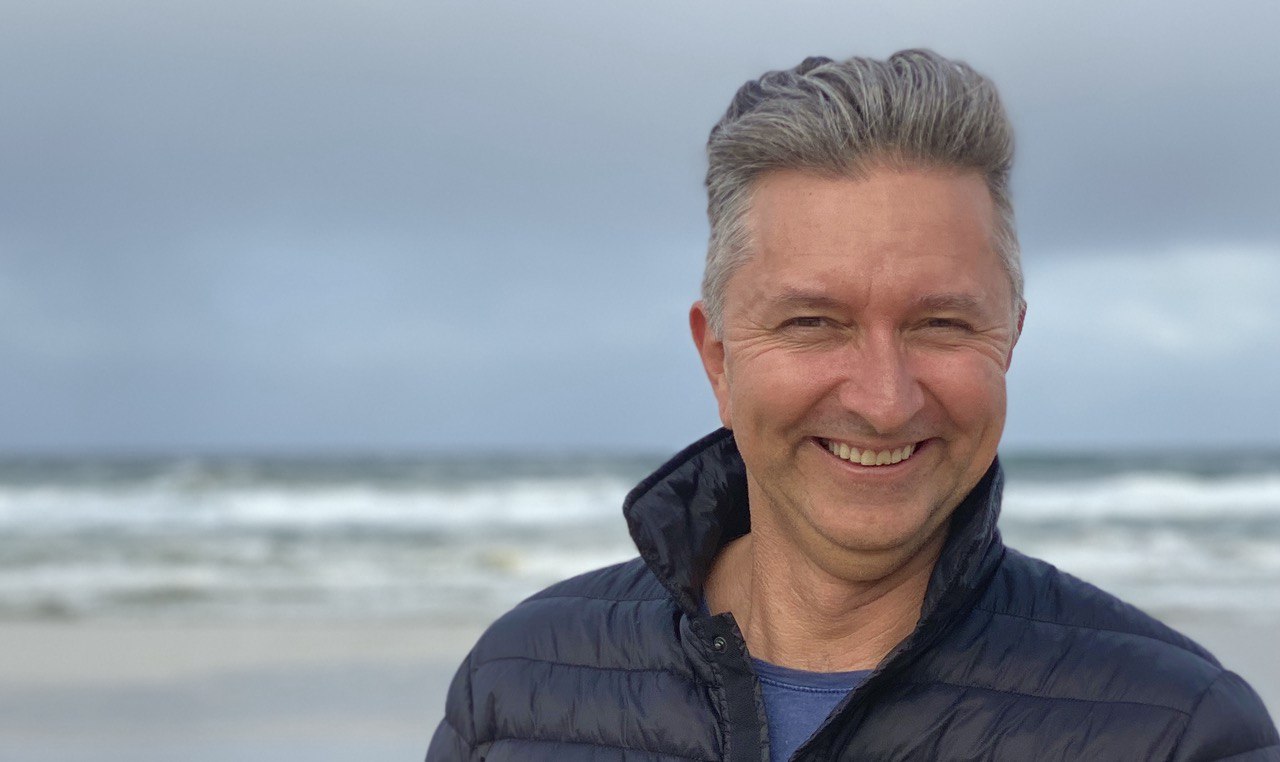
[00:00:00] Speaker A: Today on Supernormalized, I have Graeme Skidmore. His work is compelling in that he speaks both to the practical and to the profound. He brings executive level insight, lived wisdom and grounded vision for how people, teams and organizations can support individuality, restore agency, and create healthier ways of living and leading. You'll hear about his turning points that changed his life path, how he thinks about consciousness and Earth's intelligent design, and why he believes AI should support human intelligence rather than replace it, and what it really takes to build people centered systems that serve life. Stay for the full conversation and by the end of this episode, you may see burnout differently. Rather than it being a curse or a prison sentence, that actually something that is a gift that changes you and helps you to walk away in a clearer sense of how sovereignty, healing, innovation can work together in your everyday life.
[00:00:52] Speaker B: Enjoy.
Welcome to Super Normalized. Graeme Skidmore. Graham, you're an experiencer, a person that's sort of like connected more to your intuition now and you're finding your way in life and you're using that to help other people. Welcome to the show, cj.
[00:01:09] Speaker C: Thanks so much for having me. Yeah. Learning to lead an intuition led life versus cognitive or logic has definitely been an interesting transition, that's for sure.
What, what drove you there?
[00:01:20] Speaker B: I mean, you've had a story of corporate burnout and then rediscovery of self. What did that look like for you?
[00:01:26] Speaker C: Yeah, I'll try to give an overview here and we'll, and we'll take it where, wherever seems interesting to you. So I wasn't one of those people that grew up recognizing that I was hearing, seeing, experiencing, feeling things differently than anybody else or like I didn't have imaginary friends. I remember seeing things I don't remember. None of that was really resonant to me. I just always thought of myself and understood myself to be a quote unquote, normal kid, albeit a person. I'll be quirky or socially awkward. Right? As I continued to get older and was brought up in the United States in a, in a very traditional understanding, which is you're the man, you're supposed to be the provider, you'd be the cornerstone. Your value in life is what you can provide. You go, you do, you get a job, you provide. And ideally you want to gotta be known for more for your brains than strictly your brawn and go out there and work hard. And that was kind of what I was brought up with. And so now, you know, I was like, all right, so after I got out of school, High school, traditional schooling. I didn't get along. So I fortunately fell into a career that made a lot of sense to. And I did, did well at. I did just that. I checked the boxes that I was taught to do. I got the nice car, the house, the country club memberships, the, the income status, et cetera. And at the height of my. But at the height of my success was the height of my misery, was the height of my burnout, was the height of, of, of my lack of fulfillment, I didn't even know who I saw in the mirror anymore. I can remember being in Starbucks with the CEO who I reported to. And it was like, sometimes I feel like I didn't know who I am anymore. I just feel like I'm a conglomeration of learned behaviors and habits to try to figure out how to fit in, right? And this doesn.
And so after a certain point in time, got to a point where we had a meeting and he's like, this isn't working. And I'm like, no, this isn't working. And he's like, I would like to make some changes. And I'm like, all right, well, I'm going to go, right? And that was a big surprise to all of us because I'd been there for 21 years. I was in the C suite of a 20,000 person organization. You know, I didn't come from ecology, so there was a bit of a success story like, hey, you can come here and be successful in this organization without having to have go through the normal channels, blah, blah, blah. And so it surprised all of us. And so I left and I said, all right, if I played the game the way you're supposed to. And I checked all these boxes and I feel like, crap. Something's got. Something can't be right here. Something's got to give. I got to learn how to play this game of life differently or something, because I'm only at this point in time, like 40 years old or 41 years old. Spending another 40 years feeling this miserable is a no go for me. So I got. I gotta figure this out. So I went and understood myself with my health. I said, okay, let me go figure out what's wrong. Quote, unquote, what's wrong with me. Let me go fix myself. I'm doing air quotes for those not watching so that I can feel better and kind of go back to work. Because that's what I was my understanding of my role in life was supposed to be. So I went through the Western lens and they were like, oh, yeah, so, you know, so I was diagnosed as autistic adhd, dyscalculia, dyslexia, alexithymia, and these glasses are Erlen. Yeah, right. And so I was like, all right, all right, that's enough. I don't need any more, right? And initially it was helpful, right? It gave me a different vernacular. It allowed me to put words and feelings or words to feelings, words to emotions and experiences and things, and allowed you to speak from that. But just the same way that words can lift us up and, you know, they can bring us down. And so what I found was the more that I kind of leaned into these labels as understanding myself and my identity, the more that I also started to bring out the symptoms. And then, and I'm going to call it, call it the quote, the unproductive aspects, right? And so all of a sudden I found myself living a much more fearful, anxiety based and scary life, which then led, you know, which. Then again I had that same conversation I had before, which is, wait a second, you're. Holy crap. If I just went through and thought that I understood things and playing the game of life differently and okay, I just had these things wrong with me, but now I feel even worse. This doesn't make me feel even more excited about my future either. So something, again, something's got to give.
And so a friend of mine, who ironically I also happened to work with at, at my former company was like, hey, you know, you're like really psychic and stuff, right? And I'm like, and again, I understood these things from a sensationalized perspective. Comics, sci fi, stuff like that. I'm like, what are you talking about? No, I'm not, I don't understand any of that stuff. You're crazy. And I didn't really believe it. I never had any interest in spirituality or woo woo. It just wasn't of interest to me, right? And frankly, I scoffed at that stuff because I was the corporate executive guy and just had all the answers because I had money, right? Boy, you know, was I wrong there. So then I understand myself through different lenses, right? So I started understanding myself through the lens of spirituality, Eastern, indigenous as well as western. And it was only once I started to recognize myself as an individual with an individualized physiology, with my own life goals, that and undertaking an integrated approach that I started to heal, that I started to become happy, that I started to feel empowered, that I started to be productive again and started to feel comfortable in my own skin. And in doing so, along the way, I started to learn and understand My gifts and abilities and unlock additional ones and come to understand my life, the game of life, differently, what I'm meant to do for my next chapter of life here and now. I'm starting to reemerge, stepping into the stage of that next chapter of life.
[00:06:15] Speaker B: I would also throw into there that I think that a lot of people don't realize it, that a lot of those prescriptions of who we are according to society are actually curses. And you'll think you fell into that curse, which was the. All the labels. And then deciding those labels were true. And there are another conditioned loop that we need to escape from, because they're
[00:06:34] Speaker A: not all exactly true.
[00:06:35] Speaker B: They're only part of the story of who we are.
[00:06:37] Speaker C: Absolutely. It's. It was. Yeah, that was a. Shedding labels. Shedding conditioning has definitely been one of the most important, impactful and critical places where I've spent time.
[00:06:49] Speaker B: So how did the Season of Awakening challenge the identity that you had built as a corporate executive?
[00:06:55] Speaker C: Man? Everything. Everything that I understood about my life has been blown out of the wall. Oh, you kidding me?
You know, I came to understand myself ultimately as a being of consciousness, rocking a human suit to have a physical experience.
And so which was obviously very, very different than the go get a job and go make money world that I understood. Right. And I. And. And recognizing my experience here on Earth as a living and learning environment or as a classroom and leaning into what. How to listen to it, how to recognize that things.
That what I was learning so that I could recognize how things were happening for me and not to me. Right. Was. I mean, that was. It was a total paradigm shift for me.
[00:07:36] Speaker B: So as a part of that story, you actually rediscovered your own sovereignty and the potential human you could become. When you say the power is always meant to reside with the people, what does that mean to you in practical terms?
[00:07:48] Speaker C: Boy, so in practical terms, what that means to me is right is again, this is the world's upside down right now. We have almost. We have people as property, frankly. Right. We have people as property of governments, of hierarchical structures, of quote, unquote, subject matter experts.
We're evolved, taken it where people are meant, are expected to give up an aspect of their agency, of their free will, of their choosing to others that are quote, unquote, no more than them and no better for them to be able to improve their lives. When the reality is we all have, through our own divine nature, have access to all of the tools, information, and teachings that we need through our surroundings. That doesn't mean that we don't come across subject matter experts and that subject matter experts aren't important. But there's a very big difference between hey, you're a subject matter expert and I'm going to learn from you versus you're the expert and now I'm beholden to you and I can only get to a certain place through you. Right. Those are very different dynamics. Right. And so restoring power to the people means helping people to recognize and to to realize how the divine provides that learning for them without them having to be beholden to any structure, entity or individual in order to experience their healing and to realize their potential.
[00:09:04] Speaker B: Yeah. I would say that what's happened in society is that we've been led to idolatrize power and to accept that the adults in the room know best and then we're all just the children. Which is ridiculous because you know, considering what you've just said, we are all have our own understanding and our own life path to live and we should be doing that with freedom for pure self discovery.
[00:09:26] Speaker C: I think that that that conflict between the man made intelligent design and the divine intelligent design is a source of many of the problems that we experience here on earth today, frankly. So.
[00:09:35] Speaker B: Yeah, yeah, exactly, exactly. What do you think causes people to lose touch with their own agency and inner wisdom?
[00:09:42] Speaker C: It's for some it's losing touch, but I think for most, or what's probably more common is that people don't even recognize they ever had it.
Right? Because especially at least in the western world, when we go to school, we go to gym class to learn how to be physical, we learn how to be in, in shape, we learn how to build muscle. We don't learn how to understand our body's wisdom. We're not taught how to tap into and understand how our bodies talk to us, how our bodies connect with our environments and how the environment, you know, contains information and how that, you know, and how our body's able to process that information. Just like a car radio station turning into different frequencies and stations. Right. And so I think that like that was the case for me, right is that I was not one of those people who came from a quote unquote, woo Woo family where exploring yourself and recognizing that you either had imaginary friends or were talking to people, that was a completely normal part of life. Right. If I ever mention anything like that, it was at such a young age that it definitely got conditioned and squashed out of me before it ever became a memory that I have. And so that's why I feel like a lot of us. We're not taught to recognize that we have more than the traditional five senses and that we're connected to each other and we're connected to everything around us.
[00:10:48] Speaker B: How do you help people begin reclaiming their sovereignty without making the process feeling overwhelming or abstract?
[00:10:54] Speaker C: I'm not going to claim to be able to do that for everybody because we all got our different belief systems and some of us are coming from different places. But look, one of the things that I talk about or teach to help with that is that the conditioning, the guilt, the shame, the fear, the anxiety and the trauma all stand in the way between our full potential and who we are today.
And all of us would like to live our life without being inhibited by those things. And so recognizing how to shed those, and not just shed those, but recognize how when those things are being presented to you, it's the world giving you a catalyst to help you through your life goals that you wanted to learn during this living and learning experience. And when you recognize that the world is teaching you and you're learning through it, as you shed that guilt, shame, and fear, a lot of illnesses, ailments, aches and pains go along, you know, with it, and they go away pretty instantly. So usually as long as somebody's like, hey, I'm willing to take another understanding of this game of life, I'm willing to try a different way. Next time I'm feeling anxious, guilty, shame, fear, whatever it might be, next time I feel triggered. And it's pretty instantaneous to see how the world shapes itself much more favorably to you when you engage it as a learning experience and as something happening for you to help you grow as opposed to something happening to you or to condition you or to keep you small.
And so when you feel it's. It's easy to adapt things that make you feel better. There you go.
[00:12:22] Speaker B: So considering that, what signs would someone be looking out for to understand that the living, they're living themselves by external authority instead of internal knowing? Is there something that they could see to be able to discover that?
[00:12:34] Speaker C: Well, first thing I would say is if you're triggered by anything, that's a key that you're out of alignment. If, if something causes you to experience fear, anxiety, guilt, or shame, then you're living out of alignment. There's something that has gotten in there. And so which again, we say, hey, Graham, that's everybody. Bingo. Right? And the great news is, to me, unfortunately, like, again, so then normal western medicine tends to normalize. Ah, there's something wrong with all of us. Yeah, just take a pill, you'll be fine. Let's just suppress these things. When the reality is, hey, all we have to do is recognize that we're here to learn. We're not meant to have all the answers that we didn't make mistakes. They were just part of our learning path.
Give ourselves grace, give ourselves love, give ourselves acceptance. And how much.
And as a result of that, how much more easily and quickly our lives can become much more enjoyable.
[00:13:22] Speaker B: For the people out there who feel stuck, what is a grounded first step towards reclaiming their own personal power?
[00:13:28] Speaker C: I think the first thing is to recognize the patterns that are happening in their life. Right. For example, when I talk about guilt, shame, anxiety, fear, there's a pattern that happens, you know, and a topic that causes somebody to have that reaction to it and this. And the sooner that somebody can start to recognize that pattern, the topic of what it is, then the sooner, then the sooner than the one. They're one huge step closer to being able to transform that and understand it as a catalyst into their personal growth. And then recognize, you know, then what I help people do is recognize what the learning lesson is that's behind that so that they can then, you know, incorporate that learning lesson as a way of shedding the effect of those things. And as well as then it kind of stops that pattern from continuing to show up in their life anymore because they've recognized the learning lesson and have worked their way through it.
[00:14:16] Speaker B: Yeah, it sounds like a gentle observation of the process and then breaking the process through understanding.
[00:14:21] Speaker C: Yeah.
Self awareness is the foundation to all healing.
[00:14:26] Speaker B: Yeah, definitely. Where do you see one size fits all systems causing the most harm in daily life?
[00:14:32] Speaker C: Boy. So I think that. Well, first of all, it's setting the expectations. Right? I mean, if you think about the quality of our life and generally speaking comes from our expectations. Right. How we expect our interactions to be with somebody is going to determine whether they were enjoyable or not. Right. Do they live up to our expectations or didn't they? Right. That tells a happy or excited or disappointed. I mean, and so likewise. And so when we grow up thinking that to be and to be a quote unquote normal human means that we're all supposed to fit into this box. We're all supposed to think this way. We're all supposed to have these values, we're all supposed to have these same beliefs. And anybody that. And if we don't think fit inside of that box, we have a disability, a syndrome, an ailment, something. Something that's an unproductive label or identification associated with us. And so therefore we all grow. And so this kind of goes back to one of your earlier questions about, you know, what caused us to be disconnected. Well, I don't know that we were ever, ever connected because, you know, half the time, as soon as we, you know, get going to school and interacting with society, they're like, hey, you're supposed to be this way. And so then we start doing that. And so that immediately takes away from that focus on conformity, takes away from our individuality and our power. Our sovereignty comes from our individuality. Right. Our enjoyment of life comes from our individuality.
And then also understanding our gifts, our abilities comes from our individuality. So that focus on conformity and that one size fits all prevents us from understanding who we are, what we're capable of. Yeah, pretty. I mean, yeah, I mean, I guess that's my longer answer.
[00:16:00] Speaker B: How do standardized systems misread neurodivergence sensitivity or spiritual openness?
[00:16:06] Speaker C: Boy, this is a hot topic because even inside of the neurodivergent community, there's not agreement on the wiring of this. And, and, and so I, I, I feel like this is where there's a huge miss to kind of tie in your prior question about the one size fits all. And then also within the neurodivergent community is spiritual giftedness or the senses.
Psychism, mediumship, it's not all the same for all of us. It's just like, it's like athleticism. It's individualized. Right? And so to be a great basketball player doesn't mean you only can shoot three pointers, doesn't mean you only shoot free throws, doesn't mean just your ability to dribble. Right? There's all different skills and abilities that make up a good basketball player. Well, and if you were to only evaluate somebody by their ability to do one of those items, you would miss out on all kinds of talent and ability and supporting and fostering that talent and ability to be able to shy. And so I think that, so that same thing happens with, you know, those that spiritually gifted psychic, whatever somebody wants to call it is that it's not, is that it's, it's treated as, oh, if one person's telepathic, then it's all supposed to be telepathic. And which means that telepathy works like this. Well, that's not necessarily the case. And like anybody who's tried to figure out their clairvoyance, right? Not everybody sees everything the same way with their mind's eye. Right. And so that, that one size fits all approach, again, hinders and inhibits people from recognizing their own gifts and abilities. Because the way that I see my mind isn't the way that you see in your mind, but I'm trying to see in my mind the way you see in your mind, but I'm not. So I figure like I'm either broken or I don't have that ability. Well, no, the reality was it's just different. And so, yeah, so I, so that's to me where the, you know, being able this take, understanding the individualized approach and helping people to understand themselves as individuals and how to recognize their gifts in their own way is such a critical missing component of the, of, of the human experience these days.
[00:17:52] Speaker B: Yeah, definitely. What would a healthier system look like if it truly supported individuality? Individuality at scale?
[00:17:58] Speaker C: I guess the opposite of what we just talked about. Right.
And which is this is where a lot of my, you know, my work is, you know, is now geared, which is, it's about helping people to understand themselves as an individual with an individualized physiology. Which means recognizing your life path, what you're here to learn, recognizing your body's wisdom, how to tap into your body's wisdom, how your body, it taps into the information and energies around you. And then also when you don't listen to that, when you're not honoring your body, when you're not honoring it, how it talks to you, the feedback loop, which it typically is, aches, pains, ruminating thoughts, things of that nature, so that you have, so that you are, so that you recognizing that your human suit is really the best piece of kind of artificial intelligence that you have to help guide you on your journey, right? So instead of looking at your human suit as your identity, you're looking at it as a form of a compass, as knowledge, as wisdom, as a feedback loop and as a bridge and a connector.
[00:18:59] Speaker B: How do you think people can tell the difference between a personal issue or shadow work that needs to be done and a system mismatch?
[00:19:06] Speaker C: A shadow work and a system mismatch? Well, I guess typically the system mismatch causes us to go into our shadow side, right. As a survival mechanism and as a way to get by. And so I think that in general, if you're doing something that doesn't cause you to feel enjoyment or to feel happiness, and when I say, let me give you my definition of happiness is living a life of self guided choices while being able to love yourself, others and your surroundings. So therefore, if I'M doing something, it's not making me feel happy. Whose choice am I really living and operating by? And that's then from there is where I start to identify the mismatch and look. And in some cases today, some of these mismatches are unavoidable because we have to do what we have to do to go to war, work to make money, to pay bills, to put a roof over our head, food in our belly, things of that nature. But the more in tune going back to that self awareness, but the more that we can be in tune with how the systems are causing us to go into the shadows, how the systems are causing us to not be our genuine and authentic selves, the better we can provide the right self care to offset that. Right. And that's really a huge piece as well. That's that understanding ourselves as individuals to be able to provide proper self care as a way to be able to make this living and learning experience much more enjoyable.
[00:20:21] Speaker B: Yeah, yeah. Part of that experience would be to rebuild your relationship with your body after moving through trauma, fear and anxiety. How do you recommend people take that task on?
[00:20:31] Speaker C: You know, I mean, I've been very like. For me personally, I'm very fortunate that when I started to awaken I was kind of, I, you know, I had a few people to help me out along the way. But I definitely learned how the environment was talking to me and how my body was talking to me, to guide me. And so I was able to lean into that. And I think that the most important thing for anybody to do is to find somebody that they trust, that they're able to be their genuine, authentic, true self with and say the uncomfortable things. Because that's really, especially when you're getting started, you gotta be able to have a safe space to talk about, hey, this is what I'm feeling, this is what I'm experiencing.
To be able to get that feedback from. Yeah. Because without, without the ability to truly speak about what your reality is, it's gonna be really hard to somebody who's walked in those shoes who can then help you to understand what you're going through, feel good about it, normalize it, and to help you heal and become healthy again.
I think that's the first step before you find a practitioner.
[00:21:33] Speaker B: Yeah. What changed for you when you began reading Life as Information, learning education rather than an ongoing life sentence?
[00:21:43] Speaker C: Yeah, it was, it was definitely the first thing was that I finally got hope right. And there I shared with you a few times. I, you know, I started to get little bits of hope, of, oh, I'm feeling better. I got this diagnosis only to feel worse again. But this time, once I started to recognize how things were talking to me, I recognized how my ign. How when I ignored those things, it caused energy to stagnate in the body. It caused aches, it caused pains, it caused ailments, it caused doubt, it caused fear, it caused anxiety. And learning how to be all of a sudden trust what I was experiencing, trusting what I. What my body was talking to me, trust that little voice, my intuition, and taking action on that intuition, all of a sudden, you know, little by little, aches and pains would go away. The synchronicities and who would pop up into my life and be helpful, you know, started to increase the enjoyment of the day. Looking forward to waking up in the morning got, you know, you know, improved and happened much more commonly. And then again, as I mentioned earlier, you know, feeling better and feeling happy is the easiest way to adopt new behaviors and patterns. And so for me, that was what it was. And then from there it kind of, you know, I also had to recognize that, you know, just because. And by the way, not every piece of information is life changing, right? Sometimes it's just little guidance, sometimes it's friendly nudges, sometimes it is life changing, you know, and so learning how to recognize information, recognize what information is, FYI, what information needs to be, you know, action taken. And then what information is letting me know, hey, you know, I'm not hearing what's being told to me. And so now I'm quote, unquote, dealing with a catalyst to. That's. That's nudging me in the form of something uncomfortable.
[00:23:23] Speaker B: What role does your inner guidance play in your own decision making today?
[00:23:27] Speaker C: I mean, now it's everything. I mean, before I had to have logic and cognitive reasoning and tie it into what other people felt, what other people saw, what other people. And now, now it's. Now I, you know, when I need to know or something, it's. It's more of, you know, whether someone wants to call it source, creator, God, universe, you know, whatever. I meditate and I wait for the guidance. I wait and I, And I now operate more off of what is it that I'm here to do based on. Yes, but, yeah, what is that I'm here to do based on my own individualized journey versus what is it that society's telling me I'm supposed to be doing? Right? And they definitely, you know, they go hand in hand. Spirituality and capitalism don't have to be at odds Spirituality and science don't have to be at odds, right? And so recognizing how I'm being told to use my gifts to create new systems, to operate inside of a capitalist environment, to be able to create change, you know, and then, you know, and I don't always know the answers, right? I just, it's sometimes it's just being given one step at a time. And then somehow when I look back, all of those taking those different steps one step at a time, you know, allowed me to gain access and the clarity and the. And the knowledge to do what needed to be done. And the people crossed my path that needed to be there to assist me. And somehow things have a way of working out. And so, you know, after enough repetition of going through that sequence, it becomes a lot, you know, much more comfortable in belief to not require, I should say belief to take those steps without requiring major positive reinforcement along the way.
[00:24:54] Speaker B: How does that play into your understanding of this dimension, Earth's intelligent design?
And how did you come to trust that framework?
[00:25:01] Speaker C: I think that, well, yeah, simply put, it, I became happier, healthier, more productive and more empowered is the short answer.
Right. What I started to recognize was that, you know, even though that I learned how to trust my intuition, and many times it was scary because it was very different because I couldn't apply logic to it. When I did apply logic to it, it didn't make sense. And so that was very hard for me to then do those things. That was no longer leaning into my logic and my cognitive abilities because I spent so much of my life living in that space and in the corporate world and in the status quo that, believe me, that cognitive and logic served me very well. So being able to learn how to trust my intuition and trust that inner guidance, especially when things didn't make sense and when I had no idea how this would ever come together because I didn't have the knowledge to make it work. I didn't have the people around me to make it work. I didn't have the resources around me to make it work. And then all of a sudden, somehow stuff found a way to make itself work, right?
That feedback loop really was what was what allowed me to gain that trust. And, you know, I'm saying these things pretty easily, but believe me, this, this, my journey was not like this sweet surrender of, oh, I just trust everything now. Come to me and I'll follow you. No, I can'. Kicking and screaming every step of the way where it was going to be my way, and I had to try it my way until it didn't work. And then I was willing to find, okay, I quit. I give up. Let me. I'll do it your way. Right there was, it was a lot of that. And so that also helped to me to adopt things and change my belief systems because the way that I did it just wouldn't work anymore.
[00:26:31] Speaker B: Yeah, no, I think we all go through that stage of kicking ourself in the ass over and over until we realize we don't have to do that.
[00:26:39] Speaker C: Yeah, it was, it was definitely. There was, there was a lot more pain that you know, in my learning journey than, than, than simplicity or, or joy as we, as it was getting started.
[00:26:48] Speaker B: So let's pivot now. We'll have a talk about your understanding about ethical AI and human centered innovation. Why is it important that to you that AI enrich human intelligence rather than replace it?
[00:27:00] Speaker C: Yeah, such an important topic, especially in today's world where we've got. At least I'm here in the States, so my news loop is probably a little bit different than yours. But you know, you're probably aware I've got a handful of guys here that are the same ones that want to talk about how humanity's tapped out and we've reached our potential unless we're willing to use their tools to help us, make us more intelligent and to help empower us. Right. And essentially then just becoming more, you know, beholden to them and a few of them. Yeah, pretty much exactly right. That's right. The broligarchy. Right.
And so, yeah, and look, if you had asked me 10 years ago, I would have been one of those guys, right. I would have been like, yeah, humanity's
[00:27:37] Speaker B: give me the brain. Yeah, let's go.
[00:27:39] Speaker C: That, that's right. Exactly right. But now, but since I've recognized that, you know, like there's a higher self and that there's. I have so much more intelligence gifts and abilities that once I, you know, available to me based on what I've accumulated all of, over all of my different lifetimes, you know, I've now recognized that, that humans have much greater potential.
And then I trust consciousness to guide me and being able to tap into the knowledge and wisdom that exists within the collective consciousness and believe that to be a most rewarding path for humanity in its future as opposed to us giving up our agency to AI. Now that doesn't mean that AI can't play a factor a part in. I'm not anti technology by any means. I'm just pro human and pro consciousness. I believe that we should be viewing Technology, just like calculator. Right. As somebody with dyscalcula, you know, math, you know, it just didn't come easy to me. But that didn't mean that I lacked intelligence. It just meant that my wiring was. Instead of having me to be able to understand math, my free thinking and creative problem solving allowed me to create new data intelligence methodologies, to create alternative data sets, and to be able to, you know, bring evolution into different, you know, industries that I was involved in. Right. And, and, but that, but math is obviously important. And so if I didn't have a calculator, I wouldn't have been able to do those things. If I didn't have something that could naturally take care of some of the calculations for me, I would have had real problems. So it was the ability to be able to blend my natural intelligence, my intuition guiding me with the proper tools and support that I needed to operate at my best self that allowed me to accomplish the things that I did in my professional career.
And so for me, that's where I see the leveraging technology. What's that?
[00:29:24] Speaker B: They coming to get you?
[00:29:25] Speaker C: Oh, you could. Oh, yeah. What's here's crazy. I'm in Chicago. I'm 44 floors up. The noise pollution here is crazy.
Yeah. Okay. Well, I guess so. Yeah. I wish I could turn off the sirens for you, but. Yeah, it doesn't matter.
Yeah. And so that's. And so that was when I realized, wow, there's so much to all of us that we really need to be spending our time teaching us how to be our best selves. And that's where the personal empowerment comes in. And that's where the restoring the power to the people comes in, you know, not. And then using AI to help us with that, not this narrative that's being taught that we're supposed to become, you know, again, a hierarchical structure or obedient to, To. To AI and the broligarchy as. And, you know, as our future. So anyway, so, yeah, that was. It was my. It was through my own spiritual journey that I realized that humans and investing in humanity is one of the. Is one of the things that we're not doing enough of and where I believe is, you know, one of the greatest opportunities available to us right now.
[00:30:19] Speaker B: Yeah, I think AI is a good tool, you know, for assistance, but to rely on it continuously and to invest your personality into it to such a degree that, I mean, there's people that have even committed suicide from, you know, dealing with AIs at this time in history, which is very Sad. But you know, people need to realize they're just like you said, a calculator, use them as a calculator, use them sensibly and it can actually be to benefit. But I mean that big narrative about basically AI replacing absolutely everything, it's just bonkers. You know, I mean I've used a lot of AIs and I'm an ex programmer and some of the stuff they put out is just garbage. You can stretch them out to a certain point and they can't. And they loop on themselves and don't even understand what they're talking about. So. And I catch them out and call them on it and they, they know that I'm watching.
So.
[00:31:11] Speaker C: Yeah, I mean it's, it's, it's, it's, it's pretty crazy. And when you start to, I think, well, when you, when you start to think about, okay, you know, large language models is a accumulation of all the knowledge on the Internet. Okay, well, the collective consciousness is an accumulation of everybody's experiences since the beginning of Earth.
Right, right. And you start, and you can, and you can really start to understand consciousness through that kind of, that tech lens really. And you start and go, all right, well let me, let me get this, let me think about this. I can have a direct access to conscious that doesn't cost me a subscription. I don't have to give up. It's not telling me what to do. It's allowing, it's, you know, it's, it's allowing me to access information and helping me to make decisions for myself so that I'm becoming more intelligent and more confident. Or I can go and work with a tool that tells me what to do based on a one size fits all system that may or may not work for me. Which one sounds more appealing? You know, And I just think there's not enough of that conversation happening. Yeah.
[00:32:09] Speaker B: What do you think ethical AI would look like when it's designed with empathy and stewardship? I mean, at the moment it seems like there's almost no guardrails whatsoever and they're in a hell bent race to make the fastest and best AI that does absolutely everything. So I don't know, I don't know if we can actually get the empathy into stewardship at this time in history.
[00:32:28] Speaker C: Yeah, look, I mean, I don't think that it's possible in today.
The current approaches today don't allow for it because all of the information that's being taken, I'm probably, I'm using some broad brushes here, essentially comes from the information that's either online or in books, known information which all contains, which all comes from a bias from one group's perspective. Right. And so if you think history's not unbiased. Right.
[00:32:52] Speaker B: Look at kinks.
[00:32:53] Speaker C: Yeah, right. I mean you take a look at the way that, the way that many, that we were taught about the indigenous and instead which it's bonkers. It's full of so much bad misinformation. We would be so much further along if we adopted the knowledge and the wisdom that came along with that. But we didn't.
And so to your point, what we have is the colonizers view of history. We have the colonizers view of what it means to be human. We have the colonizer's view of what the future should look like. And as a result of that all of the tools are then going to continue to further that.
And the colonizers view isn't necessarily known for its empathy, sympathy and support for those that are, that act outside of the box that it deems acceptable. And so therefore technology is going to follow that suit and we're going to continue to create the self fulfilling prophecy of conformity and increased trauma and pain, anxiety, shame, guilt, suicides, et cetera. Because you know, people are going to continue, are going to in larger scales be made to feel like there's something wrong with them and that they're broken and they can't and then they're not able to figure out how to get out of it because those, the one size fits all approach isn't working for them and now they feel hopeless and now you're going to start. And so that's the, you know, I'm kind of going down a bit of a rabbit hole here but to me that's the scariest outcome is when you start to have a society that feels hopeless and helpless and can't find its way out because the most, the supposed most intelligent tool is telling you to do it this way. And if you can't do it this way, then you're the problem, not the tool.
[00:34:26] Speaker B: Yeah, well if you can't behave according to the algorithm, then your bank account gets turned off.
[00:34:31] Speaker C: It really does. Right. I mean it truly, you know, they've
[00:34:34] Speaker B: already done it so you know, they tested that in Canada. So let's just talk about your current work and future visions. How do N Gen Sath Solutions and Harmony Health each serve a different part of your mission?
[00:34:45] Speaker C: Wow. Well, thank you for reading what I sent over.
So as part of my belief that we should be building A human centric future. I think the first thing that we need to do is there needs to be the other side of the narrative, which is why we should be investing in humans and why are we have, you know, more potential ahead of us as individuals without needing to, you know, take on brain chips or give up our agency to AI? And so my focus is in health and wellness because, you know, by demonstrating how people, by demonstrating how people are able to realize their potential when they're properly supported as individuals, now opens up the door to say, hey, we need to do this at a systemic scale and we need to be able to do. And we need to be able to invest in humans the same way that we're investing in our, in our, in our technology. And once we've demonstrated that humans have an untapped potential, we can make that argument. And so once I do that in health and wellness. And by the way, the SAS solutions is the for profit entity that creates the education, the tools and the systems that's donated to the Harmony Health Institute nonprofit to help with, you know, to, to show how individualized healing can be done and performed at scale. Is that, you know, so this was a. I. Sorry, I kind of got a little jumbled there. Anya.
[00:36:03] Speaker B: It's okay.
[00:36:04] Speaker C: The, you know, so Harmony Health proves it. Then SAS solutions then, you know, offers can license, I think that's the word I'm looking for. License the tools, educations, systems and frameworks to others that want to be able to provide the individualized healing. I mean, think about it as like a healthcare system for the woo woo. But essentially all you've got in your, you've got all kinds of guests that are all demonstrated this time and time again with different people. The, you know, what happens and the, and how we're all able to help and heal each other through stewardship, you know, looking out for one another. But what we lack is the framework that brings all of that together and into a scalable system to demonstrate and give that power back to the people. And so once. And so that's what I've been focused on with the for profit entity. And then Engine is another nonprofit and that's essentially a society that is got the systems and the tools and the resources and the support and the networks for those that want to operate inside of Earth's intelligent design and align with their path versus strictly the status quo that's out there today. So that's kind of, that's how they all kind of work together and support each other.
[00:37:09] Speaker B: How does your book and video series, I didn't come with an owner's manual. Connect to your larger body of work. Understanding the science of you.
[00:37:17] Speaker C: Yeah, So I started thinking about, right, like, what's kind of a fun way to introduce this, educate, you know, the educational material. And so, you know, I said, well, you know, I didn't come with an owner's manual. And that was part of the problem, right, is that I didn't know how to use my human suit. And so it caused me all kinds of aches, pains, traumas, et cetera.
And so I said, all right, so I'm going to take that approach. And so the. I didn't come with an owner's manual is a. It's currently a video series, and it's. And then it's. And I'm working on the book right now. And what that does is it explains Earth's curriculum. Earth has a living and learning environment.
So for those that want to understand, you know, Earth is a classroom and what it's meant to teach us, how it's meant to teach us what's different about, you know, the divine classroom versus the quote, unquote, status quo. And then from there, the understand the science of you helps you to understand yourself as a being of consciousness, which is very different than a conscious being. Right? A conscious being is essentially, hey, you're born and then you become conscious, and you're, you know, you're just as. And from there, as a conscious being, it's up to the DNA lottery. You know, your intelligence, your gifts, your wisdom, et cetera. It's all kind of some. A bit of randomness or who your parents were. Well, that's not true. As a being of consciousness, you predetermined all of this stuff ahead of time, including your parents. And so it's being able to understand the. It's being able to understand life through that lens as a being of consciousness and how to navigate life as a being of consciousness. And so there's different people on the podcast that I bring in to talk about, you know, how they've learned and understand themselves that way, navigate life that way. And so between the two, we provide the framework to understand Earth through the. Through the lens of consciousness and then how to understand it as a being of consciousness.
[00:38:59] Speaker B: What message do you want your audiences to take away with them after engaging with your work?
[00:39:04] Speaker C: Number one is you're not broken. The systems are. Number two, there's a whole lot of awesomeness sitting underneath that guilt, shame, fear, conditioning, anxiety and trauma that the world has put on you. And when you learn how to start giving yourself credit and well, I mean, you start to learn how life threw you catalysts to help you grow, not mistakes.
And just give yourself credit for being as strong as you were to learn through them, to work through them and not define them. And you just look in the mirror and you start to give yourself credit for that and appreciate yourself, appreciate your experiences and love yourself. Life becomes. Life really opens up in a whole new way for you and it becomes a heck of a lot more enjoyable to live. And I want everybody to experience through, whether it's through me or other people, it doesn't really matter. We all got our own paths and our own journeys. But you know, I just want everybody to be able to find that path and that journey for themselves.
[00:39:54] Speaker B: What gives you hope about humanity's next chapter?
[00:39:57] Speaker C: Well, great news is as you know as. Because the reality of, I guess is rooted in consciousness. That means that there's a certain level of things that are predetermined. And so when we look around, it can be easy to look at and go, holy crap, the world's on fire. There's hell in a handbasket. How in the world are things ever going to improve? Well, no, what we're seeing is catalysts on a large scale that are here to cause and create change. And because we are beings of consciousness and there is that predetermination of what's going on, that means that we have the change makers that are incarnating now. We have the change makers that are coming into age, and we have the change makers that are coming into their own. And we have the energies that are now hitting her earth and activating us to help us come into our own. And so for me, that's what I see. Some see a world on fire. What I see is the world come is the world experiencing the catalysts that are needed to create systemic change.
And I see and you know, and I don't see, you know, the world of people going crazy. I see people being activated through the energies coming to us to recognize their real and genuine authentic selves and their connection to the divine and the gifts that they have to offer and, and how they're here to bring in that change. And the more then that people continue to get comfortable with that, you know, we're going to continue to see the positive change start to occur. But we've got a few, you know, we've got some growing pain still we have to go through before that occurs. But you know, that's where I see, you know, you know, the quote unquote, the darkest before the dawn. Right?
[00:41:20] Speaker B: Yeah. Yeah, it does seem like that's going to be the way a lot of people really need those eyes pried wide open with crowbars almost.
[00:41:28] Speaker C: So unfortunately. Unfortunately. Right. I mean, look, catalysts weren't to your point, like, we didn't always need catalysts, weren't always a part of the, of the design to help us to move, but we didn't move fast enough. We didn't grow. We got, you know, either content complacent or didn't. And so we needed those catalysts to kind of nudge us along. And to your point, some of us need more catalysts than others. I certainly needed big catalysts. I needed those crowbars. I needed that two by four across the head. Not so much now, but definitely early on, without a doubt.
[00:41:55] Speaker B: Yeah. I've had some experiences with spirits in other dimensions and as a part of that, I did ask them, I said,
[00:42:01] Speaker A: why does it have to be like this?
[00:42:03] Speaker B: And they said, well, you know, we know what we're doing. Don't worry.
Yeah.
[00:42:07] Speaker C: Which isn't always reassuring either. Right. Sometimes you like to have a little bit of that answer of like, okay, but how did we get to this place? And when does it start getting better? I'm going to trust you, but what else do I got to go through? Right. Give me some, give me some, give me some. Give me a synchronicity, Give me some positivity, something to help me along the way feel a little bit better about what I'm, what we're going through. Right.
[00:42:26] Speaker B: Hey, yeah. I think that's pretty much the reason why people turn to astrology and divination as well, because they're just going to have those answers. If we had a roadmap, it makes things a lot easier. So. Yeah. All understood. Graham, how can people find you and engage with your work?
[00:42:40] Speaker C: So my YouTube channel, Understanding the science of you also has the. I didn't come with an owner's manual video series there or, you know, connect with me on LinkedIn. I've got a variety of articles there. And so if you kind of like some of my different perspectives, I definitely, you know, right to that and helping people to heal and understand the world differently. Or if you just want to connect and say, hey, interact with me on LinkedIn.
[00:43:00] Speaker B: Excellent. Thank you very much for coming on to super normalize today and explaining your understanding as driven from your own personal experience and great change.
[00:43:09] Speaker C: You know, thank you so much for having me and thank you for, for providing a platform for so many people to talk about their stories. So for people to recognize ourselves as a race, as individuals, as powerful people, and that this and that. The spectrum of what it means to be a normal human is much wider and more expansive and more awesome than what we've been led to believe. And so thank you for bringing that knowledge out there to people.
[00:43:32] Speaker B: Well, that's the exact definition of supernormalize. Thank you so much.
[00:43:36] Speaker C: Wonderful.
[00:43:40] Speaker A: That was a great talk with Graham just now. I enjoy his understanding and his perspectives on life. And it was good to hear about how even when people get to the top, it can be completely empty. But at least that's the first point of call for change. If you've enjoyed today's show, remember to like and subscribe.
[00:43:59] Speaker B: And if you're on a podcast app,
[00:44:00] Speaker A: give me five stars and say something super nice that'd be really cool. And share it to a friend. Share this video to a friend too.
[00:44:07] Speaker B: If you're on YouTube.
[00:44:07] Speaker A: And till next episode, enjoy yourself. And maybe you'll like these ones too.
[00:44:12] Speaker B: Subscribe.